

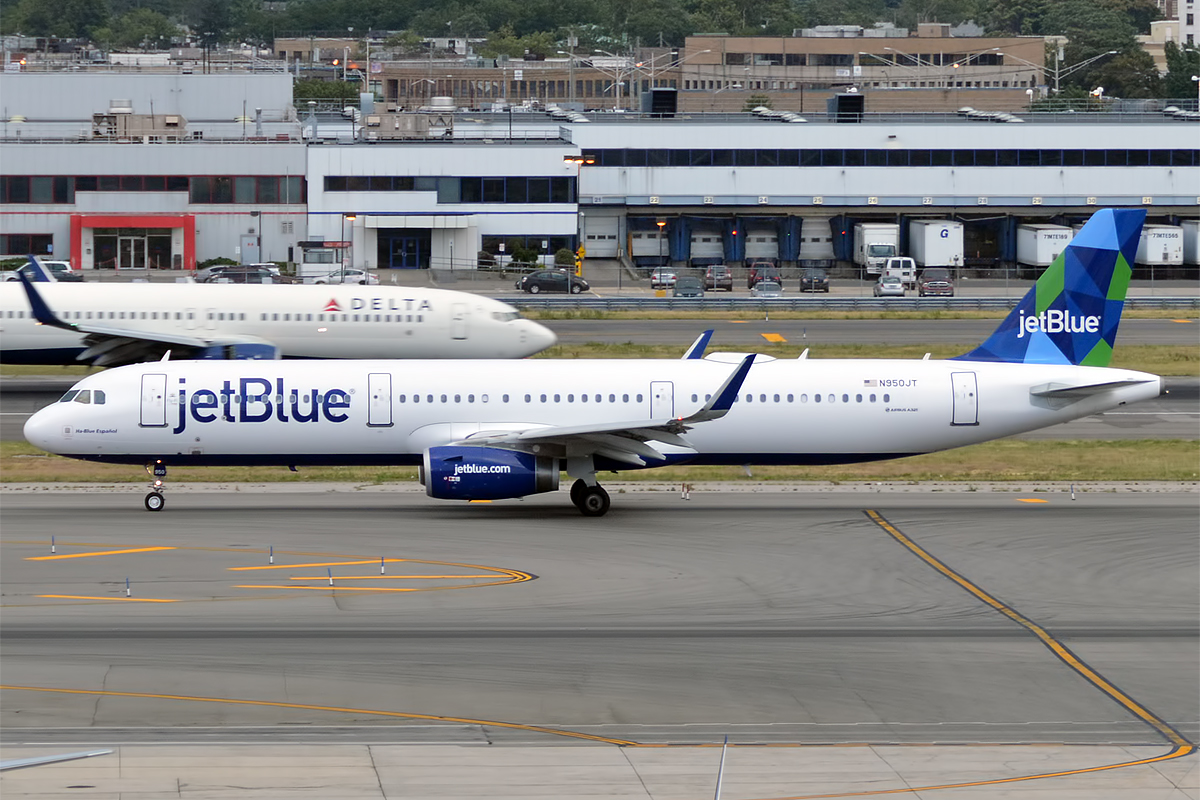
CAPE CANAVERAL- Blue Origin’s New Glenn rocket exploded on May 28, 2026, during a static fire engine test at Launch Complex 36 at Cape Canaveral, Florida, destroying the vehicle and causing significant damage to the launchpad infrastructure.
The incident directly threatens the satellite deployment schedule that underpins inflight Wi-Fi plans for Delta Air Lines (DL) and JetBlue Airways (B6).
Amazon’s Leo satellite internet unit had signed a deal with Delta Air Lines (DL) to provide inflight Wi-Fi on 500 aircraft starting in 2028, while JetBlue Airways (B6) was already the first airline partner, with a planned rollout beginning in 2027 covering about a quarter of its fleet.
The destruction of New Glenn removes substantial launch capacity from Amazon’s aggressive satellite deployment schedule, narrowing the margin for either airline to meet its stated timeline.
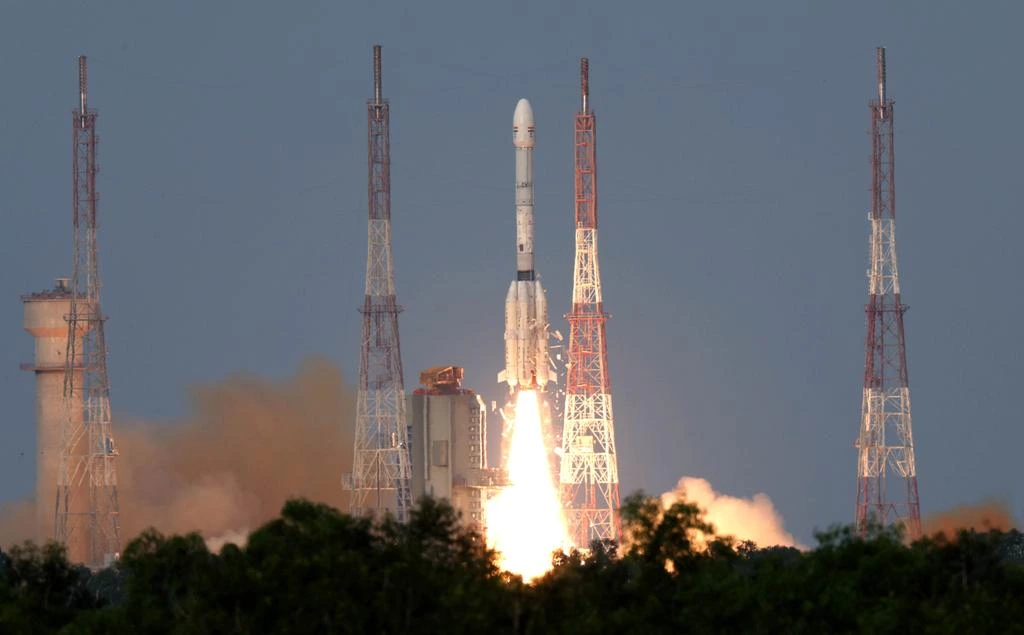
New Glenn Explosion Disrupts Amazon Leo’s Satellite Deployment
The static fire test was designed to ignite New Glenn’s seven BE-4 first-stage engines ahead of the NG-4 mission, which was scheduled to carry 48 Amazon Leo satellites to orbit.
The Amazon Leo satellites had not yet been loaded onto the rocket, sparing Amazon from immediate hardware loss. However, the destruction of the vehicle and launchpad infrastructure creates a far more significant problem: the loss of launch capacity, not satellite hardware.
Amazon Leo entered enterprise beta in April 2026 and is targeting a commercial launch by mid-2026, but the constellation currently has only 210 to 241 satellites in orbit against an FCC requirement of 1,618 by July 30, 2026.
Amazon can produce approximately 30 satellites per week, meaning the backlog of completed satellites is growing faster than launches can deliver them to orbit. The constraint is not manufacturing — it is the launch cadence.
Amazon had contracted 102 total launches across four providers: 18 Ariane 6, 24 New Glenn, 38 Vulcan Centaur, 9 Atlas V, and 13 Falcon 9 flights. The 24 New Glenn missions represented capacity for over 1,100 satellites. That capacity is not permanently lost, but the timeline for those launches is now uncertain.
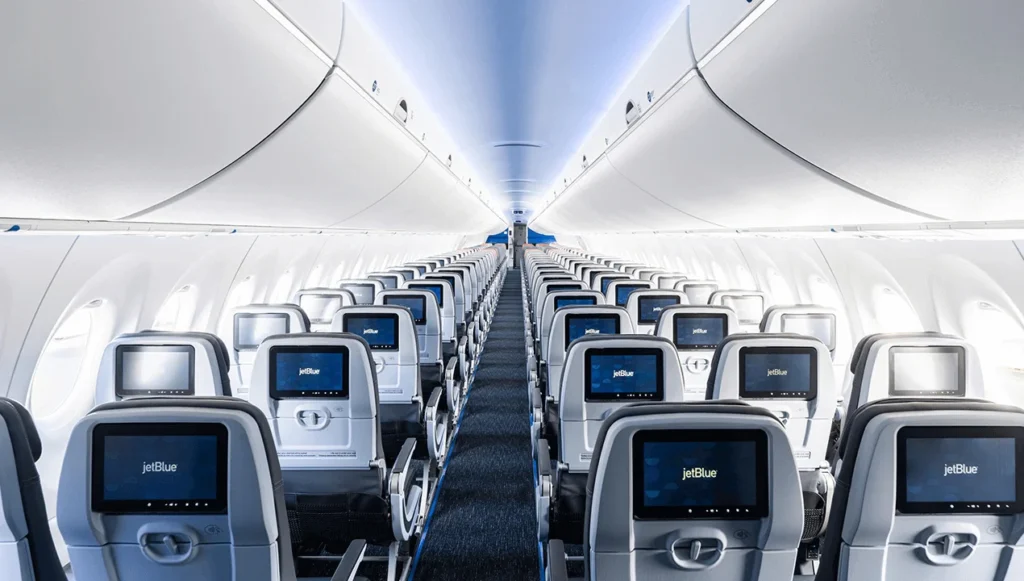
The Scale Amazon Needs — And How Far Behind It Is
To understand the consequences, it is important to understand how many satellites Amazon Leo actually needs to deliver a viable inflight Wi-Fi service. The constellation requires roughly 600 to 700 satellites for a limited beta phase.
For a service with consistent satellite handoff and meaningful coverage, over 1,000 satellites are necessary. Full first-generation service requires a constellation of more than 3,200 satellites.
The table below illustrates where Amazon stands and what remains ahead:
| Milestone | Satellites |
|---|---|
| Production satellites before LA-07 | 302 |
| Initial service rollout phase | 578 |
| Amazon’s July 30, 2026 projection | ~700 |
| FCC 50% milestone | 1,618 |
| Full first-gen constellation | 3,232 |
| Starlink (approx.) | ~10,000 |
By comparison, SpaceX’s Starlink ran its own minimally viable beta at around 900 satellites — with acknowledged service interruptions and a limited customer base. Amazon is entering a similar phase with a fraction of that infrastructure, and the New Glenn explosion removes the slack that Amazon had built into its launch schedule.
Amazon has asked to move the FCC midpoint deadline to July 30, 2028, a sign that the company already recognized schedule pressure before this incident. The explosion makes hitting even the revised deadline more difficult.
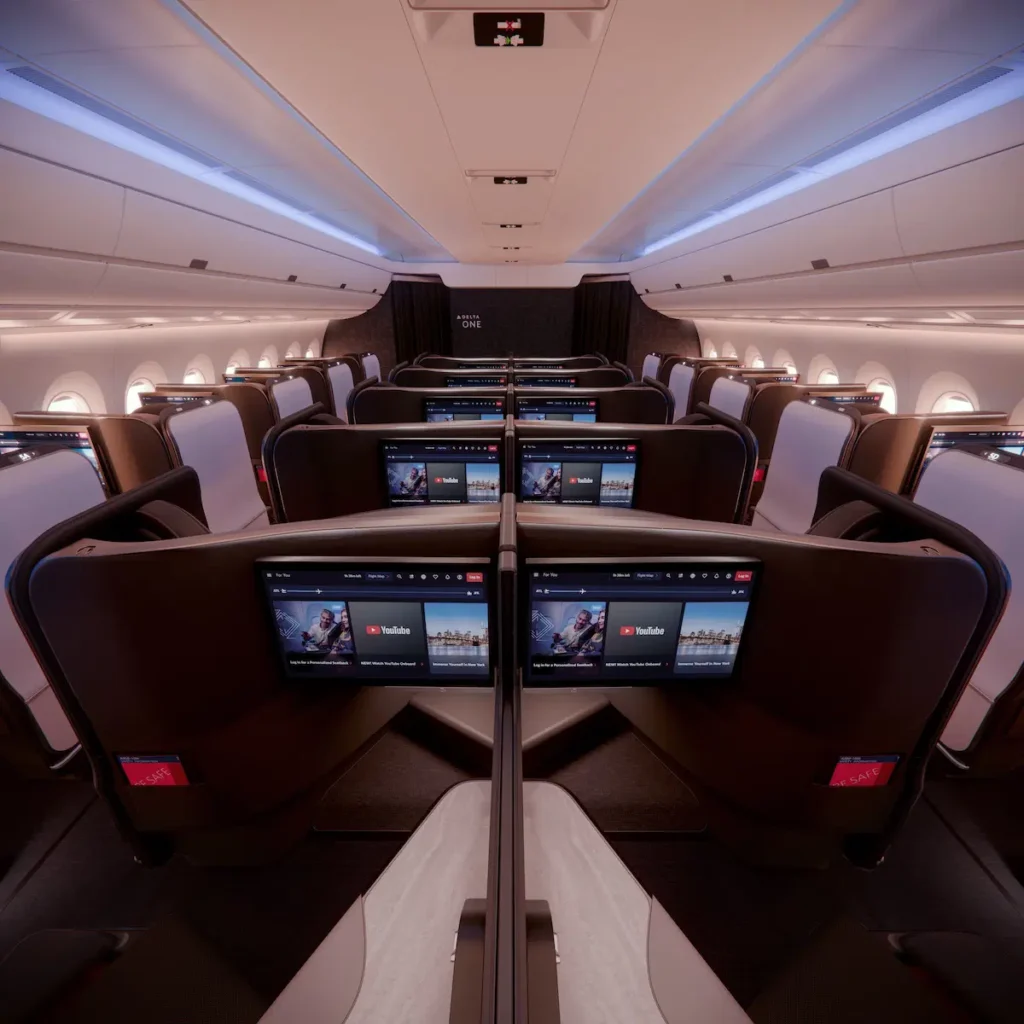
What This Means for JetBlue and Delta Inflight Wi-Fi
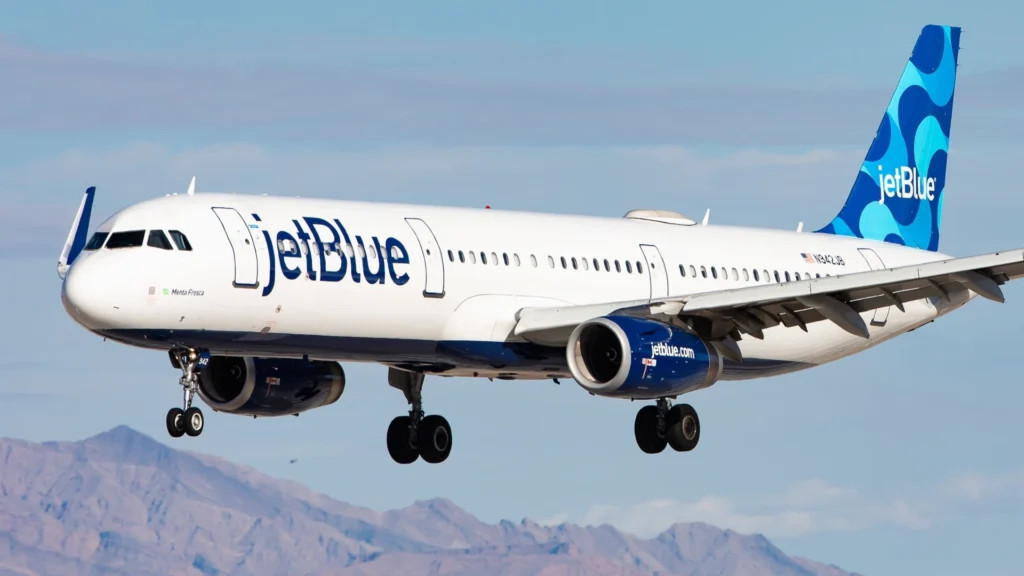
JetBlue (B6) plans to install Amazon Leo terminals on about a quarter of its fleet, with the rollout beginning in 2027 and expected to be completed in 2028.
If New Glenn remains grounded through most of 2027, that directly compresses the number of satellites Amazon can deploy in the window JetBlue needs for service to begin. This setback threatens Amazon’s satellite deployment deadline. A delay in reaching the minimum viable constellation size means a delay in JetBlue’s rollout, not merely a slower one.
Delta (DL) plans to begin installing Amazon Leo terminals on 500 aircraft starting in 2028, with plans to expand that number over time.
Delta’s later start date provides more buffer, but it also means the airline will not begin installs until two years after JetBlue — with competitors already well ahead.
Delta was the first of the major U.S. carriers to offer free Wi-Fi, but it is now the last to switch to a low-Earth orbit provider, while competitors United Airlines (UA), Southwest Airlines (WN), and Alaska Airlines (AS) have largely committed to Starlink.
United Airlines (UA) began installing Starlink connectivity in 2025 and expects availability across its entire fleet by 2027, already offering free, fast Wi-Fi on more than 340 aircraft, including its entire United Express regional fleet.
Southwest Airlines (WN) announced its own Starlink deal shortly before Delta’s Amazon Leo announcement was made.
The strategic risk for Delta (DL) is straightforward. Starlink is operational now. United (UA) and Southwest (WN) will have fully Starlink-equipped fleets before Delta even begins its Amazon Leo installs.
If the New Glenn delays push Amazon’s constellation build further behind schedule, Delta’s Wi-Fi upgrade — and the broader commercial relationship it implies, including Amazon shopping and content integration — could fall years behind what passengers are already experiencing on competing airlines.
Launchpad Damage and the Road to Recovery
The explosion destroyed the vehicle, the erector-gantry, and a lightning tower at Blue Origin’s only New Glenn launch pad. The transporter-erector and lightning tower may not be salvageable. Blue Origin has not released a timeline for completing its investigation or returning the rocket to flight status.
This was not New Glenn’s first trouble in 2026. In April, a mission suffered an upper-stage cryogenic leak that froze a hydraulic line, destroying an AST SpaceMobile satellite that never reached its planned orbit.
The FAA grounded New Glenn after that incident and had only recently cleared it to return to flight before the static fire explosion occurred.
Jeff Bezos responded to the explosion by saying Blue Origin would rebuild whatever needs rebuilding and get back to flying, calling the program worth the cost. However, rebuilding launchpad infrastructure takes time — time that Amazon’s satellite deployment schedule does not have in abundance.
The explosion does not affect launches from other Cape Canaveral pads used by Ariane 6, Vulcan Centaur, Atlas V, or Falcon 9. Amazon can attempt to redistribute some New Glenn manifest to other providers, but it is not yet clear how many of those 24 planned New Glenn missions can be absorbed by the remaining contracted launch vehicles without further delays.
Stay tuned with us. Further, follow us on social media for the latest updates.
Join us on Telegram Group for the Latest Aviation Updates. Subsequently, follow us on Google News
