

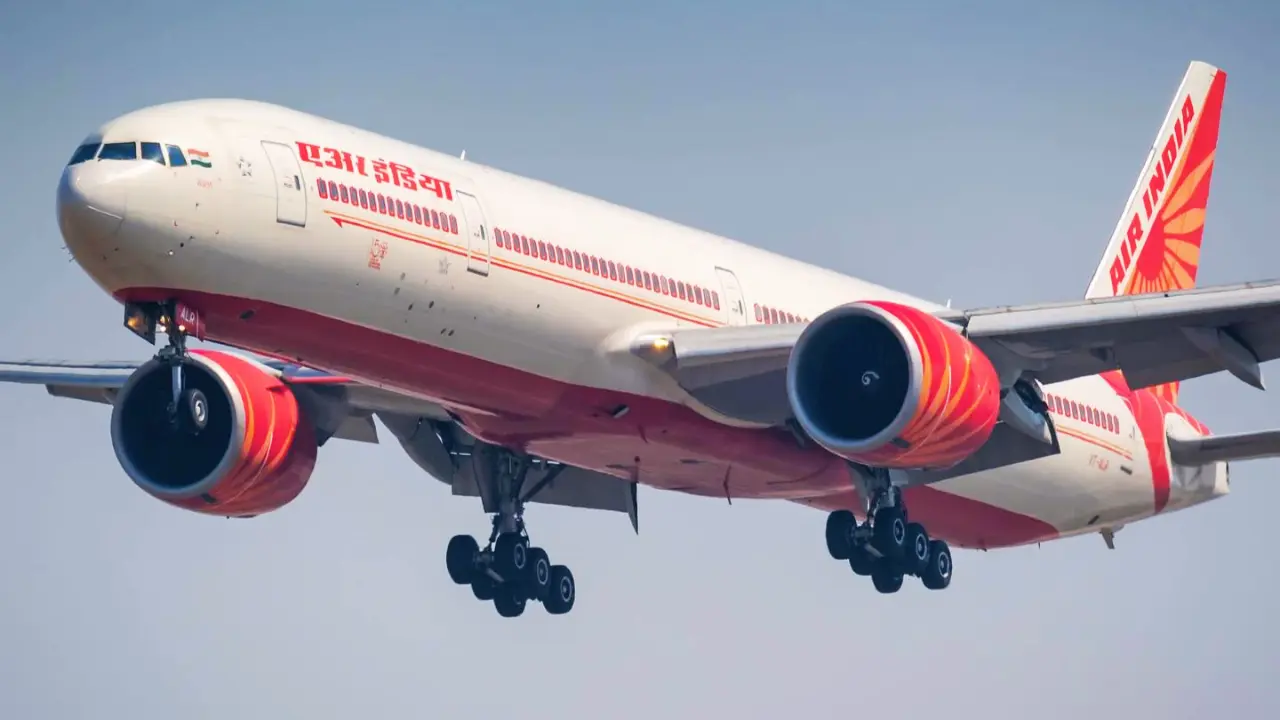
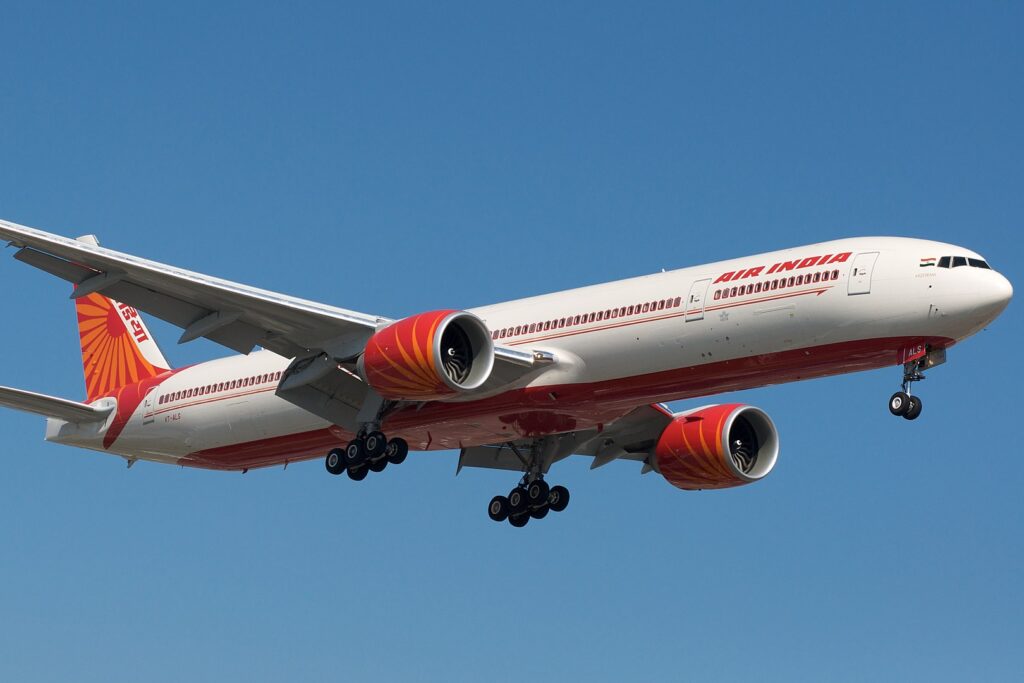
GURUGRAM– Tata Group-owned Air India (AI) flight AI173 operating from Delhi (DEL) to San Francisco (SFO) returned to the Indian capital on Tuesday (May 27, 2026) after the crew identified a technical snag while approaching Chinese airspace. The Boeing 777 widebody was carrying 230 passengers at the time of the incident.
The aircraft had been airborne for nearly three hours before the crew decided to turn back as a precautionary measure. The return leg from Indira Gandhi International Airport (DEL) to San Francisco International Airport (SFO) was suspended in line with standard operating procedures, and the airline has since arranged alternative travel options for affected passengers.
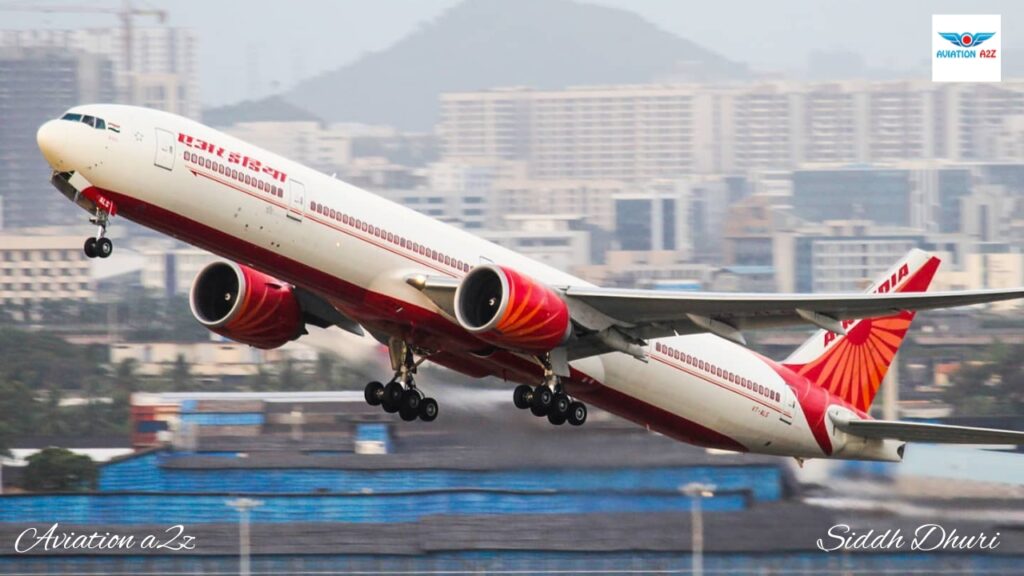
Air India San Francisco Flight U-Turn
According to sources, the cockpit crew detected the technical issue roughly three hours into the ultra-long-haul flight, just as the aircraft was approaching Chinese airspace.
Following established protocols, the pilots elected to return to Delhi rather than continue toward San Francisco. The return journey added approximately three and a half hours of flying time.
Before the aircraft could land, it remained airborne for nearly an additional hour to complete fuel jettison procedures. The total airborne duration came to almost eight hours.
Airline sources explained that the fuel dump was required because a Boeing 777 departs on the Delhi–San Francisco route at a very high take-off weight, carrying large fuel reserves needed for the ultra-long-haul sector.
Landing with that much fuel onboard would exceed the maximum permissible landing weight of the aircraft.
Air India Confirms Technical Inspection
In its official statement, the airline confirmed the diversion and the reason behind it. An Air India spokesperson said flight AI173 from Delhi to San Francisco on 27 May returned to Delhi due to a technical issue in accordance with laid-down procedures.
The aircraft landed safely and will undergo a technical inspection in line with Air India’s safety standards.
The spokesperson added that the safety and well-being of passengers and crew remain the airline’s highest priority. The 777 will not return to service until engineering teams clear the aircraft after inspection.
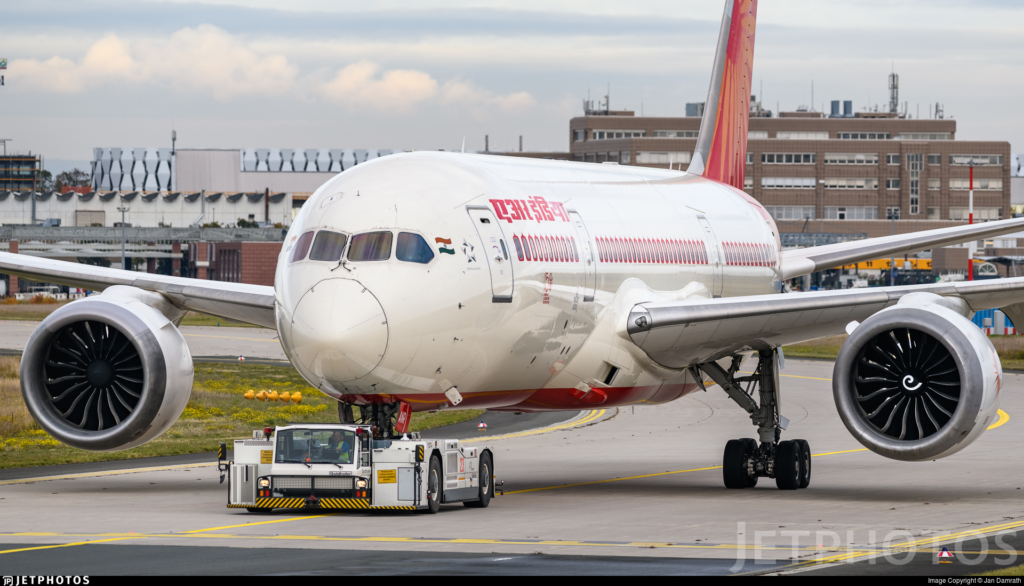
Alternative Arrangements for Stranded Passengers
Air India confirmed that ground teams at Delhi airport are actively assisting passengers affected by the disruption.
The airline is providing refreshments, hotel accommodation, and rescheduling options based on passenger preferences. Alternative travel arrangements are being put in place to ferry passengers to San Francisco at the earliest opportunity.
The carrier expressed regret over the inconvenience caused and said efforts are underway to minimise further delays for the 230 travellers booked on the long-haul service.
Fuel jettison, while uncommon, is a standard procedure for widebody aircraft operating ultra-long-haul routes. Flights such as Delhi to San Francisco require the aircraft to carry a heavy fuel load at departure, which exceeds the safe landing weight.
When such an aircraft must return shortly after take-off, the crew releases fuel in a controlled manner at a safe altitude to bring the aircraft within landing weight limits.
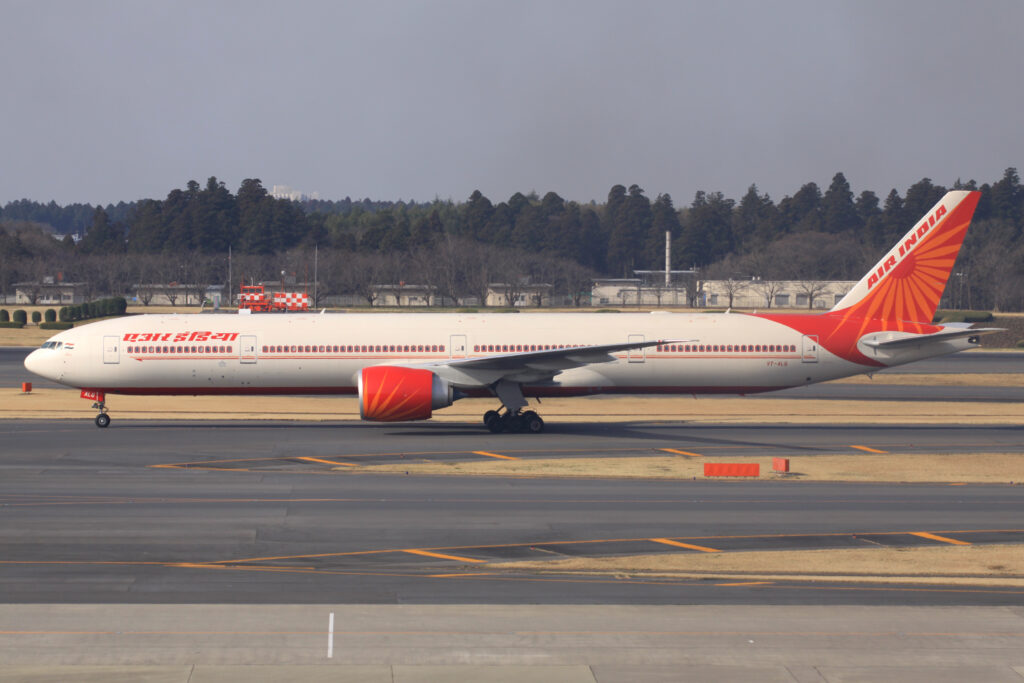
ACARS Analysis — AI173 / VT-ALL, 27 May 2026
This log captures a Boeing 777-300ER (VT-ALL) operating AI173 Delhi (VIDP) → San Francisco (KSFO) that turned back over Chinese airspace on company instructions. Air India later confirmed the return was due to a technical issue in accordance with laid-down procedures, with the aircraft ultimately spending over 8 hours airborne before landing back at Delhi. Deccan Chronicle
Below is what the messages actually show, in chronological order.
Reading the header
Each line shares the same metadata block: ICAO 24-bit address 8003E4 (= VT-ALL), flight AI173, type B77W (777-300ER), routed via Inmarsat GES 50 (POR — Pacific Ocean Region satellite) on link L-143E. The shift from L-143E (Inmarsat data link) to C-143E around 02:04Z indicates a channel change, typical when an OOOI/position class message goes up.
Timeline of events (UTC)
00:31:44 – 00:31:50 | End of Yangon FIR datalink Three near-simultaneous messages from RGNCAYA (Yangon ACC, Myanmar) terminate the FANS-1/A session:
- CPDLC uplink MSG ID 2 and MSG ID 63: END SERVICE
- ADS-C: CANCEL ALL CONTRACTS AND TERMINATE CONNECTION
This is normal handover behaviour as the aircraft exited Yangon’s FIR — but it’s the last “normal” event before the diversion sequence begins. Position at this point, judging by the next position report, was approaching the China border.
00:34:02 | IOCC tries to reach the crew
“REQ TO CALL US BACK. UNABLE TO CALL YOU ON SATCOM.”
Air India’s Integrated Operations Control Centre (IOCC) in Delhi (the FTF-IOCC desk) couldn’t get the cockpit on satellite voice — so they fall back to the ACARS free-text channel (titled “MW” — likely a maintenance/operations message category). This is a strong early signal that something operationally significant is in play.
00:40:49 | First disposition query
“PL CNFM CONTINUING TO DESTINATION.”
IOCC is asking the crew to confirm intent — they have not yet directed a turnback, but they’re checking. The wording itself implies something has prompted the question.
00:47:29 → 01:33:38 | Crew acknowledges, repeated “stand by” Over the next ~45 minutes, the crew responds three times with variations of “ACKD, PL SBY” (“Acknowledged, please stand by”). The crew is buying time — almost certainly running through QRH/checklist items, evaluating system status, and conferring with maintenance.
01:39:58 | First diversion instruction
“AS PER IOCC, PL RETURN BACK TO DELHI”
01:40:33 | Immediately retracted
“PL SBY, IGNORE PREVIOUS MSG”
A 35-second reversal. Either the message went out prematurely while the decision was still being finalised on the ground, or new information arrived in the gap.
01:43:23 | Diversion reconfirmed
“AS PER IOCC, PLEASE RETURN BACK TO DELHI. ALSO REQ ETA DEL.”
This is the definitive turnback instruction. The diversion is company-initiated, not crew-declared — there is no MAYDAY, PAN, or emergency descent in the log. That pattern is consistent with a non-urgent technical defect (e.g., a redundant system fault, a deferrable item that nonetheless makes an 8+ hour overwater leg unwise) rather than an immediate flight-safety event.
01:52:50 | Crew accepts
“ACKD AND COPIED”
The turnback is locked in.
02:01:13 – 02:01:58 | Flight plan & wind uplink for the return The FMC pulls fresh winds from the dispatcher. The wind grid is laid out for FL340/320/300/280 along a westbound chain of waypoints: LPS → XISLI → XFA → SGM → GULOT → MAKUL → GMA → LINSO → LSO → ANSOS → TEBUL → AAT → BOGEP → RAJ → TEBID → BIKIK → MONDA → PPT → BODOG → LKN → VIDP. This is essentially the eastbound route flown in reverse, threading back across China, the Himalayas, and Indian airspace to Delhi.
02:04:34 | Position report N26787E105589 ... VIDP ... LPS ... -21 ... 805
Decoded:
- Position roughly N26.79° E105.59° — over Guizhou Province, southwestern China
- Destination now VIDP (Delhi)
- Active leg
LPS(Luang Prabang fix) - SAT (static air temperature) −21°C
- Fuel remaining indicator 805 (×100 kg → ~80.5 tonnes, healthy for the routing back)
So at the moment of the position report, the aircraft is well into China, already turning toward Delhi.
02:26 / 02:34 / 03:01 / 04:01 | Delhi ATIS pulls — L, M, N, P The crew pulls successive ATIS broadcasts from VIDP as they get closer. Visibility climbs through the morning: 2100 m → 2500 m → 2800 m → 3500 m, all in haze (HZ). Notable items repeated on every ATIS:
- “GPS SPOOFING REPORTED AROUND DELHI AIRPORT” — a standing advisory in the Delhi area; the crew would already have GPS integrity monitoring on alert and be prepared to fall back to ILS/DME-DME navigation
- RWY 29L closed for rehabilitation; RWY 27 used for arrivals, RWY 28 for departures, RWY 29R in mixed mode
- ILS RWY 27 / ILS RWY 29R both being radar-vectored
02:38:56 | METAR pull — ZHHH and RJTT The crew requests METARs for Wuhan Tianhe (ZHHH) and Tokyo Haneda (RJTT). ZHHH is a sensible enroute alternate while still over China; RJTT is far less obvious for a westbound diversion and is most likely a residual pre-loaded alternate from the original eastbound flight plan being refreshed automatically. Both reports are benign (no significant weather), so neither was needed.
What the log does — and doesn’t — tell us
What it confirms
- The diversion was operations-driven, not an emergency. Decision made by IOCC, not a flight-deck declaration. Confirms the airline’s public account of a precautionary return.
- Initial SATCOM voice was unreachable for IOCC — they had to use the data link.
- Brief indecision on the ground (the “ignore previous” reversal) before the turnback was firm.
- The crew remained methodical: multiple acknowledgements with “stand by” before committing, fresh winds requested, ATIS pulled progressively, enroute alternate weather checked.
And What it doesn’t reveal
- The nature of the technical snag. No EICAS/ACMS fault uplinks, no maintenance message (e.g., a CMC/CFDS report) are present in this excerpt. Either they weren’t included, or the issue produced a soft fault the crew assessed manually. Air India hasn’t publicly disclosed the system involved.
- Why SATCOM voice was unreachable initially — could be a coverage gap during the satellite handover near the Yangon FIR boundary, or potentially part of the snag itself.
Bottom line
This is a textbook company-initiated precautionary return: no distress, no emergency, but enough concern about completing a long overwater Pacific crossing that IOCC pulled the aircraft back while it was still over a continental landmass with diversion options.
The crew’s behaviour — methodical, repeatedly asking to stand by, pulling alternate weather while turning back — fits a non-urgent technical issue being worked through deliberately. The aircraft landed safely and is undergoing technical inspection, with passengers being rebooked.
Stay tuned with us. Further, follow us on social media for the latest updates.
Join us on Telegram Group for the Latest Aviation Updates. Subsequently, follow us on Google News
