


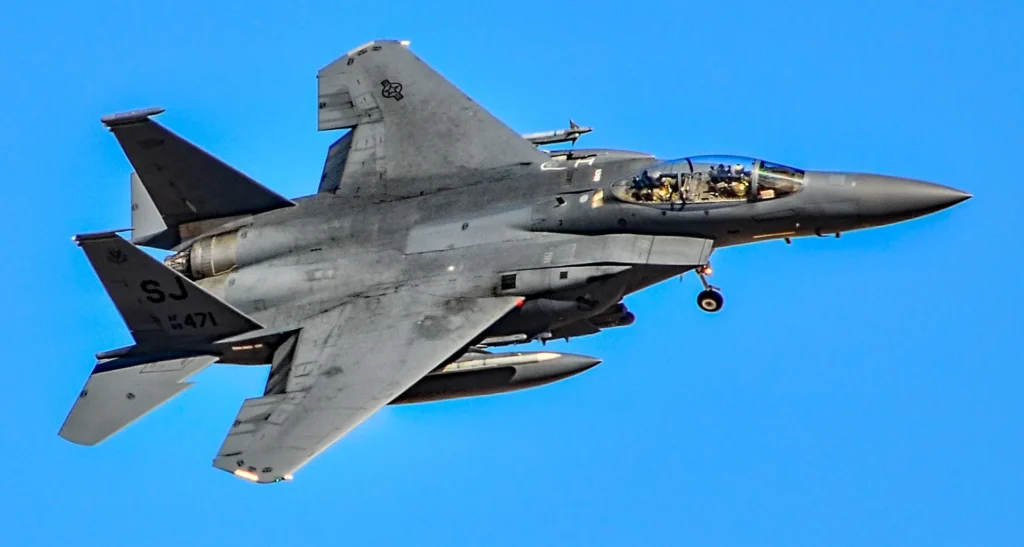
WASHINGTON, D.C.- The United States Air Force (USAF) executed a large-scale combat search and rescue (CSAR) operation in early April 2026 after an F-15E Strike Eagle was shot down over Iran, marking the first time in 27 years that American Airmen required rescue from hostile territory.
A joint force of 21 military aircraft, special operations teams, and CIA assets recovered both crew members across a tense 48-hour window, sustaining at least $300 million in material losses during the mission.
The operation drew immediate parallels to the 1995 rescue of former Air Force Capt. Scott O’Grady and the 1999 rescue of retired Gen. David L. Goldfein, both shot down over Serbia during the Balkan conflicts.
America’s $300 Million Bet on Bringing Airmen Home
The F-15E Strike Eagle was downed on April 3, 2026, forcing its pilot (call sign DUDE 44A) and weapons systems officer (call sign DUDE 44B) to eject into Iranian territory, Air and Space Forces reported.
Rescue forces moved fast. Within hours, a daylight CSAR mission involving 21 aircraft and dozens of personnel extracted the pilot from the ground.
The WSO’s rescue proved far more difficult. DUDE 44B remained in hiding for roughly 36 additional hours while Iranian state television broadcast a bounty for his capture. American and Iranian forces raced to reach him first.
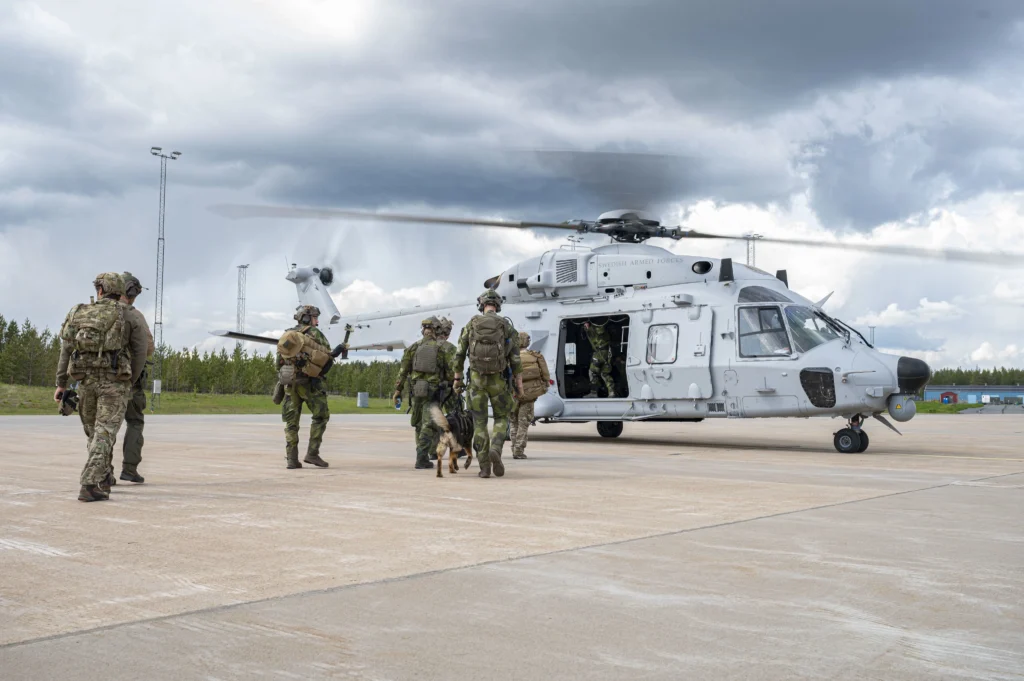
The joint rescue team deployed Air Force A-10 attack jets, HC-130 combat rescue airlifters, and HH-60W rescue helicopters alongside other aircraft.
The operation came at a steep cost. Two HC-130s and two Army MH-6 helicopters became stuck in soft terrain and had to be destroyed in place. An A-10 took anti-aircraft fire and was ditched in friendly territory. Total material losses reached at least $300 million.
Chairman of the Joint Chiefs of Staff Gen. Dan Caine praised the rescuers afterward, stating that the mission proved the United States and its joint force will always place more value in human lives than in hardware.
Lessons From the Balkan Shootdowns
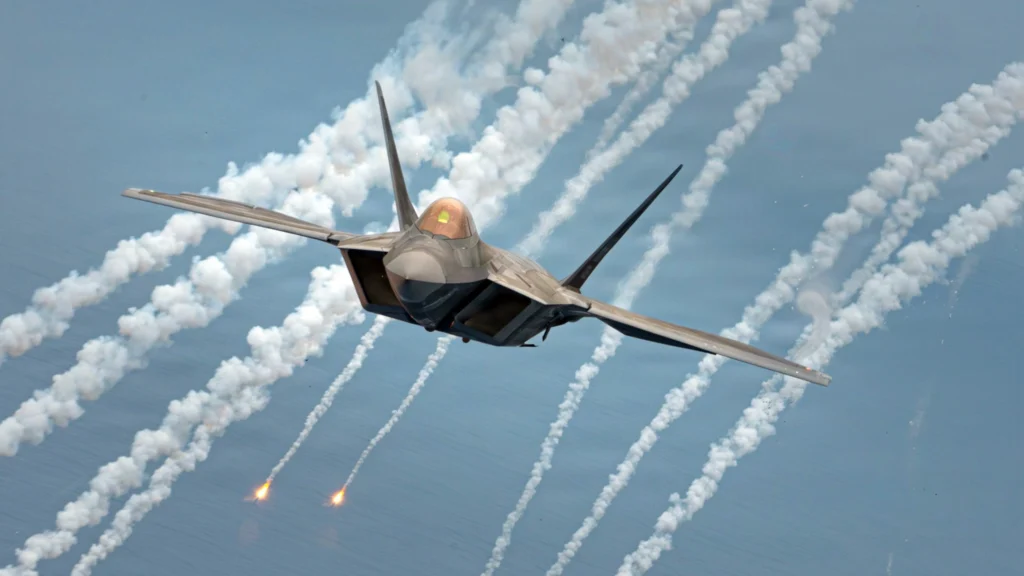
The DUDE 44 rescue reopened a chapter of Air Force history that had remained dormant for nearly three decades. The last comparable events occurred during NATO operations in the former Yugoslavia.
On June 2, 1995, Serbian forces shot down Capt. Scott O’Grady’s F-16 with a Soviet-made SA-6 surface-to-air missile during the Bosnian War.
O’Grady recalled that the missile impact was violent and came with almost no warning. His aircraft split in two, and burning jet fuel scorched his skin and clothing during the ejection. He watched Serbian vehicles tracking his parachute drift toward the ground.
O’Grady evaded capture for six days, hiding while Serb forces passed within six feet of his position. He kept his radio off to avoid detection. On June 8, 1995, a force of 61 Marines extracted him, and O’Grady has called those Marines his instant brothers ever since.
Almost exactly four years later, on May 2, 1999, Gen. David Goldfein’s F-16 collided with a surface-to-air missile over Serbia. He spent several hours on the ground, dodging Serbian patrols and landmines, before an HH-60 Pave Hawk crew extracted him at dawn. Two pararescuemen and a combat controller jumped from the helicopter to secure Goldfein as enemy forces opened fire.
Goldfein continues to send bottles of Scotch annually to the units that saved him. He also built lasting friendships with his rescuers, supporting some through post-traumatic stress and substance abuse recovery.
Why Downed Pilots Become Strategic Liabilities
Both O’Grady and Goldfein emphasized that a captured American pilot creates consequences far beyond the battlefield. O’Grady pointed to the 1993 Battle of Mogadishu as a turning point in how adversaries exploit captured or killed service members for propaganda.
In that engagement, Army Master Sgt. Gary Gordon and Sgt. First Class Randy Shughart was killed defending a downed helicopter pilot, Chief Warrant Officer Mike Durant, who was subsequently captured and held for 11 days.
Images of slain American soldiers being dragged through Mogadishu’s streets shocked the American public and contributed directly to the withdrawal of U.S. forces from Somalia five months later.
Retired Air Force Col. Brandon Losacker, a career HH-60G Pave Hawk weapons officer, argued that the entire trajectory of Operation Epic Fury could have shifted had the DUDE 44 rescue failed. He described CSAR as a strategic mission, noting that Iranian possession of the downed crew would have fundamentally altered the president’s decision space.
The Role of Technology and Intelligence in DUDE 44
The DUDE 44 operation showcased new CSAR capabilities that did not exist during the Balkan rescues. Bespoke technology allowed the rescue team to detect the WSO’s heartbeat from miles away. Space Force Guardians and intelligence analysts verified that the emergency beacon they were tracking was in the pilot’s hands, not a decoy.
The CIA executed a misdirection operation to divert Iranian personnel during the extraction. Special operations forces held off Iranian troops closing in on the WSO’s hiding position. Goldfein noted that the entire government stopped what it was doing and applied every available resource to bring the crew home.
However, social media emerged as a double-edged sword. Iranian state media used American platforms to share photos of the wreckage and rescue operations, rallying bounty hunters. Goldfein acknowledged that rolling such rapid information sharing into future tactics presents both opportunities and significant challenges.
The Future of Combat Search and Rescue
The DUDE 44 rescue reignited a longstanding debate about CSAR readiness for future conflicts, particularly against well-defended adversaries.
In the Pacific theater, vast distances and advanced air defenses raise serious questions about whether helicopter-based rescues remain viable against a peer competitor like China.
The Air Force originally planned to procure 113 HH-60W Jolly Green II combat rescue helicopters from Lockheed Martin’s Sikorsky division. In 2023, the service cut that number to 85, arguing it needed to explore unmanned and autonomous alternatives.
Congress pushed back, funding 14 additional aircraft over the following two years. The fleet currently stands at 89 production aircraft with two more on order.
Goldfein advocated for a range of CSAR capabilities tailored to different threat environments. Highly contested rescues like the Iran operation demand large, robust forces, while lower-threat scenarios could potentially use uncrewed aircraft functioning almost like a taxi service for waiting aviators.
O’Grady questioned why anyone would consider reducing dedicated CSAR capability. He argued that the specialized skill sets, equipment, and mission focus of CSAR units cannot be replicated by forces for whom rescue is not the primary mission.
Speed remains the decisive factor. Goldfein noted that at least one Airman evaded capture for three weeks during the Vietnam War, a scenario he considers almost impossible in the modern era of surveillance and social media. From the moment someone ejects over enemy territory, he said, every second counts.
Stay tuned with us. Further, follow us on social media for the latest updates.
Join us on Telegram Group for the Latest Aviation Updates. Subsequently, follow us on Google News
