

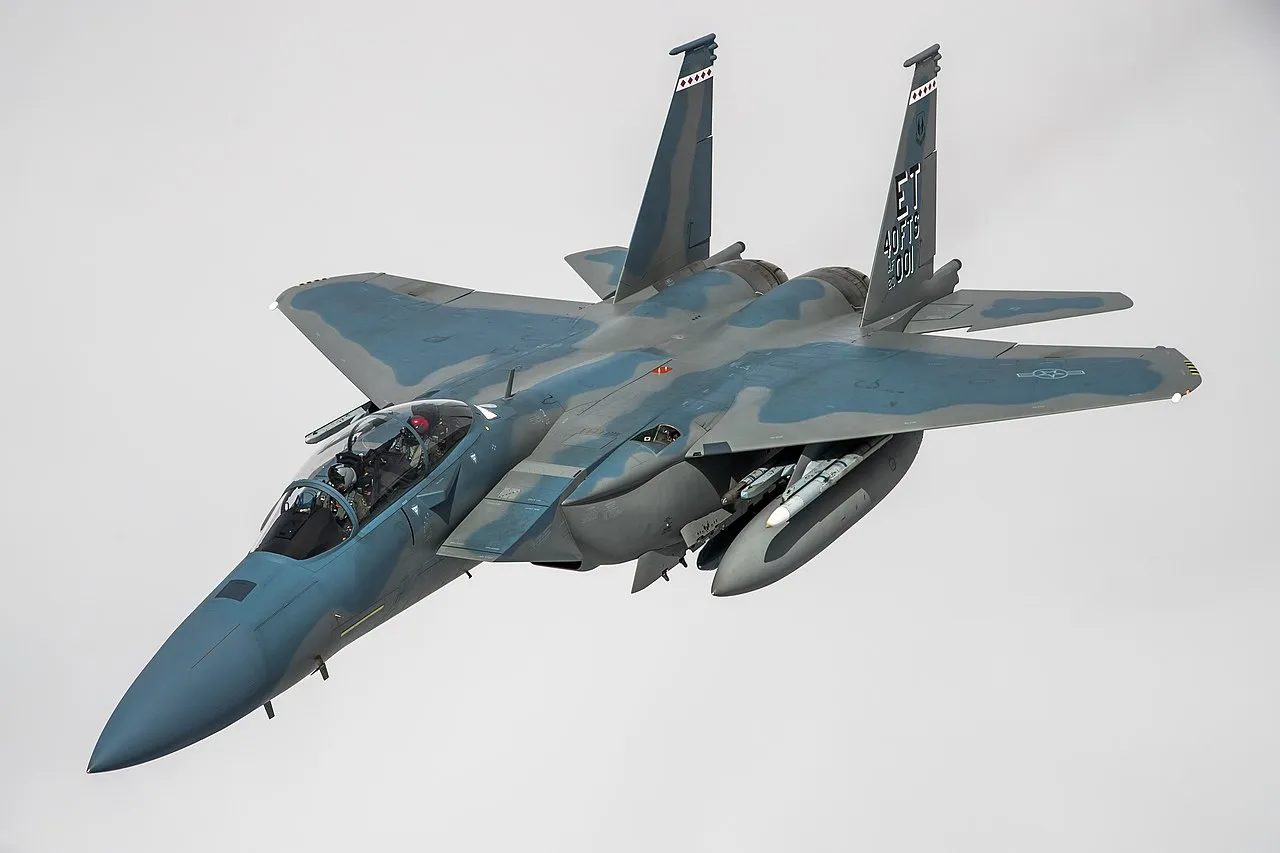
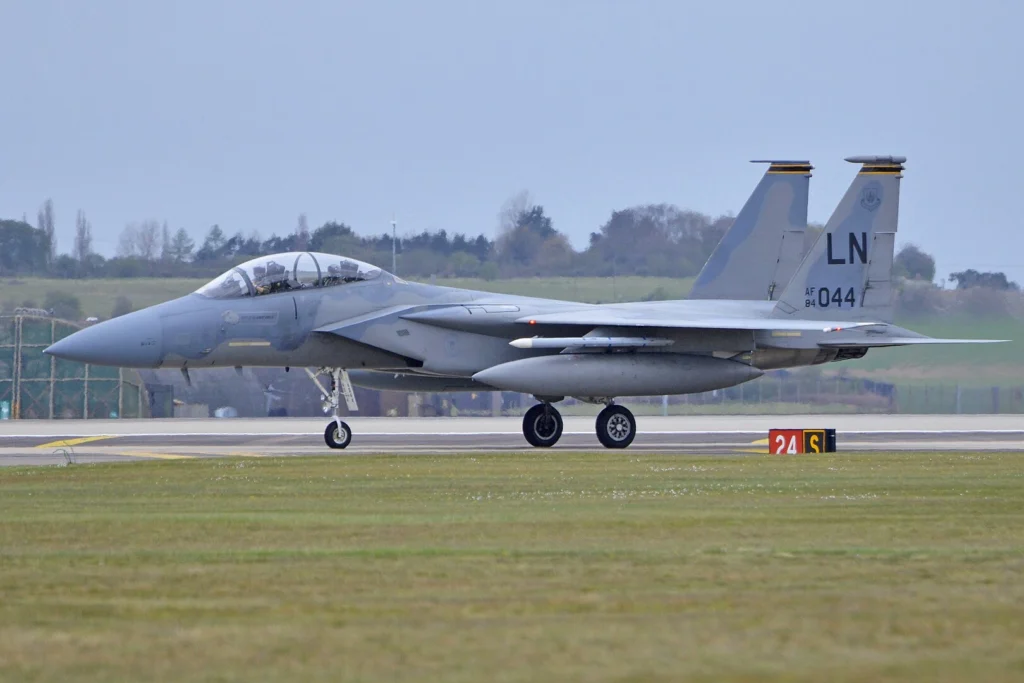
WASHINGTON, D.C- The United States Air Force (USAF) has dramatically expanded its planned purchase of the Boeing F-15EX Eagle II, with the total fleet target now standing at 267 jets. The move more than doubles the previous buy of 129 aircraft and is driven by the urgent need to replace aging F-15E Strike Eagles.
The Air Force’s Fiscal Year 2027 budget proposal includes funding for 24 additional F-15EXs for $3 billion. This comes as part of the Trump administration’s $1.5 trillion defense budget request, which would give the Air Force a 38 percent spending increase over FY2026, pushing its budget to $338.8 billion, TWZ reported.
USAF Massive F-15EX Expansion To Replace Strike Eagle Fleet
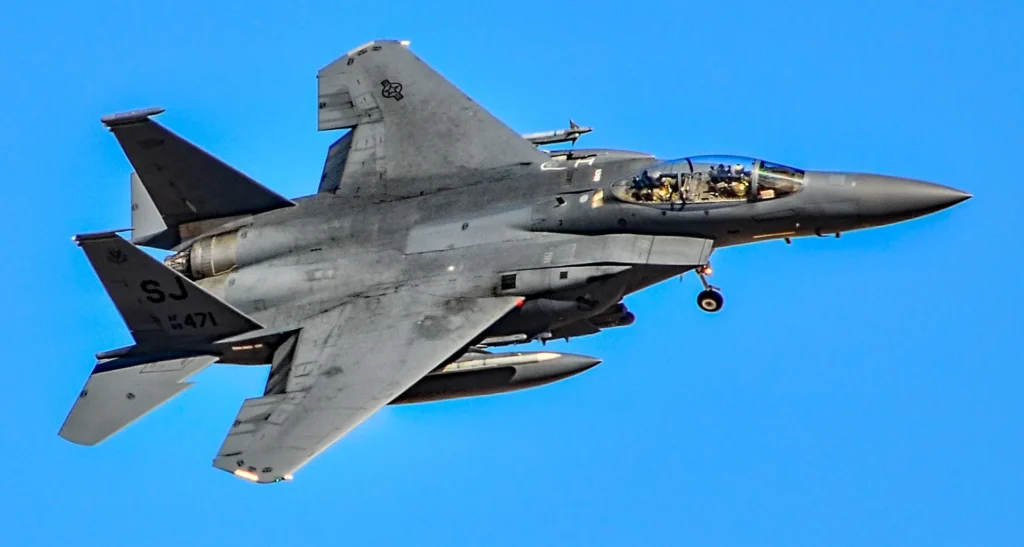
The F-15EX procurement increase is primarily aimed at recapitalizing the aging F-15E fleet. The Air Force currently operates around 215 Strike Eagles, with at least one of the six frontline squadrons always deployed to the U.S. Central Command region.
These jets have shouldered decades of combat operations and are showing their age, particularly the oldest examples powered by Pratt & Whitney F100-PW-220 engines.
For FY2027, the Air Force has requested the retirement of 20 of these oldest F-15Es. The expanded F-15EX buy is intended to provide a clear replacement path for these aircraft. The production line, originally expected to wind down sooner, will now remain open significantly longer to accommodate the larger order.
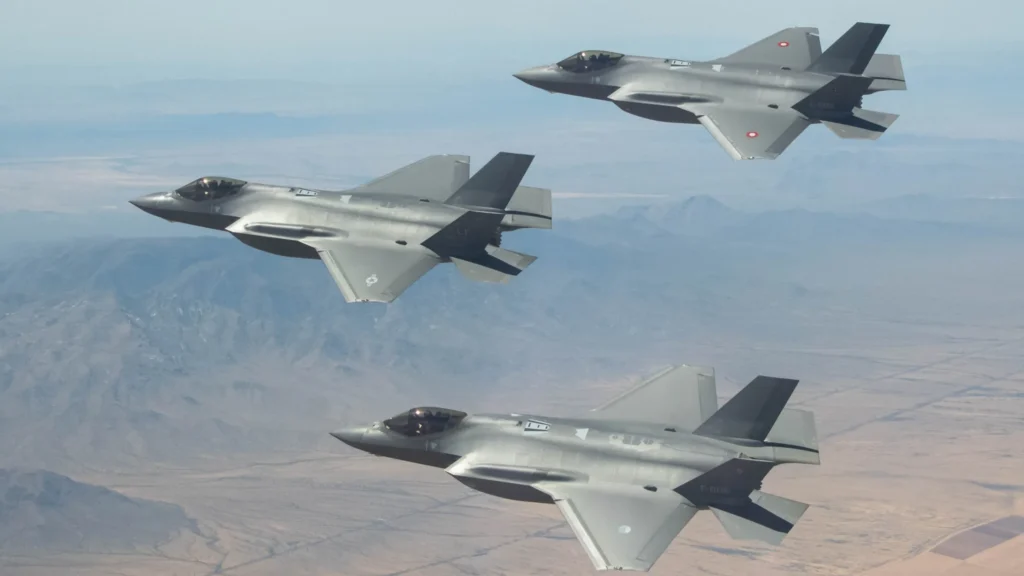
The Air Force plans to operate three fighter production lines simultaneously. The F-15EX and Lockheed Martin F-35A lines will run in parallel, with the sixth-generation F-47 entering series production in the future.
The F-35 continues to receive funding in the FY2027 budget with its own procurement boost, though deliveries remain affected by the delayed Block 4 upgrade, which has left new jets without operational radar.
F-15EX Proves Its Worth in Testing
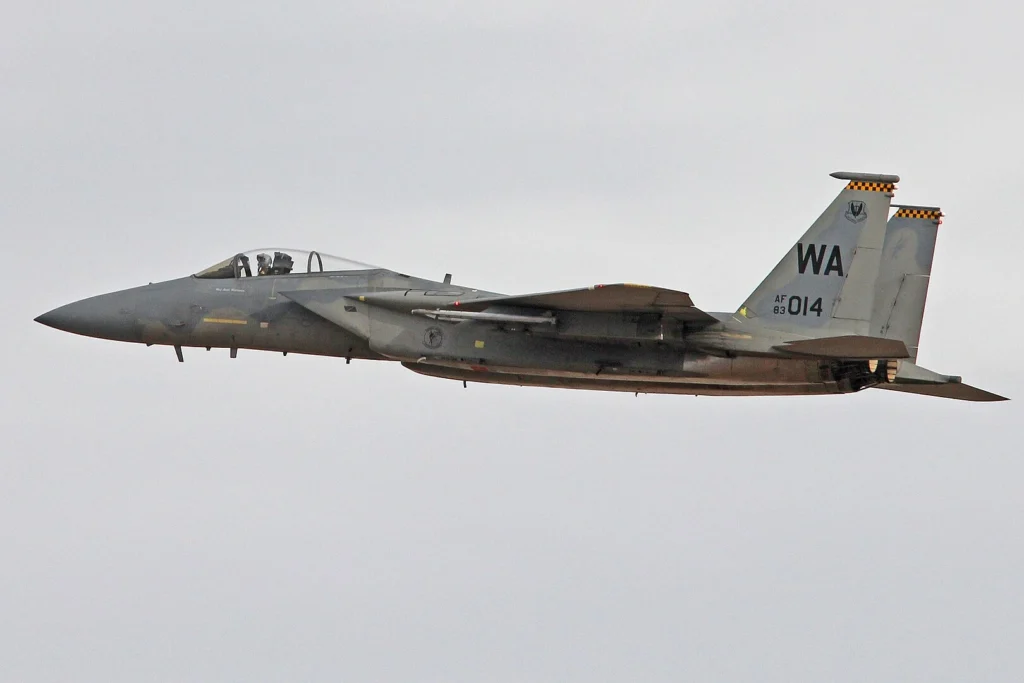
The Office of the Director, Operational Test & Evaluation, published a highly favorable assessment of the F-15EX in its 2025 annual report, Breaking Defense reported.
The evaluation found the aircraft operationally effective across all air superiority roles, including defensive and offensive counter-air missions against surrogate fifth-generation adversary aircraft.
The finding that the F-15EX performed well against fifth-generation threats is particularly significant, as such adversaries typically feature low-observable designs and advanced sensor-fused avionics.
The Eagle II currently carries up to 12 AIM-120 missiles, a number that could nearly double in the future. Smaller air-to-air weapons and laser-guided rockets are also being considered for the platform, especially for counter-drone operations.
The jet’s massive payload capacity makes it a strong candidate for carrying hypersonic missiles over long distances, a capability that would prove critical in a potential Pacific conflict.
Boeing has stated the F-15EX has a 20,000-hour airframe service life, enabled by full-scale fatigue testing and targeted structural redesigns addressing known fatigue-critical areas.
At common usage rates, this allows the aircraft to serve for the better part of a century, offering a strong value proposition when unit cost is amortized over its extended lifespan.
Air National Guard Leads F-15EX Fielding
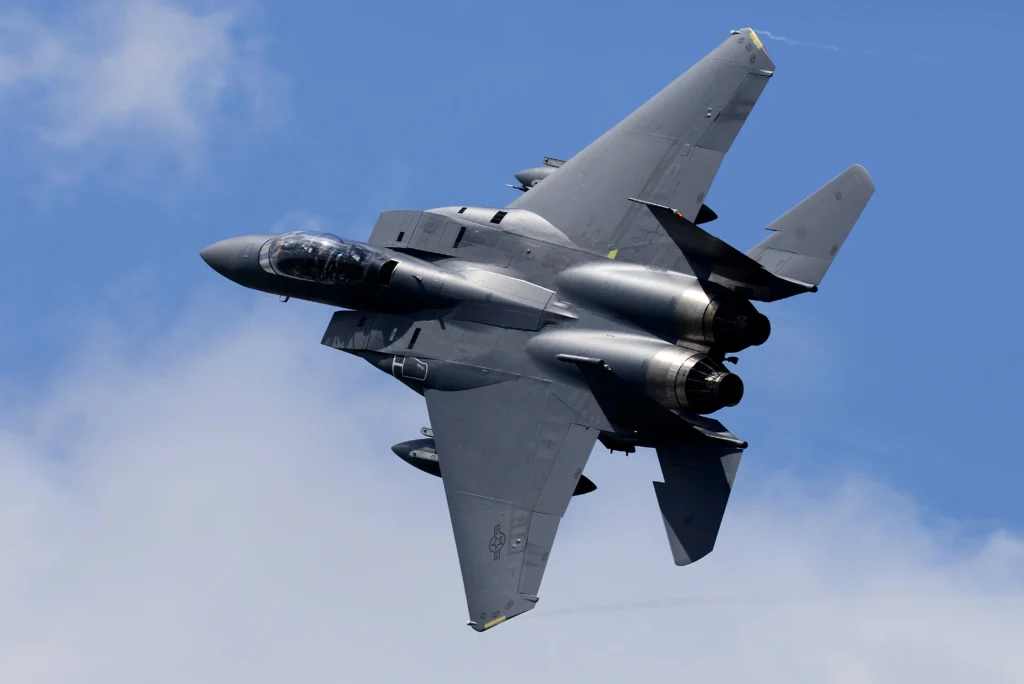
The Air National Guard is receiving the first F-15EXs, with these units focused on the homeland air sovereignty mission. This includes intercepting aircraft, countering cruise missile salvos, and engaging long-range one-way attack drones.
The F-15EX is well-suited to this role due to its payload capacity, range, advanced electronic warfare suite, and raw speed, qualities that a more complex stealth fighter trades away for low observability.
Bases slated for the F-15EX include Portland, Fresno, New Orleans, two squadrons at Kadena Air Base in Okinawa, Japan, and the Michigan Air National Guard, which is losing its A-10 attack jets. With 267 jets, the Air Force could field 13 squadrons of 21 aircraft each, with three remaining for test, evaluation, and training.
The Air National Guard is also pushing Congress to approve multiyear funding for 72 to 100 new fighters per year to address the cumulative effects of decades of underinvestment in combat aircraft.
The F-15EX could play a central role in meeting this demand, though production line capacity and foreign orders impose limits.
Eagle II’s Growing Offensive Role
While the air-to-air mission is the current priority, the F-15EX will almost certainly take on a broader multirole portfolio as it matures. As a direct F-15E successor, it would inherit deep strike and air-to-ground responsibilities.
The F-15E is also certified to deliver the B61 series tactical nuclear bomb, a mission the F-15EX could eventually assume.
The concept of using the F-15EX as an arsenal ship, loaded with long-range missiles and operating in coordination with forward-positioned stealth fighters, has gained traction.
The two-seat Eagle II variant also presents a compelling case as a controller platform for the Air Force’s forthcoming Collaborative Combat Aircraft unmanned drones.
Beyond the F-15E replacement, the Air Force also needs to retire aging F-16s and A-10s. Some of these retirements could potentially be covered by additional F-15EX orders beyond the 267 currently planned, especially as the F-16 fleet ages and becomes more expensive to sustain.
Budget Must Clear Congressional Approval
The FY2027 budget proposal remains subject to Congressional approval, and changes are expected.
Lawmakers have previously blocked aircraft retirement requests, though the availability of new F-15EXs to replace retiring jets should make the proposal more palatable.
The F-15EX program has seen significant fluctuations in planned numbers over recent years. The buy dropped to a low of just 80 aircraft in 2023 before climbing to 98, then 129 in the FY2026 proposal, and now 267.
Each increase reflects growing confidence in the platform and expanding mission requirements across the Combat Air Forces.
Stay tuned with us. Further, follow us on social media for the latest updates.
Join us on Telegram Group for the Latest Aviation Updates. Subsequently, follow us on Google News
