

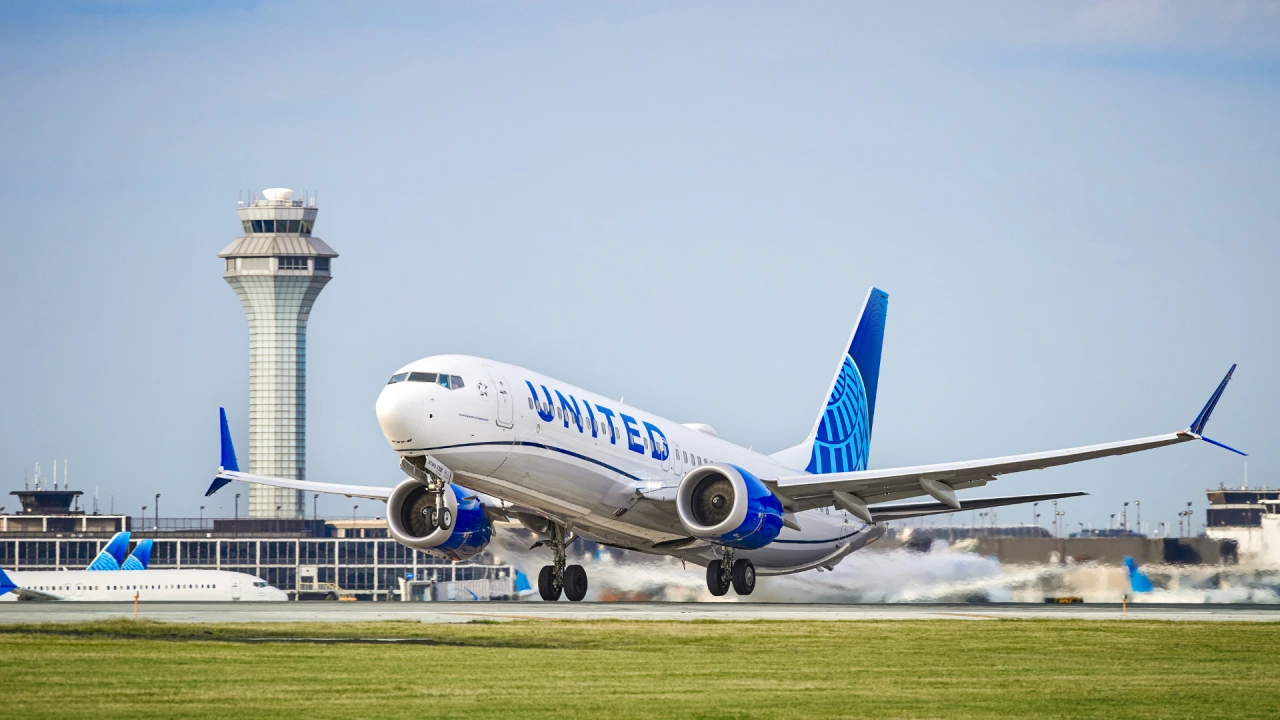
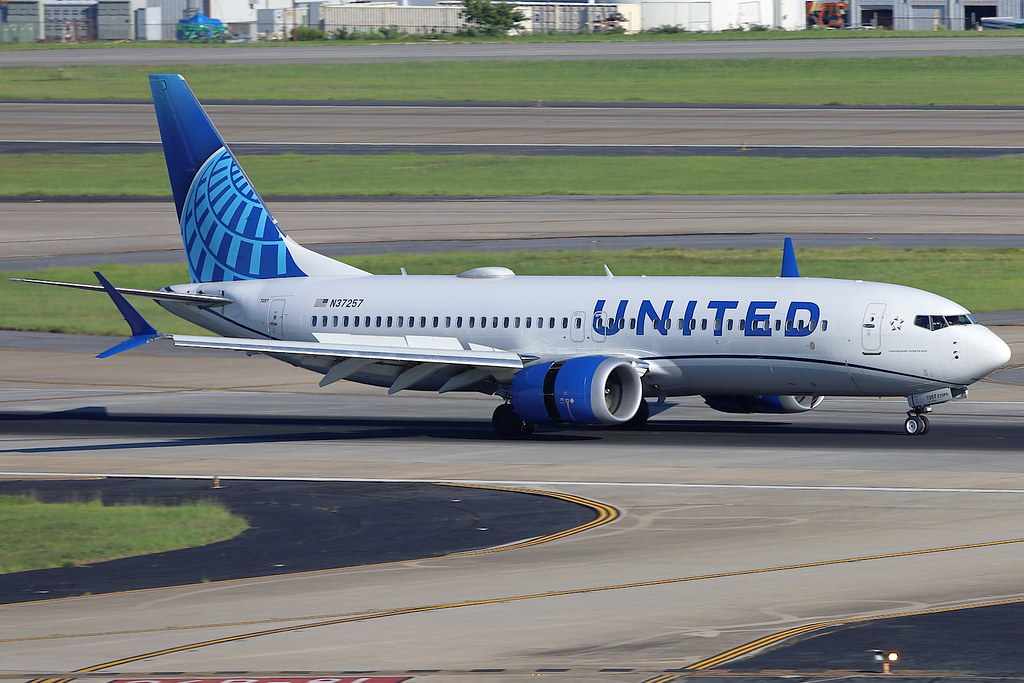
CHICAGO- United Airlines (UA) is adding 6 Saturday nonstop flights from Boston, Massachusetts (BOS), to Jackson Hole, Wyoming (JAC), from February 13 through March 20, 2027, using a 126 seat Boeing 737-700. The route is unusual because United rarely operates point-to-point service that does not touch a hub.
The Boston-Jackson Hole service highlights a broader shift in United’s ski strategy. The airline has built the broadest ski network among major US carriers, but its data suggests that capacity, larger aircraft and schedule breadth may explain much of its customer advantage.
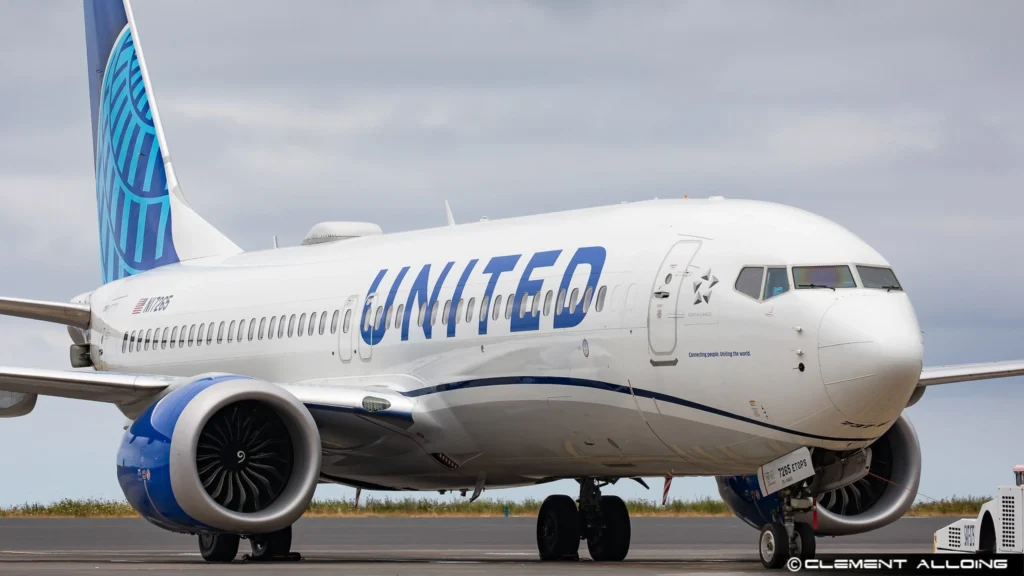
United’s Ski Network Was Already the Largest
United now operates about 60 routes from seven cities to 15 mountain destinations during January and February.
Denver (DEN) is the largest ski hub, while Newark (EWR), Washington Dulles (IAD), Houston (IAH), Chicago O’Hare (ORD) and San Francisco (SFO) also connect with mountain airports.
Ski flying has expanded beyond traditional western hubs. Jackson Hole, Aspen, Vail Eagle and Steamboat Hayden receive nonstop service from both coasts, while Bozeman and Kalispell have developed into substantial year-round markets.
The Boston (BOS) to Jackson Hole (JAC) route is notable because it does not require a hub connection. It is a small seasonal addition, but it fits United’s broader move toward putting more nonstop capacity closer to customers.
A published comparison showed United with 39% of February seats at 13 major ski airports in 2026, up from 30% in 2019. It showed American at 18%, down from 22%; Delta at 15%, down from 23%; Alaska at 18%, up from 14%; and Southwest at 6%, compared with zero in 2019.
A reconstruction using BTS T-100 Segment data and BTS Marketing Carrier On-Time Performance data produces a different starting point.
The 13 airports are Aspen, Bishop, Bozeman, Durango, Eagle/Vail, Kalispell, Gunnison, Hayden, Jackson Hole, Montrose, Redmond, Santa Fe, and Sun Valley.
| Airlines | Published 2019 | BTS 2019 | Published 2026 | BTS 2026 |
|---|---|---|---|---|
| United | 30% | 42.6% | 39% | 43.6% |
| American | 22% | 24.1% | 18% | 20.2% |
| Alaska | 14% | 8.7% | 18% | 10.1% |
| Delta | 23% | 20.6% | 15% | 17.0% |
| Southwest | 0% | 0.0% | 6% | 6.4% |
| Other | 11% | 4.1% | 4% | 2.8% |
The reconstruction suggests United was already the clear leader in 2019, with a 42.6% share, and reached 43.6% in 2026. United therefore did not simply move from 30% to 39% while taking a large share from competitors. It largely maintained its position as the total market expanded by about 62%.
The reconstruction also produced 39,497 Southwest inbound seats in February 2026, compared with about 39,000 in the published chart after rounding.
View from the Wing provided the underlying ski-market comparison that prompted this analysis.
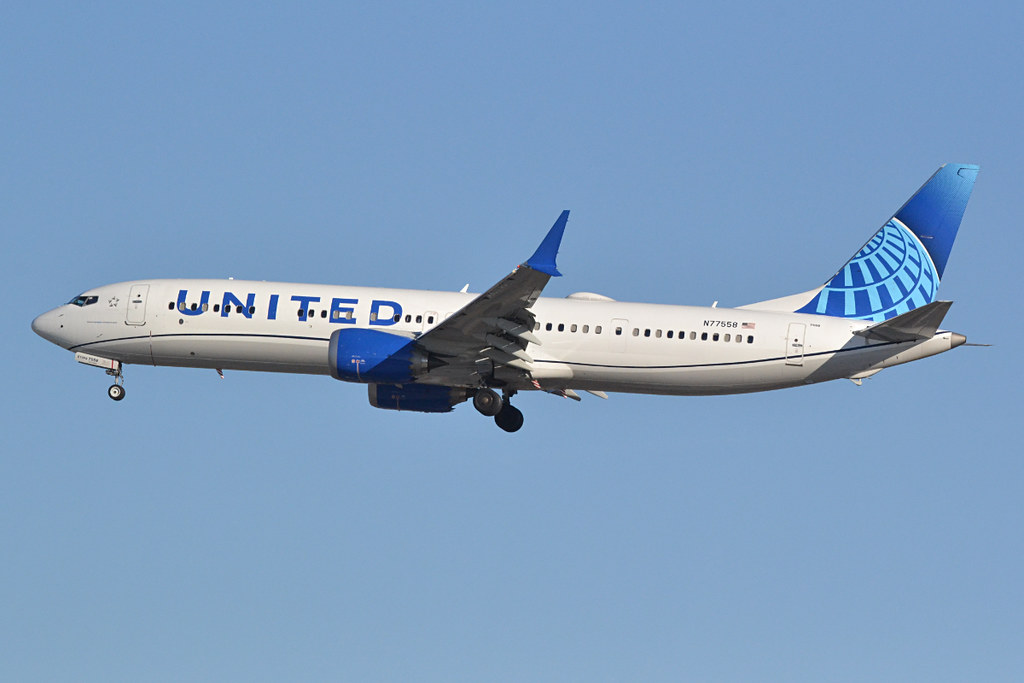
United’s Growth Came From More Capacity
United’s February inbound seats at the 13 airports increased from 162,537 in 2019 to 268,888 in 2026, up 65.4%.
Departures increased 27.3%, from 2,034 to 2,589, while average seats per departure increased 30.0%, from 79.9 to 103.8.
| United at 13 ski airports | 2019 | 2026 | Change |
|---|---|---|---|
| Inbound seats | 162,537 | 268,888 | +65.4% |
| Inbound departures | 2,034 | 2,589 | +27.3% |
| Seats per departure | 79.9 | 103.8 | +30.0% |
The capacity increase was almost evenly split. About 48% of the added seats came from more departures and 52% from larger aircraft.
That means United’s ski growth was not simply about adding routes. Upgauging aircraft was responsible for slightly more than half of the additional seats.
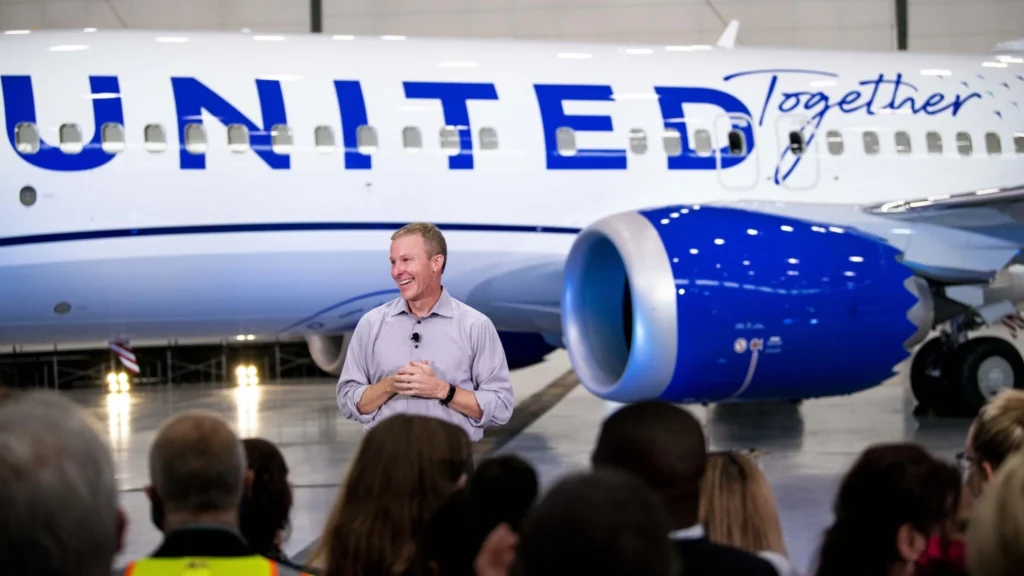
United Strategy
Scott Kirby became United president on August 29, 2016. The strategy began appearing in United’s 2016 annual report, in the 2017 schedule and most clearly at the January 2018 investor event.
The diagnosis was that United’s mid-continent hubs lacked scale. Fewer destinations, frequencies and seats made the airline less useful to local customers, weakening local demand, loyalty, revenue, connectivity and credit-card economics.
The response was to restore network breadth and frequency, improve hub banks, replace 50 seat regional jets with larger aircraft and grow domestic capacity. United expected several years of 4% to 6% annual capacity growth.
The strategy reversed the earlier domestic retrenchment that relied more heavily on smaller regional jets and capacity reductions.
Loyalty Strategy
Kirby’s thesis linked network strength directly to loyalty. More destinations and better schedules make United more useful. More useful service attracts more local and corporate customers.
Those customers have more reasons to use MileagePlus and the United co-brand card. Higher loyalty and card economics then support further network investment.
The ski network fits this model because premium leisure customers are among the travelers most likely to value direct service to desirable destinations.
United’s growing network also contrasted with changes at American. Brian Znotins, who had been a United network planner, later joined American in January 2020 and became its senior network-planning chief. During the same period, American reduced the scale of its Los Angeles and Chicago operations while United continued building in both markets.
American’s co-brand card spend position also moved from first to third among major airlines, while United moved to second.
Chicago Shows How Capacity Can Look Like Loyalty
Chicago provides a clearer test of the argument. United says it has a roughly 19 to 22 point local share advantage over American and about a 38 point corporate advantage.
Between 2019 and 2025, United’s annual domestic seats at O’Hare increased from 38.83 million to 42.32 million, up 9.0%. Departures fell 7.4%, from 388,319 to 359,704, while average seats per departure increased 17.7%, from 100.0 to 117.6.
| United domestic at O’Hare | 2019 | 2025 | Change |
|---|---|---|---|
| Performed seats | 38.83 million | 42.32 million | +9.0% |
| Performed departures | 388,319 | 359,704 | −7.4% |
| Seats per departure | 100.0 | 117.6 | +17.7% |
| United seat share | 47.2% | 51.1% | +3.9 pts |
| American seat share | 39.6% | 35.8% | −3.8 pts |
Holding the 2019 aircraft gauge constant, fewer departures would have removed about 3.11 million seats. Larger aircraft added about 6.60 million.
Every net United seat added at O’Hare therefore came from upgauging. This was before the later regional-flight buildup that United attempted to use to capture gates from American, a schedule the FAA blocked as unrealistic for the airport.
The United-American seat share gap widened 7.7 points, while the passenger-share gap widened about 7.5 points. Load factors were nearly the same.
That does not prove loyalty was irrelevant. T-100 passenger data includes connecting traffic. It does show that capacity explains much of the passenger-share result.
Local Share Also Tracks Capacity
Domestic local O&D data from Cranky Flier shows United gaining roughly 5 points of Chicago local share from 2019 to 2025.
Over the same period, United’s domestic seat share across O’Hare and Midway increased about 3.2 points. Roughly 60% of the local-share gain therefore aligns with the visible capacity-share increase.
Other factors still matter, including nonstop breadth, frequency, schedule timing, fares, corporate contracts, airport facilities, reliability, product, sales execution, and international connectivity.
United also holds a major schedule advantage at O’Hare, operating close to half of the airport’s flights versus roughly one-third for American. The approximately 17-point schedule gap is already about 80% to 90% as large as United’s claimed local-share advantage, before considering aircraft size.
Product Matters, But Network May Matter More
The original analysis does not suggest that customers have no genuine preference for United.
United has improved its product and technology. Its Star Alliance membership offers broader alliance connectivity. Its app and, more recently, Starlink connectivity are strengths, while American has had advantages in areas such as upgrades, award pricing and some aspects of its onboard product.
The point is narrower: United does not need a decisive product advantage to explain much of its market position when it offers more seats, more flights and more schedule options.
A larger network can create repeated customer use. Repeated use can create MileagePlus activity, status and credit-card relationships. What looks like brand loyalty can therefore begin with network convenience.
Boston-Jackson Hole Route
The 6 Saturday Boston-Jackson Hole flights are too small to change United’s overall network.
They do, however, show how the strategy has evolved. United is willing to add targeted point-to-point service to a premium leisure market instead of relying entirely on hub connections.
The wider evidence points to the same model. United’s ski network was already dominant in 2019, its total ski-market capacity grew sharply, and more than half of its added seats came from larger aircraft.
Chicago shows the strategy at a much larger scale. United increased seat capacity and market share while reducing departures, with upgauging doing the work.
That makes the central conclusion straightforward: United may have genuine brand loyalty, but its network appears to be one of the main reasons that loyalty exists.
Bottom Line
United’s rise in ski country is less a story of suddenly taking market share and more a story of expanding capacity while maintaining an already strong position.
The BTS reconstruction shows United at 42.6% share in 2019 and 43.6% in 2026 across the 13 airports. Its February seats increased 65.4%, with 48% of growth coming from additional departures and 52% from larger aircraft.
The same pattern appears at Chicago O’Hare, where United added seats, increased seat share, and reduced departures while raising aircraft gauge.
The data therefore supports a broader interpretation of Kirby’s strategy: network utility can create loyalty. More destinations, better schedules, and larger aircraft make United more useful, and that usefulness can become the customer loyalty the airline later measures.
Stay tuned with us. Further, follow us on social media for the latest updates.
Join us on Telegram Group for the Latest Aviation Updates. Subsequently, follow us on Google News
