


PALMDALE, CALIFORNIA- Northrop Grumman has released the first-ever full overhead image of the B-21 Raider stealth bomber.
The photo was captured during the aircraft’s initial aerial refueling trials at Edwards Air Force Base (EDW), offering an unprecedented view of the next-generation bomber’s upper fuselage and exhaust system.
The first B-21 airframe, nicknamed Cerberus, was photographed in a pre-contact position behind a KC-135 tanker. The image reveals several highly sensitive design elements, including the Raider’s deeply blended air inlets, chevron-shaped exhaust outlets, and minimal cockpit glazing.
Northrop Grumman confirmed the B-21 program remains on schedule, with the first aircraft planned to arrive at Ellsworth Air Force Base (RCA) in 2027.
First Photo of B-21 Raider’s Stealth
The overhead photograph marks the first time the public has seen the B-21 Raider from a steep upper perspective.
No previous imagery had shown the bomber’s exhaust system, which ranks among the most sensitive areas of any low-observable aircraft design.
The image shows deeply sunk, chevron-shaped exhaust outlets positioned far forward of the aircraft’s trailing edge. This placement helps mask the bomber’s infrared signature from detection systems below and behind.
Notably, the chevron orientation is inverted compared to the B-2 Spirit’s exhaust design, suggesting a fundamentally different approach to thermal signature management.
One striking observation is the apparent absence of special heat-attenuating materials around the exhaust area. The B-2 Spirit features a visible planar area for active cooling and a trough-like section connecting the buried engine exhaust ducts to the upper empennage.
Neither feature appears present on the B-21 in this image. However, the photograph may have been deliberately altered to conceal classified exhaust features before public release.
Fuel Efficiency and Endurance Set the B-21 Apart
Northrop Grumman described the B-21 as the most fuel-efficient bomber ever built. According to the manufacturer, the Raider consumes a fraction of the fuel used by fourth- and fifth-generation aircraft.
This efficiency reduces demand for theater tanker logistics and gives operational commanders greater flexibility in force packaging.
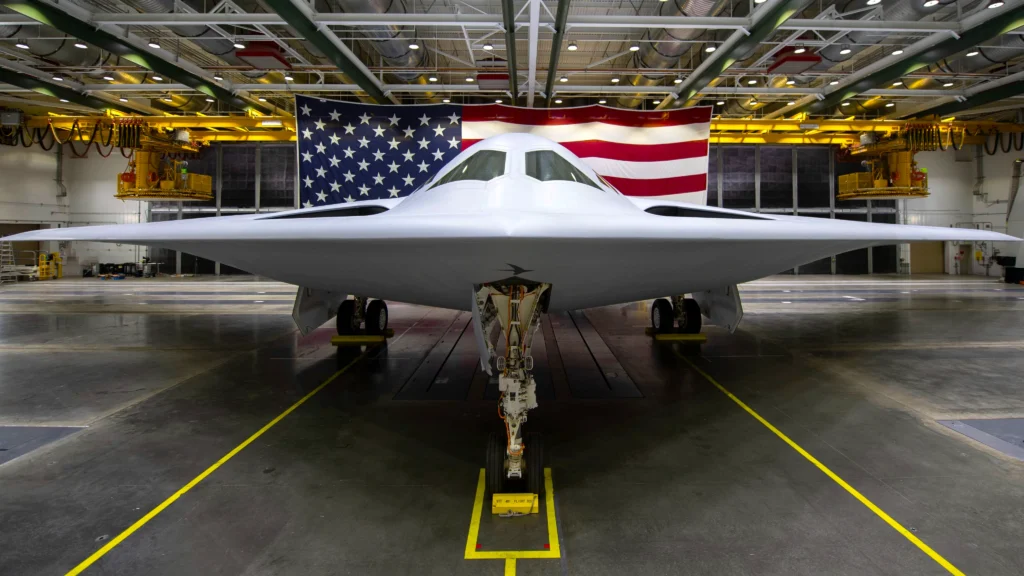
The B-21 is smaller than the B-2 Spirit but is designed to fly farther. Its planform design predates the B-2 and is optimized for high-altitude, highly efficient flight.
The aircraft likely operates on two engines rather than the B-2’s four, based on contrail imagery and general design analysis.
While it carries a smaller weapons payload than its predecessor, the Raider compensates with an extreme fuel capacity to extend its range between tanker support.
Cockpit and Airframe Design Details Emerge
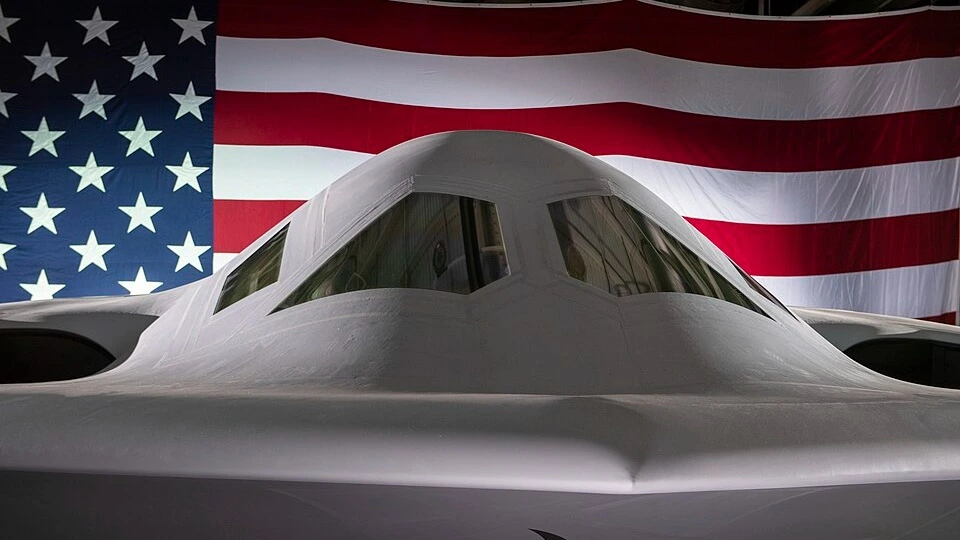
The overhead image clearly shows the B-21’s remarkably small cockpit windows. This design was likely driven by the need to balance aerial refueling visibility requirements with the minimization of the aircraft’s frontal radar cross-section.
The B-21’s higher operating altitude reduces the cockpit area’s vulnerability to most aerial and ground-based radars, but the minimal glazing further lowers detectability.
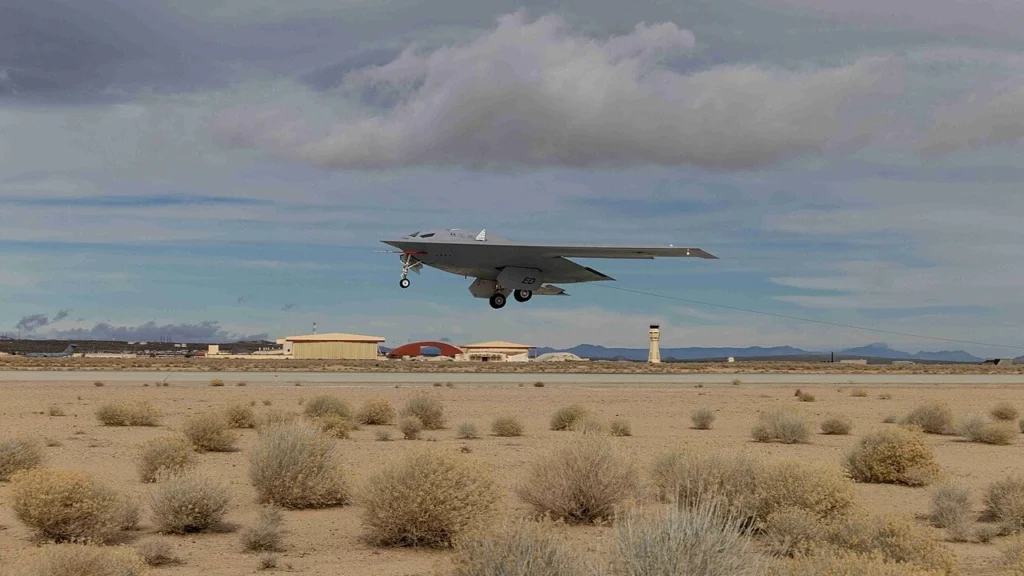
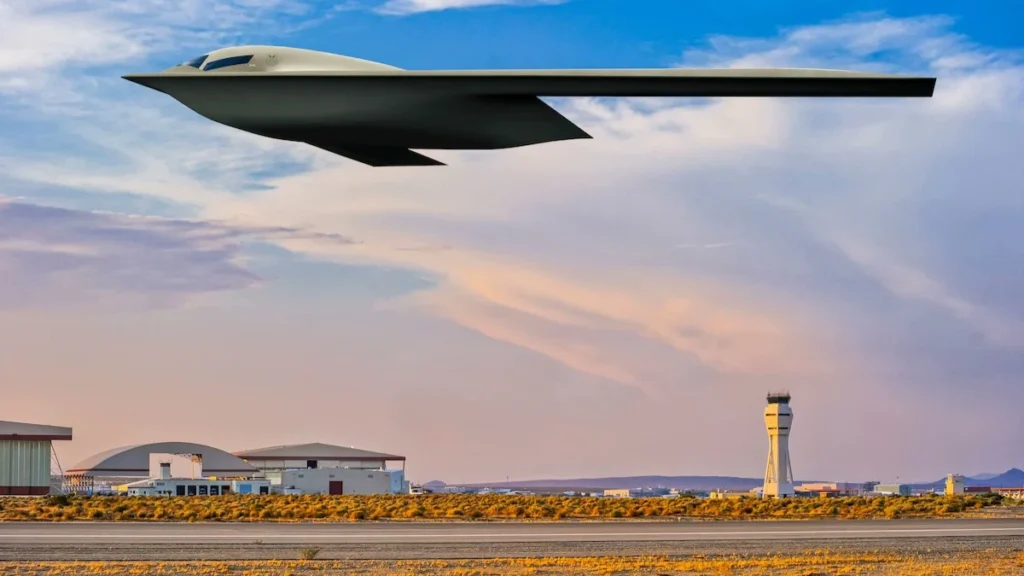
A side-view photograph from the refueling formation trial was also included with the release. This angle reveals the B-21’s notably short fuselage length, estimated to be roughly equivalent to an F-15 Eagle from front to back.
Wingspan estimates remain in the range of 145 to 155 feet. The refueling receptacle and surrounding paint markings mirror those found on the F-22 Raptor and F-35 Lightning II.
Edwards AFB Ghost Tanker Supports B-21 Testing
The tanker visible in the released images is Edwards AFB’s Ghost tanker, identified by tail number 61-0320.
This KC-135 unit operates a specialized mission supporting classified test programs at Edwards.
The Ghost tanker and its crews play a critical role in supporting the B-21’s flight test campaign as the program advances toward initial operational capability.
| Wikimedia Commons
https://commons.wikimedia.org/wiki/File:B-21_Raider_cockpit_detail.jpg
Program Progress and Production Outlook
Northrop Grumman has invested more than USD 5 billion in digital technologies and manufacturing infrastructure for the B-21 program.
The company stated it is accelerating production, targeting the first aircraft delivery to Ellsworth Air Force Base in 2027.
From available information, the program remains on schedule and on budget, a notable achievement given the B-2 Spirit’s history of cost overruns and production cuts.
The release of new imagery signals growing confidence in the program and suggests more B-21 photographs will become available as flight testing accelerates toward initial operational capability.
Stay tuned with us. Further, follow us on social media for the latest updates.
Join us on Telegram Group for the Latest Aviation Updates. Subsequently, follow us on Google News
