

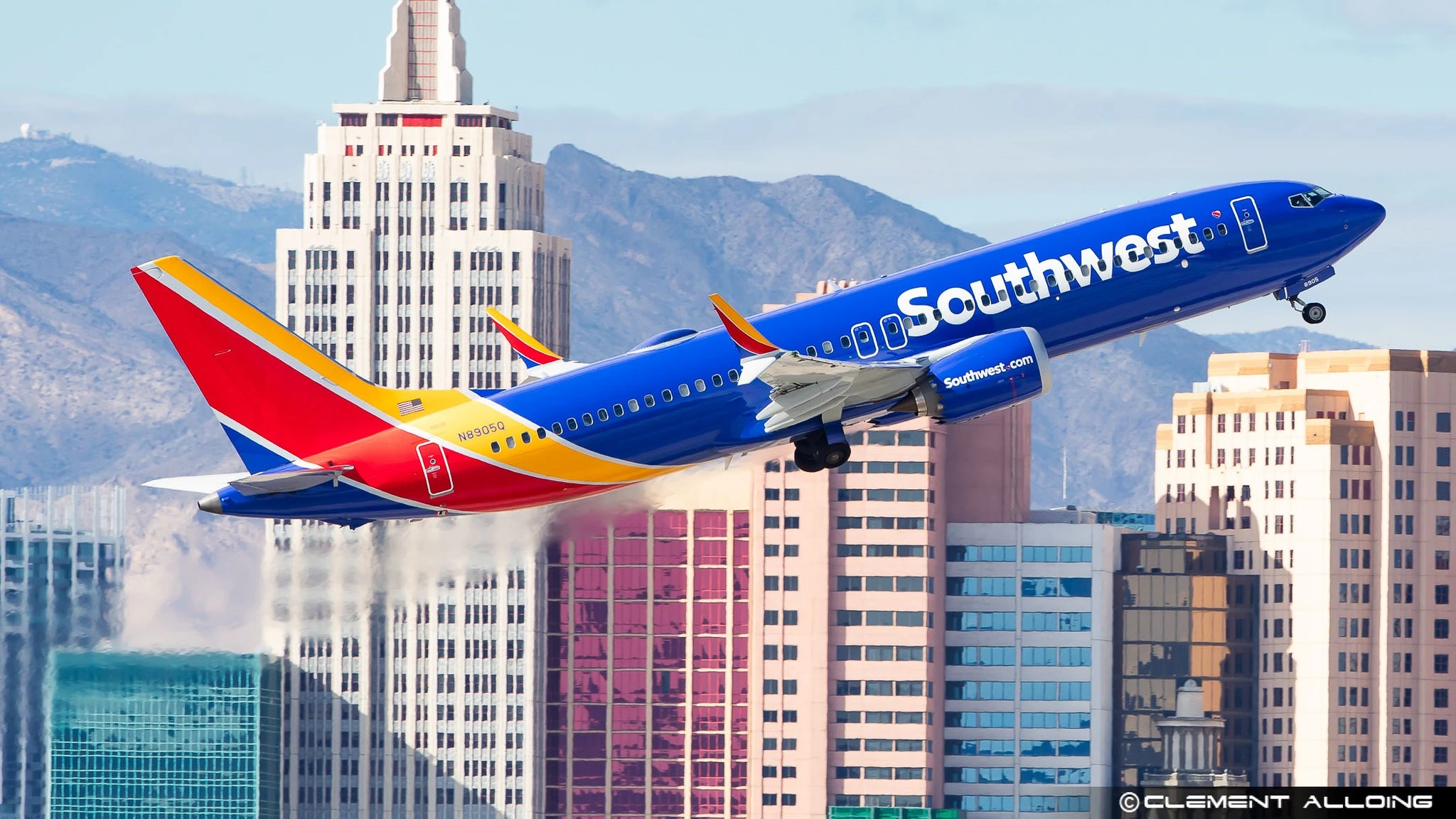
DALLAS- Southwest Airlines (WN) was sued after firing flight attendant Charlene Carter over religiously based criticism of her union and its political activity.
Carter worked for Southwest from 1996 until her 2017 termination and ultimately received $946,102.87 from Southwest and Transport Workers Union of America Local 556. The case later focused on whether Southwest properly told flight attendants that federal law prohibits religious discrimination.
Charlene Carter’s Southwest Dispute
Carter was a pro-life Christian and a strong opponent of organized labor. She had been a member of TWU Local 556 but later resigned and became a “nonmember objector,” while remaining subject to the union’s representation under the collective bargaining agreement.
She had opposed union leadership and supported efforts to recall union president Audrey Stone.
The dispute escalated in January 2017 after Stone and other union members attended the Women’s March in Washington, D.C. Carter objected to the union’s participation because of her pro-life views and criticized Stone.
Carter later sent Stone private Facebook messages containing graphic anti-abortion images and videos and criticized the union publicly.
Stone reported the conduct to Southwest. The airline investigated the messages under its social media, workplace bullying, and harassment policies and fired Carter in March 2017. An arbitrator later found that Southwest had cause to terminate her under three company policies.
Carter sued Southwest and Local 556 under Title VII of the Civil Rights Act and the Railway Labor Act.
A federal jury found for Carter in 2022. The original verdict was about $5.1 million, but statutory limits reduced the final recovery. Carter was also reinstated.
The final recovery was $946,102.87, but Southwest did not pay the entire amount alone. Southwest’s share was $473,051.44, with Local 556 responsible for the remainder.
Carter therefore recovered nearly $1 million from the two defendants combined, along with reinstatement.

Fifth Circuit Narrowed Original Judgment
The US Court of Appeals for the Fifth Circuit issued a substituted opinion on October 15, 2025.
The court reversed the judgment against Southwest on Carter’s belief-based Title VII claim and her RLA retaliation claim.
It affirmed the judgment against Southwest on her practice-based Title VII claims and affirmed the judgment against Local 556 on all claims. The court also vacated the district court’s permanent injunction.
The distinction is important. The appellate court did not simply affirm the entire original verdict. Southwest remained liable on Carter’s religious-practice claims, while other claims against the airline were reversed.
Southwest Used Different Language
The district court ordered Southwest to inform flight attendants that, under Title VII, it “may not discriminate” against employees because of their religious practices and beliefs, including views expressed on social media and views concerning abortion.
Southwest posted the verdict and judgment in flight-attendant breakrooms and emailed them to employees. Its accompanying message instead said Southwest was ordered to inform employees that it “does not discriminate” based on religious practices and beliefs.
Southwest also issued a memo stating that Carter’s messages were “inappropriate, harassing, and offensive,” “extremely graphic,” and violated company policies. The memo said Southwest was disappointed with the ruling and intended to appeal.
The wording difference became the basis of the contempt dispute. The district court found that Southwest had not complied with the notice requirement.
View from the Wing also reported on the dispute over Southwest’s notice, Carter’s reinstatement and the nearly $1 million combined recovery.
Contempt Order and Religious-Liberty Training
The district court held Southwest in civil contempt and ordered the airline to send a corrected statement to flight attendants. It also required three Southwest lawyers to undergo religious-liberty training with Alliance Defending Freedom.
The Fifth Circuit held that the training was not an appropriate civil-contempt remedy because it was punitive rather than remedial. The lawyers had not made the decision to fire Carter, and the record did not show that they acted with religious animus.
The appellate court affirmed the contempt finding but vacated the contempt sanction, requiring further proceedings on an appropriate remedy. It also required any new sanction to be remedial, narrowly tailored, and the least restrictive means of securing compliance.
The union’s role was separate from Southwest’s employment decision. The Fifth Circuit affirmed the judgment against Local 556 on all claims.
The case alleged that the union used its relationship with Southwest to pursue disciplinary action against Carter over conduct connected to her religious expression and opposition to union leadership. The litigation included claims involving religious discrimination, failure to accommodate, RLA retaliation, and the union’s duty of fair representation.
Southwest’s Case Continued
Carter’s reinstatement and financial recovery did not immediately end the litigation because the parties still had to address the post-judgment notice and contempt issues.
In a June 8, 2026 filing, the Northern District of Texas said it did not intend to pursue further civil or criminal contempt because Southwest had sufficiently acknowledged and apologized for its failures.
The court also noted that Southwest attorney Kevin Minchey had voluntarily completed half a day of continuing legal education covering accommodation of religious beliefs, practices and speech under Title VII. The court scheduled a July 15, 2026 hearing before making a final ruling.
The June filing means the earlier religious-liberty training order should not be presented as still in force. The Fifth Circuit had already vacated that sanction.
Carter Case Shows
The case does not mean every employee’s social media post receives protection from workplace discipline. Southwest’s policies covered social media, bullying and harassment, and an arbitrator initially found cause for Carter’s termination.
The legal dispute turned on whether Southwest’s treatment of Carter unlawfully discriminated against her because of religiously protected practices. The Fifth Circuit preserved the practice-based Title VII judgment against Southwest while reversing other claims against the airline.
The case also demonstrates that an employer and a union can face separate liability when union activity contributes to an employment dispute.
Stay tuned with us. Further, follow us on social media for the latest updates.
Join us on Telegram Group for the Latest Aviation Updates. Subsequently, follow us on Google News
