

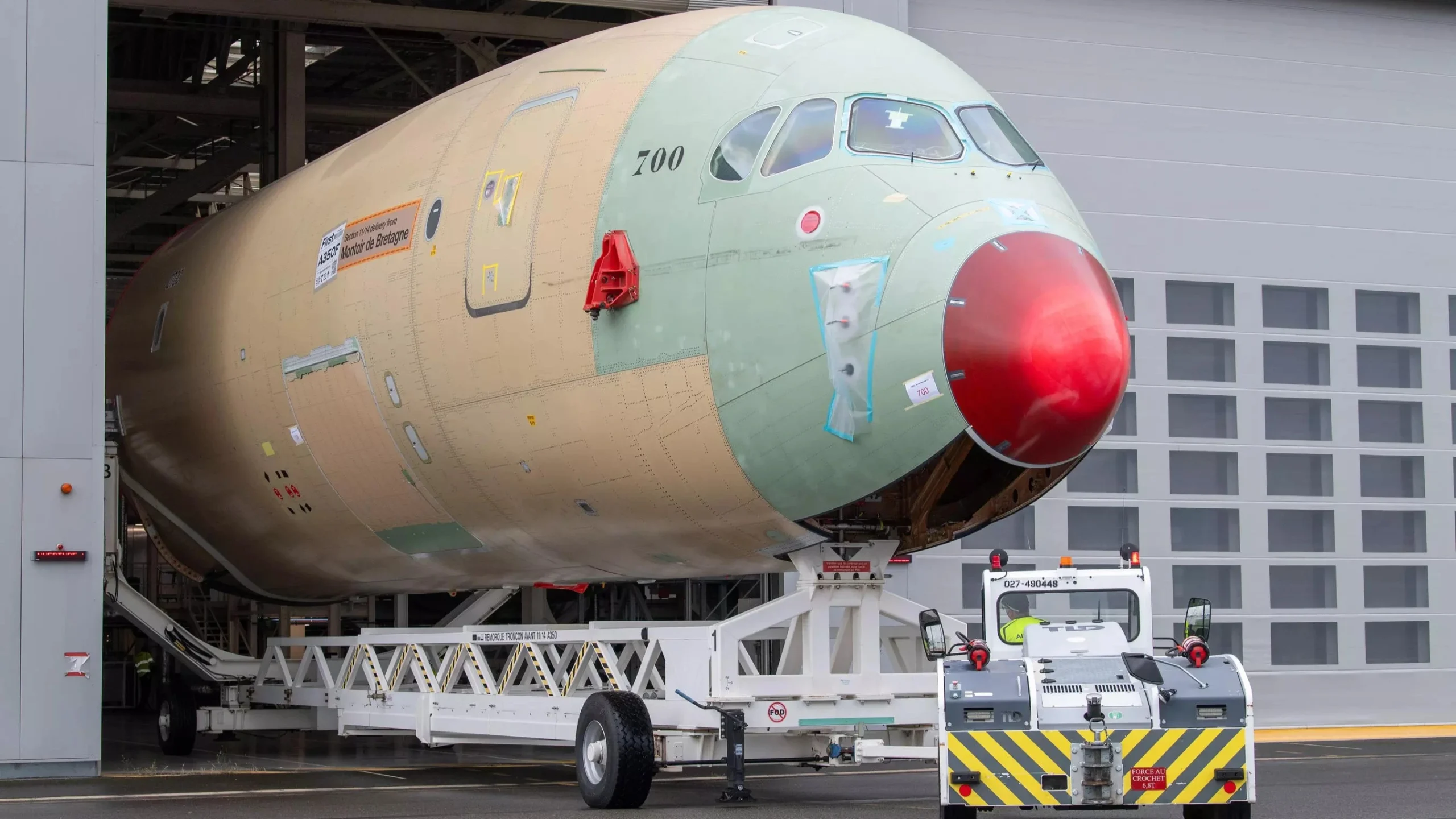
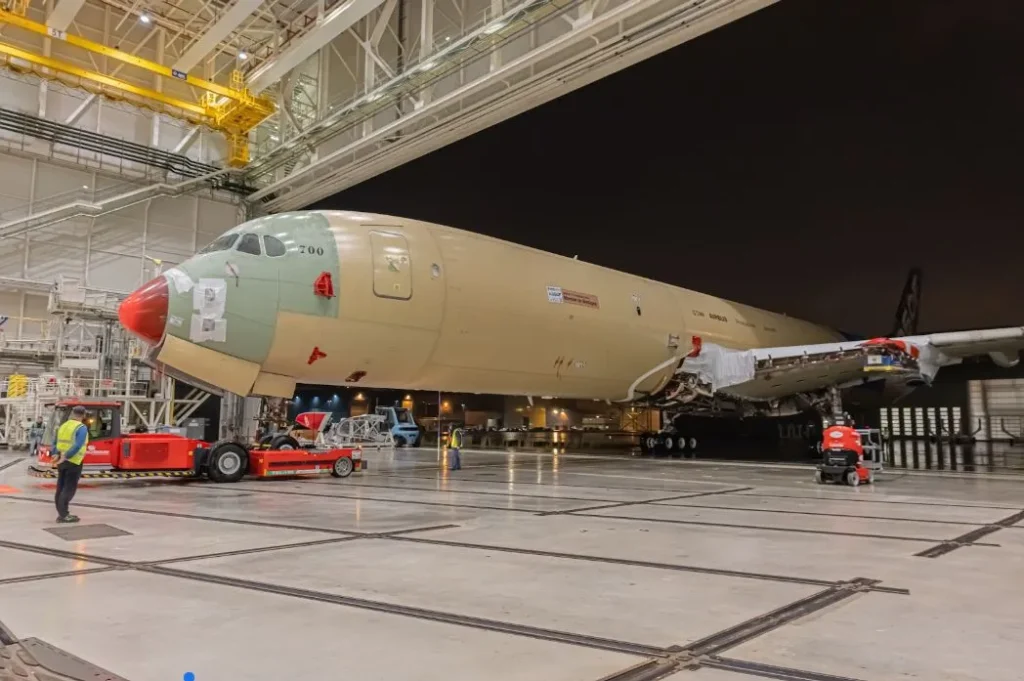
TOULOUSE— Airbus has begun ground testing the A350F freighter variant during final assembly, marking a critical phase in the aircraft’s path to certification and service entry.
The A350F introduces a range of new and significantly modified systems, requiring up to 40% of serial ground test procedures to be newly created or revised specifically for this variant.
A350F Ground Testing: New Systems, New Challenges
The A350F features several entirely new systems concentrated in the cabin and cargo areas. Key systems under test include the main-deck cargo loading system (CLS), main-deck cargo door (MDCD), a dedicated courier area seating up to 10 occupants, anti-tail-tipping warning system (TTWS), multi-zonal air distribution system, drainage system, oxygen system, the ‘Smart Freighter’ connectivity platform, and a video-monitoring system.
Ground test design activities for the A350F began as early as 2021, during the aircraft’s definition phase. Guillaume Terrien, who leads these activities, notes that close collaboration between the FAL Ground Test Design and Chief Engineering teams was established from the start.
This “co-design” approach ensured that testability requirements were factored into the aircraft’s preliminary design, reducing complications during final assembly testing.
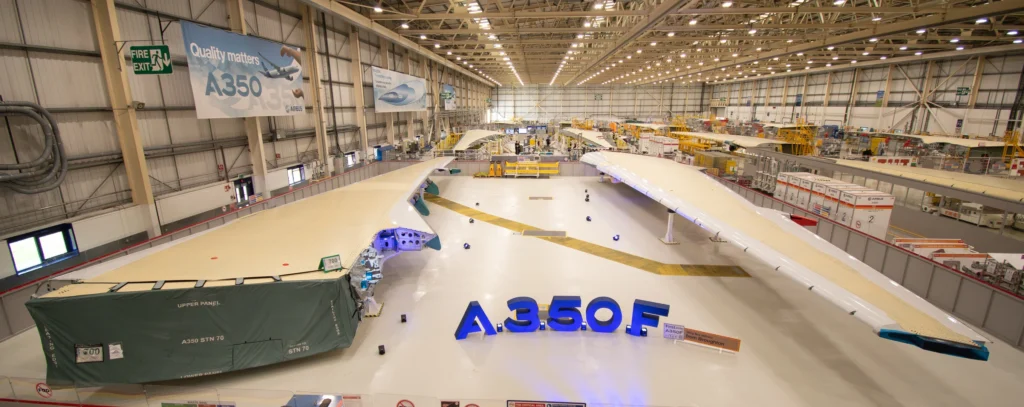
How Co-Design Shaped Key Ground Tests
The Cargo Loading System presented one of the most complex testing challenges, with hundreds of electrical components embedded in the floor requiring verification.
Engineers devised an automated wiring self-test that runs directly from the cockpit using onboard software. This solution checks over 1,300 wires automatically within minutes of power-on, significantly reducing manual testing time on the production line.
The drainage system test involves flooding the 50-metre main compartment with more than 180 litres of water to verify tightness and proper water evacuation. The test is performed with the aircraft floor at zero-degree inclination, using purpose-built equipment to fill all drainage pipes.
Despite appearing straightforward, it ranks among the most technically complex ground tests on the A350F programme.
The Tail Tipping Warning System is tested without placing the aircraft at risk by using specialist equipment that simulates landing gear extension, tricking the sensors into believing the aircraft is tipping. This validates that the cargo loading system halts immediately and that both audible and visual alarms trigger correctly.
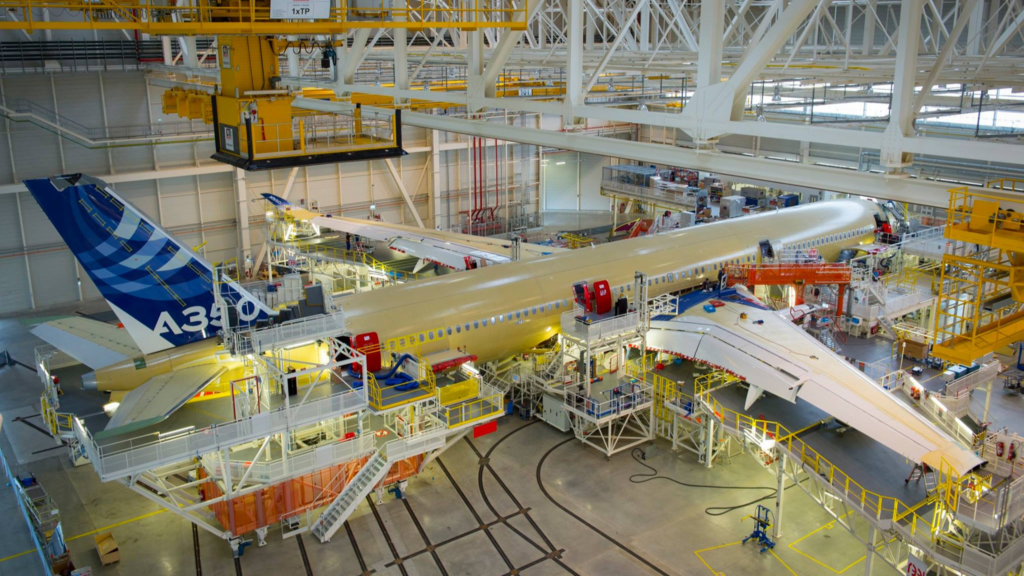
Serial vs. Certification Ground Tests
Of approximately 200 serial ground test instructions (GTIs) used on the standard A350 passenger aircraft, around 40% have been specifically created or modified for the A350F.
One entirely new serial test is the Main Deck Cargo Door Cycling test, which cycles the MDCD repeatedly in both manual and electrical modes to verify system behaviour, sensor response, and alert functions throughout the final assembly process.
In parallel, a dedicated campaign of development and certification tests runs exclusively on the two flight-test aircraft, MSN 700 and MSN 701. These 55 Ground Test Requirements (GTRs) are one-off performance tests required for validation and verification by authorities such as EASA.
The Max Payload Test, one of the most notable GTRs, loads the aircraft to its maximum payload capacity of 111 tonnes — equivalent to approximately 18 elephants — to confirm correct sequencing and full system functionality, particularly for the MDCD.
The Pressurisation Development Test adds cameras, displacement sensors, and a microphone to the MDCD to monitor door behaviour throughout cabin pressure cycles, complementing the standard pressurisation test used in serial production.
Stay tuned with us. Further, follow us on social media for the latest updates.
Join us on Telegram Group for the Latest Aviation Updates. Subsequently, follow us on Google News
