

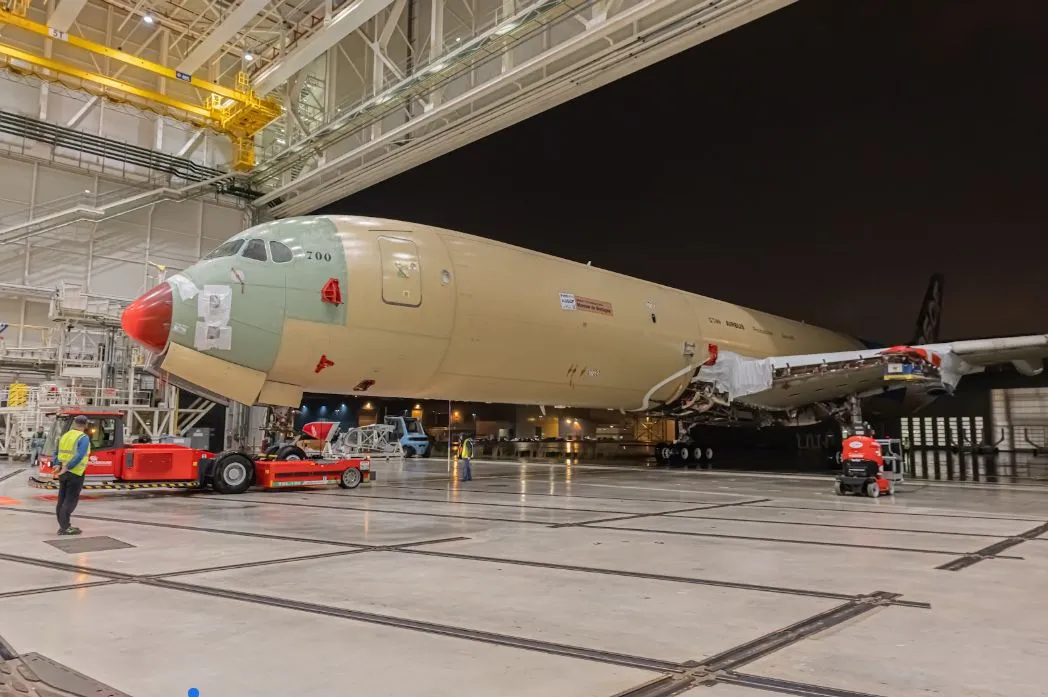
TOULOUSE— Airbus has moved the A350F freighter program significantly closer to its maiden flight after successfully completing a critical Ground Vibration Test (GVT) on the first flight-test aircraft at Toulouse-Blagnac Airport (TLS), France.
The milestone follows months of intensive development work and supports the certification campaign for Airbus’ next-generation cargo aircraft.
The Ground Vibration Test is one of the final validation activities before an aircraft’s first flight.
It enables Airbus to verify the A350F’s structural behavior under controlled conditions, ensuring that its aeroelastic models accurately predict how the aircraft will respond during real flight operations.
The latest achievement comes after earlier ground testing and system validation on the aircraft in the final assembly line in Toulouse.
Ground Vibration Test Milestone
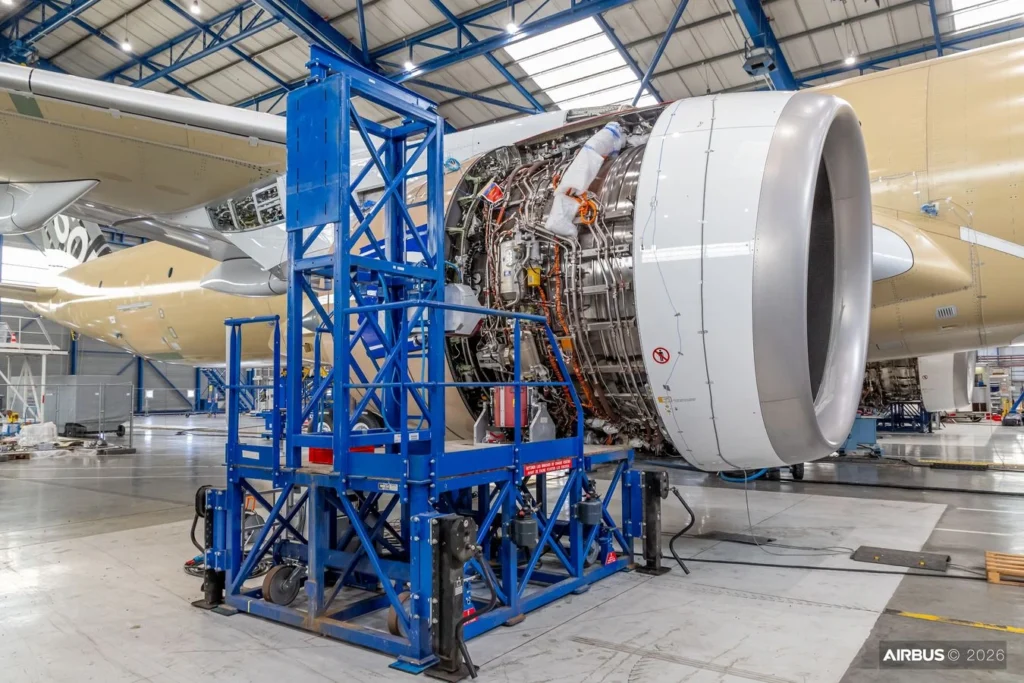
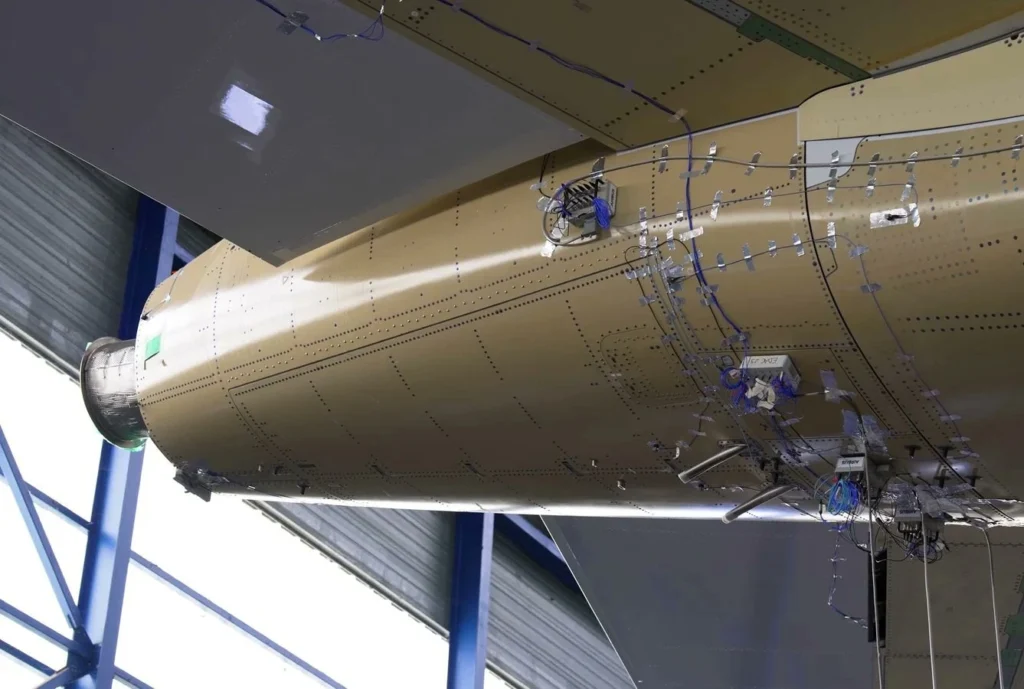
The three-day campaign took place in June and involved hundreds of sensors installed throughout the aircraft to capture its response to carefully controlled vibrations.
Engineers used both external electrodynamic shakers and the aircraft’s own flight control surfaces to generate excitation across multiple frequency ranges.
Accelerometers positioned around the airframe measured how the wings, fuselage, engines, and tail responded to these inputs.
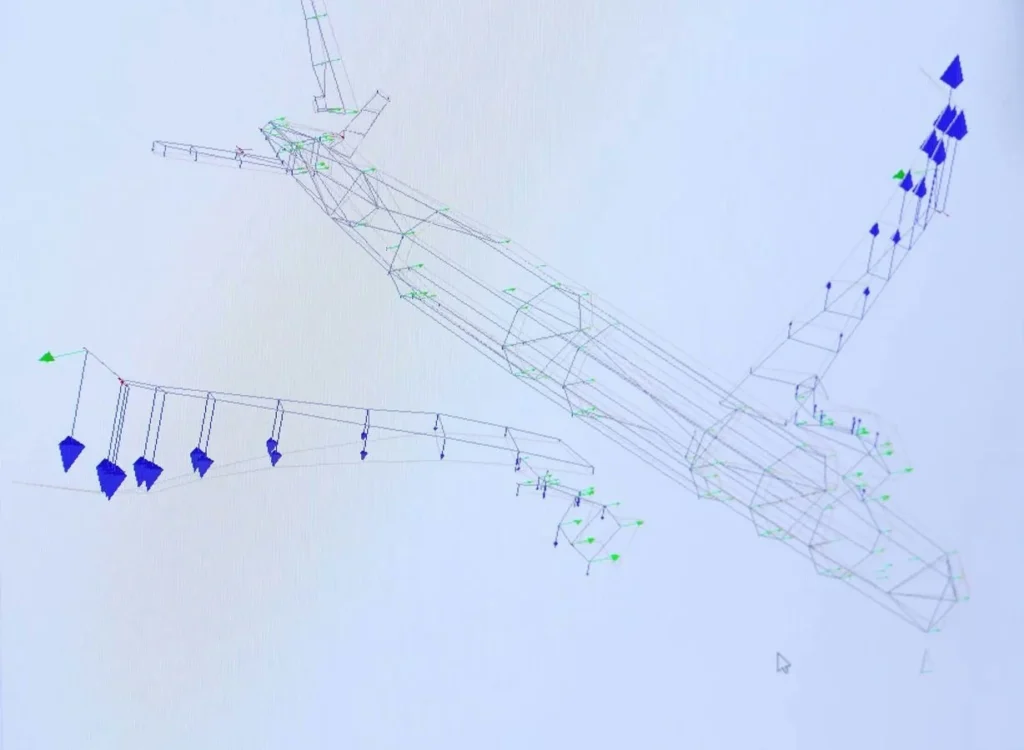
The collected information allows Airbus engineers to refine digital structural models that predict aircraft behavior during flight, turbulence, maneuvering, and landing.
According to Airbus, validating these models is essential before expanding the aircraft’s flight envelope during its first flight campaign.
Engineers also completed extensive preparation before testing, including aircraft weighing, configuration checks, instrumentation installation, and calibration of the data acquisition system.
Airbus also introduced an advanced data fusion approach during the campaign. Instead of relying solely on conventional Flight Test Instrumentation, engineers combined onboard systems with additional autonomous sensors installed specifically for the test.
This method improved measurement quality while reducing overall testing time. Throughout each vibration run, engineers monitored structural responses in real time before immediately processing the data to adjust subsequent test sequences.
Airbus said the final results closely matched theoretical predictions, confirming the accuracy of its structural models.
Flight Test Preparation Milestone
Ground Vibration Testing represents the culmination of nearly two years of planning involving specialists from multiple Airbus engineering disciplines.
Teams responsible for flight controls, aeroelasticity, vibration testing, tooling development, mass properties, quality, and flight-test instrumentation collaborated throughout the project.
The successful completion of the campaign provides a key certification milestone because regulators require accurate structural validation before approving an aircraft for flight testing.
The data generated during GVT will now be used to fine-tune simulation models that support the next stage of certification.
Those next steps include Flight Vibration Tests, commonly known as flutter tests, which will be performed during the first months of the A350F flight-test campaign.
These evaluations will gradually expand the aircraft’s operating envelope until it reaches its maximum certified dive speed and Mach number.
A350F Certification Milestone
The Ground Vibration Test forms part of Airbus’ broader effort to certify the A350F, a purpose-built freighter designed to strengthen the company’s position in the global cargo market.
The aircraft incorporates several cargo-specific innovations, including a large main-deck cargo door, an advanced cargo loading system, and new onboard systems tailored for freight operations.
With the GVT successfully completed, Airbus is now finalizing data analysis and model tuning before progressing to flight testing, Airbus reported
The company says the latest milestone provides confidence that the A350F’s structural design has been thoroughly validated, laying the foundation for a safe and efficient certification campaign as the aircraft moves closer to commercial service.
Stay tuned with us. Further, follow us on social media for the latest updates.
Join us on Telegram Group for the Latest Aviation Updates. Subsequently, follow us on Google News
