

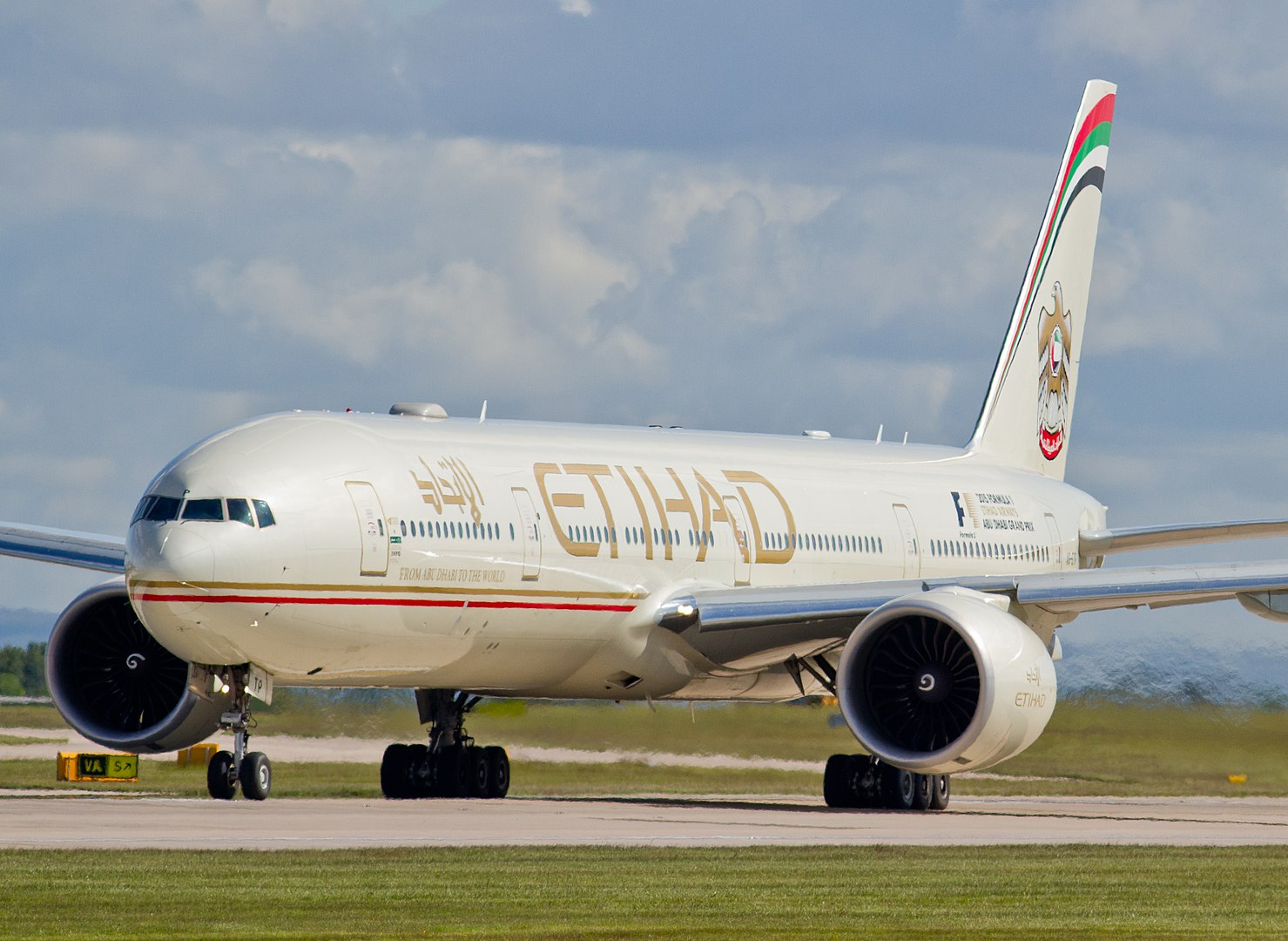
ABU DHABI— Etihad Airways (EY), the national carrier of the United Arab Emirates (UAE), will launch a seasonal service to Dhaka, Bangladesh, beginning June 26, 2026. The route strengthens passenger and cargo connectivity between Abu Dhabi (AUH) and Dhaka (DAC) across the South Asia corridor.
Operating four times weekly using Boeing 777 widebody aircraft, the service to Hazrat Shahjalal International Airport (DAC) will carry 28 Business and 374 Economy passengers per flight. The route also leverages widebody belly hold capacity to support growing cargo demand, particularly for Bangladesh’s export-driven industries.
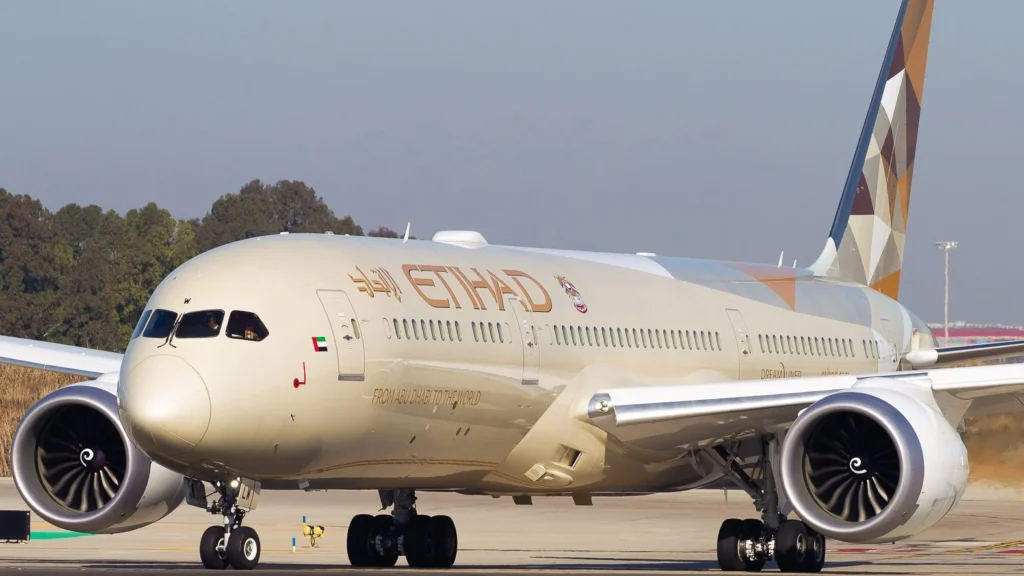
Etihad Airways New Flights to Dhaka
The new Dhaka route reflects Etihad’s phased approach to rebuilding and expanding its global network in line with demand across key markets. Abu Dhabi (AUH) serves as a strategic gateway connecting South Asia with markets across the Middle East, Europe, and North America.
Antonoaldo Neves, Chief Executive Officer of Etihad Airways (EY), highlighted the commercial rationale behind the launch. He stated that Dhaka is a strategically important market with strong and sustained demand across both passenger and cargo segments.
He added that the route plays a key role in supporting export-driven industries, particularly textiles, while enhancing Abu Dhabi’s connectivity across South Asia.
The UAE is home to one of the largest Bangladeshi diaspora communities in the world. This direct link from Abu Dhabi (AUH) to Dhaka (DAC) provides those communities with an efficient travel option, along with seamless onward connections through Etihad’s hub at AUH.
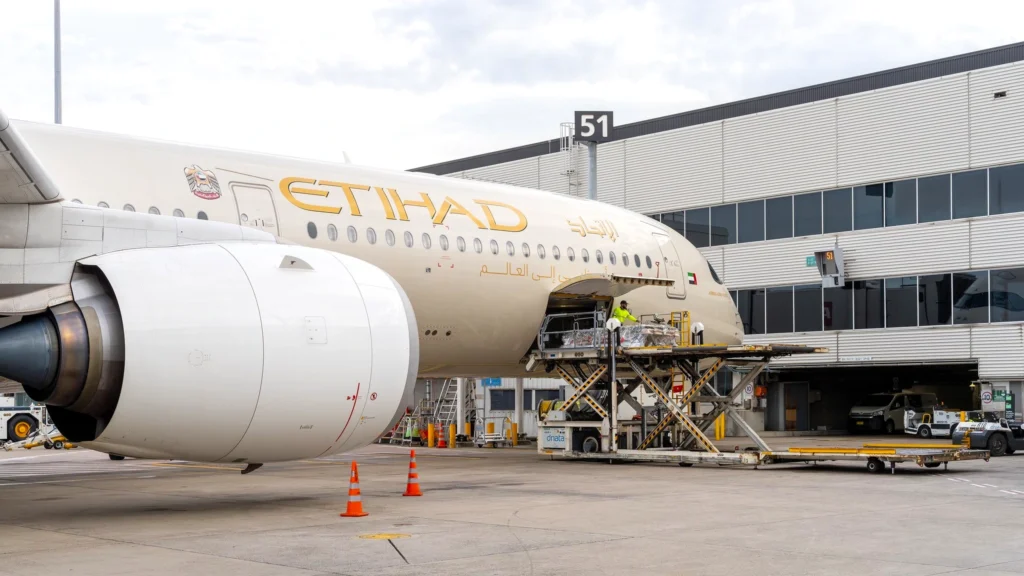
Cargo and Trade Links Between the UAE and Bangladesh
Bangladesh’s economy continues to grow steadily, driven significantly by its globally competitive garment and textile sector.
The introduction of widebody capacity on the Abu Dhabi to Dhaka route enables reliable and efficient cargo movement, giving exporters improved access to markets across the Middle East, Europe, and North America.
The Boeing 777’s belly hold offers substantial freight capacity on each of the four weekly frequencies. This makes the route commercially relevant beyond passenger travel, directly supporting Bangladesh’s logistics requirements and trade flows with the UAE and beyond.
The seasonal service also creates new travel options for Bangladeshi diaspora communities residing in the United Kingdom, Italy, and North America. Passengers from these regions can connect via Abu Dhabi (AUH) to reach Dhaka (DAC) with ease, using Etihad Airways as their transit carrier.
The route serves both point-to-point travellers between AUH and DAC, as well as connecting passengers routing through Etihad’s Abu Dhabi hub to onward global destinations.
Dhaka Flight Schedule: 26 June to 24 October 2026
| Flight | From | Departure | To | Arrival | Days | Aircraft |
|---|---|---|---|---|---|---|
| EY382 | Abu Dhabi (AUH) | 22:00 | Dhaka (DAC) | 04:50 | Mon, Wed, Fri, Sat | Boeing 777 |
| EY383 | Dhaka (DAC) | 21:35 | Abu Dhabi (AUH) | 00:40 | Tue, Thu, Sat, Sun | Boeing 777 |
Flights are now on sale, with one-way fares starting from USD 199 from Abu Dhabi (AUH).
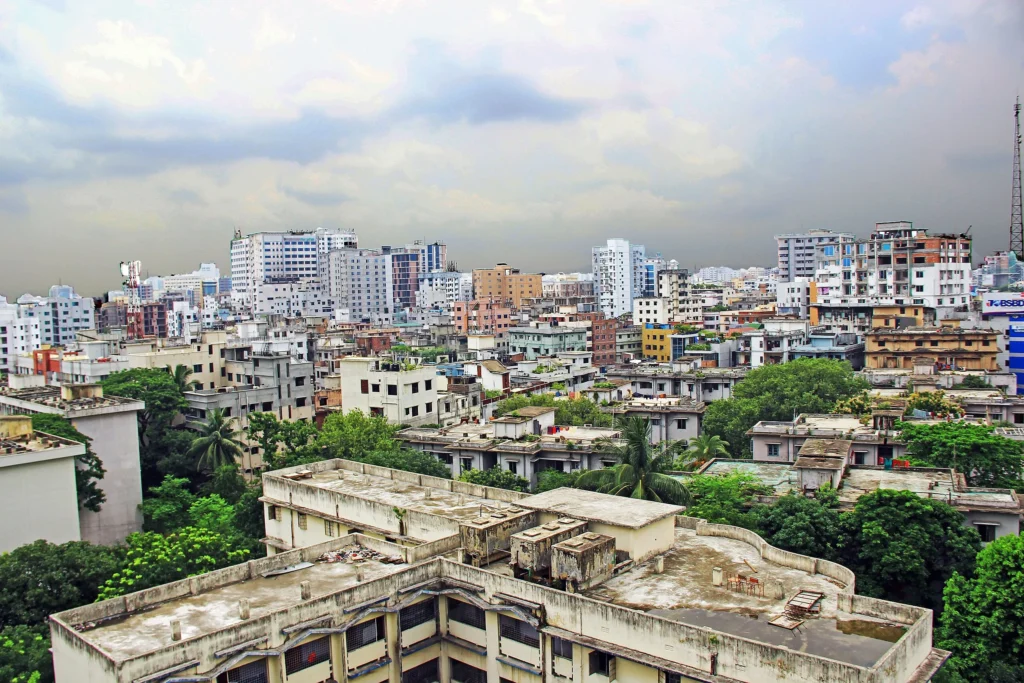
Dhaka Travel Guide
Dhaka consistently ranks as one of the most populated and unlivable cities in the world, competing with Harare for the bottom spot on global livability indexes. Despite its chaos, the city offers a raw, unfiltered experience that few destinations can match.
Travelers arriving at Hazrat Shahjalal International Airport (DAC) often fly through Bangkok’s Suvarnabhumi Airport (BKK) via Bangkok Airways (PG) or Biman Bangladesh Airlines (BG). A visa on arrival costs $51 USD, though processing can take up to 2.5 hours upon entry.
Getting Around Dhaka’s Chaotic Streets
Transportation in Dhaka is one of the city’s biggest challenges. Crossing from one side of the city to the other takes roughly three hours on a normal day due to severe congestion. Travelers have three primary options, each suited to different distances and street widths.
Rickshaws are human-powered vehicles ideal for short distances and narrow alleys. Every rickshaw features unique, colorful artwork, making them a visual highlight of the city. Fares vary by distance, and travelers should ask locals for the correct price before boarding to avoid being overcharged. Having exact change is strongly advised, as drivers commonly attempt to withhold change from passengers.
CNGs (Compressed Natural Gas auto-rickshaws) are motorized three-wheelers used for longer journeys. Passengers sit in an enclosed cage-like compartment. These vehicles operate on major roads and can be extremely loud at higher speeds. Again, consulting a local or hotel staff before agreeing on a fare is the most reliable approach.
Lagunas are the cheapest option, consisting of pickup trucks fitted with benches and a roof, running fixed routes across the city. Fares rarely exceed 30 BDT (approximately $0.38 USD). However, these are best suited for travelers who speak Bangla or are accompanied by a local, as routes are not clearly marked for foreign visitors.
It is common to change vehicles once or twice during a single journey, particularly when traveling between areas with narrow lanes and wider roads.
New Market: Dhaka’s Textile Reject Bazaar
New Market is one of the most densely packed commercial areas in Dhaka. Bangladesh is a global hub for textile manufacturing, supplying major Western brands including Abercrombie & Fitch. Garments that fail quality inspections never get exported, and those rejected pieces end up being sold at New Market for under $1 USD, compared to retail prices of $100 or more in Western countries.
Walking through New Market is overwhelming. The market is packed, loud, and hot. Street vendors, rickshaws, and shoppers compete for every inch of space. Stopping for a chai or a lassi while observing the activity is one of the more manageable ways to absorb the environment.
Visitors should be prepared to encounter severe poverty and physical deformities among street beggars in this area. These sights are present throughout Dhaka but are more concentrated around New Market. Being mentally prepared before visiting makes the experience more manageable.
Gulshan: Where the Wealthy Live Behind Walls
Gulshan is the wealthiest neighborhood in Bangladesh and home to most foreign embassies and multinational company offices. The street life that defines much of Dhaka largely disappears here, replaced by gated compounds, valets, and private clubs.
Embassy clubs, such as the American Club and British Club, are among the only places in Dhaka where alcohol is available. Bangladesh follows Islamic law broadly, meaning alcohol is otherwise unavailable publicly across the city. Entry to these clubs requires membership or an invitation from a member, and no day passes are issued. Tabs for alcohol consumption are handled discreetly as part of monthly membership fees.
Old Dhaka: History Buried in Chaos
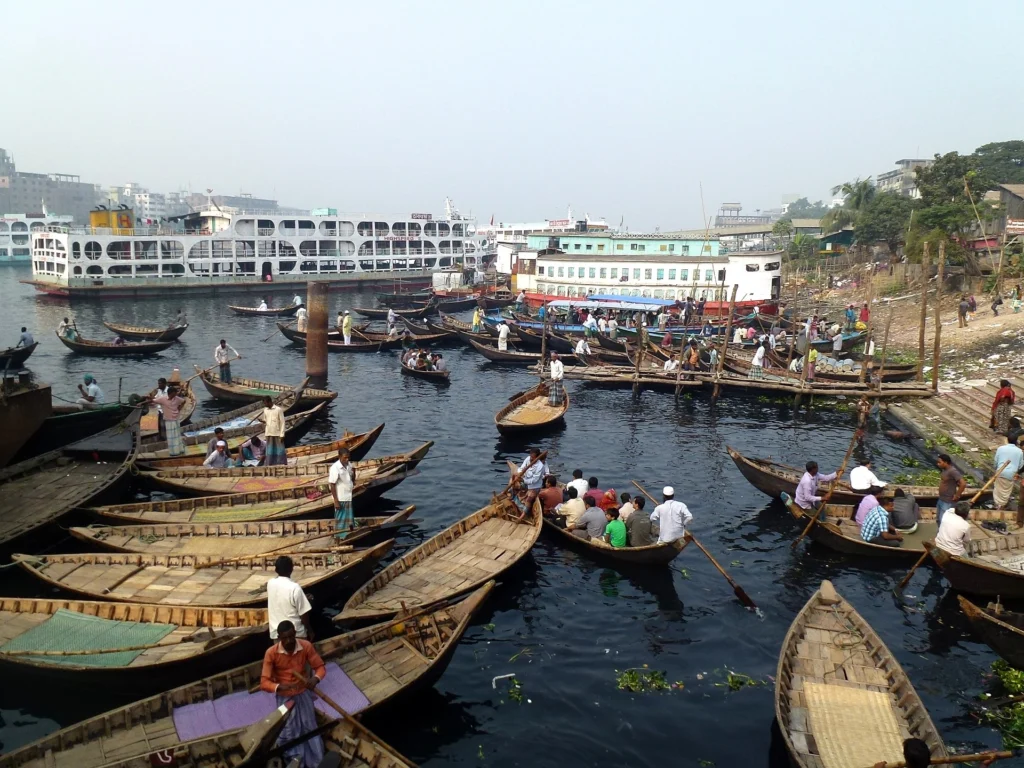
Old Dhaka is the city’s historic district, once one of the most prosperous cities on the Indian subcontinent.
During the late 18th and 19th centuries, Dacca, as it was then spelled, served as a key city under British East India Company control before passing to the British Crown in the mid-1800s. It was eventually overshadowed by Calcutta (now Kolkata) and earned the nickname “The City of Magnificent Ruins.”
Today, Old Dhaka retains large stone walls and remnants of its colonial past. However, the chaos of the surrounding city makes it difficult to pause and appreciate the history. Reaching Old Dhaka from the northern part of the city can take over three hours by road. Visitors interested in history should plan for a full day and set realistic expectations.
Bangladeshi Food: A Street-Level Overview
Bangladeshi cuisine shares significant similarities with Indian food, though locals strongly identify their dishes as distinct. Several affordable, widely available options are worth trying.
Lassi is a cold, milky drink available in sweet or salty varieties. The sweet version is recommended, as the salty variant can be intensely flavored. Street price is around 50 BDT ($0.64 USD).
Fuchka consists of crispy, hollow shells filled with an earthy paste and served with a spicy dipping sauce. The entire piece is eaten in one bite. Street price is approximately 50 BDT.
Kebab and Chaap are grilled meat options, available in chicken or beef, commonly served on skewers. Restaurant prices start around 150 BDT ($1.92 USD).
Chai (Cha) is a thick, sweet, milky tea found at street stalls throughout the city. It costs as little as 6 BDT ($0.08 USD) per cup and is a reliable, low-risk option for travelers cautious about food hygiene.
Samosas and Singaras are fried, stuffed pastries available for around 5 BDT ($0.06 USD) each. They are widely eaten but can occasionally cause stomach issues for travelers with sensitive digestion.
A standard meal of rice, chicken, potato, and dal costs very little and is available at most local restaurants. In Bangladesh, eating with hands is customary. After meals involving spicy food, washing hands thoroughly and promptly is strongly advised.
Stay tuned with us. Further, follow us on social media for the latest updates.
Join us on Telegram Group for the Latest Aviation Updates. Subsequently, follow us on Google News
