


ATLANTA- Delta Air Lines (DL) pilots, represented by the Air Line Pilots Association (ALPA), have submitted their opening proposal for a new contract, with the union pushing for fast-tracked negotiations well ahead of the current agreement’s expiry.
The existing Pilot Working Agreement (PWA) is amendable on December 31, 2026, and ALPA and Delta Air Lines (DL) have reopened Section 6 negotiations in early 2026. The union wants a deal done quickly, citing high profits, narrowing pay advantages, and a closing window of leverage.
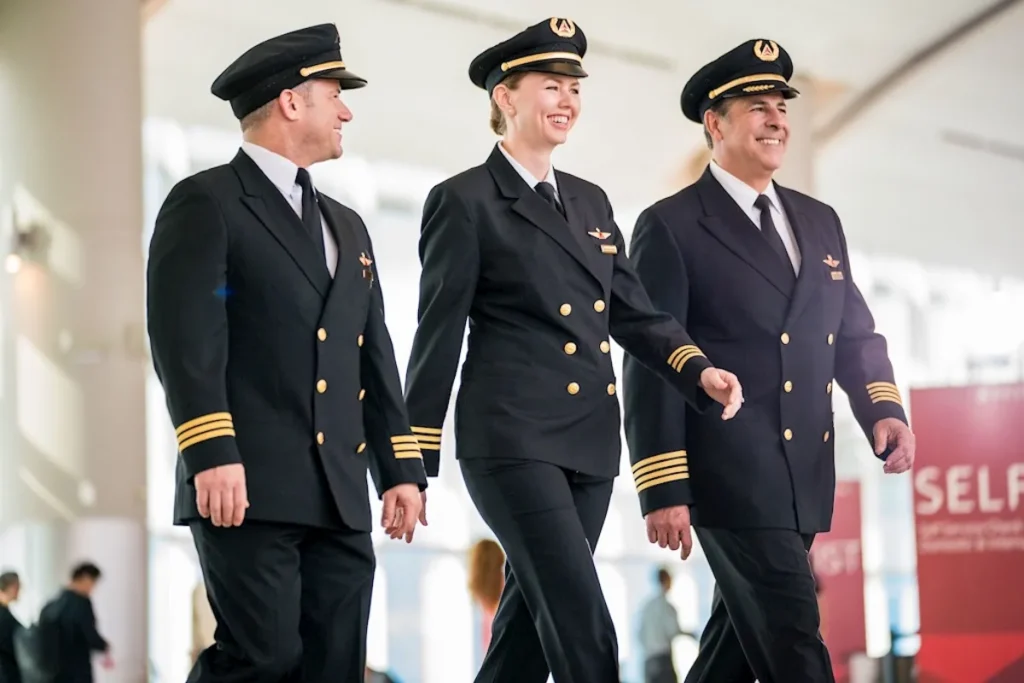
Delta Pilots Race to Secure a New Contract
The pilots’ opening proposal covers a broad set of priorities: scope provisions, pay rates, retirement and vacation improvements, better layover hotels, higher non-revenue travel priority, improved commuting and deadheading terms, and greater schedule flexibility.
ALPA views this moment as critical, given that airline conditions can shift fast when economic or geopolitical pressures emerge.
Under the U.S. Railway Labor Act, pilot contracts do not expire in the traditional sense. They remain in force until both sides ratify a new agreement, which makes early bargaining essential. The history of the last Delta contract illustrates just how long this process can take.
Delta’s previous contract negotiations began in April 2019, but an agreement was not reached, so mediation was initiated in early 2020. Due to the COVID-19 pandemic, negotiations were halted for two years, and mediated talks only resumed in January 2022.
An agreement in principle was reached on December 2, 2022, and the contract was ratified on March 1, 2023, and runs through December 31, 2026.
From start to finish, the process took nearly four years. Starting negotiations now, well before the amendable date, gives both sides a realistic shot at avoiding a similar delay, as View from the Wing flagged.

What the 2023 Contract Delivered and Where Gaps Now Exist
Delta and ALPA agreed to increase pilots’ pay by 34% over four years, making Delta the first U.S. carrier to reach a breakthrough on pilot pay at that scale.
The contract provided for an 18% raise upon signing, followed by annual increases of 4% or 5% through 2026, along with improvements to retirement contributions and vacation policies. The total cost to Delta came to $7.2 billion over four years.
Since that deal was signed, Delta (DL) has reported over $18 billion in pretax income across four years, giving pilots a strong argument that their compensation should reflect the airline’s premium financial performance. However, the pay advantage that Delta pilots once held over peers at American Airlines (AA) and United Airlines (UA) has narrowed significantly.
At the top of the widebody pay scale, pilots at all three carriers are now essentially tied. A 12-year captain flying an Airbus A350, Boeing 777, or Boeing 787 earns $465.13 per hour, while first officers on the same aircraft earn $317.73 per hour, regardless of which of the three carriers they fly for.
The gap is clearer on smaller widebody aircraft. On the Airbus A330 or Boeing 767, Delta (DL) captains with 12 years of seniority will earn $404.92 per hour next year, while first officers earn $276.56.
At both American (AA) and United (UA), those rates are $417.07 and $284.86, respectively. Because Delta’s current deal runs through 2026, competing airline pilots receive raises next year under their own agreements, while Delta pilots must wait for a new contract to see similar increases.
On narrowbody aircraft, Delta (DL) 737 captains currently earn $388.27 per hour. Next year, American (AA) will pay $402.01, United (UA) will pay $399.92, and Southwest Airlines (WN) will pay $401.04.
Delta’s pay advantage on narrowbodies disappears entirely under these comparisons. The key distinction is that Delta pilots’ overall compensation remains competitive due to industry-leading profit-sharing payouts, not base wages alone.

Why the Timing of These Negotiations Matters
Delta pilots are entering these negotiations from a position of relative strength, but that strength is time-sensitive. The airline is projecting approximately 506 pilot retirements in 2026 alone and has resumed pilot hiring, which gives ALPA meaningful leverage.
New aircraft orders, including 30 Boeing 787-10s on top of existing Boeing 737-10 MAX commitments, create additional scope and equipment issues that the union can use as bargaining points.
However, the leverage is not unlimited. Under the Railway Labor Act, airline strikes require National Mediation Board (NMB) approval and are rarely permitted. The current administration makes that process even less likely to favor union action.
A fast negotiation, concluded before economic conditions weaken or profit figures soften, is therefore in both sides’ interest.
A precedent for speed already exists. In 2012, Delta (DL) and ALPA reached an agreement seven months before the contract’s amendable date, showing that quick deals are achievable when both sides are motivated.
The union’s position is straightforward: Delta operates as a premium airline, generates premium profits, and should therefore pay premium wages.
The current deal is no longer the industry benchmark it once was. With the amendable date approaching and competitive dynamics shifting, ALPA is pushing to execute while the conditions still support a favorable outcome.
Stay tuned with us. Further, follow us on social media for the latest updates.
Join us on Telegram Group for the Latest Aviation Updates. Subsequently, follow us on Google News
