

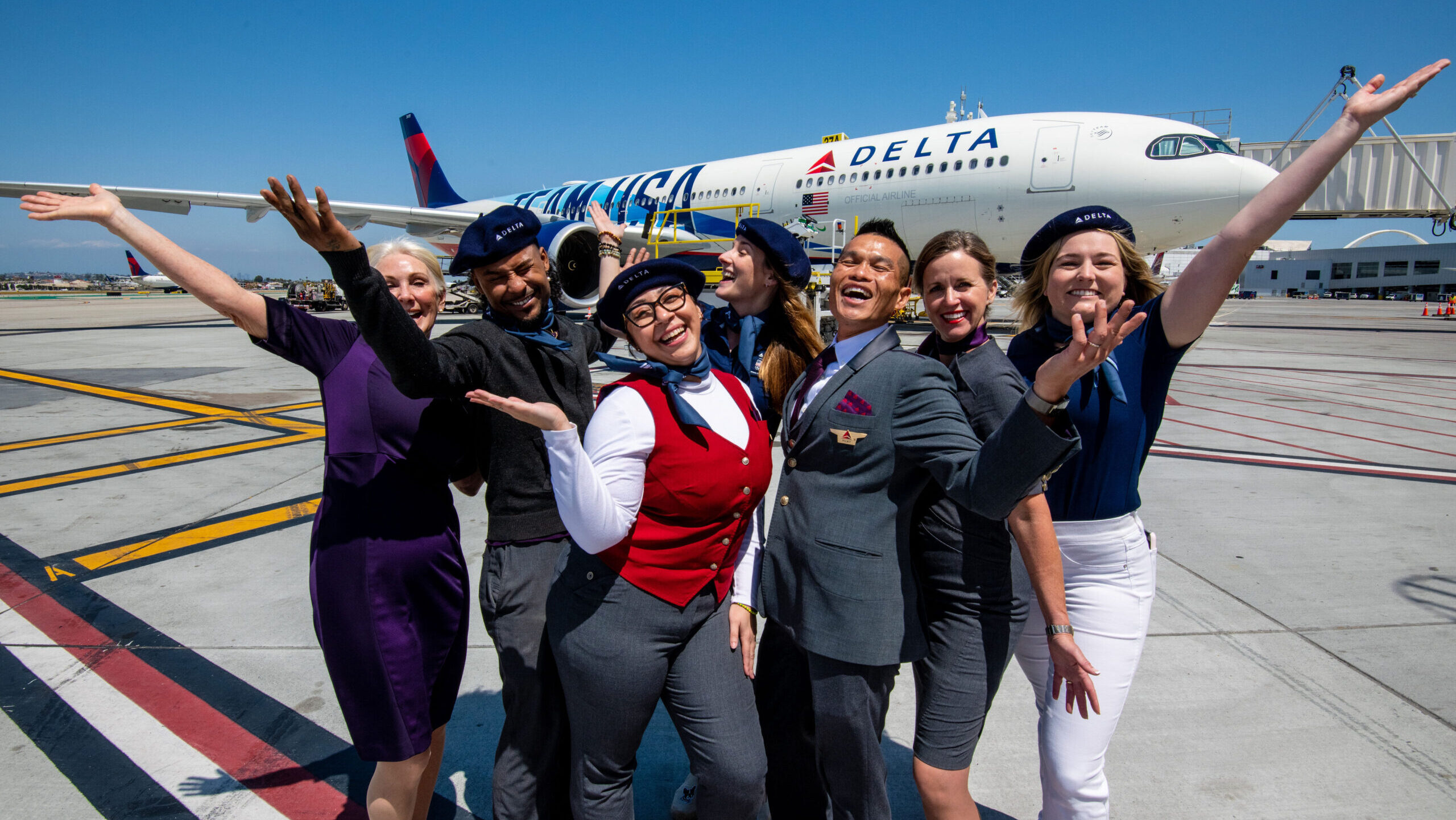
MINNEAPOLIS- Kaela Berg, a Minnesota state representative and flight attendant for Endeavor Air (9E), is running for a U.S. House seat in the Minneapolis (MSP) suburbs while continuing to work her regular flight shifts. She balances campaign responsibilities, union advocacy, and full-time flying to connect with working-class voters.
Her campaign centers on lived economic experience, arguing that Congress needs more representatives who understand the financial pressures of everyday Americans. Berg’s story reflects a broader Democratic strategy of recruiting blue-collar candidates ahead of the August 2026 primary, the New York Times reported exclusively.
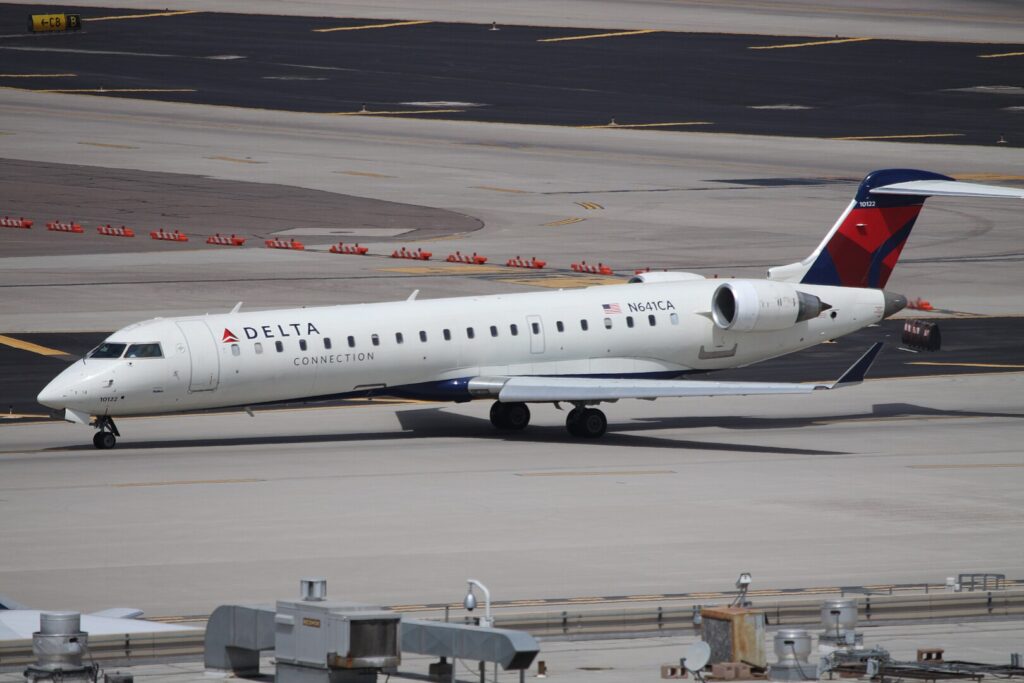
Delta Regional Flight Attendant Campaigns for Congress
Berg works for Endeavor Air (9E), flying regional Delta routes connecting airports including Minneapolis-St. Paul International (MSP), Westchester County Airport (HPN), Detroit Metropolitan Airport (DTW), John F. Kennedy International Airport (JFK), and Syracuse Hancock International Airport (SYR).
She earns approximately $45 per hour and is only compensated for time in the air, making campaign years financially difficult.
During a recent five-day, 15-flight tour, she managed donor calls, delegate outreach, and campaign strategy from hotel rooms and airport terminals between shifts.
She takes unpaid leave from flying for the roughly four months the Minnesota Legislature is in session, then increases her flight schedule the rest of the year to cover rent at her one-bedroom apartment near Minneapolis.
However, Berg’s professional identity has quietly shifted. Minnesota’s Legislature listed her occupation as “flight attendant” through the 2021-22 session.
By the 2023-24 and 2025-26 sessions, that designation changed to “independent labor consultant.”
She continues to publicly campaign on her flight attendant identity, and she reportedly still flies, but her primary professional focus appears to be politics and labor activism.
Minnesota legislators generally treat the role as part-time, and Berg takes a formal leave of absence during legislative sessions, making both roles technically compatible.
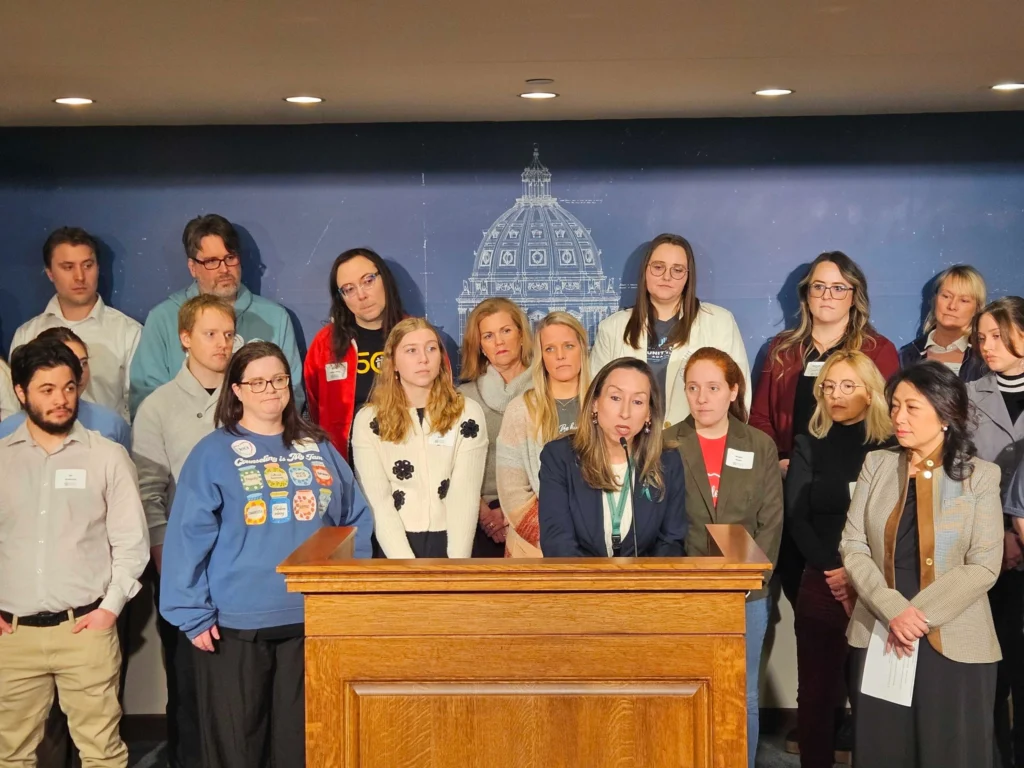
Union Background and Left-Leaning Platform Define Her Political Identity
Berg, 52, has never graduated from college and credits her entire political career to union involvement. She became active in the Association of Flight Attendants-CWA (AFA-CWA), led by President Sara Nelson, which has formally endorsed her campaign.
That union experience taught her to lobby legislators and organize workers, eventually leading her to serve as a Bernie Sanders delegate at the 2016 Democratic National Convention and win a Minnesota House seat in 2020.
Her platform centers on cost-of-living issues, including groceries, healthcare, housing, and utilities, alongside taxing the wealthy, expanding education access, and protecting abortion rights.
She supported legislation adding flight crews to Minnesota’s earned sick and safe time law and ran for her state seat while living in a friend’s basement during the COVID pandemic, as her flight income alone was insufficient to qualify for a local lease.
Beyond labor issues, Berg has taken visible stances on immigration enforcement, posting videos of herself using a whistle to alert residents to nearby U.S. Immigration and Customs Enforcement (ICE) activity in her neighborhood.
She also believes airline consolidation has driven up airfares, though long-run data on fares inclusive of fees points in the opposite direction.
Fundraising Gap and Poll Numbers Present a Steep Climb
Berg’s path to the nomination faces significant financial headwinds. She closed 2025 with $53,162 cash on hand after raising $132,117 for the cycle. Her two primary opponents significantly outpaced her, View from the Wing reported.
State Senator Matt Klein closed the same period with $328,327 on hand after raising $565,209 with no debt. Former mayor and state senator Matt Little closed with $390,955 after raising $583,844, though he carries $155,000 in debt.
A party straw poll reinforced the gap. Berg pulled just 6.68% of the vote, well behind Little at 43.29% and Klein at 20.97%. No public opinion polling in the race has been identified.
The coveted Democratic-Farmer-Labor (DFL) Party endorsement, announced at its state convention in May, remains influential in crowded primaries.
Berg’s campaign is actively working to secure delegate support ahead of that announcement, though the straw poll results suggest she faces an uphill fight within party ranks.
The District Leans Democratic, Giving Her a Path If She Reaches the General
Minnesota’s 2nd Congressional District covers the south Twin Cities suburbs, the same area that served as the historic headquarters of Northwest Airlines in Eagan, Minnesota.
Representative Angie Craig is vacating the seat to run for U.S. Senate, making it an open contest. The district currently leans Democratic by approximately three points.
Recent electoral history shows a consistent shift toward Democrats. The district recorded 55.5% Democratic support in 2024, 50.9% previously, and a Democratic hold in 2022 with 48.2% of the vote. If Berg secures the nomination, the district’s trajectory would give her a competitive general election platform.
Representative Jason Crow (D-CO), a former Army Ranger overseeing candidate recruitment for the Democratic Congressional Campaign Committee (DCCC), has argued that voters want candidates with real-world experience.
Berg fits that profile. Whether her fundraising and polling numbers allow her to reach the general election remains the central question of her campaign.
If elected, the $174,000 congressional salary would be the largest paycheck Berg has ever received. She has acknowledged that maintaining two residences, one in Washington, D.C., and one in her district, will quickly reduce that figure, and has stated that the salary is not her motivation for running.
Stay tuned with us. Further, follow us on social media for the latest updates.
Join us on Telegram Group for the Latest Aviation Updates. Subsequently, follow us on Google News
