

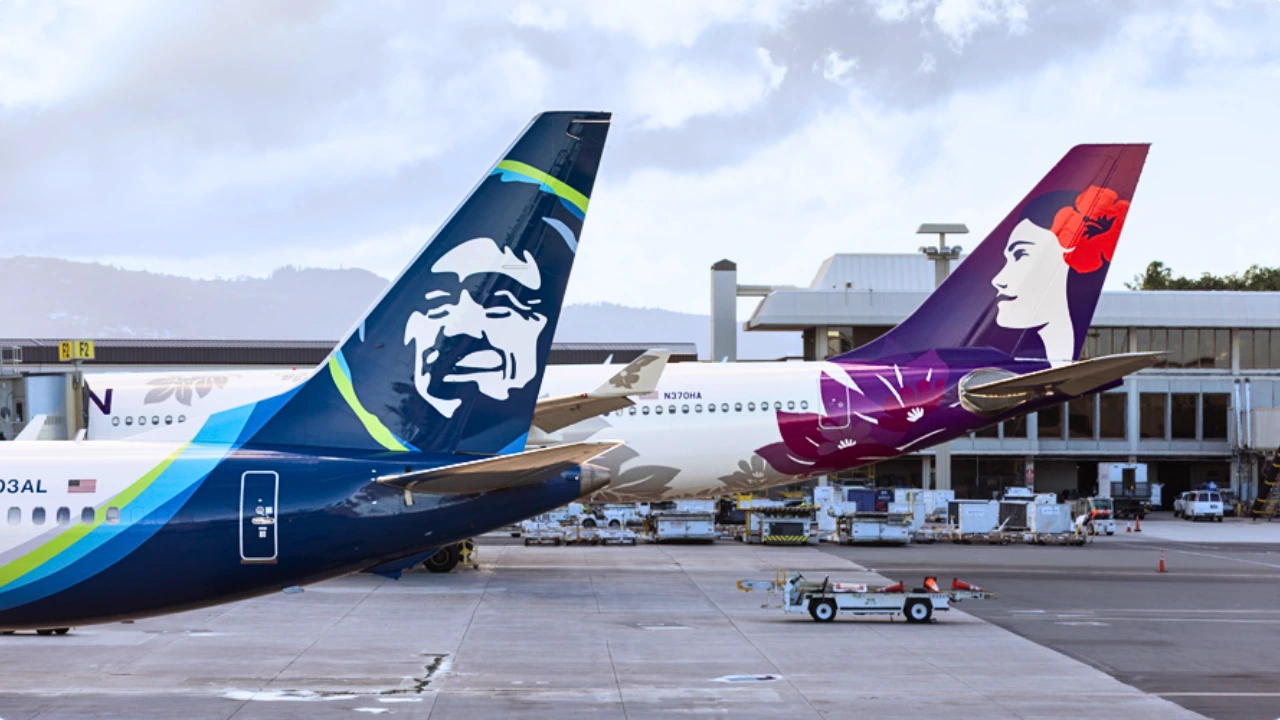
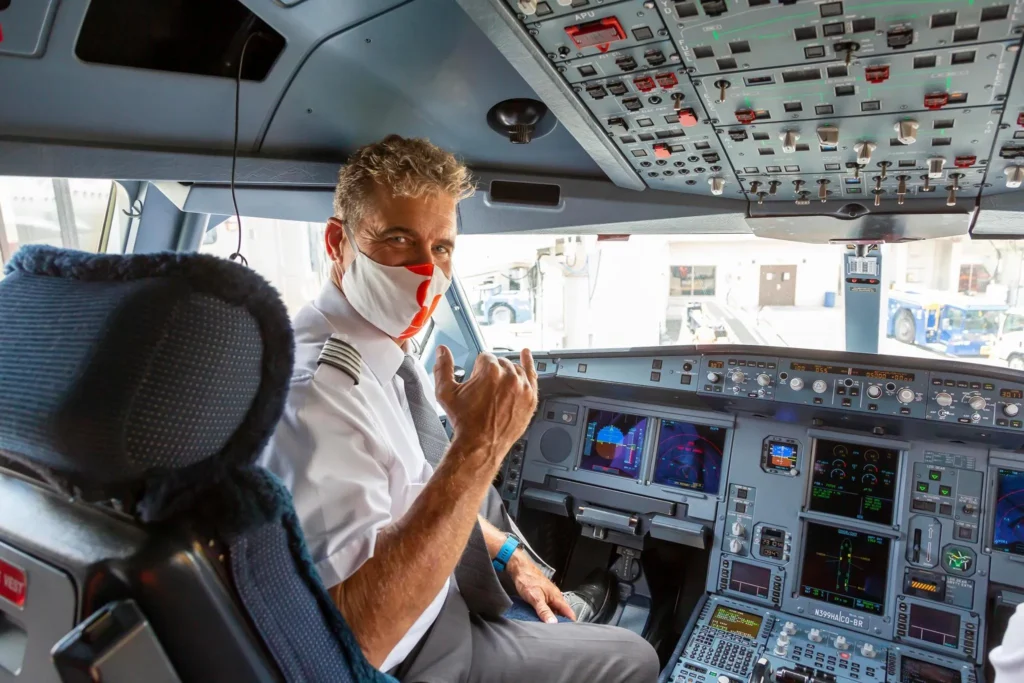
SEATTLE— Alaska Air Group has announced a unified pilot appearance policy following its merger with Hawaiian Airlines (HA), ending the carrier’s long-standing permission for pilots to wear beards in the flight deck.
The revised Flight Operations Manual, effective April 1, prohibits beards for all pilots across the combined airline. The policy aligns with FAA guidance and follows a safety risk assessment conducted by Alaska Air Group (AS).
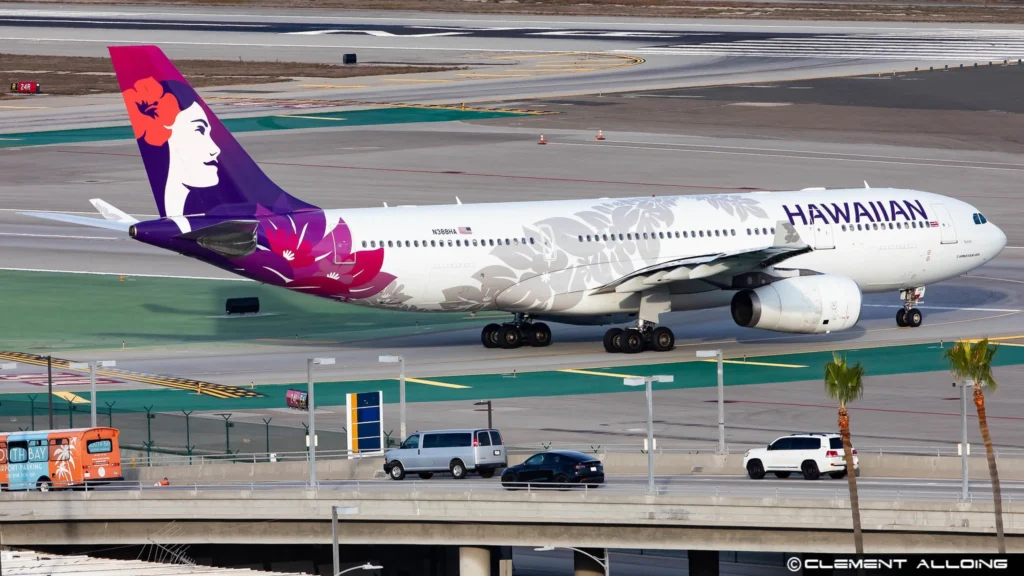
Hawaiian Airlines Pilots’ Beard Policy Update
Alaska’s System Chief Pilot Scott Day informed pilots via an internal email dated March 23 that a significant revision to the Flight Operations Manual would take effect on April 1.
The update includes changes to the uniform and appearance policy, with all Boeing 787 pilots transitioning to the Alaska (AS) uniform beginning April 20.
Day stated clearly that beards would no longer be authorized and that facial hair must meet specific requirements to comply with FAA guidance and flight deck safety standards.
Dave Mets, Vice President of Flight Operations for Hawaiian Airlines (HA), sent a follow-up message to Hawaiian pilots on March 27 acknowledging the weight of the decision.
Mets wrote that the company had engaged with regulators multiple times over several years on the matter of beards and oxygen mask compatibility.
He confirmed that the FAA’s Civil Aerospace Medical Institute (CAMI) had reaffirmed its long-standing recommendation that beards should not be permitted in the flight deck for safety reasons. Cockpit oxygen mask manufacturers have also recommended against beards, AirlineGeeks flagged.
ALSO READ: Largest Air and Space Force in the World New Beard Rules Aim to Stop Abuse, But Stir Controversy
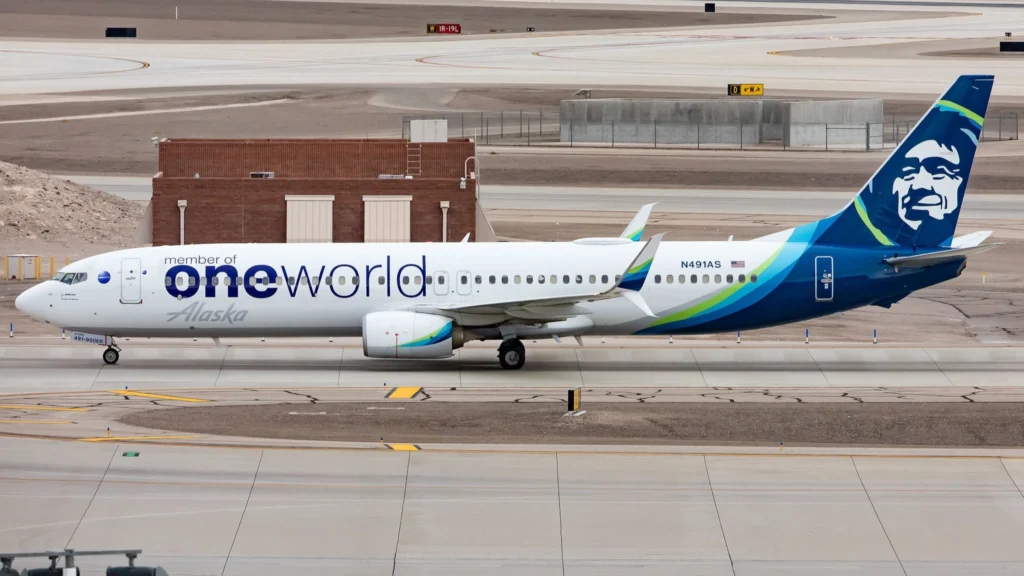
Safety Concerns and Regulatory Basis
The policy change references FAA Advisory Circular AC 120-43, originally issued in 1987 and still active, which addresses beard-related mask guidance.
Alaska cited this alongside its own multi-year internal studies and a review of manufacturer specifications and aircraft placards as the foundation for the decision.
Mets also pointed to Alaska Flight 1282 as a real-world example, reinforcing the policy. During that incident, pilots were required to don oxygen masks following a rapid decompression event, underscoring the operational importance of a proper mask seal.
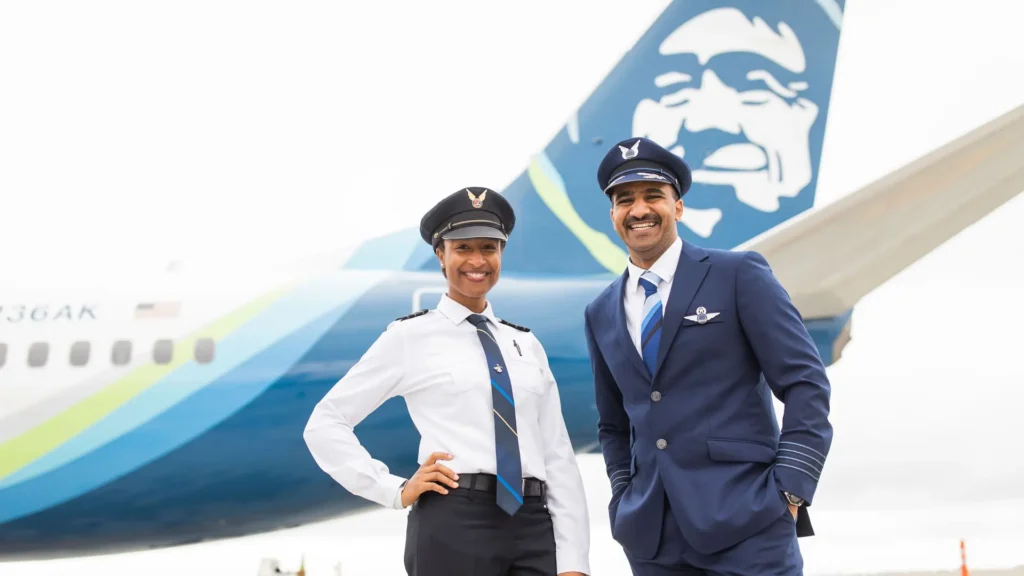
The revised appearance standard permits a well-groomed mustache but explicitly states that beards are not allowed.
Conflicting Research on Facial Hair and Mask Safety
The beard prohibition comes despite recent research that challenges the traditional safety rationale. A 2024 study by Embry-Riddle Aeronautical University found no evidence that facial hair caused mask leaks, hypoxia, or chemical exposure issues when testing commercial-style oxygen masks.
Earlier research from Simon Fraser University reached similar conclusions and was cited as a factor in Air Canada’s decision to permit pilot beards.
Alaska Air Group acknowledged these studies but maintained that its own assessment pointed toward prohibition as the safest and most compliant path forward for its combined operation.
Hawaiian Culture and Identity Concerns Addressed
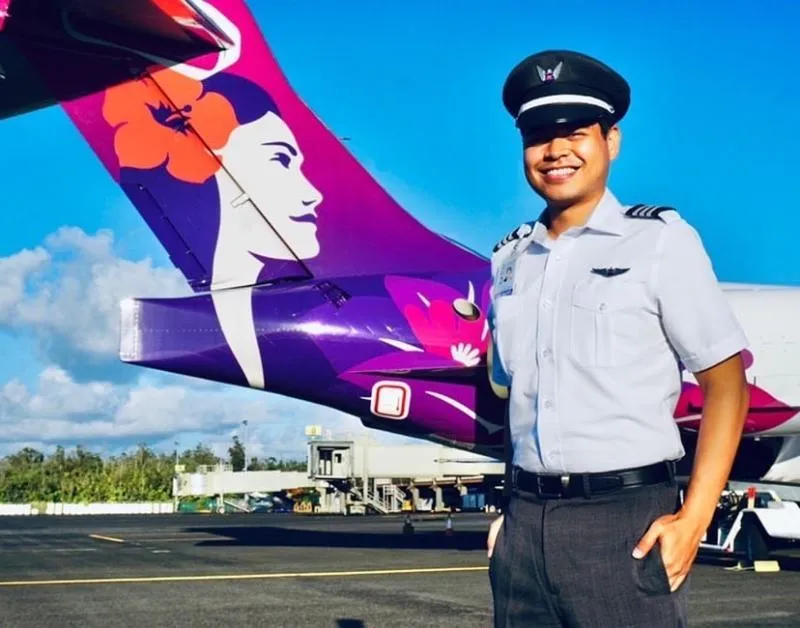
Mets addressed concerns that the policy change could signal a broader erasure of Hawaiian Airlines’ identity within the merged company. He stated that Alaska leadership has no desire or intention to diminish Hawaiian culture or the Hawaiian Airlines brand.
The company pointed to continued investment in the Hawaiian brand, airport infrastructure at Honolulu (HNL) and other Hawaii destinations, cabin upgrades, and a more relaxed tattoo policy as evidence of its commitment to preserving Hawaiian identity.
Alaska Air Group stated publicly:
Safety is our priority, and Alaska and Hawaiian’s policy to prohibit facial hair for pilots across our combined airline is based on longstanding FAA guidance, as well as our own studies over many years.”
Pilot Union Response and Contract Negotiations
The Air Line Pilots Association (ALPA) represents pilots at both Alaska Airlines (AS) and Hawaiian Airlines (HA). The two pilot groups remain separately represented within ALPA and are currently negotiating a joint collective bargaining agreement.
Seniority list integration will only occur after that contract is ratified, after which a single pilot group and master executive council will be established. ALPA had not issued a public comment on the beard policy at the time of reporting.
Stay tuned with us. Further, follow us on social media for the latest updates.
Join us on Telegram Group for the Latest Aviation Updates. Subsequently, follow us on Google News
