

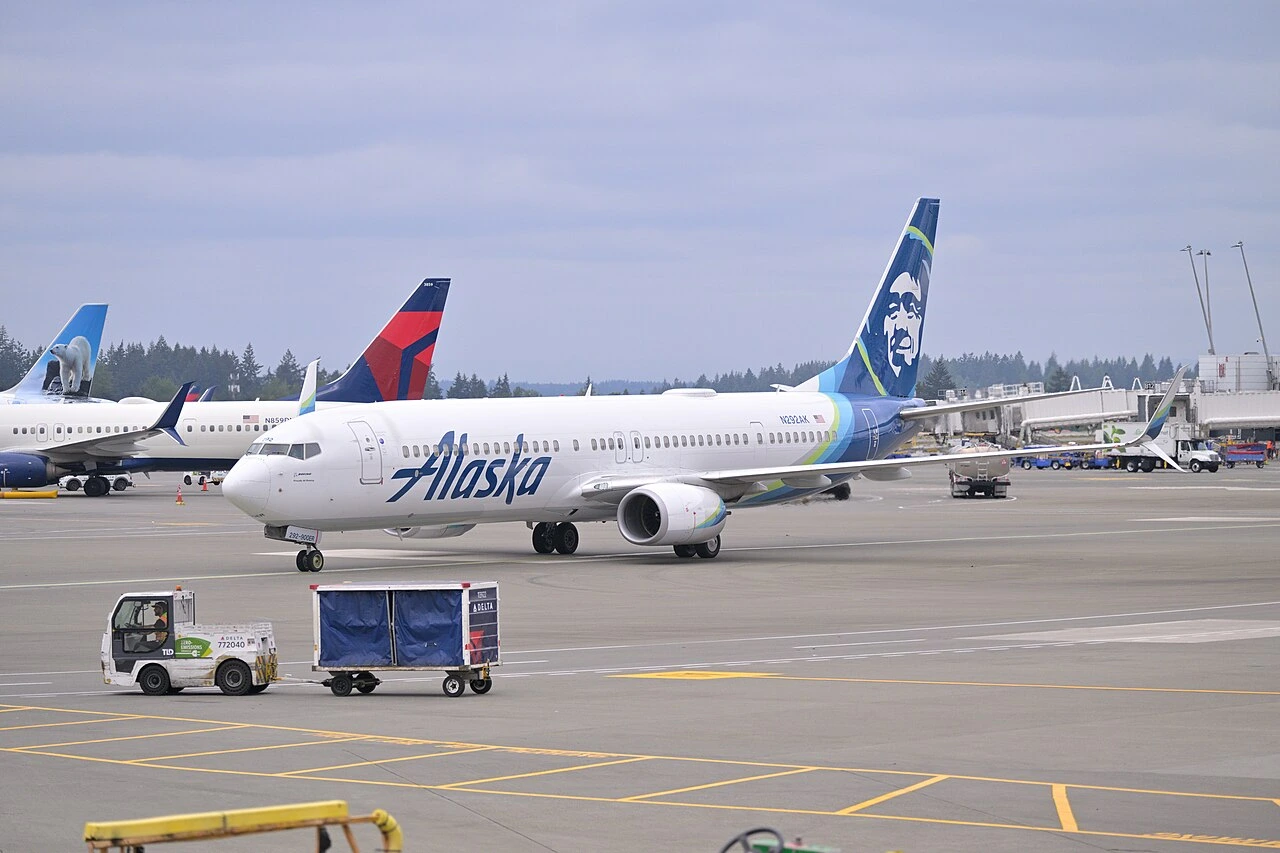
SEATTLE– Alaska Airlines (AS) has completed an internal investigation into a travel disruption that saw a family of four wrongly denied boarding on flights from Missoula Airport (MSO) to Seattle-Tacoma International Airport (SEA) and onward to Vancouver International Airport (YVR) because of document verification issues.
The airline acknowledged technology failures affecting the family’s travel, apologized for multiple service breakdowns, and provided more than $2,200 in goodwill compensation. However, Alaska Airlines (AS) maintained that the family’s later removal from a flight was based on the crew’s assessment rather than retaliation, OMAAT reported exclusively.
Alaska Concludes Investigation Into Boarding Incident
The incident involved a family traveling on Swiss passports while holding United States permanent resident status. They were initially prevented from boarding because Alaska Airlines’ document verification system incorrectly indicated they required visas to enter Canada, despite Canadian regulations exempting U.S. permanent residents from that requirement.
Following the family’s formal complaint to both the airline and transportation regulators in the United States and Canada, Alaska conducted a detailed internal investigation involving Customer Care, Airport Operations, and Inflight leadership.
The airline admitted that communication failures delayed its response after the complaint was escalated internally.
According to Alaska, several departments assumed another team had already contacted the passengers, leaving the family without any meaningful response for weeks. The carrier apologized for this internal breakdown and acknowledged that it further damaged customer confidence.
Airline Acknowledges Technology and Service Failures
Alaska confirmed its investigation found the family possessed valid travel documents throughout their journey.
The airline stated that airport employees spent considerable time working with internal support teams to overcome repeated document verification failures before departure. Although staff attempted to resolve the issue, Alaska admitted the resulting delays and disruption did not meet the level of service customers should expect.
The carrier also confirmed that the same document verification problem reappeared when the family attempted to board their replacement flight later that day. Employees once again had to coordinate with internal support teams before boarding could proceed.
Alaska acknowledged that encountering the same issue twice understandably reduced the passengers’ confidence in the airline’s ability to complete their journey successfully.
Why Alaska Declined Denied Boarding Compensation
Although Alaska accepted responsibility for the operational disruption, it rejected the family’s argument that the incident qualified as involuntary denied boarding under U.S. Department of Transportation rules.
The airline explained that federal denied boarding compensation regulations apply only to oversold flights where passengers with confirmed reservations cannot travel because there are more passengers than available seats.
According to Alaska, this case resulted from operational document processing delays rather than an oversale, making those regulations inapplicable.
The carrier also addressed claims under Canada’s Air Passenger Protection Regulations (APPR).
Alaska maintained that the disruption did not meet the legal definition of a compensable denied boarding event under Canadian rules either. Nevertheless, the airline recognized the significant inconvenience experienced by the family and voluntarily offered compensation equivalent to what passengers might receive for a major airline-controlled disruption.
Crew Removal Decision Remains Unchanged
One of the most disputed parts of the incident involved the family’s removal from their replacement flight after a disagreement over assigned seats.
The passengers argued they were removed after requesting the names of airline employees for a future complaint.
Alaska’s investigation reached a different conclusion.
According to the airline, interviews with the operating flight attendants, a commuting flight attendant, station leadership, and the captain found no evidence that the family’s intention to file a complaint influenced the decision.
Instead, Alaska said confusion surrounding seat assignments and concerns that the interaction could escalate led the operating crew to conclude that removal was appropriate under the airline’s Contract of Carriage.
The airline emphasized that its safety procedures allow flight crews and captains to make transportation decisions based on their assessment of unfolding events, even without identifying a specific passenger instruction that had been disobeyed.
Compensation Offered to the Family
As part of its resolution, Alaska Airlines agreed to several forms of compensation.
The airline redeposited all Mileage Plan award points used to book the four First Class tickets and agreed to refund applicable taxes and fees.
Although it declined to reimburse the family’s entire replacement airfare purchased on Delta Air Lines (DL), Alaska paid $630 to cover the difference between the value of the unused Alaska tickets and the new tickets purchased after the disruption.
The airline also issued an additional goodwill payment totaling $1,600, or $400 per passenger, bringing the total cash compensation to $2,230. Four future travel discount codes were also provided.
Passenger Challenges Alaska’s Findings
After reviewing the airline’s response, the passenger disputed several conclusions.
He maintained that the seating confusion resulted entirely from outdated boarding passes issued by Alaska after repeated document-verification failures. He also argued that his family complied with every crew instruction and that the airline had failed to identify any specific order that was ignored.
Alaska responded by reaffirming its original findings while acknowledging that the passengers’ version of events differed significantly from employee accounts.
The airline stated that it had shared the family’s concerns with Inflight Management so leadership could determine whether additional coaching, guidance, or retraining would be appropriate for the employees involved.
Family Donates Compensation
In a notable conclusion to the case, the passenger informed Alaska that he had matched the airline’s compensation with a donation to Save the Children.
He said the donation reflected a desire to close the difficult experience by recognizing that many families face challenges far greater than a disrupted journey.
Bottom Line
Alaska Airlines acknowledged significant failures in its document verification process and customer communication after a family was wrongly denied boarding because of technology issues.
The carrier apologized, refunded award tickets, issued goodwill compensation totaling $2,230, and pledged internal process improvements.
However, the airline continues to defend its decision to remove the family from their replacement flight, stating its investigation found no evidence of retaliation and that the captain acted within established safety procedures.
While the case highlights the challenges airlines face when technology failures disrupt travel, it also underscores the importance of clear communication and consistent customer service when operational issues arise.
Stay tuned with us. Further, follow us on social media for the latest updates.
Join us on Telegram Group for the Latest Aviation Updates. Subsequently, follow us on Google News
