


MISAWA AIR BASE, JAPAN— The Royal Netherlands Air Force began joint operations on March 23 at Misawa Air Base in Japan alongside U.S. and Japanese forces, marking its first exercise in the country. The drills focus on combined air operations using F-35 fighter jets across three allied nations.
The exercise runs until April 3 and marks a milestone in Dutch military cooperation in the region. It reflects a broader strategic alignment among democratic nations as security concerns in the Indo-Pacific continue to grow.
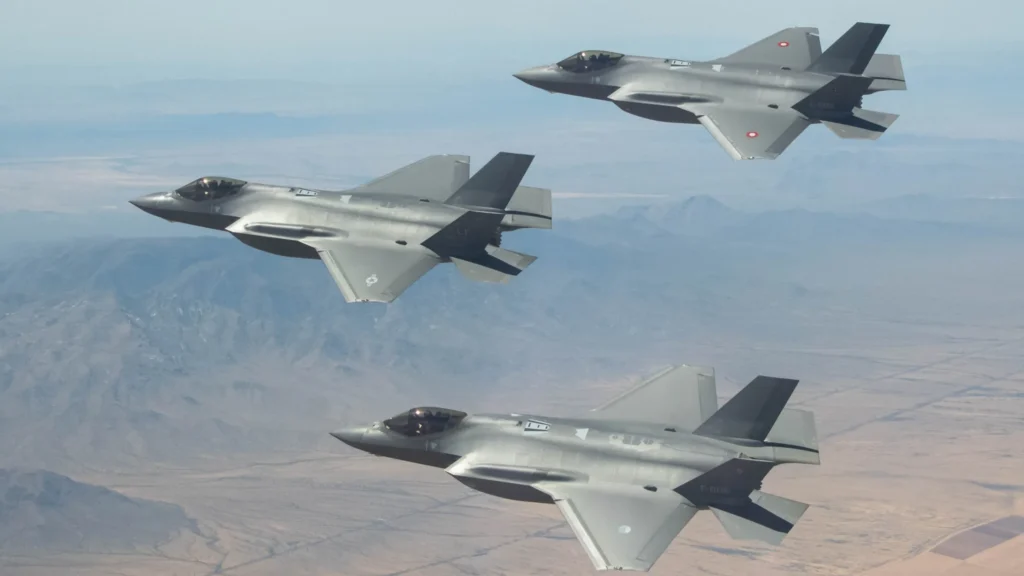
https://commons.wikimedia.org/wiki/File:US_Danish_Dutch_F-35A.jpg
Trilateral F-35 Exercise Built for Interoperability
The Netherlands contributed five F-35 fighter jets and an A330 tanker aircraft to the exercise. Japan is also operating F-35s, while the United States is participating with both F-35 and F-16 aircraft.
The exercise logo features a windmill with three blades, each representing one of the three participating nations. The name Kazaguruma Guardian translates to “Windmill Protector,” drawing on a symbol recognized in both Dutch culture and Japan.
The training focuses on interoperability between allied air forces, testing how effectively they can operate together in complex scenarios. The presence of advanced fifth-generation F-35 platforms highlights the emphasis on modern air combat integration, including data-sharing, stealth operations, and coordinated missions across multiple nations.
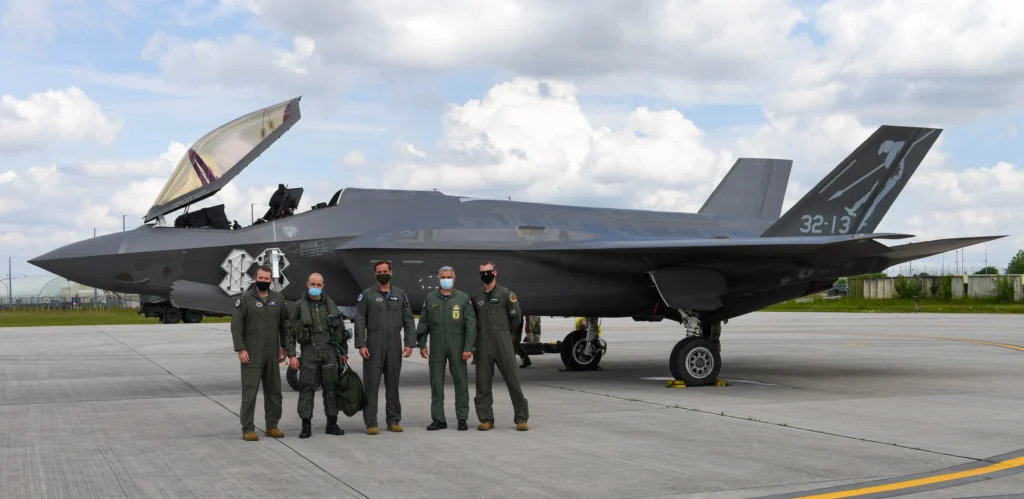
The Dutch contingent has high levels of interoperability with U.S. and Japanese systems, allowing the fighters to seamlessly plug into local U.S.-led combat networks. Misawa Air Base serves as a central hub for U.S. and Japanese air operations and sits in close proximity to the Russian Far East.
Strategic Significance of the Deployment
Plans for the Netherlands’ first F-35 deployments to the Western Pacific region were first announced in December 2025. The Netherlands’ ambassador to Japan explained that growing regional threats made the deployment necessary for maintaining the rules-based international order.
The Misawa deployment shows the Netherlands operating in two strategic theaters at once, strengthening interoperability, sustainment, and coalition response capacity far from Europe. For the Dutch Air Force, this represents a clear capability to project power beyond the NATO theater.
The Royal Netherlands Air Force was the first NATO member air force to achieve an air-to-air kill using the F-35, with a drone of alleged Russian origin shot down over Polish airspace in September 2025.
Dutch F-35 units also train for nuclear attack roles under a nuclear sharing agreement with the United States, making the Netherlands the second country after the U.S. to operationalize the aircraft in that capacity.
Netherlands-Japan Relations and the Indo-Pacific Context
Japan and the Netherlands have maintained a longstanding partnership, with both countries placing importance on peace and stability. For the Netherlands, Japan is considered a key partner in the Indo-Pacific region due to its role as a democratic and influential nation.
In a world where the rules-based international order is under pressure and great-power tensions are rising, many countries are deliberately pursuing closer cooperation with Japan based on shared values: democracy, rule of law, free trade, and respect for international law.
The three nations have also aligned on technology controls. In 2023, they coordinated export restrictions on advanced chipmaking equipment involving firms such as ASML, Nikon, and Tokyo Electron to limit the transfer of military-use technology. By early 2026, the U.S. pushed for stricter rules on equipment servicing and chemical exports.
Broader Military Coordination in the Region
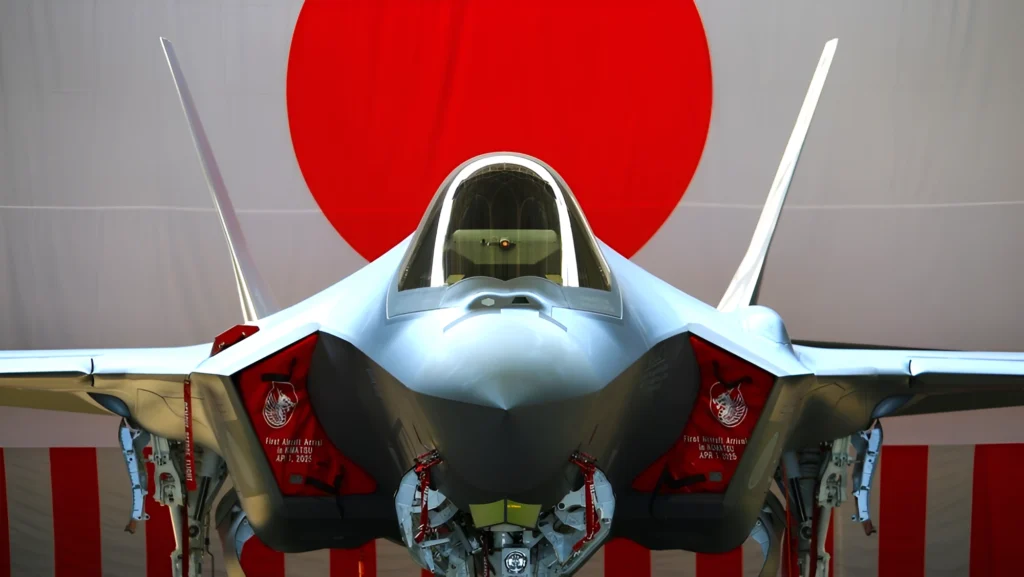
Italy deployed F-35A and F-35B fighters to Japan in 2023 and 2024, respectively, while British F-35Bs operated in Japan in 2025. The Netherlands joins this growing list of European nations prioritizing deployments to Northeast Asia.
Military cooperation in the wider region has also intensified. In February 2026, the U.S., Japan, and the Philippines conducted joint maritime drills.
China conducted 163 operations in the South China Sea in 2025, increasing its presence near disputed territories, with new land reclamation activity reported in early 2026.
Tensions between China and Japan have also grown since late 2025 over Taiwan-related statements, followed by trade and export restrictions on both sides.
What the Dutch deployment to Misawa shows most clearly is that fifth-generation airpower is reshaping how allies prepare for future conflict.
Coalition airpower, built around U.S. leadership, trusted partners, and the shared advantages of the F-35, is becoming more unified, more agile, and more credible in the face of global security challenges.
Stay tuned with us. Further, follow us on social media for the latest updates.
Join us on Telegram Group for the Latest Aviation Updates. Subsequently, follow us on Google News
