

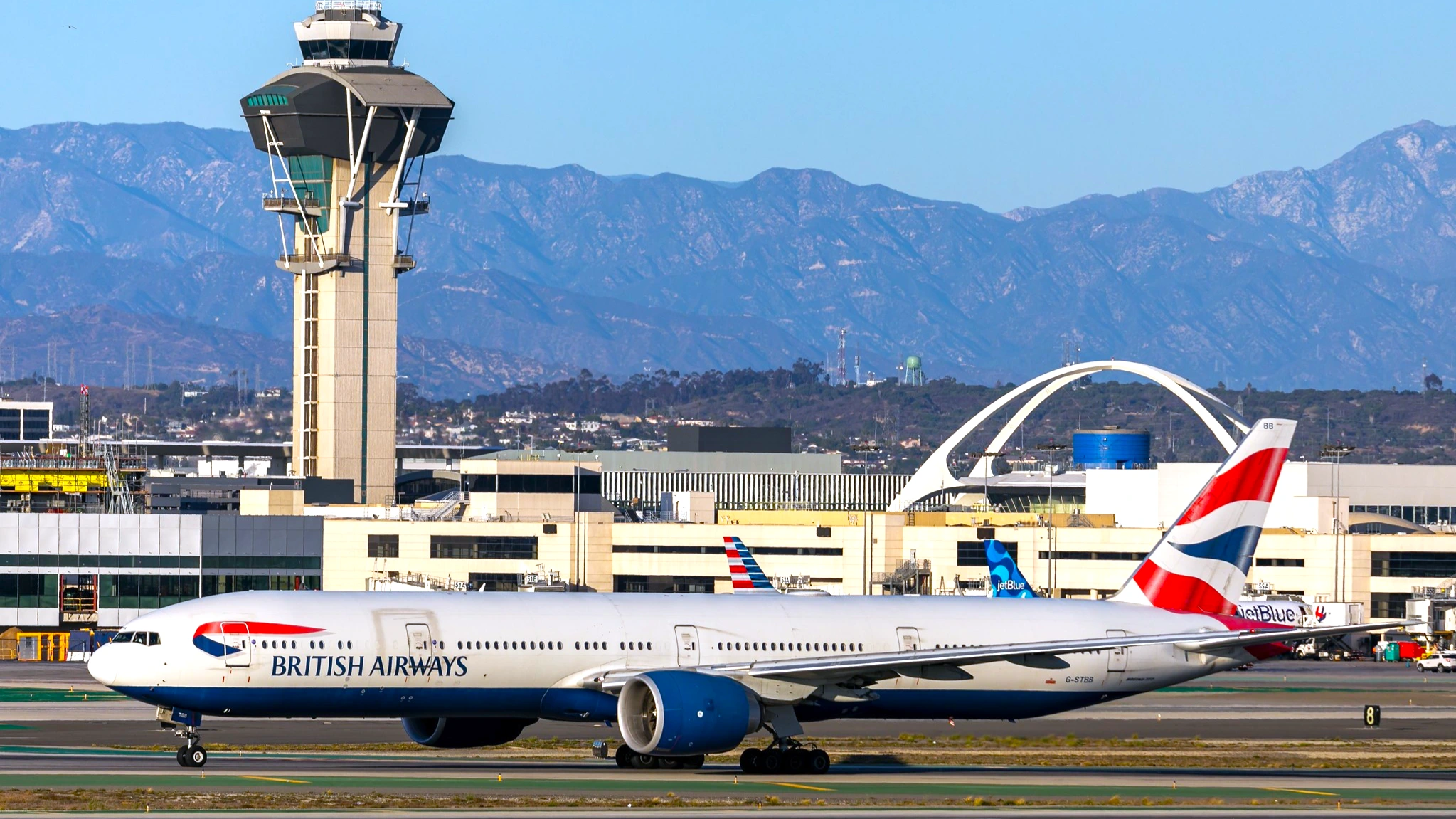
LONDON- British Airways (BA) is facing a lawsuit after a passenger alleged she suffered a concussion when a cabin crew member accidentally struck her during an unruly passenger incident on a flight from London Heathrow Airport (LHR) to Washington Dulles International Airport (IAD).
The lawsuit, filed by retired U.S. Navy Captain Karen Gibbs, claims the airline failed to provide timely medical assistance after the incident aboard British Airways (BA) Flight BA217. According to PYOK, Gibbs continues to experience long-term health issues more than two years after the flight.
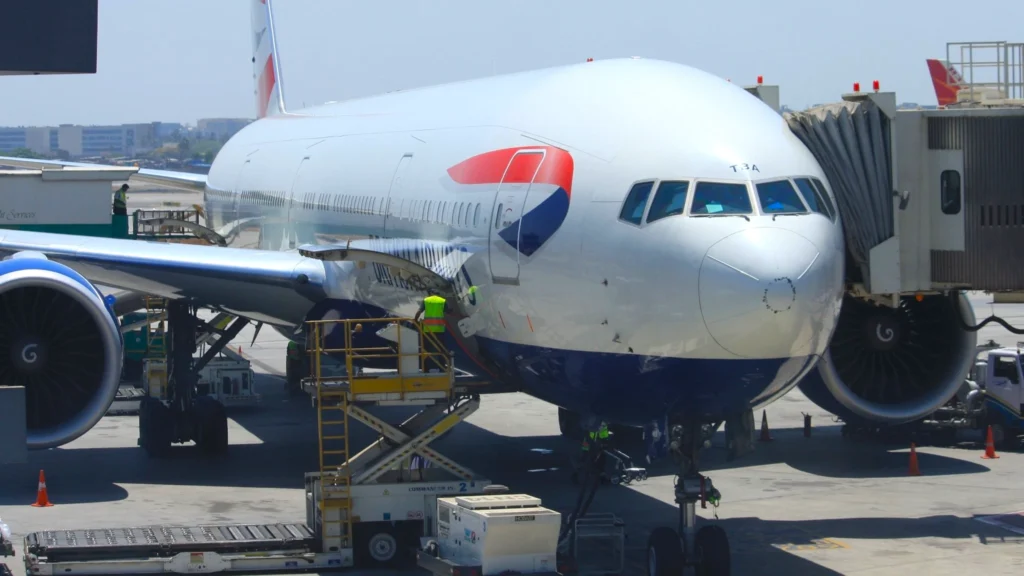
British Airways Lawsuit Alleges Injury
Karen Gibbs, a retired U.S. Navy captain from Silver Spring, Maryland, has filed a lawsuit in a Virginia district court over injuries she says she sustained during British Airways Flight BA217 on August 1, 2024.
According to the complaint, Gibbs was seated on the transatlantic service from London Heathrow Airport (LHR) to Washington Dulles International Airport (IAD) when a disturbance broke out involving an unruly passenger seated across the aisle and a few rows ahead of her.
The lawsuit states that a flight attendant attempted to restrain or intervene with the disruptive passenger. During that intervention, the crew member allegedly struck Gibbs in the head with significant force, even though she was not involved in the incident.
Gibbs claims the impact immediately caused blurred vision, dizziness, pain, and symptoms consistent with a concussion.
Cabin crew reportedly provided her with a cold compress shortly after the incident. However, the lawsuit alleges that the crew did not immediately request assistance from any medical professionals who might have been traveling onboard.
According to the filing, it was approximately 90 minutes later that the crew made an announcement seeking a medical volunteer.
An emergency room physician traveling as a passenger responded to the request and evaluated Gibbs. The doctor reportedly concluded that her symptoms were consistent with a concussion and advised the crew to administer supplemental oxygen.
The cabin crew followed that recommendation, but the lawsuit alleges they did not arrange for medical personnel to meet the aircraft upon arrival in Washington or request additional emergency assistance before landing.
Passenger Claims Long-Term Health Effects
Gibbs alleges that the consequences of the incident have continued long after the flight ended.
According to the lawsuit, she continues to suffer from migraines, memory problems, blurred vision, vision disturbances, dizziness, and balance issues more than two years after the incident.
She further claims that her overall health has experienced a marked decline and that the injuries forced her to retire earlier than she had originally planned.
The complaint also alleges that British Airways later offered only £50, approximately US$67 at the time, as a goodwill payment despite the severity of her claimed injuries.
Montreal Convention Forms Basis of Legal Claim
The lawsuit has been filed under Article 17 of the Montreal Convention, the international treaty governing airline liability for passenger injuries during international air travel.
Article 17 provides that an airline may be held liable when a passenger suffers bodily injury caused by an accident occurring onboard an aircraft or during the process of boarding or disembarking.
The convention states:
The carrier is liable for damage sustained in case of death or bodily injury of a passenger upon condition only that the accident which caused the death or injury took place on board the aircraft or in the course of any of the operations of embarking or disembarking.”
While airlines have certain legal defenses under the convention, they may avoid liability if the injury resulted solely from the negligence or wrongful actions of a third party.
Compensation Limits Under International Aviation Law
Compensation under Article 17 is generally subject to a liability threshold of 151,880 Special Drawing Rights (SDRs), an international reserve asset established by the International Monetary Fund.
Based on current exchange values, that amount is approximately US$207,000, although the exact figure varies with currency movements.
However, Article 21 of the Montreal Convention allows courts to award compensation beyond that threshold if the airline’s negligence or wrongful conduct contributed to the passenger’s injuries.
Gibbs argues that both the crew member’s alleged use of force during the altercation and the delayed medical response constitute negligence by British Airways. On that basis, she contends the court should consider damages exceeding the standard liability limit.
The case remains before the Virginia district court, and no judgment has been issued regarding the airline’s liability or any potential compensation.
Stay tuned with us. Further, follow us on social media for the latest updates.
Join us on Telegram Group for the Latest Aviation Updates. Subsequently, follow us on Google News
