

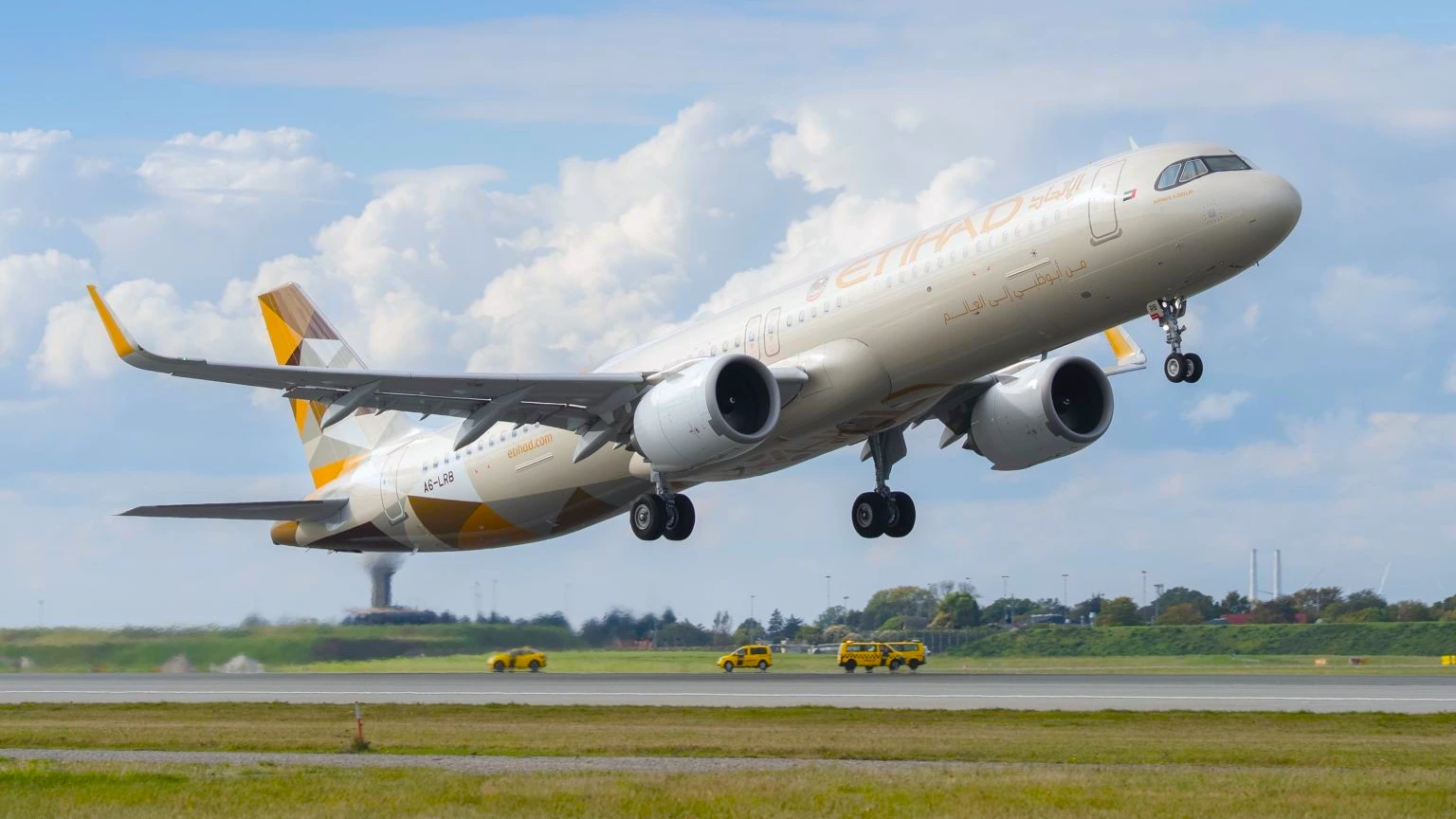
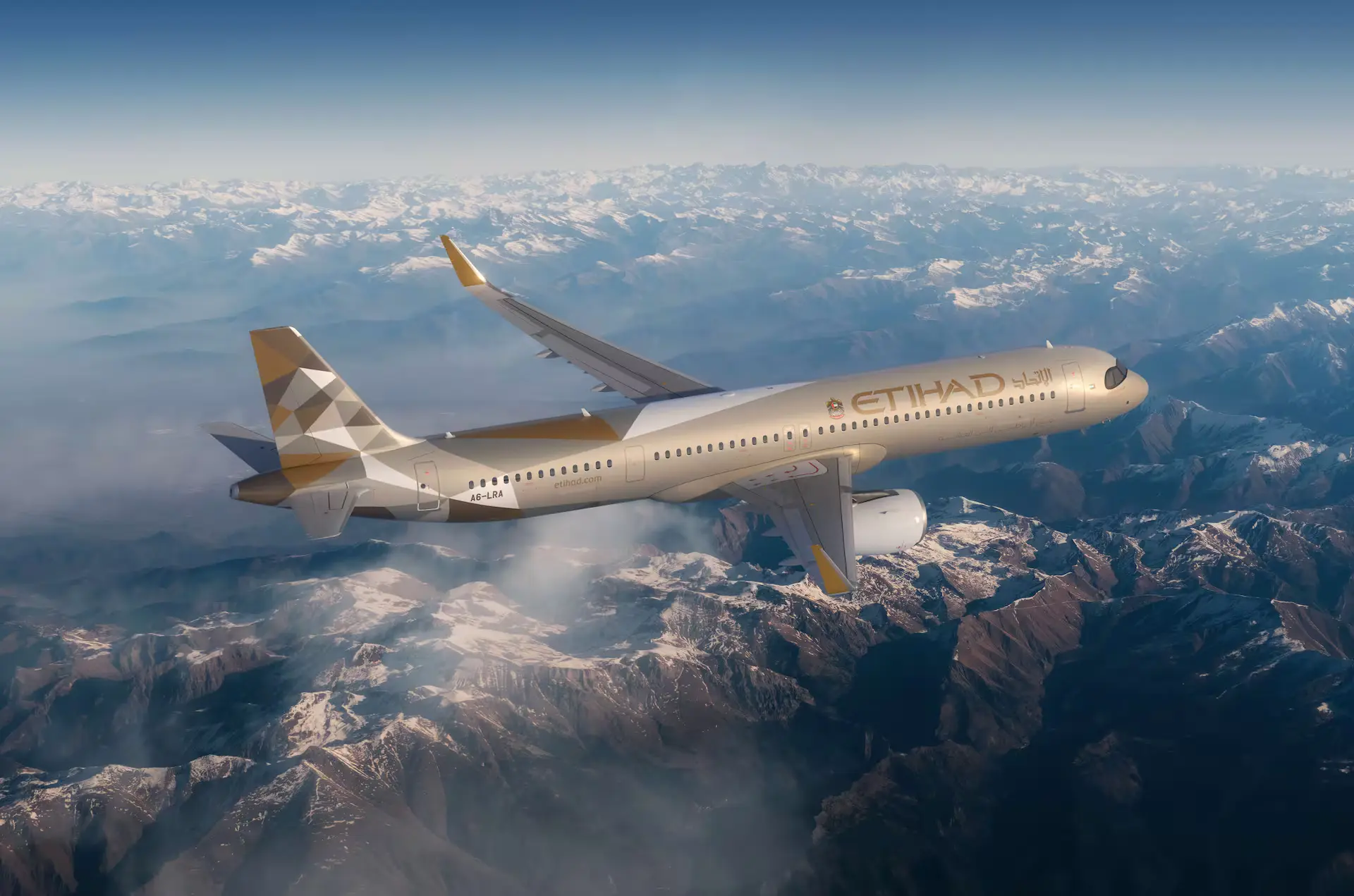
ABU DHABI- Etihad Airways (EY) is preparing a high-density Airbus A321LR configuration that still includes first class, a rare move in narrow-body aviation.
The aircraft will initially operate from Abu Dhabi (AUH) to Delhi (DEL) and Mumbai (BOM), combining premium service with higher capacity.
The updated layout increases total seats while reducing premium capacity, creating a deliberate balance between revenue efficiency and brand positioning.
This configuration reflects a broader shift in how narrow-body aircraft are used on competitive regional routes.
Etihad’s Unique Narrow-Body Strategy with Premium Cabins
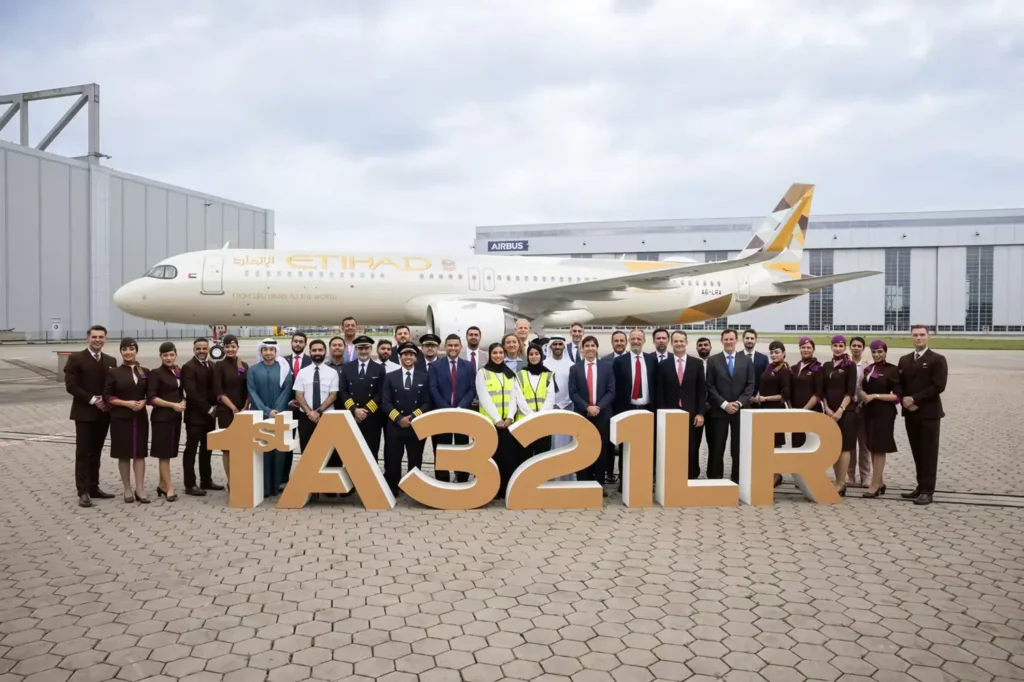
Etihad Airways is expanding its fleet with 30 Airbus A321LR aircraft, focusing on range and flexibility. Unlike traditional Gulf carrier strategies centered on wide-body jets, this move supports growth on thinner, high-demand routes.
The new configuration increases seating from 160 to 194 seats, structured as:
- 2 First Class seats
- 6 Business Class seats
- 186 Economy Class seats
This change removes eight business class seats and adds 42 economy seats. The adjustment highlights a clear shift toward volume-driven revenue while retaining a minimal premium offering.
Reported by OMAAT, this configuration is scheduled to enter service from early 2027 on key India routes.
Cabin Design and Competitive Differentiation
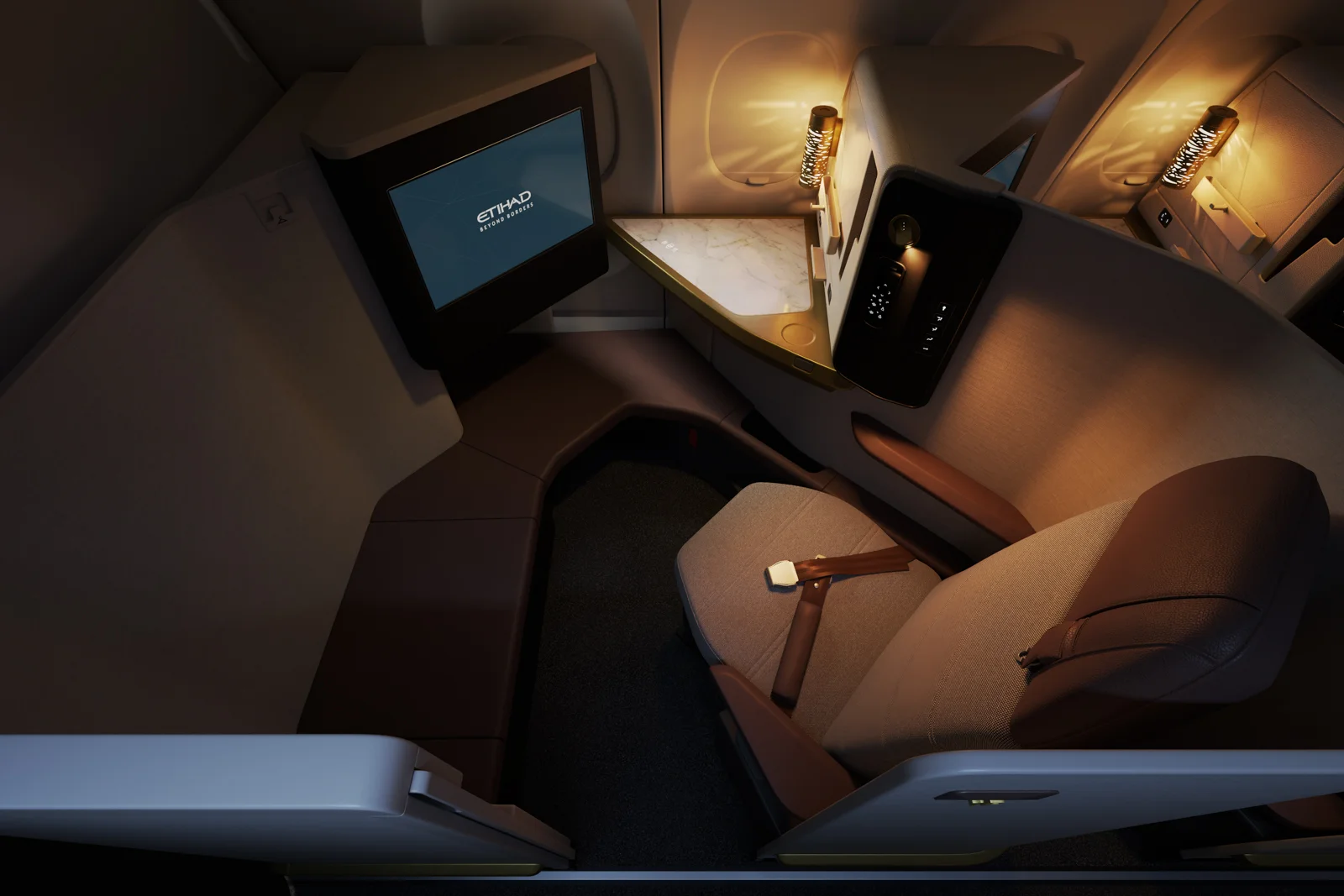
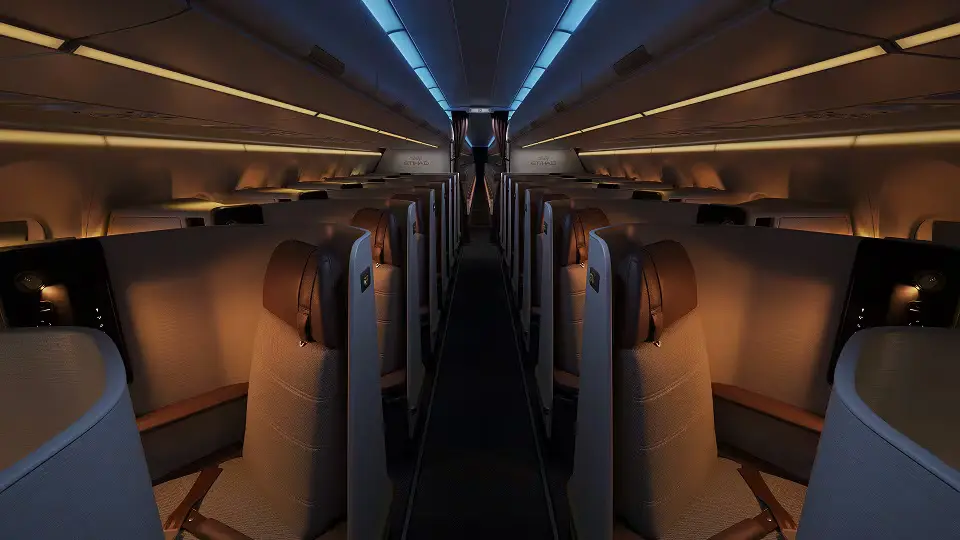
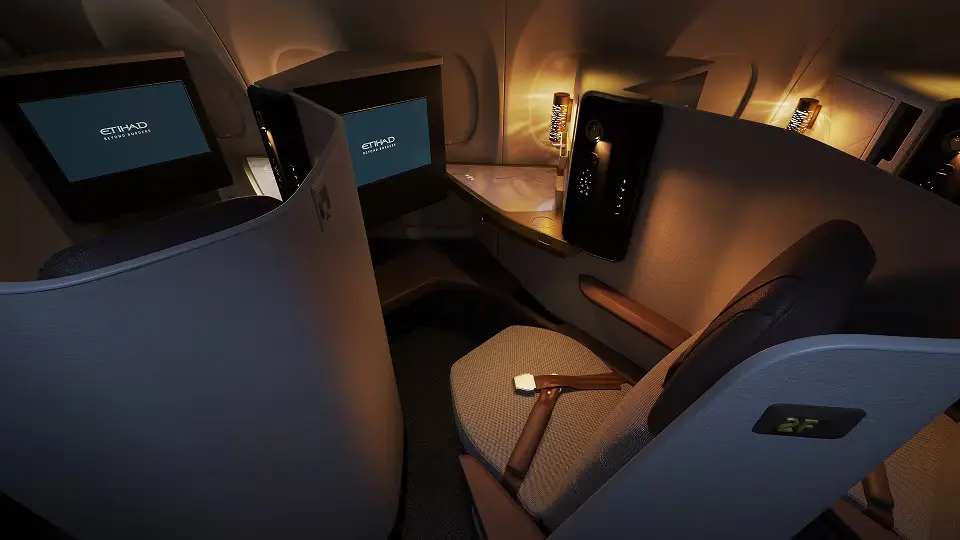
Etihad maintains a 3-cabin layout, which is uncommon for narrow-body aircraft. Both first and business class cabins feature reverse herringbone seats, a design typically reserved for wide-body aircraft.
This is a key competitive advantage because many airlines use standard herringbone or recliner seats on narrow-body jets.
Reverse herringbone seating provides direct aisle access and greater privacy, elevating the onboard experience.
The first class cabin consists of only two seats positioned at the bulkhead. In terms of hard product, this offering aligns more closely with a “business class plus” seat rather than a traditional first class suite.
The differentiation comes from the soft product, including enhanced service, dining, and ground experience.
The reconfiguration raises operational questions about space efficiency. The removal of eight business class seats to accommodate 42 economy seats suggests a significant difference in seat footprint.
This leads to a practical consideration: one business class seat appears to occupy the space of more than 5 economy seats. This may also indicate additional space optimization in galley areas or seat pitch adjustments, though exact details are not disclosed.
Premium Demand Risks on Key Routes
Routes between the UAE and India, especially to Delhi and Mumbai, generate strong premium demand. Reducing business class capacity to just 6 seats creates potential challenges.
Key risks include:
- Limited availability for premium travelers
- Faster sell-outs of business class inventory
- High-value passengers shifting to competitors
- Negative impact on connecting traffic and network revenue
A single corporate group or family booking could fill the entire business class cabin, limiting availability months in advance.
First Class on Narrow-Body
Introducing first class on a high-density narrow-body aircraft is unusual. However, Etihad has implemented this efficiently by utilizing existing cabin space rather than expanding it significantly.
The airline focuses on delivering a premium soft product while keeping the hard product compact.
Pricing for first class on the A321LR is lower than on wide-body aircraft, reflecting the difference in seat size and overall experience.
This approach allows Etihad to maintain its premium brand presence without compromising overall aircraft economics.
Strategic Contrast
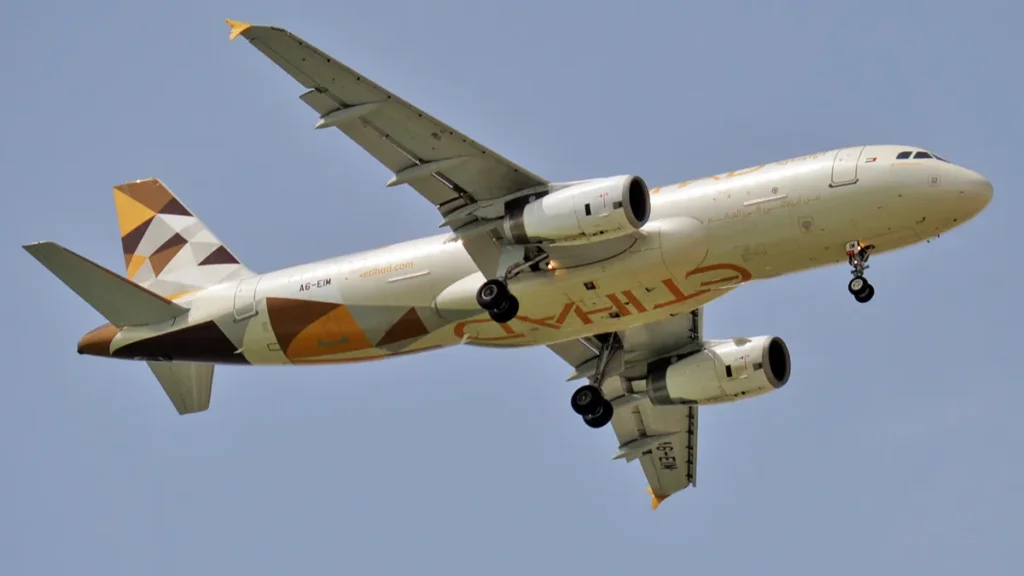
An interesting aspect of Etihad’s strategy is the presence of first class on the A321LR, while some larger aircraft, such as certain Airbus A350-1000 jets, do not offer first class.
This highlights a flexible and route-specific deployment strategy, where cabin products are aligned with demand patterns rather than aircraft size alone.
Etihad’s management has indicated long-term interest in expanding first class across more aircraft types, currently including Airbus A380s, select Boeing 787-9s, and now the A321LR.
Conclusion
Etihad Airways is redefining narrow-body travel by combining high-density seating with a three-cabin structure.
The 194-seat Airbus A321LR reflects a calculated trade-off between premium capacity and overall efficiency.
This strategy enables the airline to compete effectively on high-demand regional routes while maintaining a distinct premium identity in a crowded market.
Stay tuned with us. Further, follow us on social media for the latest updates.
Join us on Telegram Group for the Latest Aviation Updates. Subsequently, follow us on Google News
