


JEWAR— Prime Minister Narendra Modi inaugurated Phase 1 of the Noida International Airport (DXN) in Jewar, Uttar Pradesh, on March 28, 2026, marking a major milestone in India’s aviation expansion. The airport is set to become the second international airport serving the Delhi-NCR region, alongside Indira Gandhi International Airport (DEL).
The new airport will serve as a primary hub for key Uttar Pradesh cities, including Noida, Meerut, Ghaziabad, Mathura, and Agra, while also acting as a gateway to several pilgrimage and tourist destinations across the region.
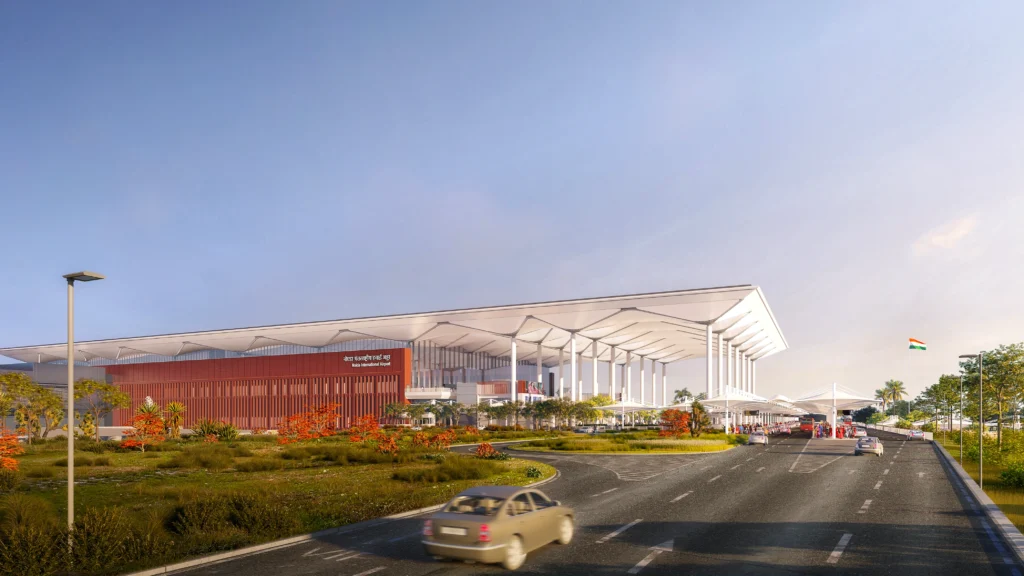
Noida International Airport Inaugurated
PM Modi was joined at the inauguration by Uttar Pradesh Chief Minister Yogi Adityanath, UP Governor Anandiben Patel, and Union Aviation Minister Ram Mohan Naidu.
Speaking at the event, Modi stated that the airport will eventually handle a flight every two minutes, positioning it as one of India’s busiest aviation hubs.
He also noted that the airport will connect North India to the rest of the world and serve as a symbol of Uttar Pradesh’s development.
Modi highlighted that the government has invested heavily in modern infrastructure under its “Viksit Bharat” vision.
He noted that over the past 11 years, the infrastructure budget has grown more than six times, with Rs 17 lakh crore spent on highways and expressways and over one lakh kilometres of highways constructed.
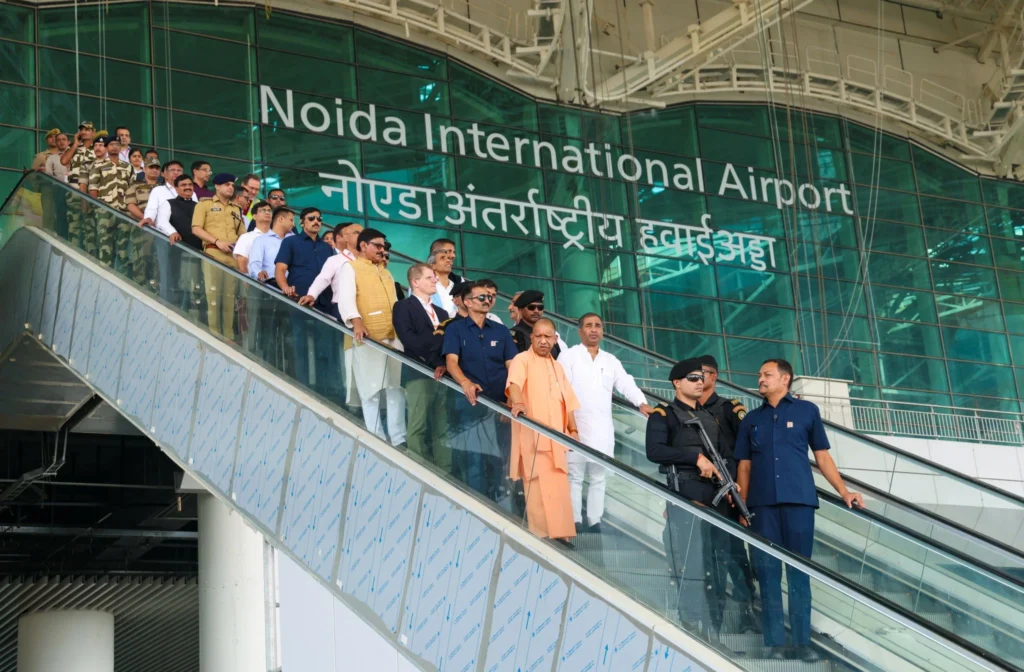
Noida Airport Infrastructure and Features
Phase 1 of Noida International Airport was developed at a total investment of approximately Rs 11,200 crore under a public-private partnership (PPP) model, making it one of the largest greenfield airport projects in India.
The airport features a 3,900-metre runway capable of handling wide-body aircraft such as the Boeing 777-300ER. It includes modern navigation systems like the Instrument Landing System and advanced airfield lighting to support all-weather, round-the-clock operations.
The terminal design draws inspiration from Indian heritage, incorporating elements inspired by the ghats of Varanasi and Haridwar, haveli-style courtyards, and locally sourced art and materials.
The airport is planned as a multi-modal transport hub with connectivity across road, rail, metro, and regional transit networks. Its strategic location along the Yamuna Expressway links it to Delhi and major Uttar Pradesh cities.
It also incorporates eco-friendly features, including natural lighting, rainwater harvesting, and plans for renewable energy use, aligned with a net-zero emissions target.
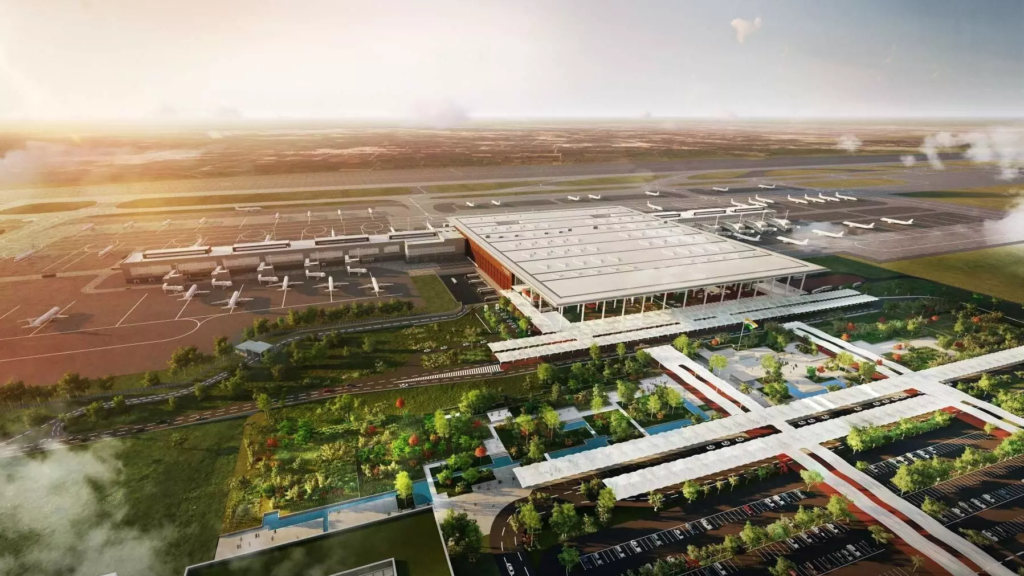
Passenger Capacity and Cargo Facilities
In its initial phase, the airport is expected to handle 12 million passengers per annum (MPPA), with the capacity to scale up to 70 MPPA upon full completion. Initial passenger traffic is forecast at 4 MPPA, as per the master plan submitted by Yamuna International Airport Private Limited (YIAPL).
The airport has also allocated 87 acres for a Multi-Modal Cargo Hub, which includes an integrated cargo terminal, warehouse, and logistics zone.
Phase 1 cargo investment stands at Rs 800 crore, with the total expected to reach Rs 3,200 crore after the final phase.
The cargo terminal is designed to handle 2,55,000 metric tonnes per annum, with eventual capacity of 1.8 million metric tonnes.

Ground Connectivity and Infrastructure Development
The airport is building a multi-modal transport network to ensure seamless access. Planned options include intercity bus services, long-distance coaches, airport taxis, and app-based ride services supported by traffic management systems.
The Indian government has approved a greenfield corridor connecting the airport to the Delhi-Mumbai Expressway via Faridabad, Ballabhgarh, and Sohna. The project carries an investment of ₹3,631 crore and aims to improve regional accessibility.
Future connectivity plans include integration with the Regional Rapid Transit System and a proposed high-speed rail corridor between Delhi and Varanasi, with a stop at the airport.

Who Developed the Airport
Zurich Airport International AG won the bid to develop Noida International Airport (DXN) and signed the concession agreement on October 7, 2020, through its special purpose vehicle, Yamuna International Airport Private Limited (YIAPL).
YIAPL is a wholly owned subsidiary of Zurich Airport International AG and developed the airport under the Design, Build, Finance, Operate and Transfer (DBFOT) model for an initial concession period of 40 years.
The former CEO of YEIDA and NIAL, Dr. Arun Vir Singh, noted that the airport operates on a unique 100% FDI model with revenue generated on a per-passenger basis.

Commercial Flights and When Operations Begin
The Directorate General of Civil Aviation (DGCA) issued the aerodrome licence to the airport on March 6, 2026.
As per the project plan, cargo and domestic flight operations were expected to commence within 45 days of this approval, suggesting commercial services may begin between mid-April and May 2026.
The airport faced several delays before its inauguration. It was originally scheduled to open on December 1, 2024, before being pushed to April 2025, then to September 2025, and finally to early 2026.
Despite these setbacks, Phase 1 is now operational and expected to ease the growing congestion at Delhi’s Indira Gandhi International Airport (DEL), which the two airports will together manage as an integrated aviation system for the Delhi-NCR region.
Traffic Advisory for Inauguration Day
The Gautam Buddh Nagar Traffic Police issued a traffic advisory in connection with PM Modi’s visit. Entry routes were earmarked, parking zones were designated, and commercial vehicles were diverted.
The advisory remained in force from 7 AM to 11 PM on Saturday, with provisions to ensure the uninterrupted movement of emergency vehicles, including ambulances and fire services.
Heavy, medium, and light goods vehicles were restricted on the Noida-Greater Noida Expressway and Yamuna Expressway during this period.
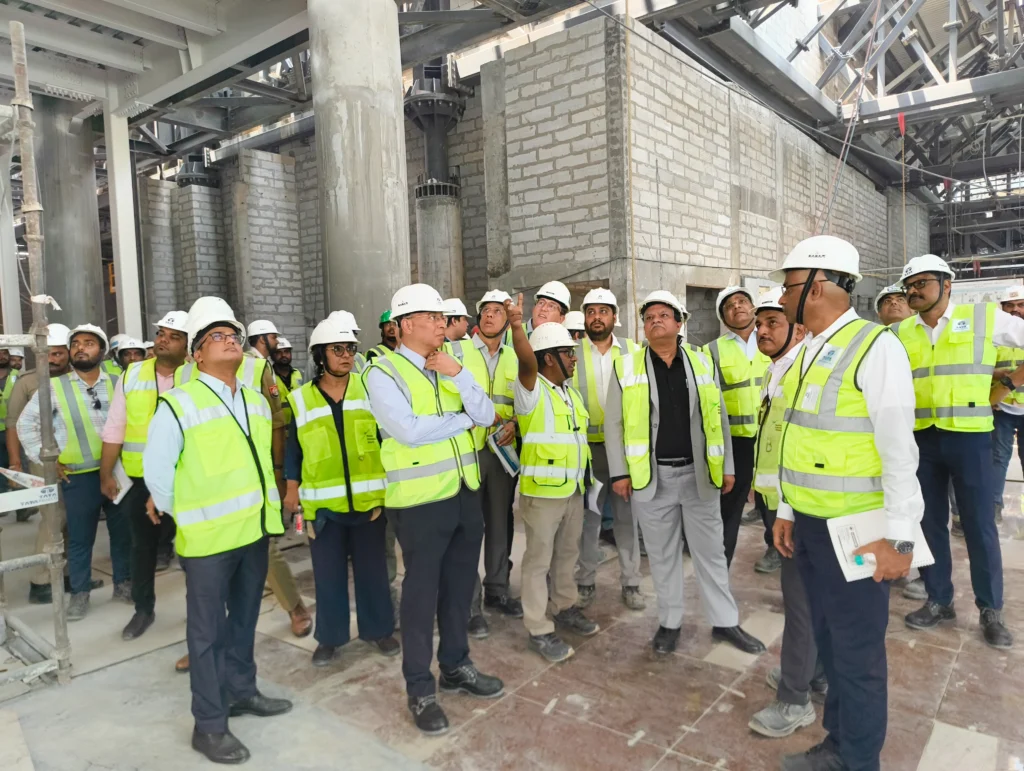
Noida Airport Signals Confidence in Indian Aviation
Noida International Airport (DXN) is set to strengthen India’s aviation sector, with CEO Christoph Schnellmann reaffirming confidence in long-term growth despite geopolitical disruptions, BusinessLine reported. The airport’s launch reflects sustained investment and rising demand in the country’s air travel market.
IndiGo (6E) will lead operations as the launch carrier, with Akasa Air (QP) and Air India Express (IX) also planning services. The airport aims to serve the Delhi NCR region through Jewar, positioning itself as a major aviation hub.
Christoph Schnellmann emphasized that India’s aviation growth remains stable, even as global challenges such as the West Asia crisis continue to affect international markets. He noted that previous disruptions, including the COVID-19 pandemic and supply chain issues, did not derail long-term sector expansion.
The development of Noida International Airport highlights investor confidence in India’s aviation potential. The project reflects a strategic push to meet rising passenger demand and improve infrastructure in one of the country’s busiest travel regions.
Following the inauguration, the airport will focus on completing regulatory approvals. Slot allocation will enable airlines to begin ticket sales, marketing efforts, and operational readiness ahead of commercial launch.
Stay tuned with us. Further, follow us on social media for the latest updates.
Join us on Telegram Group for the Latest Aviation Updates. Subsequently, follow us on Google News
