

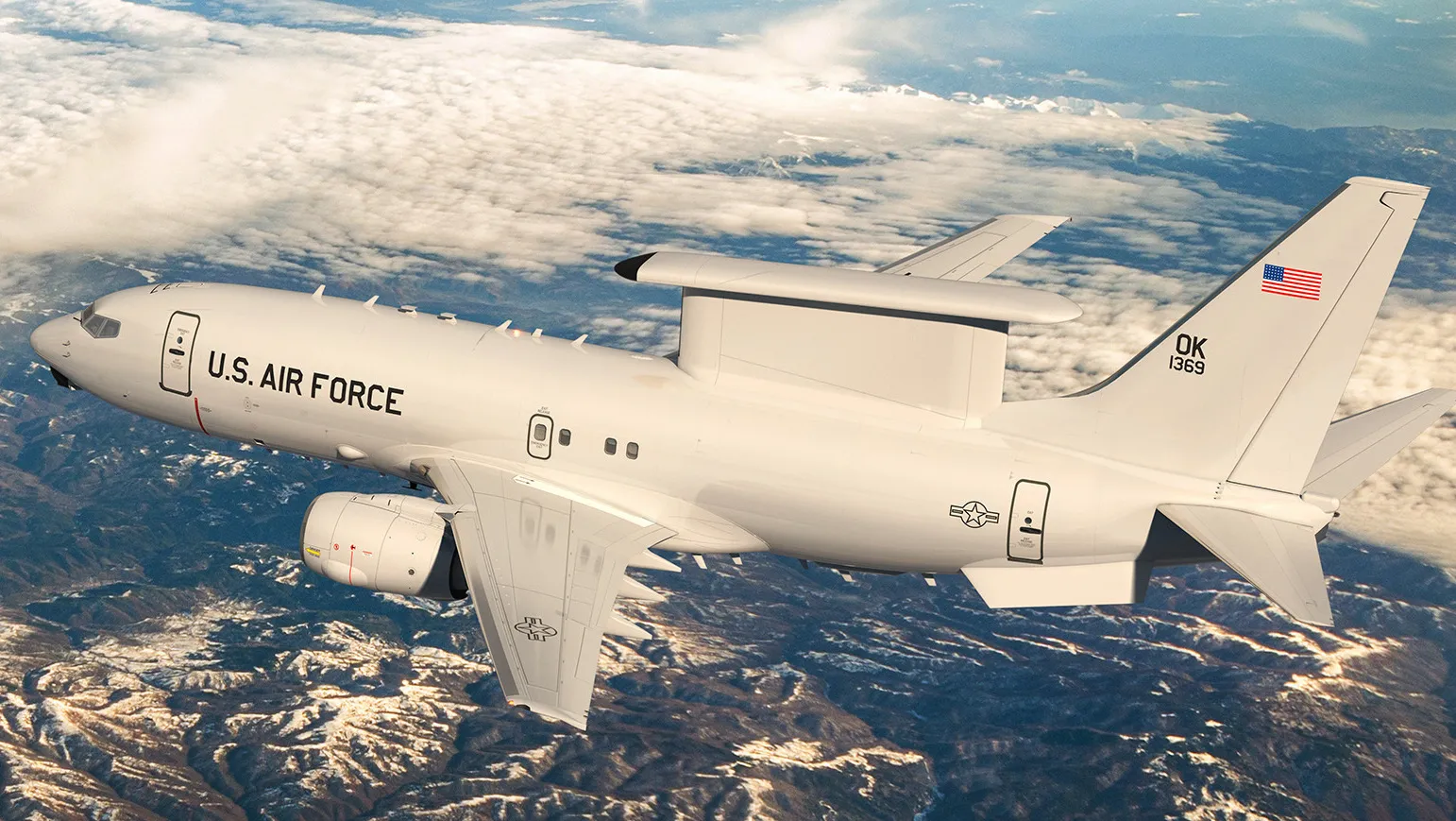
BIRMINGHAM— The first Boeing E-7A Wedgetail prototype aircraft designated for the US Air Force (USAF) has begun its journey toward conversion, with the unpainted Boeing 737-700 (registration N471DS) spotted transiting through Bangor International Airport (BGR) on March 21 before landing at Birmingham Airport (BHX) in the UK.
The aircraft, operating under callsign BOE151, will undergo military modification at STS Aviation Services in Birmingham, where standard 737s are transformed into advanced airborne early warning and control (AEW&C) platforms. This transit follows the USAF’s exercise of a $2.3 billion contract option just 10 days prior.
First USAF E-7A Enters Modification in the UK
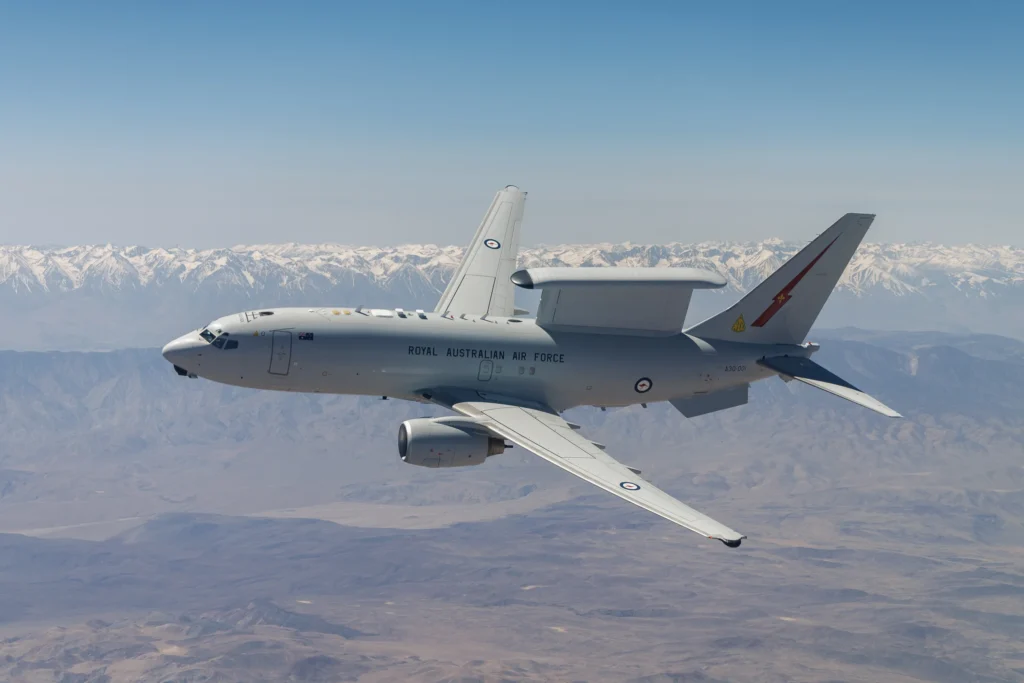
STS Aviation Services in Birmingham is already performing conversion work on three Wedgetail aircraft bound for the UK Royal Air Force (RAF). The first of those, registered WT001, is currently undergoing final test and evaluation at the Ministry of Defence’s Boscombe Down site in Wiltshire, with delivery expected later this year.
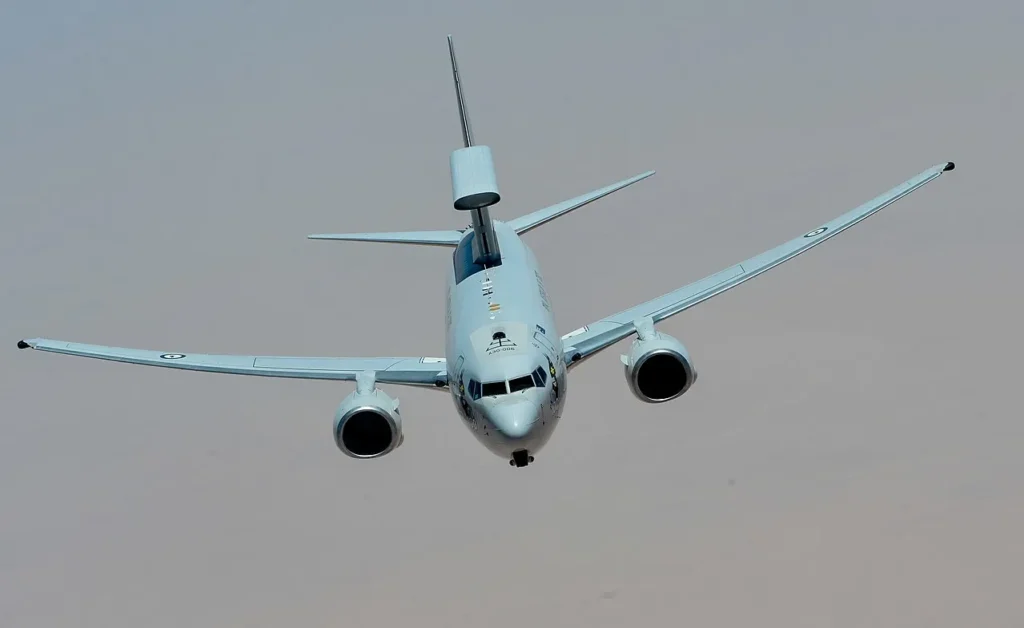
The conversion process involves equipping “green” 737 airframes with military mission systems, most notably the dorsal-mounted Northrop Grumman Multi-Role Electronically Scanned Array (MESA) radar, which is central to the E-7A’s threat detection and battle management capabilities.
Boeing’s 737 assembly line in Renton, Washington, received the fuselage for N471DS in January 2025, with aviation analytics firm Cirium confirming its delivery in August of that year.
A $4.9 Billion Programme Under Political Scrutiny
The USAF’s original E-7A rapid prototyping contract with Boeing, issued in 2024, carries a total value of $4.9 billion. This includes an initial face value of $2.5 billion and the recently exercised $2.3 billion option. The funds are allocated to develop two prototype aircraft intended to support a future decision on full-scale E-7A acquisition.
A USAF official confirmed to FlightGlobal that the programme follows a congressional mandate to advance into an Engineering and Manufacturing Development (EMD) phase, stating: “This strategy executes congressional direction to continue development and transition to an EMD phase.”
The latest contract modifications suggest the second option will fund production of the USAF’s second E-7A prototype, though the service has not officially confirmed this. Work under the current contracts is expected to conclude by 2032.
ALSO READ: Largest Air Force in the World Expands B-21 Production And Restructures Missile Program
E-7A’s Role and the Case Against the Aging E-3 Sentry
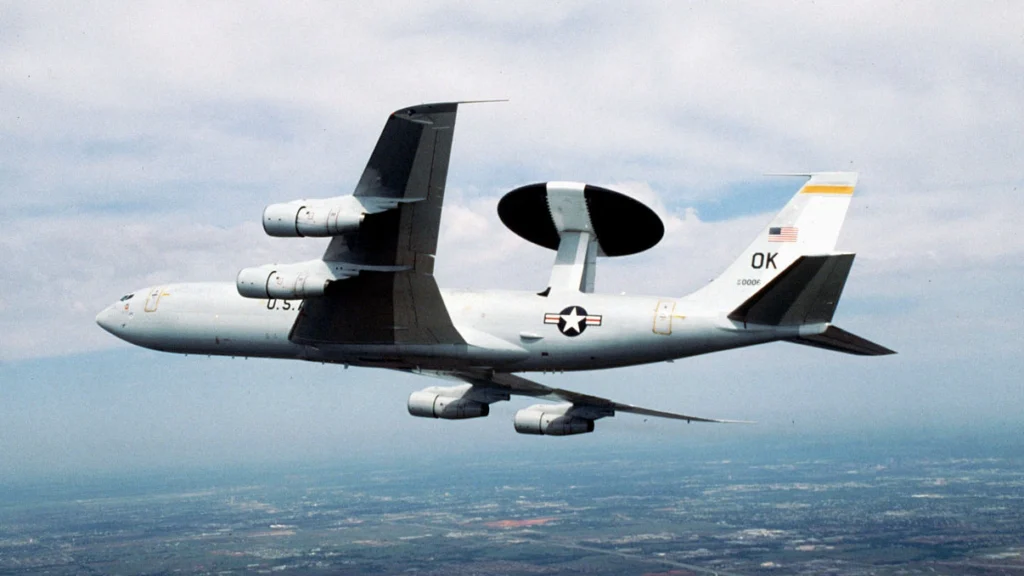
The E-7A Wedgetail is designed to replace the Boeing E-3 Sentry, an aging AEW&C platform that the USAF has already begun retiring. Key functions the E-7A is expected to take over include airborne moving target indication (AMTI) and air battle management (ABM), both critical to coordinating modern aerial operations.
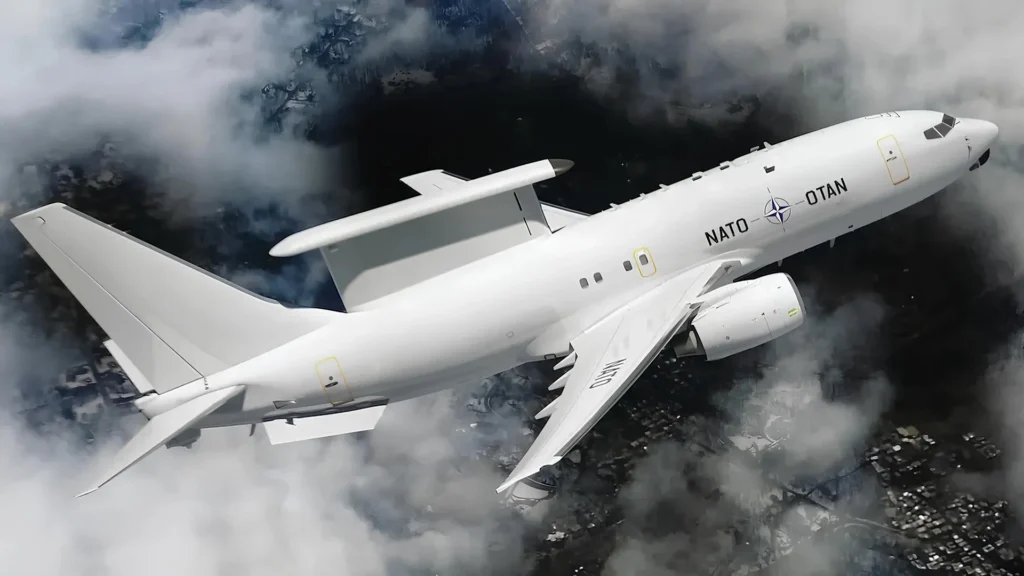
Australia, South Korea, Turkey, and the UK have already procured or are fielding the E-7A. The Royal Australian Air Force (RAAF) serves as the type’s launch customer and has deployed the aircraft operationally, including missions supporting the counter-Islamic State campaign in Iraq, NATO’s Eastern Flank air policing mission, and most recently to the Persian Gulf to support air defence efforts by the United Arab Emirates.
Political Debate Clouds Long-Term USAF Wedgetail Acquisition
Despite the programme’s active progress, its long-term future remains uncertain. The Trump Administration has labeled the E-7A as insufficiently survivable for modern combat, advocating instead for a space-based AEW&C alternative.
Secretary of Defense Pete Hegseth voiced opposition during 2025 Congressional testimony, stating that platforms lacking survivability in modern warfare require tough and immediate decisions.
However, critics argue that space-based alternatives remain conceptual and unproven. Dan Stewart, former deputy director of the National Reconnaissance Office, described the challenge as unprecedented in scope during the 2026 Air and Space Forces Warfare Symposium.
The Center for New American Security (CNAS) reinforced this view in a published report titled “Eyes in the Sky,” arguing that proposed alternatives are either unproven, incapable of battle management, or highly vulnerable. The report recommends space-based AMTI systems complement, rather than replace, dedicated AEW&C aircraft.
Secretary of the Air Force Troy Meink has acknowledged the programme’s congressional mandate while stopping short of committing to full-scale production, noting that delivering a transition plan does not guarantee budget allocation.
Programme Timeline and Future Outlook
The USAF has previously identified a requirement for 26 operational E-7A jets. However, the final decision on full-scale acquisition is now expected to rest with the administration that takes office following the 2028 US presidential election, as current contract work is slated for completion in 2032.
Former Air Force Secretary Frank Kendall and acquisitions chief Andrew Hunter, both serving under the Biden Administration, were strong advocates for recapitalising the E-3 fleet through the E-7A. The current administration’s stance remains opposed, leaving the programme’s ultimate fate tied to future political leadership.
Boeing confirmed its continued support for the programme without commenting on specific contract details, stating its commitment to providing customers with operational advantage.
Stay tuned with us. Further, follow us on social media for the latest updates.
Join us on Telegram Group for the Latest Aviation Updates. Subsequently, follow us on Google News
