

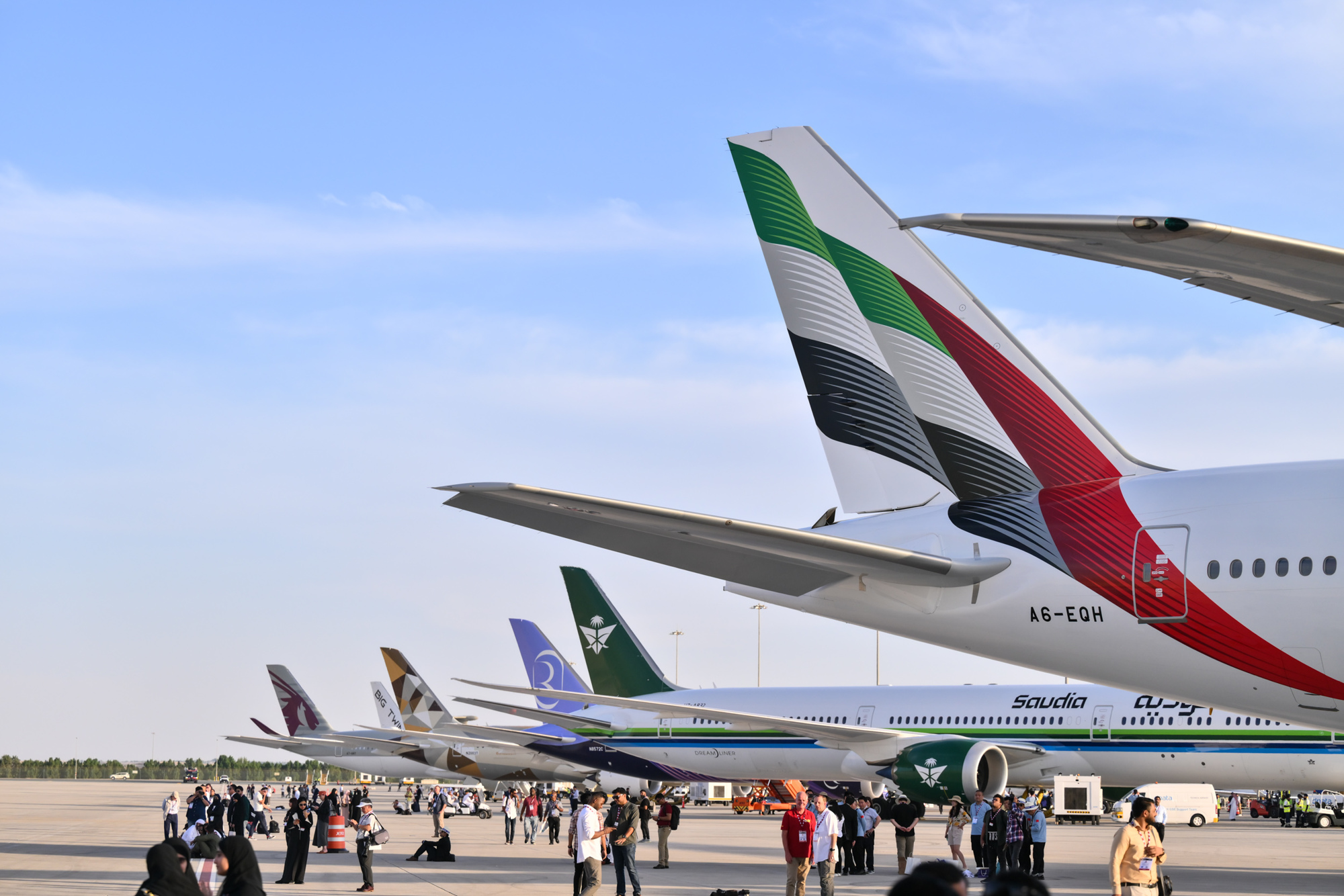
DUBAI- Sri Lanka has proposed using Mattala Rajapaksa International Airport (HRI) as an alternative hub for Emirates (EK) and Qatar Airways (QR) amid ongoing regional disruptions. The move aims to ensure continuity for long-haul operations across key global routes.
The proposal shifts focus away from Colombo Bandaranaike International Airport (CMB) and instead highlights Mattala’s unused capacity and strategic location along major east-west air corridors, Daily Mirror reported.

Sri Lanka Positions Mattala as a Strategic Backup Hub
Sri Lanka has initiated preliminary discussions with Emirates (EK) and Qatar Airways (QR) to explore the possibility of shifting select operations to Mattala Rajapaksa International Airport (HRI).
The airport, located in the southern part of the country, has long struggled with low traffic despite its modern infrastructure.
Opened in 2013, Mattala was built to handle large aircraft, including Airbus A380 operations, but has seen minimal commercial use. This underutilization has led to its reputation as a ghost airport. However, its current status also presents a rare opportunity. The airport has available slots, existing runway capacity, and minimal congestion, all of which are critical for hub operations.
Sri Lanka’s proposal comes at a time when Gulf carriers face increasing operational uncertainty due to airspace restrictions and regional instability. Emirates (EK) and Qatar Airways (QR) rely heavily on connecting traffic between Europe, Africa, Asia, and Australia. Any disruption in their primary hubs could impact global connectivity.
Mattala’s geographic position offers a potential advantage. It sits along key Indian Ocean flight paths, making it suitable for transit operations between west and east. The location is also significantly distant from conflict-prone areas, which could enhance operational reliability, OMAAT flagged.

Operational Challenges and Infrastructure Readiness
Despite its strategic advantages, shifting hub operations to Mattala presents several logistical challenges. Establishing a fully functional hub requires more than runway capacity. Airlines would need ground handling systems, catering services, maintenance facilities, and trained personnel.
Accommodation infrastructure near the airport is another concern. Large-scale transit operations demand nearby hotels and efficient passenger transfer systems. At present, the surrounding region lacks the scale required to support high passenger volumes.
Additionally, airlines must consider the cost and time required to reposition aircraft, crew, and support systems. For a temporary solution, these investments may not be commercially viable unless disruptions persist over a longer period.

Middle East Disruptions and Airline Response
Recent instability in the Middle East has forced airlines to frequently adjust operations, including route changes and temporary suspensions. Gulf carriers, known for their hub-and-spoke models, are particularly vulnerable to such disruptions.
While airlines currently treat the situation as short-term, prolonged instability could force a shift in strategy. Establishing alternative hubs or diversifying operational bases may become necessary to maintain network resilience.
Sri Lanka’s proposal aligns with this potential shift. By offering an underutilized airport with favorable geography, the country aims to position itself as a contingency solution for global carriers.

Economic Implications for Sri Lanka
For Sri Lanka, the proposal carries significant economic potential. Increased airline activity at Mattala could stimulate tourism, create jobs, and improve regional development.
The country has experienced fluctuations in tourism due to external factors, including flight disruptions. Hosting transit operations for major international airlines could help offset these losses and strengthen aviation-linked revenue streams.
While the concept is strategically sound, implementation remains uncertain. Airlines typically require long-term stability before committing to major operational shifts. The scale of preparation needed at Mattala may limit its appeal as a short-term solution.
However, if disruptions in the Middle East persist, the aviation industry may need to reconsider traditional hub structures. In such a scenario, Sri Lanka’s proposal could gain traction as part of a broader network diversification strategy.
Bottom Line
Sri Lanka is positioning Mattala Rajapaksa International Airport (HRI) as a potential alternative hub for Emirates (EK) and Qatar Airways (QR).
The airport’s location and unused capacity offer clear advantages, but significant operational and logistical hurdles remain.
Stay tuned with us. Further, follow us on social media for the latest updates.
Join us on Telegram Group for the Latest Aviation Updates. Subsequently, follow us on Google News
