

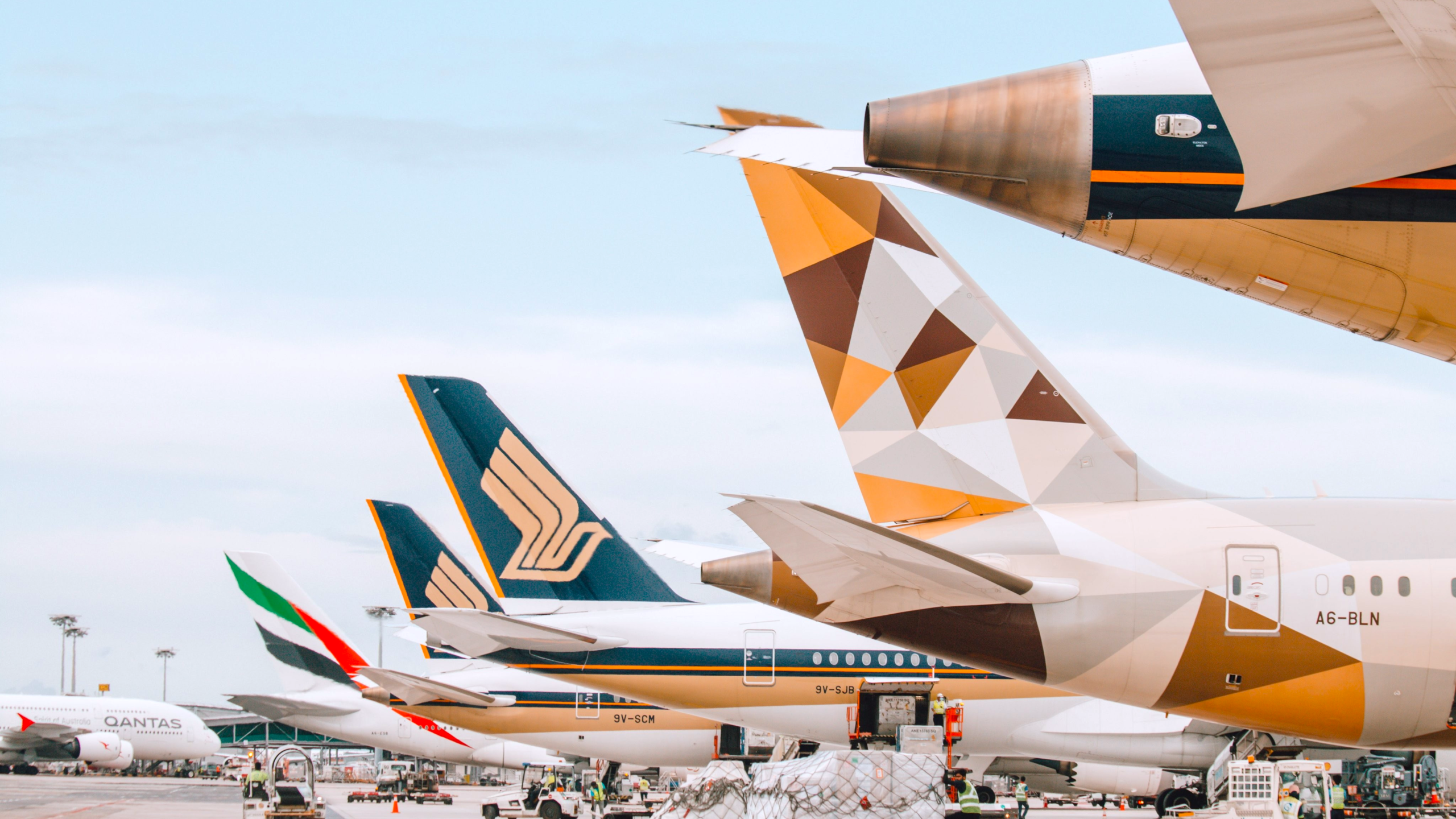
DUBAI- Emirates (EK) was forced to disrupt inbound services to Dubai International Airport (DXB) after Iranian missiles and drones targeted the United Arab Emirates (UAE). Several flights from India entered holding patterns or reversed course mid-air.
Etihad Airways (EY) also diverted aircraft from Zayed International Airport Abu Dhabi (AUH) to Muscat International Airport (MCT), as UAE air defenses engaged incoming threats and airspace conditions rapidly shifted.
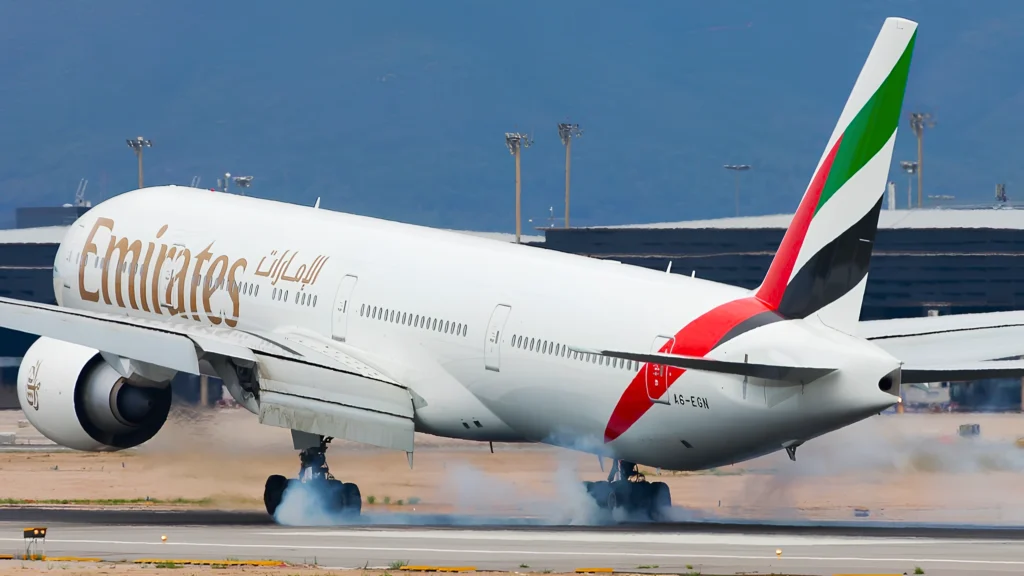
Missile Attack Disrupts Emirates and Etihad Restart Plans
Emirates had planned a limited resumption of exceptional repatriation flights to assist stranded passengers. The operation unraveled shortly after 3:00 am local time when Iran launched ballistic missiles and drones toward the UAE.
Within minutes of the UAE Ministry of Defence confirming that air defense systems were intercepting threats over Abu Dhabi and Dubai, Emirates flight EK501 from Mumbai Chhatrapati Shivaji Maharaj International Airport (BOM) entered a holding pattern over the Gulf of Oman. Flight tracking data showed the aircraft performing several loops before heading south toward Oman.
At the time of the attack, five Emirates flights were inbound to Dubai from Mumbai (BOM), Delhi Indira Gandhi International Airport (DEL), Hyderabad Rajiv Gandhi International Airport (HYD), Chennai International Airport (MAA), and Bengaluru Kempegowda International Airport (BLR).
Operational control reportedly instructed inbound aircraft to return to their departure airports. Some flights later reversed course and proceeded toward Dubai as the situation evolved. According to PYOK, the rapidly changing security environment created confusion for both flight crews and passengers.
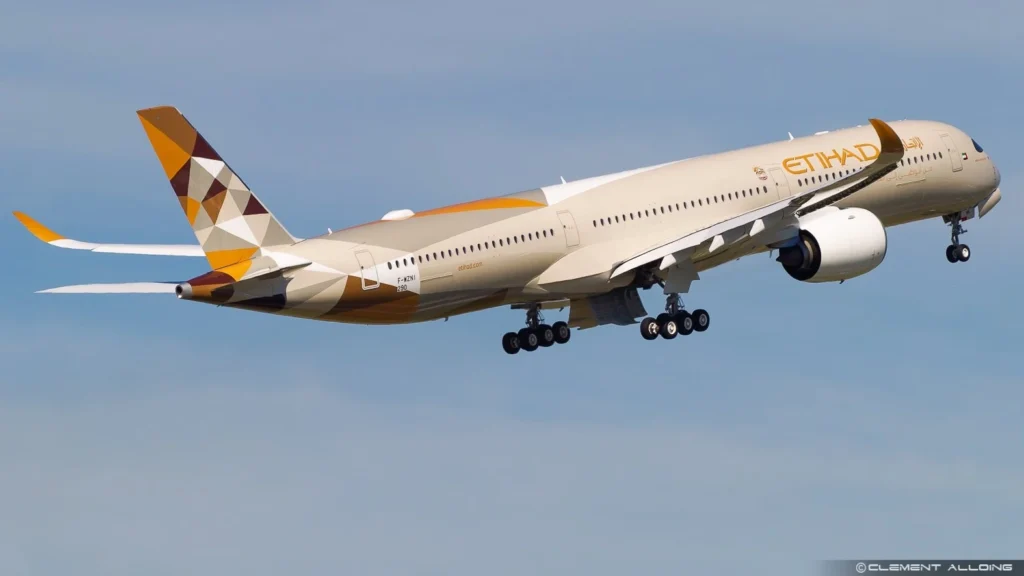
Etihad Airways Diverts to Muscat
Etihad Airways had multiple aircraft airborne when the missile activity began. Two cargo flights diverted immediately to Muscat International Airport (MCT), where airspace remained open.
Passenger flight EY-604 from King Abdulaziz International Airport, Jeddah (JED), also diverted to Muscat. Other Etihad services that were several hours away from Abu Dhabi continued operating toward their destination pending further instructions.
On Monday, the UAE General Civil Aviation Authority approved a limited number of flights to operate in and out of national airports. Earlier that day, an Etihad Airbus A380 departed Zayed International Airport (AUH) for London Heathrow Airport (LHR), marking the first passenger departure since previous suspensions.
Fifteen Etihad flights departed Abu Dhabi on Monday afternoon, serving destinations including London (LHR), Paris (CDG), Amsterdam (AMS), Moscow (SVO), Mumbai (BOM), Delhi (DEL), Islamabad (ISB), Kochi (COK), Cairo (CAI), Bengaluru (BLR), Riyadh (RUH), Dammam (DMM), Jeddah (JED), Muscat (MCT), and Karachi (KHI).
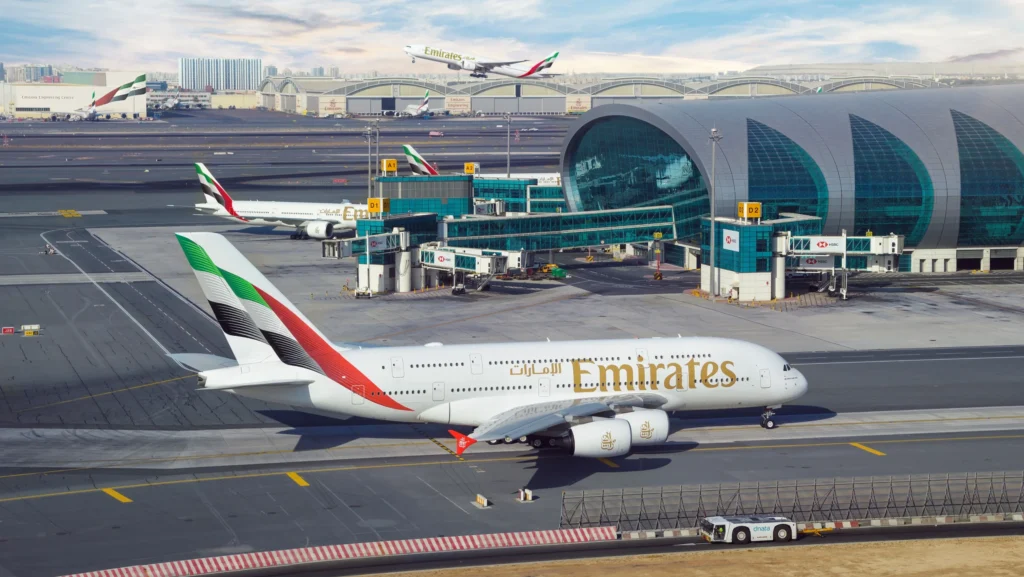
Ongoing Suspensions and Passenger Advisory
Despite the limited restart, regularly scheduled commercial operations remain suspended across the UAE.
Etihad stated that it does not expect to resume normal operations before Wednesday at the earliest. Emirates confirmed that standard flight schedules remain suspended until further notice.
Authorities advised stranded passengers not to travel to the airport unless directly contacted by their airline with confirmed booking details.
In Doha, Qatar Airways (QR) continued to keep flights grounded and is expected to issue further operational updates.
Stay tuned with us. Further, follow us on social media for the latest updates.
Join us on Telegram Group for the Latest Aviation Updates. Subsequently, follow us on Google News
