

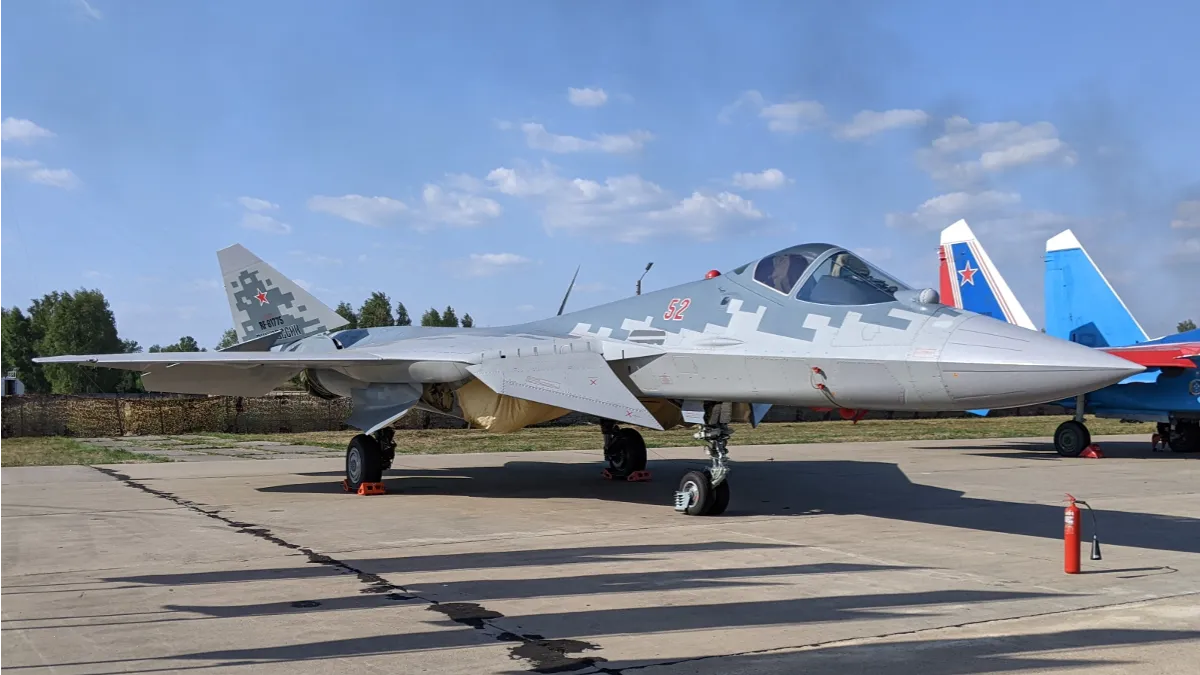
Russia remains the focal point of renewed attention on fifth-generation fighter development as the Russian Aerospace Forces induct a new batch of Sukhoi Su-57 aircraft with a revised technical configuration. The latest deliveries were completed by United Aircraft Corporation, part of the Rostec state conglomerate, and formally accepted into service by frontline units.
The handover follows sustained combat deployment during operations linked to the UKRAINE conflict zone and signals a deliberate expansion of the Su-57’s mission profile. The induction aligns with broader industrial activity centered around Moscow, including flight testing and production at facilities supporting operations near Moscow.
Rostec confirmed that the newly delivered aircraft feature enhanced onboard systems and an updated weapons configuration. While no detailed breakdown of the upgrades was released, officials emphasized that the changes significantly expand combat roles and operational flexibility.
A Su-57 pilot quoted by Rostec stated that the aircraft entered service in a new technical configuration to meet Defense Ministry targets. The pilot added that the upgraded armament system enables the use of new categories of air-launched weapons.
The manufacturer also reaffirmed that the Su-57 continues to see regular operational use. Combat exposure has shaped incremental refinements since the platform entered service in 2020.
Russia’s New Su-57 Fleet Expansion
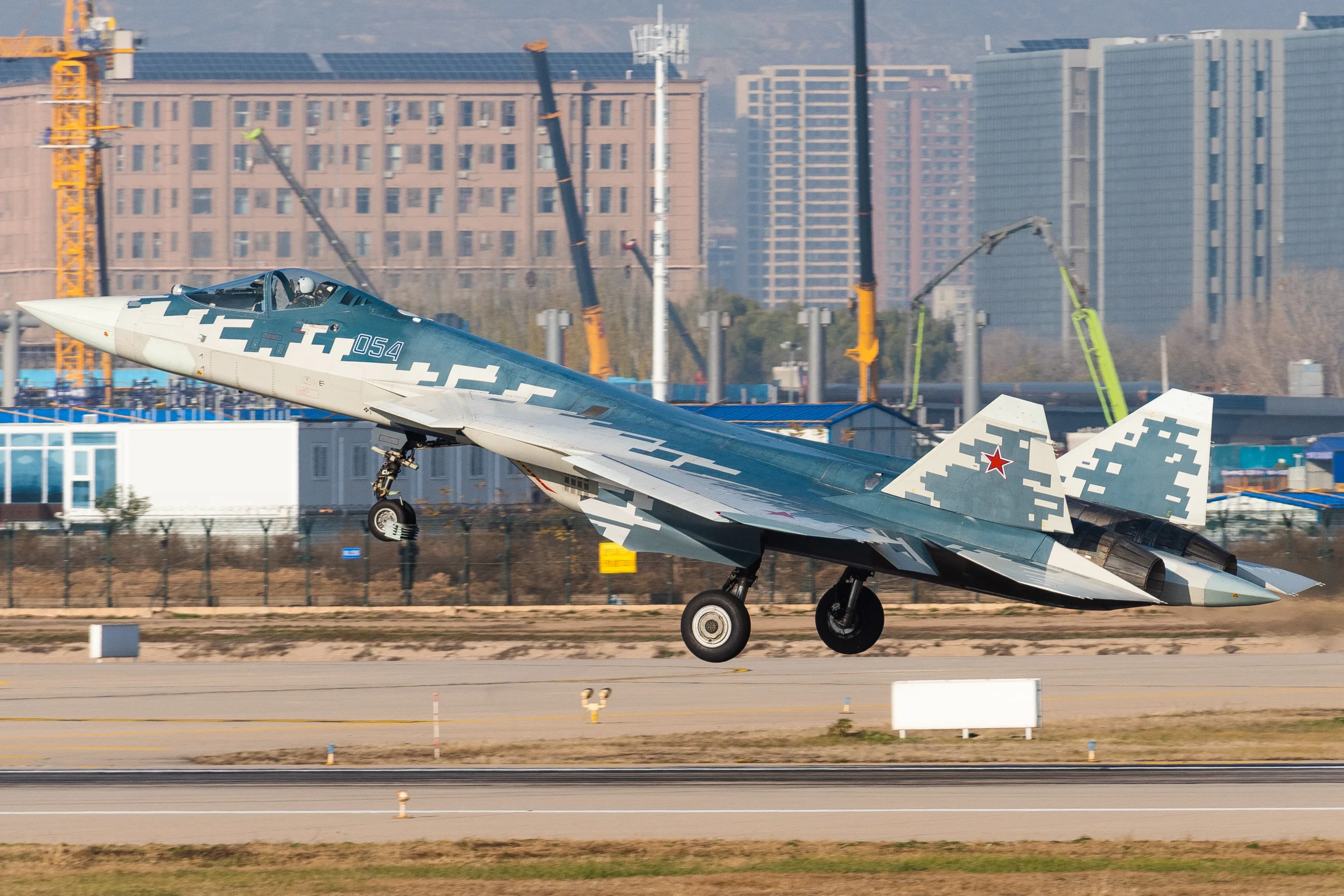
With the addition of the latest batch, the Russian Aerospace Forces now operate close to 32 Su-57 fighters.
This figure reflects steady but deliberate growth rather than mass induction, aligning with Russia’s phased approach to fifth-generation capability development.
The new deliveries come nearly two months after confirmation that the Su-57 successfully flew with the Izdeliye 177 engine during tests conducted in December 2025.
The powerplant, developed by United Engine Corporation, represents a major step in improving thrust, efficiency, and durability.
Each Izdeliye 177 engine is rated at up to 16,000 kilograms of thrust with afterburner engaged. Officials have stated that the engine reduces fuel consumption and significantly improves service life compared to the Saturn AL-41F1.
Despite the engine’s progress, imagery released by the manufacturer indicates that the latest operational aircraft remain powered by the AL-41F1.
The transition to the new engine is expected to occur in later production batches rather than immediate frontline deliveries.
Export momentum has also begun to shape the program’s trajectory. Algeria has reportedly inducted its first Su-57 aircraft, becoming the platform’s first confirmed export customer.
Unverified documents circulating after a 2025 cyber incident suggest Algeria ordered 12 aircraft. Videos showing Su-57 activity near Oum El Bouaghi Air Base have fueled further attention, although no official confirmation has been issued.
Upgraded Sensor Systems in the Su-57
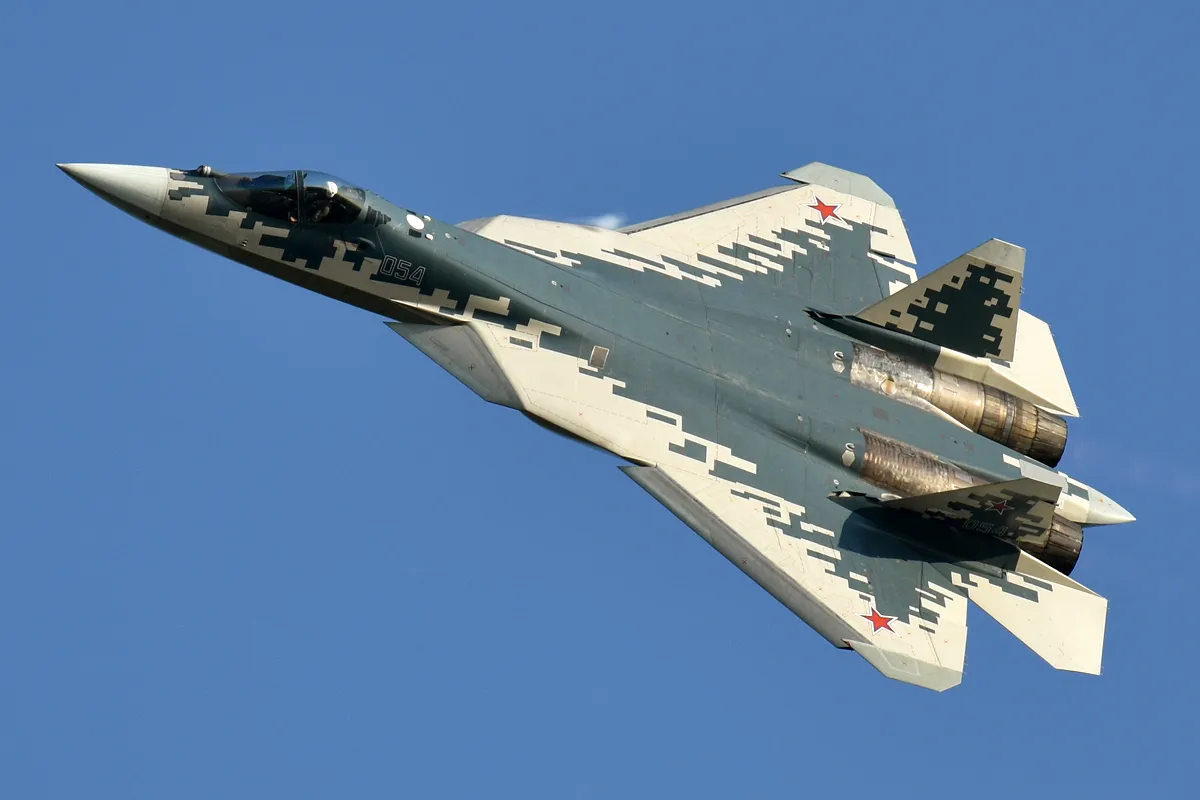
Imagery associated with the new batch has drawn attention to visible changes in the Su-57’s 101KS electro-optical complex. This system supports missile warning, self-protection, and passive surveillance functions across multiple environments.
Earlier versions of the 101KS primarily focused on detecting incoming threats. The revised configuration appears to incorporate additional apertures and optics distributed around the airframe.
Analysts assessing high-resolution images have noted indications of multispectral coverage. These sensors are believed to operate across visible, mid-wave infrared, long-wave infrared, and possibly ultraviolet bands.
Such a configuration suggests the system has evolved beyond a defensive warning role. Instead, it may now provide continuous situational awareness with near-spherical coverage around the aircraft.
If validated, this shift would align the Su-57 with the operational philosophy behind distributed aperture systems used on Western fifth-generation fighters. These systems allow pilots to detect aircraft and missile threats without emitting radar energy.
Operating in electronic silence improves survivability in heavily contested airspace. Passive detection also enhances the aircraft’s ability to track targets while minimizing exposure to enemy sensors.
While no official confirmation has been provided, the visual evidence suggests a substantial upgrade in onboard sensing capability. This would represent one of the most significant avionics advancements for the Su-57 since its induction.
https://commons.wikimedia.org/wiki/File:Su57_take_off.jpg
Weapons And UAV Integration
Beyond sensors, speculation has intensified around the Su-57’s evolving weapons ecosystem.
According to Eurasian Times, Defense analysts have suggested that the latest aircraft may be capable of deploying the newly unveiled S-71 air-launched combat UAV.
The S-71 was publicly revealed during Army 2024 as a stealthy unmanned system designed for reconnaissance and strike missions. It can reportedly identify, mark, or destroy high-value targets.
Integrating such a UAV would require enhanced data links, mission management software, and onboard control systems. These requirements align with the broader upgrades hinted at in Rostec’s statements.
Recent reports claimed that a variant of the S-71 demonstrated effectiveness against a mobile rocket system during testing.
While details remain limited, such a capability would significantly expand the Su-57’s reach beyond traditional air-to-air and air-to-ground roles.
Deploying an air-launched UAV from a stealth fighter would allow stand-off engagement in high-risk zones. It would also support cooperative operations between manned and unmanned platforms.
The Su-57’s internal weapons bays and modular avionics architecture were designed with growth in mind. This flexibility supports gradual integration of new weapons without extensive structural modification.
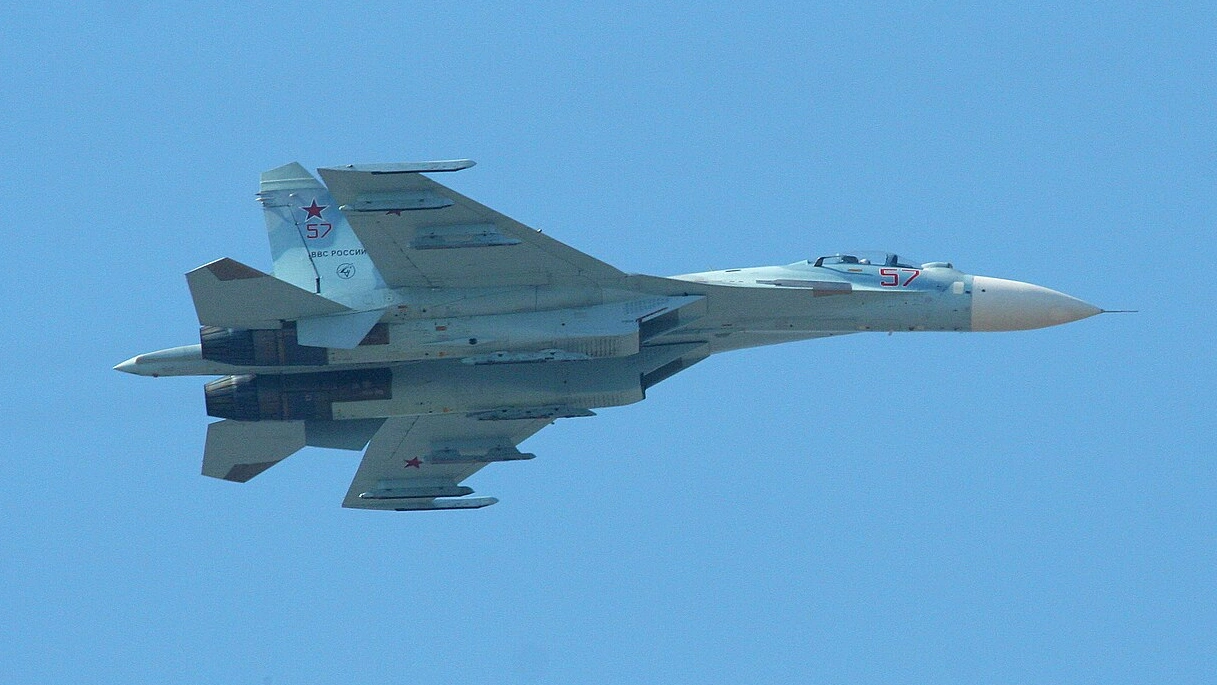
https://commons.wikimedia.org/wiki/File:Sukhoi_Su-27SM-3_Flanker_57_red_(8623309518).jpg
Sukhoi SU-57: Program Outlook
UAC leadership has described the Su-57 as a future-oriented platform rather than a static design. According to company officials, the aircraft continues to undergo iterative improvements across avionics, sensors, engines, and weapons.
The ongoing Megapolis development framework underpins this approach. Rather than waiting for a single definitive configuration, upgrades are introduced progressively as technologies mature.
This strategy allows the Su-57 to remain relevant against evolving threats while managing production complexity. It also supports export customization for international customers.
Interest from India remains a key variable in the program’s long-term outlook. The potential acquisition of two to three squadrons would significantly alter the aircraft’s production scale and global footprint.
The combination of improved passive sensing, expanded weapons options, and future engine upgrades positions the Su-57 as Russia’s primary air combat platform well beyond 2040.
Its gradual maturation reflects a long-term commitment rather than a rapid transformation.
Stay tuned with us. Further, follow us on social media for the latest updates.
Join us on Telegram Group for the Latest Aviation Updates. Subsequently, follow us on Google News
