


LOS ANGELES- A Delta Air Lines Sky Club employee has filed a proposed class action lawsuit over unpaid time spent in airport security screening before work. The case centers on whether TSA wait time qualifies as compensable work under California law.
The lawsuit involves Delta Air Lines (DL) and Los Angeles International Airport, Los Angeles (LAX). The claim targets Compass Group USA, the lounge’s food service operator, with Delta named as a joint employer.
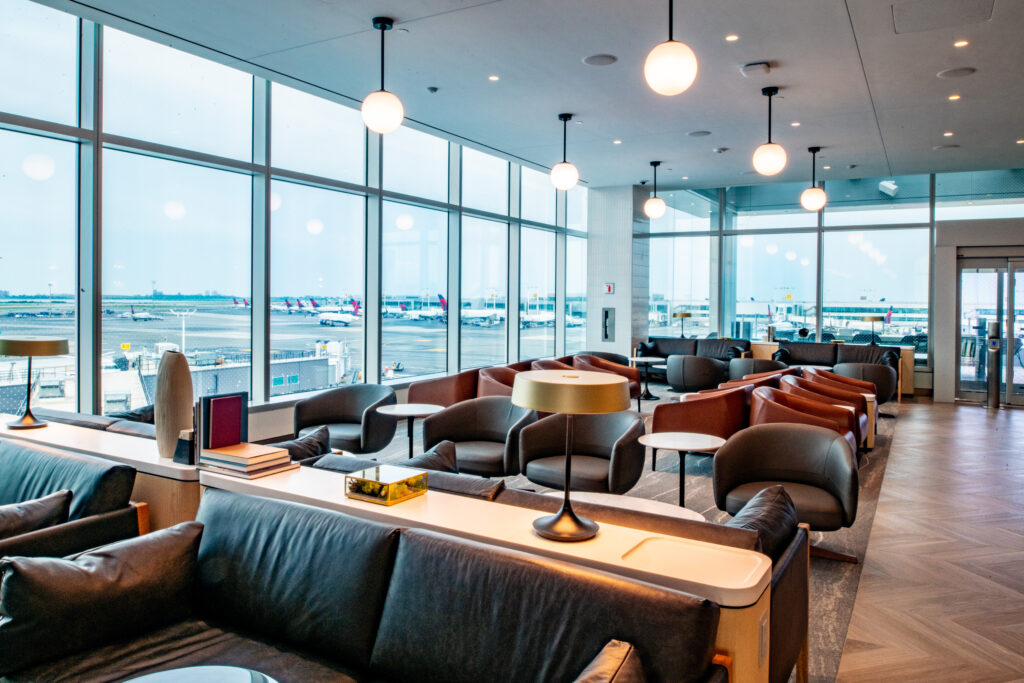
Delta Faces LAX Pay Lawsuit
The lawsuit argues that time spent clearing TSA security before clocking in should count as hours worked. Under California wage orders, work time includes periods when an employee is under the employer’s control.
The claim relies on California Supreme Court precedent, including Frlekin v. Apple, which found that employer-required exit searches conducted on company premises could be compensable.
The Sky Club worker argues that mandatory airport security is a condition of accessing the workplace and therefore qualifies as employer-controlled time.
Why Employer Control Is the Deciding Factor
California courts have made clear that necessity alone does not make time compensable. In Huerta v. CSI Electrical Contractors, the Supreme Court emphasized that employer control over the manner, timing, and conditions of an activity is the key test.
For security screening to qualify as paid time, it must be required by the employer, administered at the employer’s direction, and controlled by the employer.
TSA screening fails all three criteria. The checkpoint is operated by a federal agency, not the airline or concession operator. Employers cannot alter screening rules, manage staffing, or control wait times, ViewfromtheWing reported.
Prior Case Law Weakens the Argument
This issue has already been tested in federal court. In Cazares v. Host International, the Ninth Circuit rejected a similar claim involving lounge employees at Los Angeles.
The court ruled that TSA screening is government-mandated, not employer-mandated, and therefore not compensable.
The court also dismissed arguments related to limited mobility during meal and rest breaks. Employers are only required to allow employees to leave their immediate workplace, not the entire secured airport area. While the Ninth Circuit decision is not binding on California state courts, it remains highly persuasive.
Joint Employer Claim Against Delta
The lawsuit also names Delta as a joint employer, a strategy often used to bring in a larger corporate defendant. However, the facts do not strongly support this theory.
Delta sets brand and service standards for its lounges, but day-to-day supervision, scheduling, and payroll are handled by Compass Group.
Delta does not approve time cards or manage individual employees. Benefiting from contracted services does not equal direct employer control under California law.
Why the Case Is Unlikely to Succeed
For the claim to gain traction, it would need evidence of direct employer control. An example would be a requirement that employees arrive a fixed amount of time early, specifically due to security delays.
Without such facts, the argument rests solely on the existence of TSA screening, which courts have consistently rejected.
California employment law is complex and often employee-friendly, but existing precedent does not support pay claims tied to federally mandated airport security. Based on current case law, this lawsuit faces long odds.
Stay tuned with us. Further, follow us on social media for the latest updates.
Join us on Telegram Group for the Latest Aviation Updates. Subsequently, follow us on Google News
