

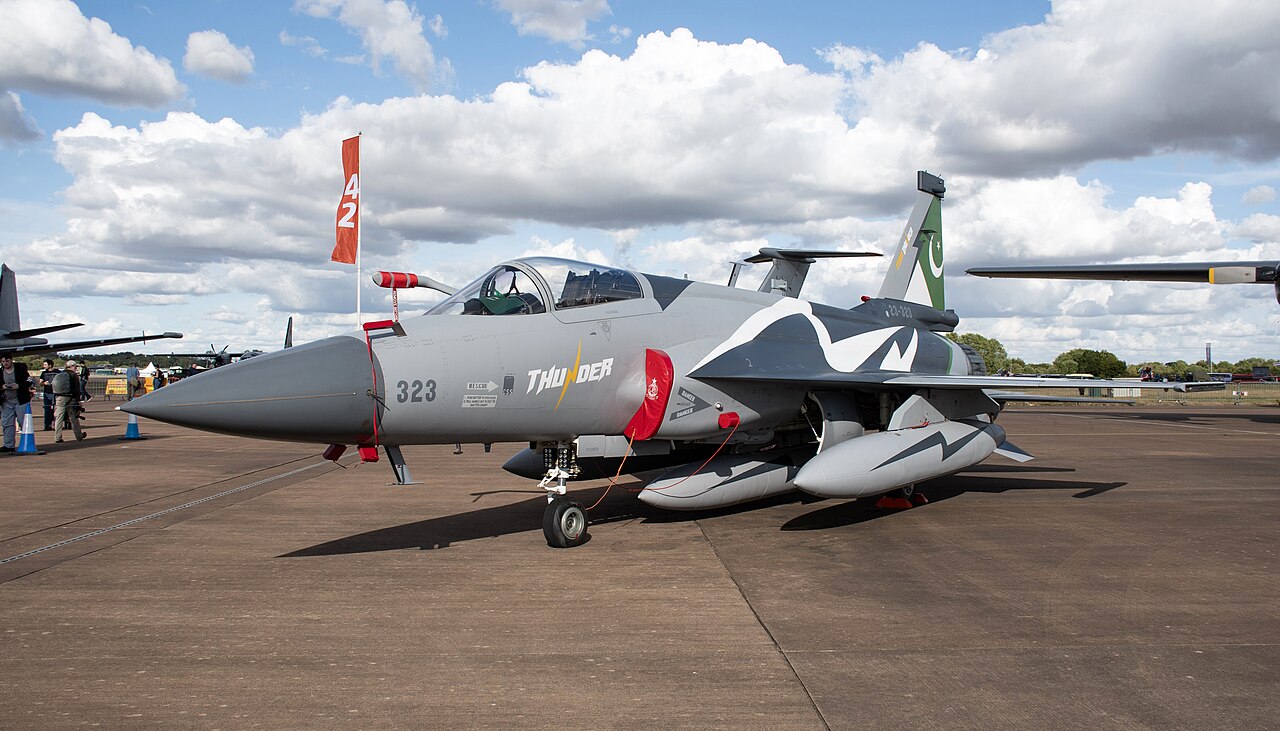
JAKARTA- Indonesia is in preliminary discussions with Pakistan over a potential acquisition of JF-17 Thunder fighter jets, as Jakarta continues an aggressive and unusually broad effort to modernize its air force. Officials from Indonesia’s Defence Ministry confirmed that meetings were held with senior Pakistan Air Force leadership, though no binding decisions have yet been taken.
The talks reportedly followed meetings in Jakarta and Islamabad, where Indonesian Defence Minister Sjafrie Sjamsoeddin met Pakistan Air Force Chief Air Chief Marshal Zaheer Ahmed Baber Sidhu. Indonesian officials described the engagement as exploratory, emphasizing that negotiations remain at an early stage and are subject to further evaluation.
https://commons.wikimedia.org/wiki/File:Nigerian_JF-17_fighter_aircraft.png
Indonesia-Pakistan talks
Discussions center on a possible purchase of approximately 40 JF-17 Thunder fighter jets, according to Aerospace Global News.
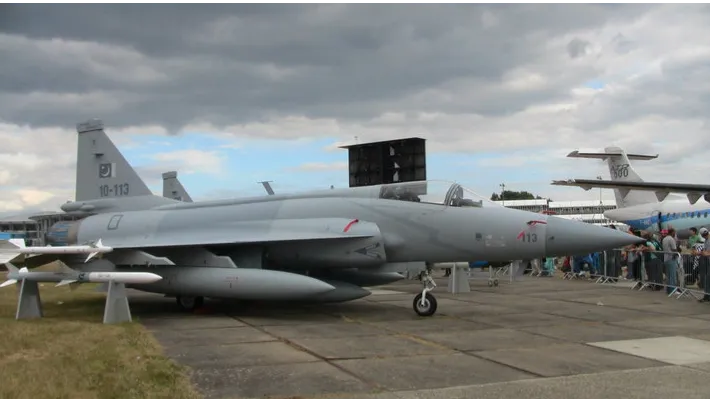
The aircraft is jointly developed by Pakistan and China and is positioned as a lightweight, multi-role combat platform aimed at export markets.
Beyond the jets themselves, the proposed package under discussion reportedly includes supporting capabilities. These may cover air defense systems, pilot and ground crew training, and engineering support for long-term sustainment.
Key elements under discussion include:
- JF-17 Thunder Block-III fighter aircraft
- Training for junior, mid-level, and senior air force personnel
- Engineering and maintenance support packages
- Surveillance and strike-capable unmanned aerial systems
No timelines, delivery schedules, or financing structures have been disclosed, and officials from both sides stress that talks remain non-committal.

JF-17 export momentum
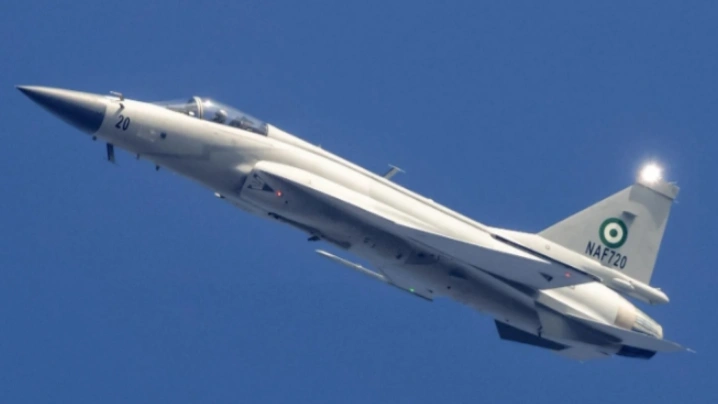
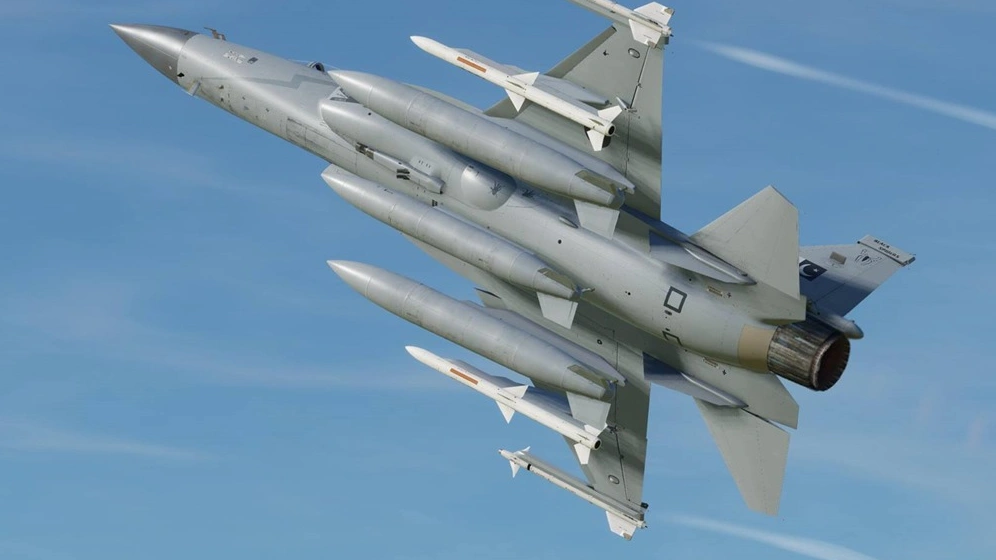
The potential Indonesian deal comes amid rising international interest in the JF-17 program. Pakistan has already exported the aircraft to Nigeria and Azerbaijan, with additional discussions reportedly taking place with several other countries.
Recent reports suggest Pakistan has also explored sales to Libya and Sudan, while unconfirmed accounts have linked Saudi Arabia to discussions involving the aircraft as part of broader financial arrangements.
Analysts note that the platform’s relatively low acquisition cost and flexible configuration have helped it gain traction in price-sensitive markets.
Interest in the JF-17 has also been influenced by Pakistan’s expanding domestic weapons development program. That effort accelerated following combat operations in 2025, which highlighted the effectiveness of long-range air-to-air missile integration on the platform.
https://commons.wikimedia.org/wiki/File:JF-17_Thunder_(4826622777).jpg
Indonesia fighter strategy
Indonesia’s interest in the JF-17 reflects a defense procurement strategy unlike that of most mid-sized air forces. Rather than limiting itself to two fighter types for logistical efficiency, Jakarta has pursued a wide supplier base to reduce political and operational dependency.
The Indonesian Air Force already operates:
- US-built F-16 fighters
- Russian Su-27 and Su-30 aircraft
- South Korean KA-50 light fighters
In addition, Indonesia has committed to 42 Dassault Rafale jets, plans to acquire 48 Turkish KAAN fighters, and holds a minority stake in the KAI KF-21 Boramae program. Separate talks have involved potential purchases of Chinese J-10s and US-built F-15EX fighters.
Indonesia’s ambitions have previously been constrained by geopolitical realities. Efforts to acquire the F-35 were declined by Washington, while additional Russian purchases were curtailed under US sanctions legislation. The JF-17 may therefore represent a politically viable alternative that fits Indonesia’s non-aligned posture.
https://commons.wikimedia.org/wiki/File:Jf-17-nigeria.jpg
Bottom Line
Indonesia’s discussions with Pakistan over the JF-17 Thunder underscore Jakarta’s determination to expand and diversify its combat aviation portfolio.
While the talks remain preliminary, even the possibility of such a deal highlights how Indonesia is reshaping its air power strategy beyond traditional supplier relationships.
Whether negotiations mature into a signed contract will depend on cost, capability alignment, and Indonesia’s ability to manage an already complex fleet mix.
Stay tuned with us. Further, follow us on social media for the latest updates.
Join us on Telegram Group for the Latest Aviation Updates. Subsequently, follow us on Google News
