


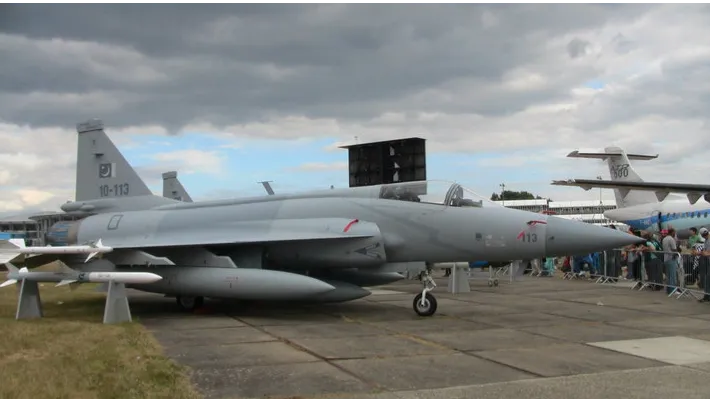
DHAKA— Bangladesh is actively evaluating the acquisition of the JF-17 Thunder multirole fighter as part of a broader effort to modernize its air combat fleet. The move reflects growing concern within the Bangladesh Air Force over the operational lifespan of several ageing fighter aircraft that are approaching retirement.
The assessment is being conducted as part of a long-term force development plan linked to national defense objectives. While civil aviation activity continues through Dhaka’s Hazrat Shahjalal International Airport (DAC), served by Biman Bangladesh Airlines (BG), the focus of this initiative remains firmly on strengthening military airpower.
https://commons.wikimedia.org/wiki/File:JF-17_Thunder_(4826622777).jpg
Bangladesh Plans JF-17 Acquisition
Bangladesh currently operates a mix of older combat aircraft, including Chinese-built F-7 variants and early-generation MiG platforms.
These jets have served for decades but now face increasing maintenance demands and reduced combat relevance in a rapidly evolving regional security environment.
Defense planners are seeking a cost-effective replacement that balances capability, affordability, and logistical support. The JF-17 Thunder, jointly developed by Pakistan and China, has emerged as a leading contender due to its multirole flexibility and competitive pricing.
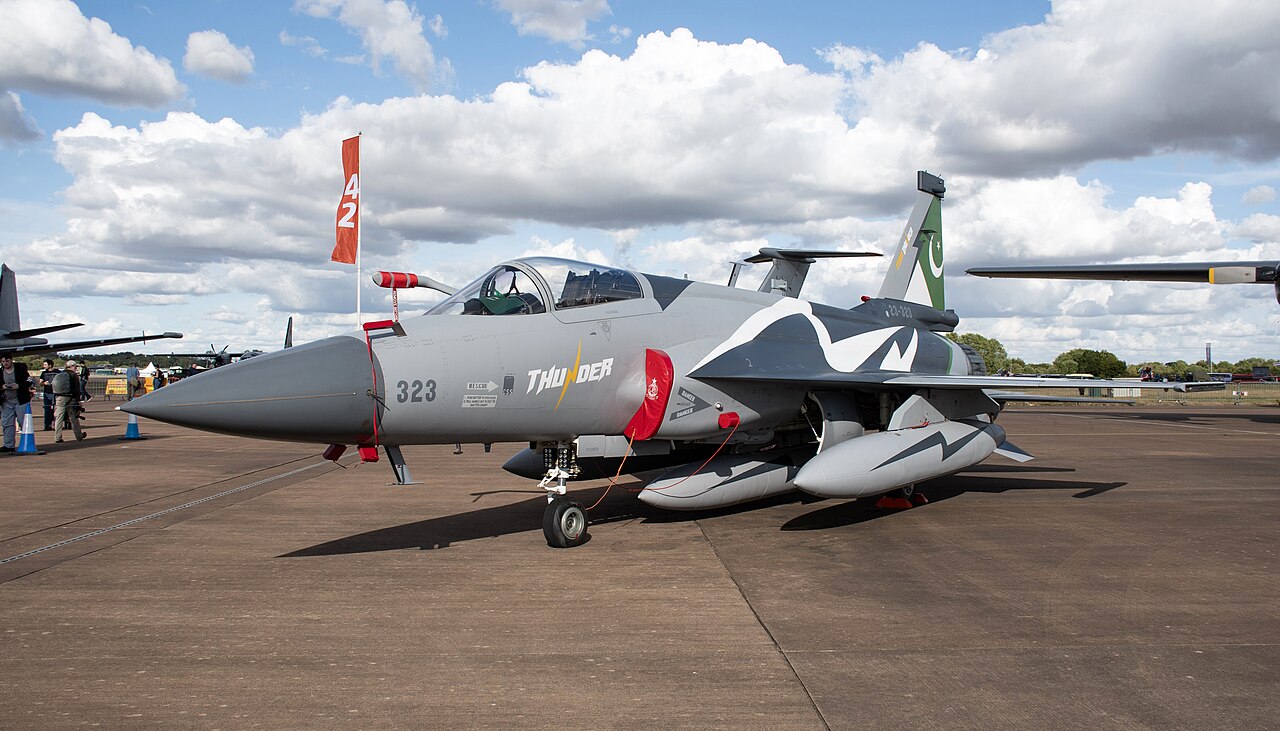
The aircraft is available in multiple production blocks, offering incremental improvements in avionics, sensors, and weapons integration.
This modular approach aligns with Bangladesh’s requirement for phased modernization without excessive upfront expenditure.
https://commons.wikimedia.org/wiki/File:Jf-17-nigeria.jpg
JF-17 Capabilities
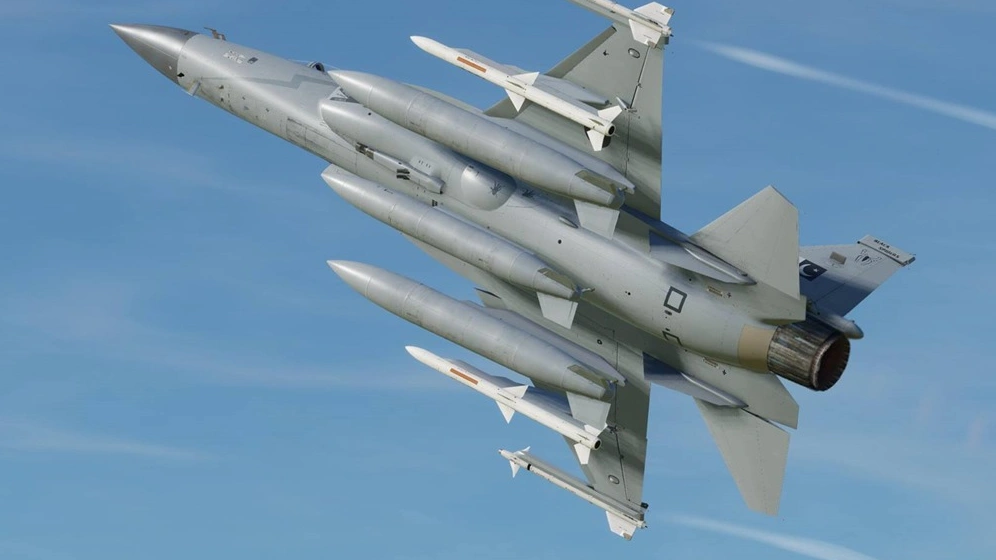
The JF-17 is designed as a lightweight, single-engine fighter capable of both air-to-air and air-to-ground missions.
It features modern radar systems, beyond-visual-range missile capability, and compatibility with a wide range of guided munitions.
Later variants of the aircraft incorporate advanced electronic warfare systems and improved cockpit displays. These enhancements significantly improve situational awareness and combat survivability compared with older fighters currently in service with the Bangladesh Air Force.
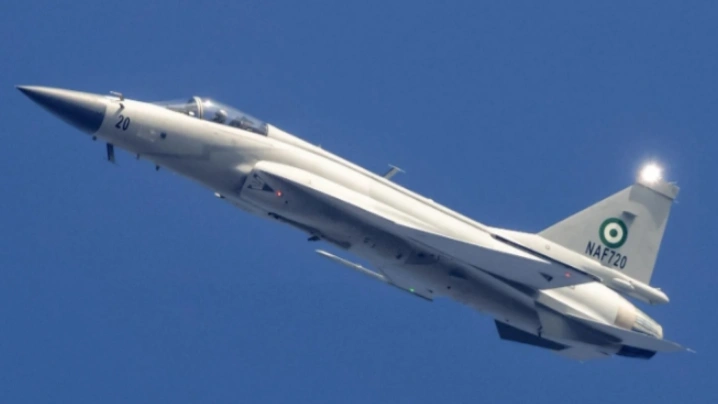
Operational use by several air forces has demonstrated the platform’s adaptability in different climates and mission profiles.
For Bangladesh, this operational track record strengthens the case for adopting the aircraft as a frontline replacement.
https://commons.wikimedia.org/wiki/File:Nigerian_JF-17_fighter_aircraft.png
Strategic Considerations
Any potential JF-17 acquisition would represent a notable shift in Bangladesh’s fighter procurement strategy.
The decision is expected to consider not only performance and cost, but also training, sustainment, and long-term upgrade pathways.
Regional air force modernization programs have added urgency to Bangladesh’s evaluation process. Ensuring credible air defense and deterrence capability remains a priority as neighboring countries continue to induct newer combat aircraft.
Officials have not disclosed timelines or quantities, indicating that discussions remain at an exploratory stage.
However, the assessment itself signals intent to move forward with a structured replacement program.
https://commons.wikimedia.org/wiki/File:Pakistan_Air_Force_JF-17_Thunder_Block_III.jpg
Bottom Line
Bangladesh’s exploration of the JF-17 Thunder highlights a clear effort to replace ageing fighter aircraft with a modern, multirole platform.
While no final decision has been announced, the evaluation reflects strategic planning aimed at maintaining air combat readiness.
The outcome of this process will shape the future capabilities of the Bangladesh Air Force for decades to come.
Stay tuned with us. Further, follow us on social media for the latest updates.
Join us on Telegram Group for the Latest Aviation Updates. Subsequently, follow us on Google News
