

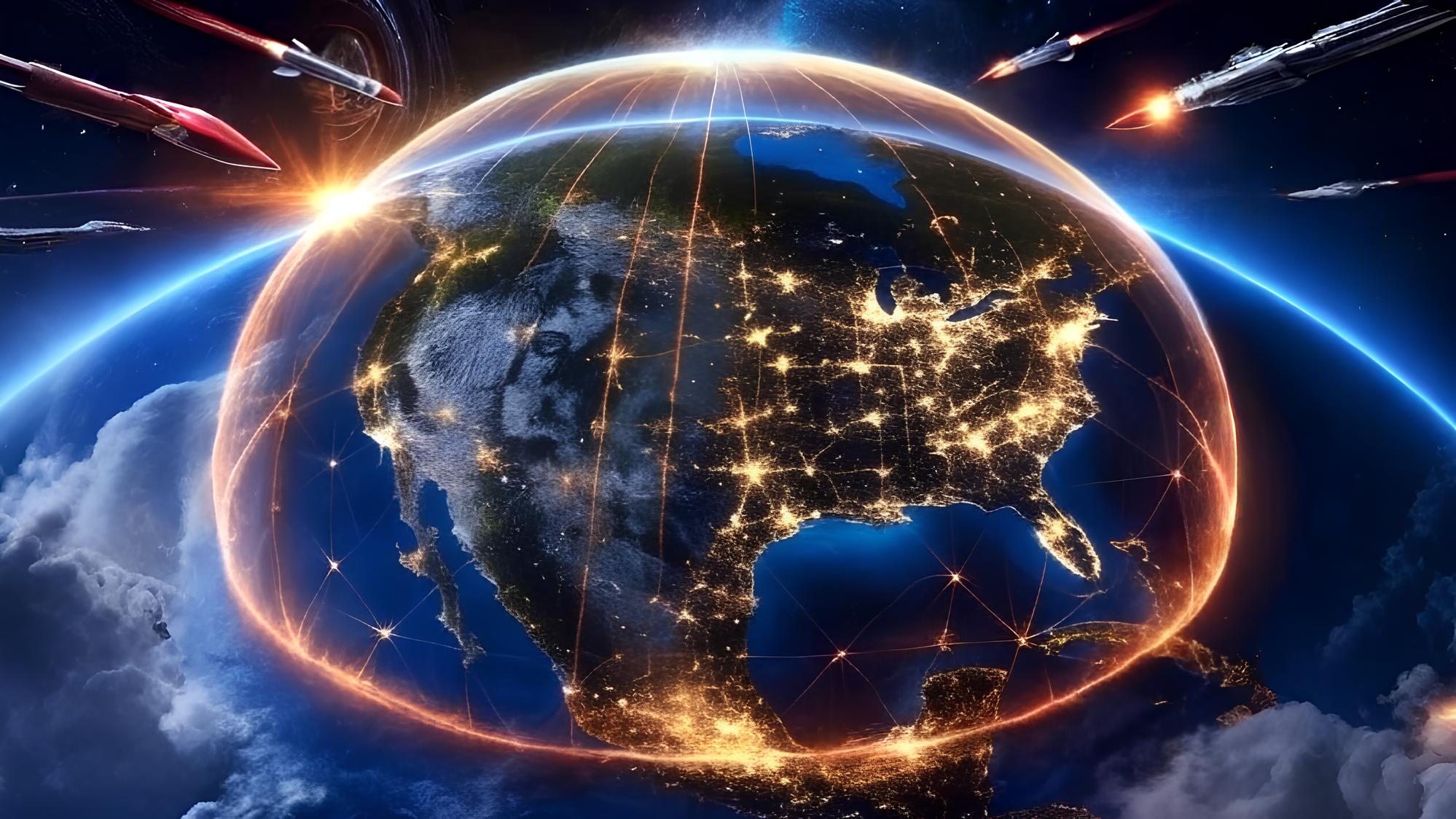
In May 2025, former U.S. President Donald Trump unveiled his vision for the “Golden Dome,” a comprehensive missile defense system designed to protect the United States from ballistic missiles, hypersonic weapons, and other aerial threats.
Promising to integrate ground-based interceptors with space-based platforms, Trump emphasized that the system would be fully operational before the end of his term, at a projected cost of $175 billion.
Trump described the system as capable of intercepting missiles “even if they are launched from the other sides of the world, and even if they are launched in space.” The Golden Dome concept represents an unprecedented scale of technological ambition, seeking to create a layered defense network that spans terrestrial and orbital domains.
The Golden Dome’s Structure and Coverage
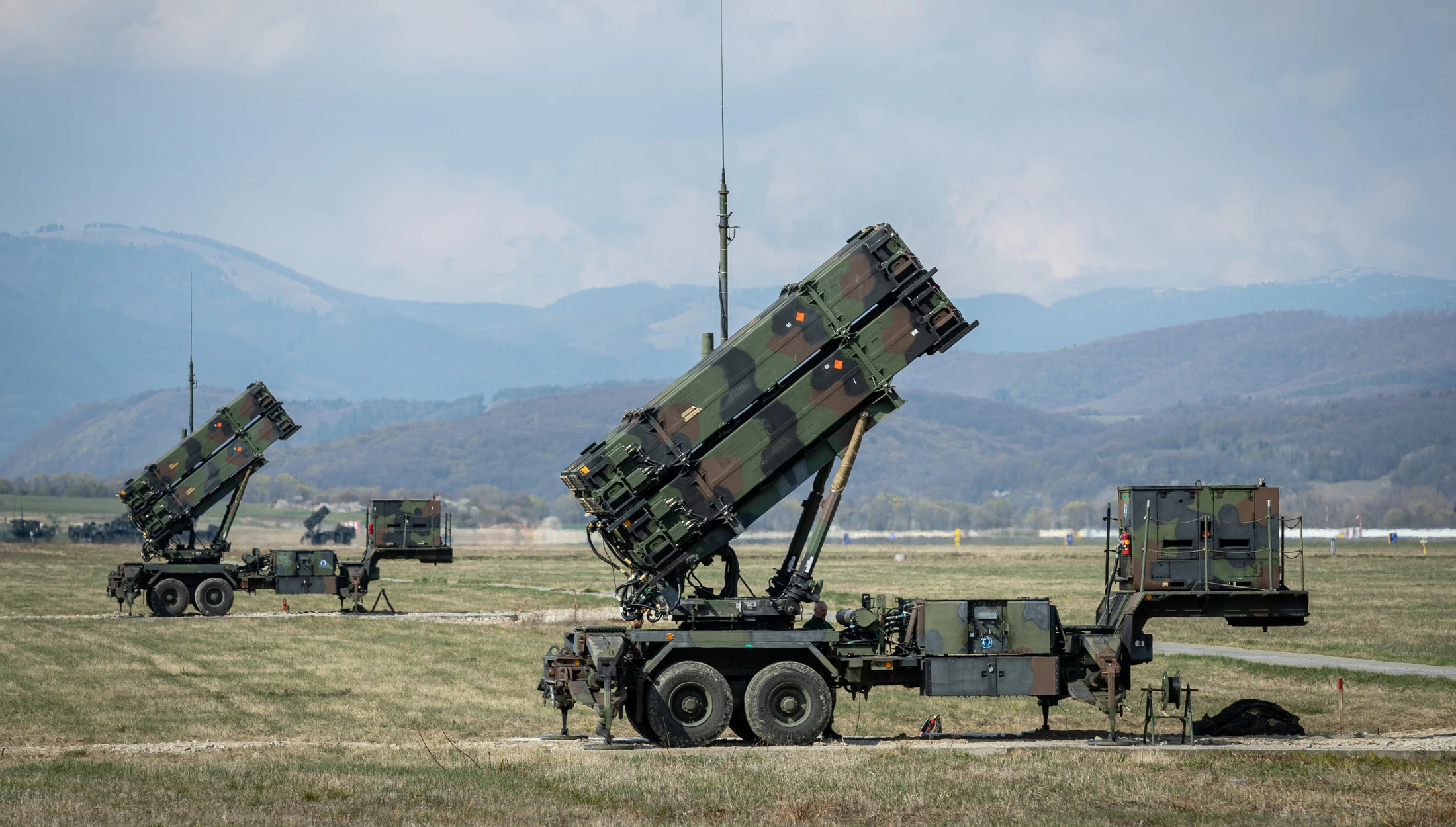
The Golden Dome is envisioned as a multi-tiered system combining existing missile defense assets with new space-based interceptors.
According to Space Force General Michael Guetlein, the system “will build on existing systems aimed at traditional ICBMs” while adding capabilities to detect and intercept cruise missiles and hypersonic threats in multiple phases of flight.
Defense Secretary Pete Hegseth highlighted that the system will incorporate sensors and interceptors “across the land, sea, and space.” The integration of these layers intends to establish a robust command-and-control network capable of rapid response to multiple simultaneous missile launches.
Key operational aspects of the Golden Dome include:
- Ground-based interceptors for conventional ICBM threats.
- Space-based interceptors to detect launches immediately and engage missiles during boost, mid-course, and terminal phases.
- Coordination with existing US Missile Defense Agency (MDA) programs in Alaska and California.
Trump’s Golden Dome Real Cost
Despite Trump’s initial $175 billion estimate, independent analyses indicate that the true cost could be exponentially higher. A Congressional Budget Office (CBO) report suggests deployment of space-based interceptors to counter ICBMs could cost between $161 billion and $542 billion, depending on scale and technological assumptions.
Todd Harrison of the American Enterprise Institute modeled multiple deployment scenarios, highlighting:
- Limited System: Prioritizing cost over coverage could remain near $175 billion for the first five years but reach $471 billion over 20 years.
- Strategic Threat Focus: Full protection against long-range ballistic and hypersonic weapons could cost approximately $2.4 trillion over two decades.
- Robust All-Threat Defense: Aligning with Trump’s goal of near-complete aerial protection might cost up to $3.2 trillion over 20 years.
Harrison concludes, “Trump’s cited $175 billion figure would only buy a limited system, likely adequate against North Korea but insufficient against China or Russia.”
Technological Hurdles and Feasibility
While the concept of the Golden Dome is compelling, several technological challenges remain. Space-based interceptors (SBIs) do not yet exist in operational form. Thousands of satellites would need to be designed, tested, and deployed in low-Earth orbit, requiring a monumental manufacturing effort.
Experts express skepticism:
- Dr. Stacie Pettyjohn, Center for a New American Security: “It is complicated, with multiple systems needing integration. Failures along the way are almost certain.”
- William Fortschen, weapons researcher: “Even a partially completed Golden Dome could prevent nightmare scenarios, but achieving full operational status within a few years is highly improbable.”
Furthermore, the system must contend with emerging threats, including hypersonic weapons, cruise missiles, and Fractional Orbital Bombardment Systems (FOBS), which can approach from unpredictable trajectories.
Geopolitical Implications
The Golden Dome has implications beyond national defense. China and Russia are actively developing hypersonic and orbital-capable weapons. Chinese Foreign Ministry spokesperson Mao Ning warned that the system “heightens the risk of space becoming a battlefield.”
Patrycja Bazylczyk of the Center for Strategic and International Studies notes, “The Golden Dome re-orients U.S. missile defense policy towards great power competitors. It raises the threshold for adversaries contemplating an attack and strengthens deterrence.”

Historical Context: Space-Based Missile Defense
The Golden Dome echoes past American initiatives. President Ronald Reagan’s Strategic Defense Initiative (SDI), popularly called “Star Wars,” proposed a space-based missile shield in 1983 but faced insurmountable technological and cost challenges.
Today, the idea persists in a modernized form, with advances in satellite deployment and tracking systems.
Harrison observes, “The technological ambition is reminiscent of SDI, but current advances in low-cost satellite launches could make a limited demonstration feasible within a decade.”

Funding and Program Management
Congress has allocated an initial $25 billion toward research and early-stage development, with over 1,000 companies, including Rocket Lab, Viasat, and Deloitte, contracted for preliminary designs and prototype testing.
The scale of investment underscores the massive industrial and economic commitment required to realize the system.
Analysts warn that future administrations may review or scale back the program if costs escalate or if SBIs underperform.
Dave Vorland, former acting deputy assistant secretary for space and missile defense policy, cautions: “Future Congresses would need to scrutinize the totality of expenditures before approving continuation.”
Bottom Line
The Golden Dome remains a conceptual framework, ambitious in scope and unprecedented in technological demands. While potentially transformative for U.S. national security, the system’s feasibility is constrained by cost, technological readiness, and geopolitical considerations.
Even if only partially deployed, the Golden Dome could enhance deterrence and protect against limited missile attacks. Full realization, however, may require decades of development, multi-trillion-dollar investment, and breakthroughs in orbital missile defense technologies.
As Trump’s vision faces practical constraints, the future of space-based missile defense will depend on strategic priorities, technological progress, and sustained political will.
Stay tuned with us. Further, follow us on social media for the latest updates.
Join us on Telegram Group for the Latest Aviation Updates. Subsequently, follow us on Google News
