

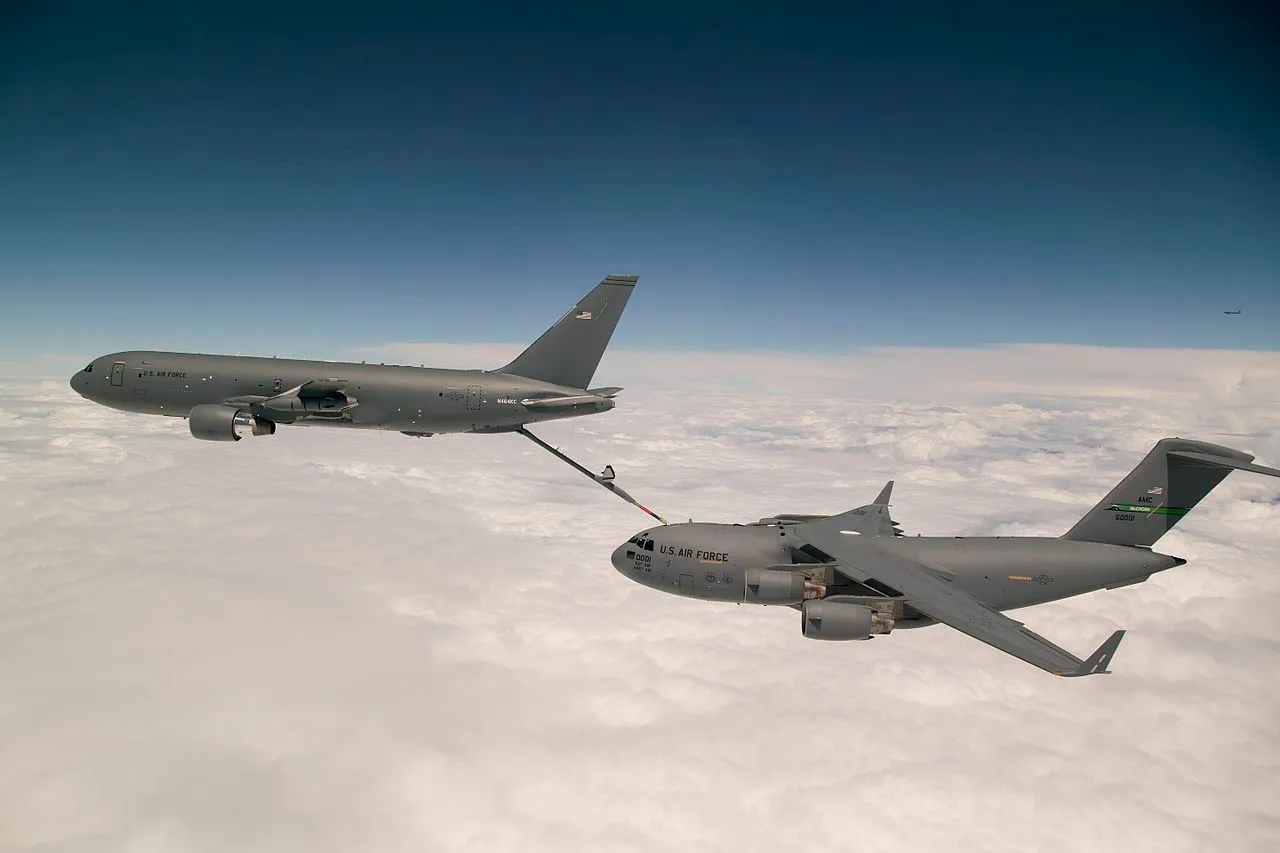
ARLINGTON- Boeing secures a $2.47 billion contract from the United States Air Force (USAF) for 15 KC-46A Pegasus aerial refueling tankers under Lot 12. Production at the Everett (PAE) facility supports global air mobility needs.
The USAF relies on KC-46A to replace aging KC-135 Stratotankers as demand rises. Deliveries resume after a brief halt, with fleet expansion targeting 263 units.

US Air Force Boeing $2.47 Billion Contract
The United States Air Force (USAF) awarded the $2.47 billion Lot 12 contract to Boeing on November 25, 2025, for 15 KC-46A Pegasus tankers. Work occurs at Boeing’s Everett, Washington, facility, with completion set for mid-2029.
This order brings the total KC-46As on contract worldwide to 183, including 98 in USAF service, six with Japan Air Self-Defense Force, and four contracted for the Israel Air Force.
According to FlightGlobal, the contract stabilizes production after a March 2025 delivery pause due to structural cracks in two jets.
Boeing and USAF deemed the cracks non-safety risks. Inspections and repairs allowed resumption in May 2025.
Boeing KC-46 program manager Jake Kwasnik stated the award ensures supply chain stability and delivers advanced refueling capabilities.
The KC-46A, derived from the 767 airliner, refuels fighters, bombers, and transports mid-air. It carries 212,000 pounds of fuel, hauls 65,000 pounds of cargo, and supports 114 passengers or 54 medical evacuees. Range exceeds 7,000 nautical miles, enabling global missions from austere bases.
Strategic Role in USAF Tanker
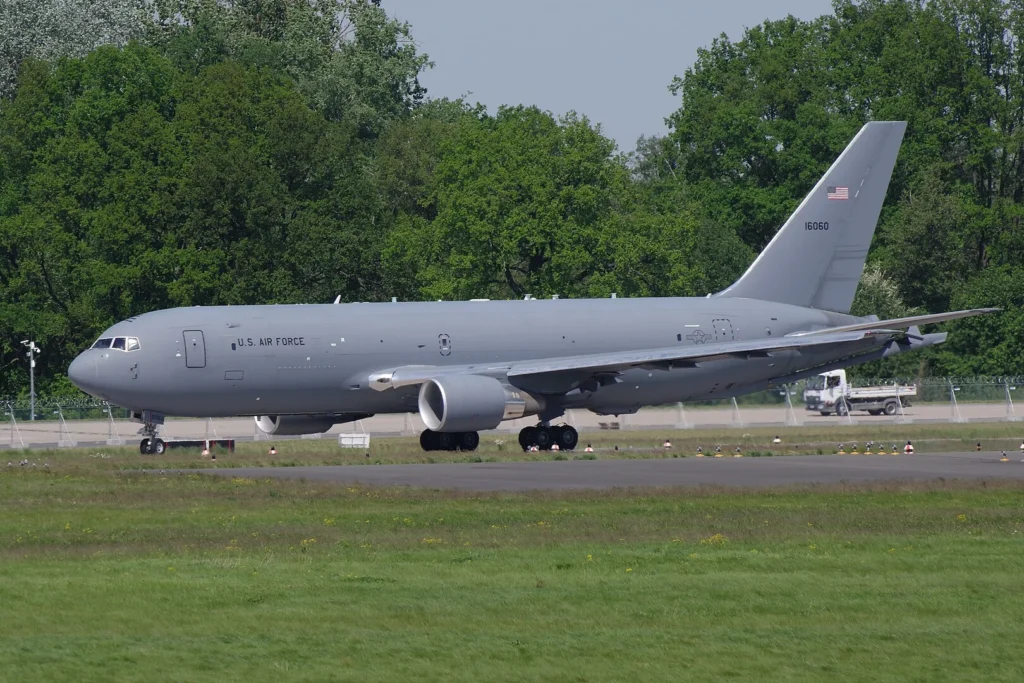
The USAF retires KC-10 Extenders and phases out KC-135s, built in the 1950s. KC-46A fills this gap, logging over 150,000 flight hours in training and combat since 2022.
It integrates with the Advanced Battle Management System for real-time data sharing across domains.
A July 2024 contract upgrades communications, connectivity, and situational awareness. These enhancements counter evolving threats and boost interoperability with allies. USAF eyes up to 75 more KC-46As via a production extension, reaching 263 total.
Boeing completed the first flight of a KC-46A with Remote Vision System 2.0 in late 2025. RVS 2.0 improves boom operator visibility, fixing early deficiencies.
Remaining challenges include boom stiffness and cargo software, but tankers deploy to Indo-Pacific and Europe.
Global Demand and Export Success
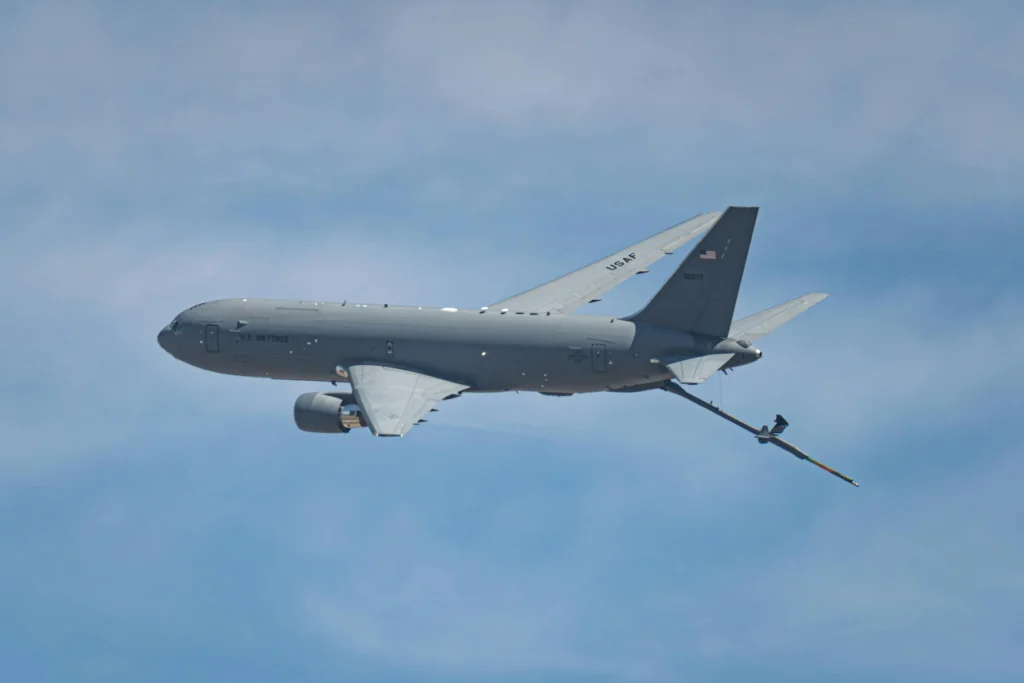
Japan operates six KC-46As for regional refueling. Israel plans four Middle East operations. International interest grows for the tanker’s multi-role design, including data relay and survivability features.
Boeing invests in Block 1 upgrades for future-proofing. These add secure links and edge computing, keeping KC-46A ahead of next-generation refueler concepts. USAF tests prototypes to integrate hypersonic and unmanned systems.
Production efficiency at Everett supports 15-18 jets yearly. Supply chain partners provide composites and avionics, meeting deadlines. The program creates 1,500 jobs locally and bolsters U.S. export leadership in aerospace.

Overcoming Challenges
Early KC-46A issues delayed full certification until 2019. USAF accepted 70 jets with waivers for unresolved fixes. Recent RVS 2.0 testing shows 95% success in boom contacts, up from 80%.
Crew training at Altus Air Force Base (LTS) prepares pilots for dual-role missions. Simulations replicate refueling in contested airspace. Maintenance intervals extend to 800 hours, cutting costs 20% below KC-135.
The Lot 12 jets incorporate G081 sustainment systems for faster turnarounds. Subscriptions cover software updates, ensuring cyber resilience. USAF reports 99% mission capability rates in 2025 deployments.
Stay tuned with us. Further, follow us on social media for the latest updates.
Join us on Telegram Group for the Latest Aviation Updates. Subsequently, follow us on Google News
