


ARLINGTON- Boeing secured an $877 million order from the US Special Operations Command in Tampa (TPA) for new MH-47G helicopters, marking a major expansion of the CH-47 Chinook programme. The award likely covers up to 18 aircraft based on comparable pricing structures.
The order strengthens the US Army’s efforts to modernise its heavy-lift capability through SOCOM and the 160th Special Operations Aviation Regiment. According to Flight Global, this award adds to a growing set of domestic and international Block II Chinook commitments.
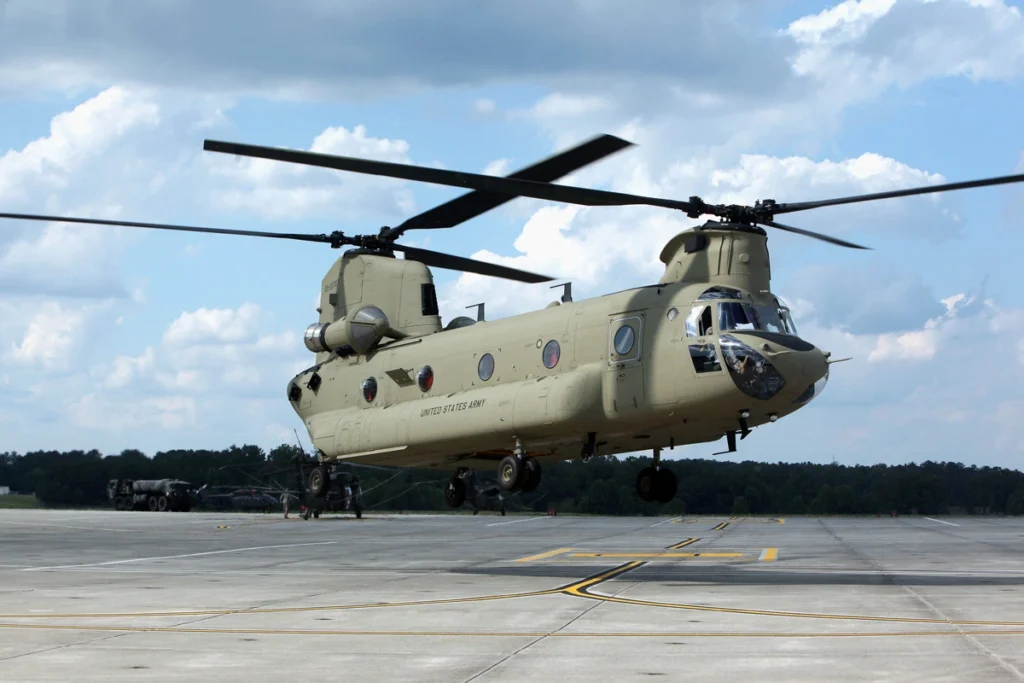
Boeing $877 Million MH-47G Chinook Order
SOCOM’s fixed-price award underscores consistent demand for MH-47G Chinook rotorcraft, a specialised derivative of the CH-47F Block II configured for long-range and covert missions.
The aircraft integrates an aerial refuelling probe, mission-specific avionics, and structural enhancements tailored for special operations.
The CH-47F Block II airframe delivers increased mission range, upgraded drivetrain performance, and improved fuel capacity that supports a maximum gross weight of 24,500kg.
Boeing’s refined fuel system and rotor-blade modifications also lower maintenance demands and improve operational availability.
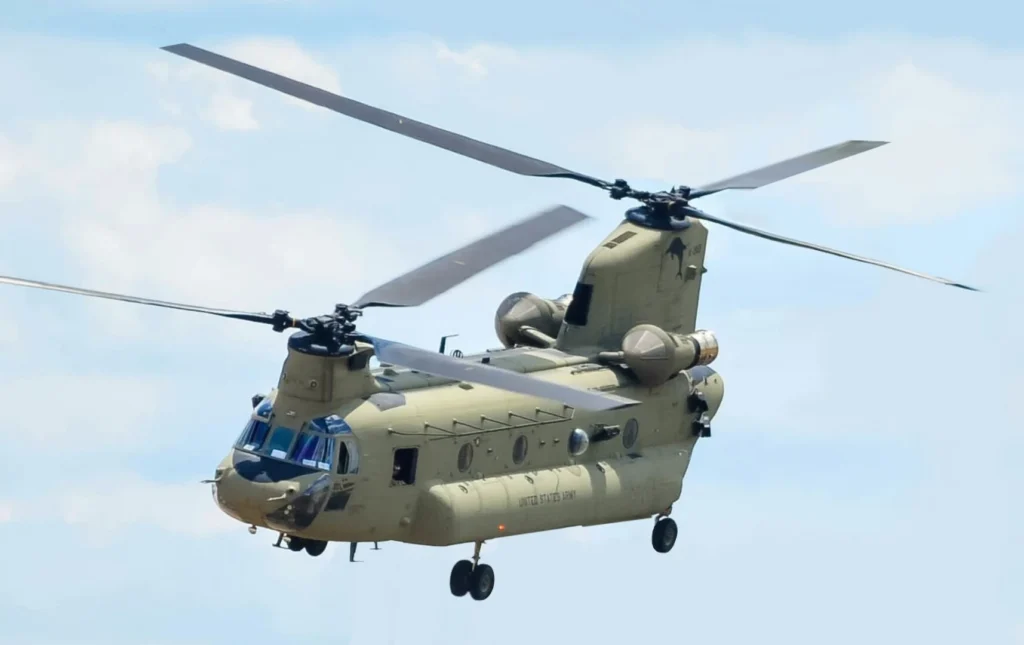
Growth in US Army Procurement Activity
SOCOM’s earlier order in May for 5 MH-47Gs valued at $240 million placed the approximate per-unit cost at $48 million.
Applying similar pricing, the new contract could supply up to 18 helicopters. SOCOM already held 51 aircraft under contract for the 160th Special Operations Aviation Regiment, which positions total commitments at roughly 70 with this addition.
Global defence customers continue expanding their Chinook fleets. The UK Royal Air Force maintains orders for 16 MH-47Gs, while Germany is procuring 60 CH-47F Block II aircraft.
The United Arab Emirates also received approval for a potential acquisition of six CH-47F Block II helicopters. These programmes reflect strong global interest in heavy-lift rotorcraft capabilities.

US Army Fleet Modernisation Plans
In 2024, the US Army confirmed that the CH-47F Block II would be fielded across conventional aviation brigades to replace older Block I aircraft. Procurement funding approved in September initiated the first phase, covering two brigades of 12 Chinooks each.
These formations will receive a mix of new production aircraft and upgraded Block I helicopters, as Boeing began remanufacturing and delivering small numbers of Block II airframes in 2024.
The full-rate production decision ensures multi-year stability across Boeing’s Chinook assembly lines in the Philadelphia region. The company maintains that an optimal annual output is between 30 and 36 aircraft, supporting both US military requirements and allied export programmes.
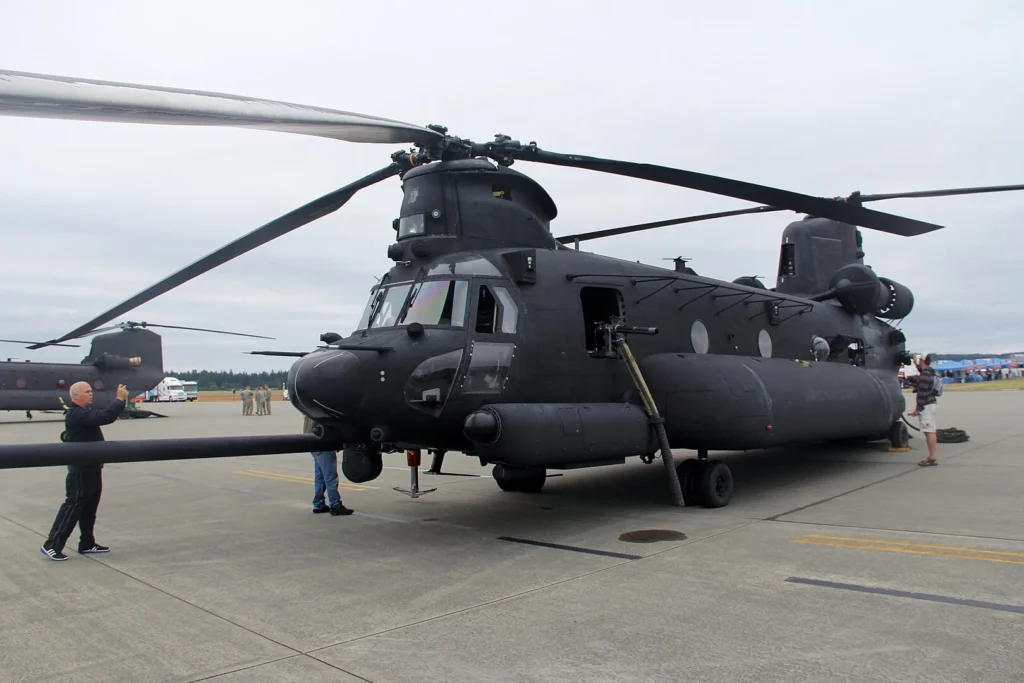
Boeing CH-47 Chinook
The Boeing CH-47 Chinook is a tandem-rotor heavy-lift helicopter originally developed by Vertol and later produced by Boeing Defense, Space & Security.
It is the second-heaviest lifting Western helicopter after the Sikorsky CH-53 and takes its name from the Native American Chinook people of the Pacific Northwest.
Vertol began work on a new tandem-rotor helicopter in 1957, designated the V-107. In 1958, the US Army ordered several prototypes under the YHC-1A designation, although testing revealed it was too heavy for assault missions and too light for transport.
The aircraft was later refined and adopted by the US Marine Corps as the CH-46 Sea Knight. To meet heavier transport needs, the Army ordered an enlarged variant known as the Model 114, designated the HC-1B.
The preproduction YCH-1B first flew in September 1961 and, in 1962, it became the CH-47A under the Tri-Service designation system.
The Chinook introduced versatile cargo-handling features, including multiple fuselage doors, a rear loading ramp, and three external hooks for underslung loads.
With a top speed of 170 knots, it outperformed most 1960s utility and attack helicopters and remains one of the fastest helicopters in US service.
Subsequent versions, such as the CH-47D introduced in 1982, incorporated upgraded engines, composite blades, improved avionics, and an advanced flight control system.
Exports expanded worldwide, with the US Army and Royal Air Force becoming the largest operators. The civilian variant, the Boeing Vertol 234, supports transport, construction, logging, and firefighting operations.
The CH-47 programme originated during the Army’s push to replace piston-engine helicopters with turbine-powered designs and played a central role in advancing early air mobility doctrine.
Stay tuned with us. Further, follow us on social media for the latest updates.
Join us on Telegram Group for the Latest Aviation Updates. Subsequently, follow us on Google News
