


HAMBURGH- Germany has approved the purchase of 20 additional Airbus Helicopters H145M in a deal worth nearly 1 billion euros ($1.2 billion), furthering its commitment to military modernization.
The new aircraft will be delivered between 2027 and 2029, with the order expanding Germany’s total H145M fleet to 82 units. The helicopters will primarily operate from Laupheim Air Base (IATA: LHA), home to the country’s special operations aviation wing.
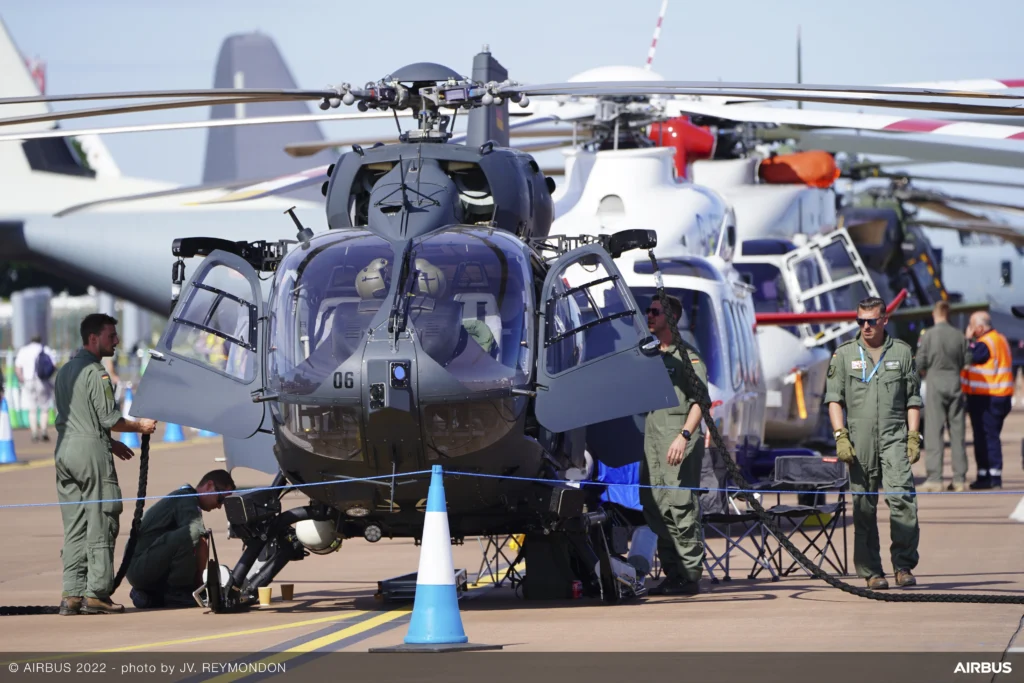
Germany to Buy 20 Airbus H145M Helicopters
The latest H145M order builds on the 2023 framework agreement between Airbus and the German Ministry of Defence. While 62 helicopters had already been ordered, this batch of 20 includes 15 configured for combat missions and 5 dedicated to pilot training.
The overall maintenance and operational cost of the 82-strong fleet is projected at nearly 3 billion euros ($3.5 billion) through 2048, according to official budget documents expected to reach lawmakers soon.
The funding will be drawn from the 100 billion euro special defense fund established in 2022, following Russia’s invasion of Ukraine, to accelerate the modernization of the Bundeswehr. This fund has become central to Germany’s efforts to rebuild military readiness after years of underinvestment.
Several domestic defense suppliers stand to benefit from the program. Hensoldt, a leading electronics and sensor specialist, will provide night-vision and electronic warfare systems for the H145M, while additional subcontractors will handle avionics, weapons integration, and communications upgrades.

Strengthening Germany’s Defense Posture
The H145M expansion is a key element in Germany’s broader “Zeitenwende” initiative, a strategic policy pivot launched by Chancellor Olaf Scholz in 2022. It aims to modernize the armed forces, enhance NATO interoperability, and bolster Europe’s security architecture.
Germany is simultaneously pursuing multiple modernization programs, including the purchase of 35 Lockheed Martin F-35 fighter jets to replace the aging Tornado fleet, the acquisition of Leopard 2A8 main battle tanks, and the expansion of Patriot missile defense systems to counter aerial and drone threats.
Beyond equipment, Berlin is investing in cyber defense, secure communications infrastructure, and the replenishment of depleted ammunition reserves.
The country has also committed to multinational defense collaborations, such as the European Sky Shield Initiative and NATO’s Rapid Deployment Corps, further reinforcing collective deterrence within the alliance.
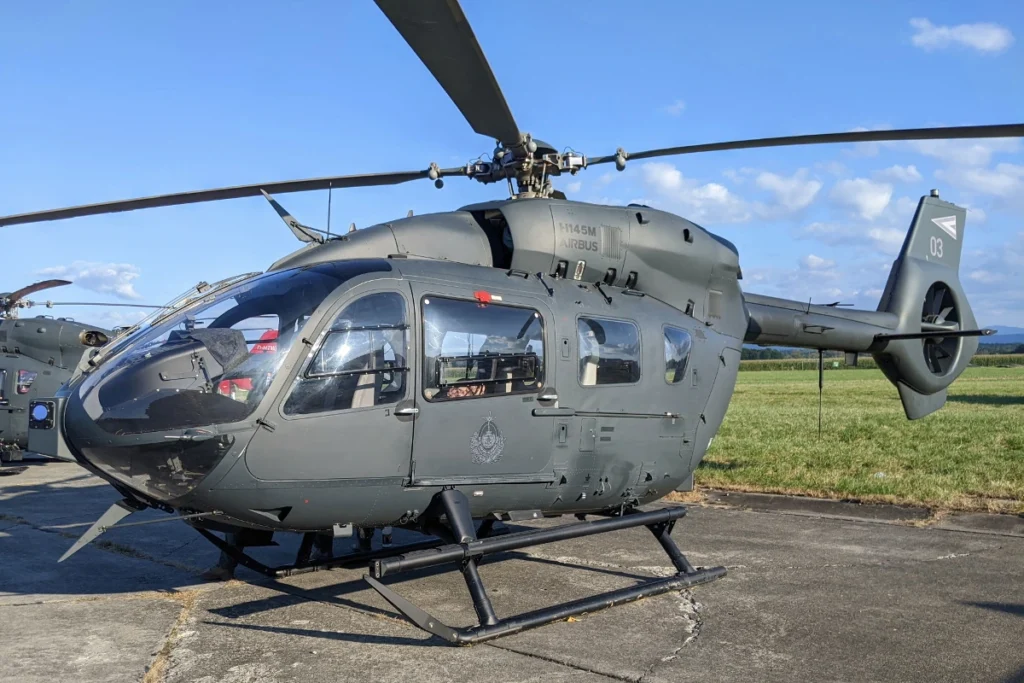
Airbus H145M: A Versatile Light Utility Asset
The Airbus H145M is a twin-engine light utility helicopter known for its agility, low operating cost, and mission flexibility. It supports a wide range of roles—from troop transport and surveillance to medical evacuation and close air support.
The aircraft’s modular design allows for quick reconfiguration between missions, a key factor in its growing adoption across NATO forces.
Germany’s expanded H145M fleet will enhance operational readiness and provide vital air mobility for both domestic and international missions. With deliveries scheduled through 2029, the deal underscores Berlin’s long-term commitment to defense capability and industrial collaboration within Europe’s aerospace sector.
Used by armed forces across the world—including the U.S. Army, which operates the UH-72A and UH-72B Lakota—the H145M demonstrates exceptional reliability and mission readiness, earning a solid reputation among military operators.
Advanced Capabilities for Modern Operations
The Airbus H145M stands out for its adaptability and mission readiness. This versatile helicopter can be rapidly reconfigured for a wide range of missions—troop transport, search and rescue, or armed support—by swapping modular equipment packages within minutes.
Its Safran Arriel 2E turboshaft engines, featuring dual-channel full authority digital engine control (FADEC), deliver strong performance in challenging environments such as high altitudes or extreme temperatures.
With a maximum takeoff weight of 3,800 kg and a useful load of 1,893 kg, the H145M provides ample flexibility. Its endurance of up to 3 hours and 30 minutes and a range of 637 km enable long-duration missions, even under heavy payloads or external sling operations. This combination of endurance, speed, and agility makes it ideal for modern military and support roles.
Precision Firepower and Modularity
A key advantage of the H145M is its compatibility with the Airbus HForce weapon system. This scalable, cost-effective suite allows the helicopter to transition from a transport platform to an armed unit capable of firing guided and unguided weapons.
The modular system supports multiple configurations—from basic ballistic weapons controlled through a helmet-mounted display to guided munitions integrated with electro-optical sensors.
This flexibility ensures that operators can tailor the aircraft’s firepower to mission-specific needs, providing an optimal balance between lethality and operational efficiency.
Design and Survivability
The H145M’s compact, low-profile airframe enhances its maneuverability and survivability in combat. Its Fenestron® shrouded tail rotor improves anti-torque control and reduces acoustic signature. Ballistic protection, self-sealing fuel tanks, and crashworthy airframe and seating structures add to crew safety.
The helicopter also features advanced electronic warfare and decoy systems, providing additional protection in hostile environments. The modern Helionix® avionics suite includes a full glass cockpit, 4-axis digital autopilot, and night vision goggle compatibility, significantly reducing pilot workload and enhancing situational awareness.
UH-72 Lakota: Proven Reliability in Service
The UH-72 Lakota, a U.S. Army variant of the H145, has proven its operational reliability with an availability rate exceeding 90%. Used by the U.S. Army, Navy, and National Guard, it supports diverse missions such as law enforcement, medical evacuation, and utility operations.
Selected in 2006 under the Army’s Commercial Off-The-Shelf (COTS) acquisition program, the Lakota combines affordability with operational effectiveness. Lightweight materials and modular systems simplify maintenance, reducing life-cycle costs and ensuring consistent mission readiness.
Stay tuned with us. Further, follow us on social media for the latest updates.
Join us on Telegram Group for the Latest Aviation Updates. Subsequently, follow us on Google News
