

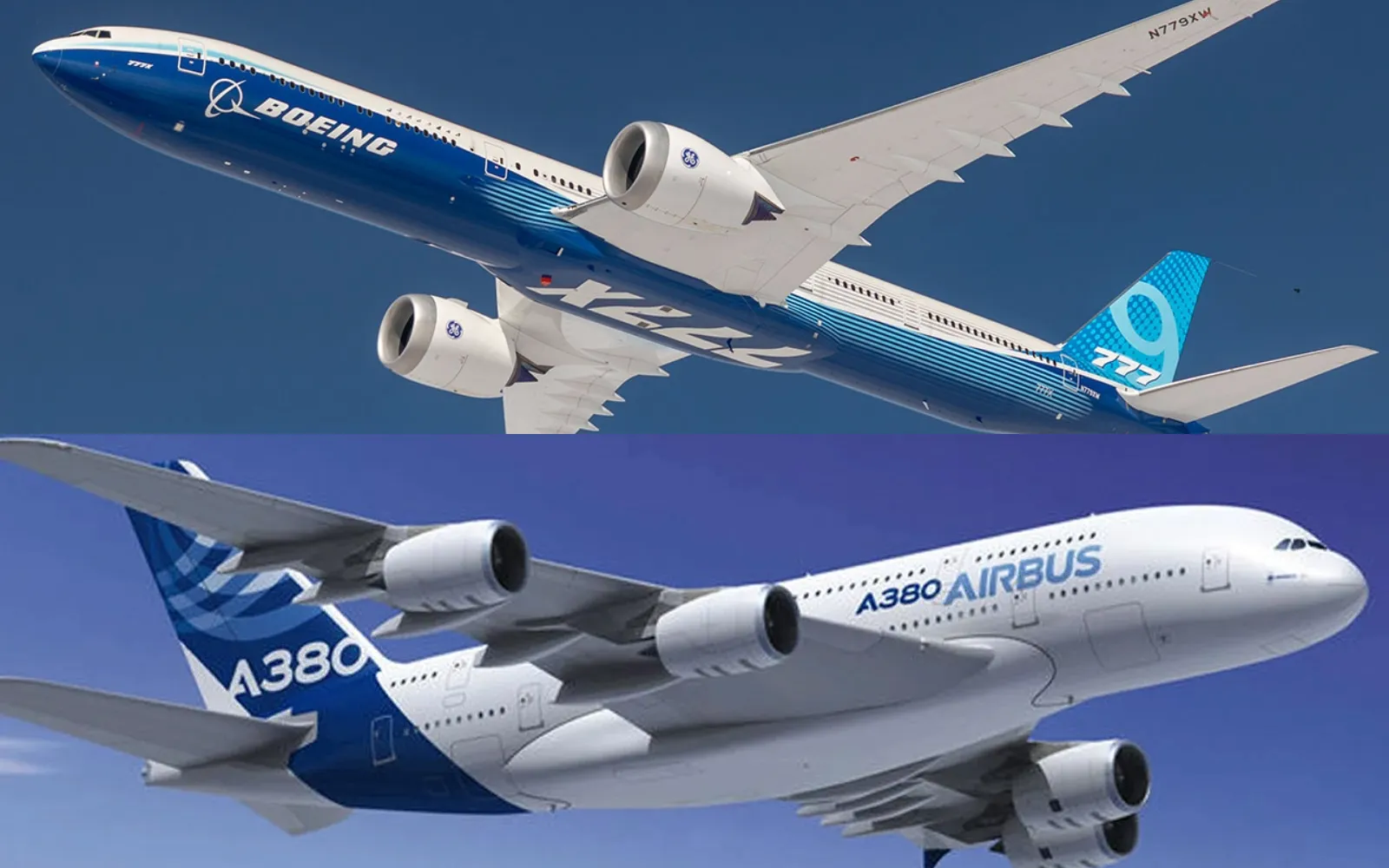
SEATTLE— The Boeing 777X has attracted global attention for its record-breaking wingspan and advanced design, prompting many aviation enthusiasts to ask whether it could face the same airport restrictions as the Airbus A380.
While the Airbus A380 struggled to serve many airports because of its massive fixed wingspan and infrastructure requirements, the Boeing 777X has been engineered with a different strategy from the beginning.
Boeing’s next-generation widebody is expected to enter commercial service with airlines including Lufthansa (LH) before expanding to other operators such as Emirates (EK) and Qatar Airways (QR).
Unlike the Airbus A380, however, the Boeing 777X has been designed to remain compatible with existing airport infrastructure at major hubs including Frankfurt Airport (FRA), Dubai International Airport (DXB), and Seattle (SEA), reducing the need for extensive airport modifications.
Boeing 777X Design Innovation Explained
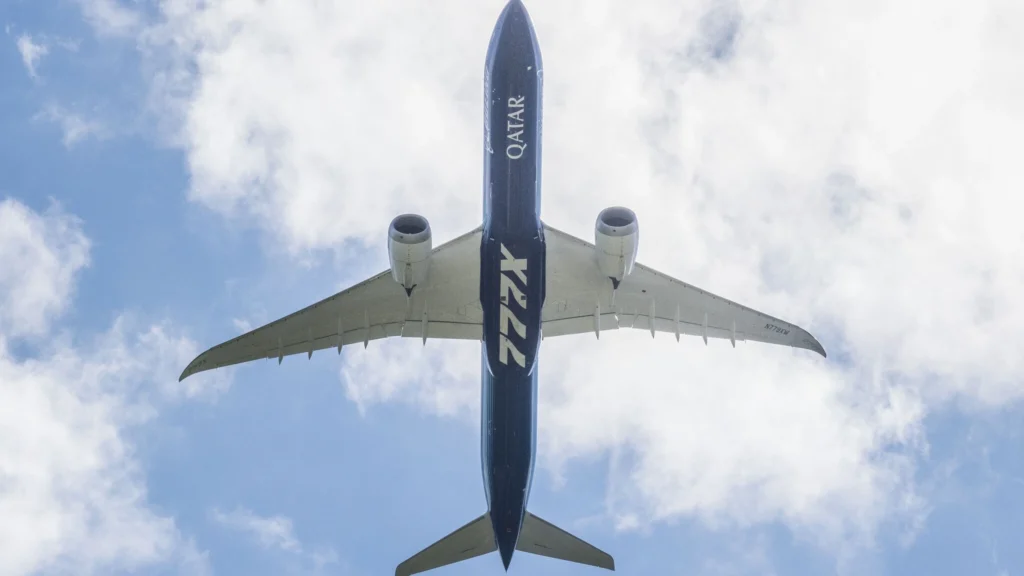
The biggest difference between the Boeing 777X and the Airbus A380 lies in their wing design.
Although the 777X features an impressive wingspan of approximately 235.5 feet (71.8 meters) during flight, its folding wingtips reduce the wingspan to about 212.8 feet (64.85 meters) while taxiing and parked.
This allows the aircraft to fit into ICAO Code E airport gates that already accommodate aircraft such as the Boeing 777-300ER, Boeing 787 Dreamliner, and Airbus A350.
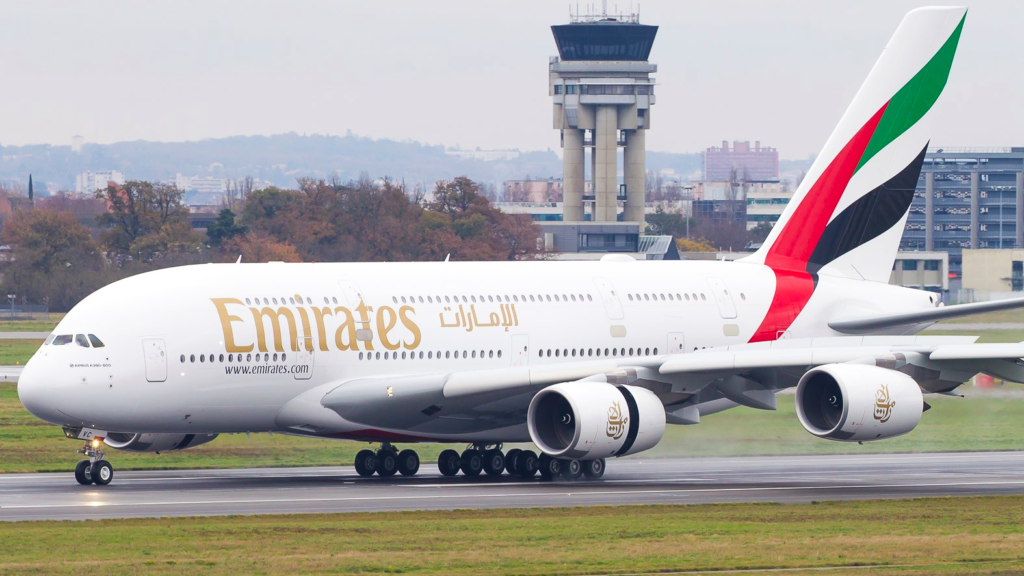
The Airbus A380 followed a completely different approach. Its fixed 261.8-foot (79.8-meter) wingspan requires permanent Code F infrastructure, including wider taxiways, larger parking stands, reinforced pavement, and specially designed gates.
As a result, many airports chose not to invest in the costly upgrades needed for regular A380 operations, limiting the aircraft’s global network.
Boeing learned from those challenges while developing the 777X. Rather than asking airports to adapt to the aircraft, the manufacturer designed the aircraft to adapt to existing airports through its innovative folding wingtip technology.

Airport Compatibility and Global Operations
Airport compatibility depends on more than passenger capacity or aircraft weight. The International Civil Aviation Organization (ICAO) classifies airports according to aircraft dimensions, particularly wingspan and landing gear geometry.
Aircraft operating within Code E standards can access a far greater number of airports than those requiring Code F infrastructure.
When the Boeing 777X lands, each outer wingtip folds upward by approximately 90 degrees, Simple Flying reported. Before takeoff, multiple redundant systems verify that both wingtips are fully extended and securely locked.
The aircraft’s flight control system will not allow departure unless the mechanism confirms a safe configuration, making the design both practical and highly secure.
Although airports must establish procedures for ground handling, parking, and taxi operations, these are operational adjustments rather than expensive infrastructure projects. That distinction makes the aircraft far easier to integrate into existing airline networks than the Airbus A380.
Future Operations
The Boeing 777X is unlikely to experience widespread airport bans similar to those faced by the Airbus A380.
While individual airports may impose specific operational procedures based on local layouts or apron constraints, these are not structural limitations that prevent scheduled service.
Instead, Boeing’s folding wingtip system gives airlines the aerodynamic efficiency of an ultra-long composite wing during flight while maintaining compatibility with the vast majority of existing international airport gates.
This combination reduces infrastructure costs, expands network flexibility, and improves the aircraft’s commercial appeal.
As certification progresses toward commercial entry into service, the Boeing 777X appears positioned to avoid one of the A380’s greatest operational drawbacks.
Rather than repeating history, Boeing has developed a solution that allows one of the world’s largest twin-engine aircraft to operate at many airports already handling today’s widebody fleet.
Stay tuned with us. Further, follow us on social media for the latest updates.
Join us on Telegram Group for the Latest Aviation Updates. Subsequently, follow us on Google News

