

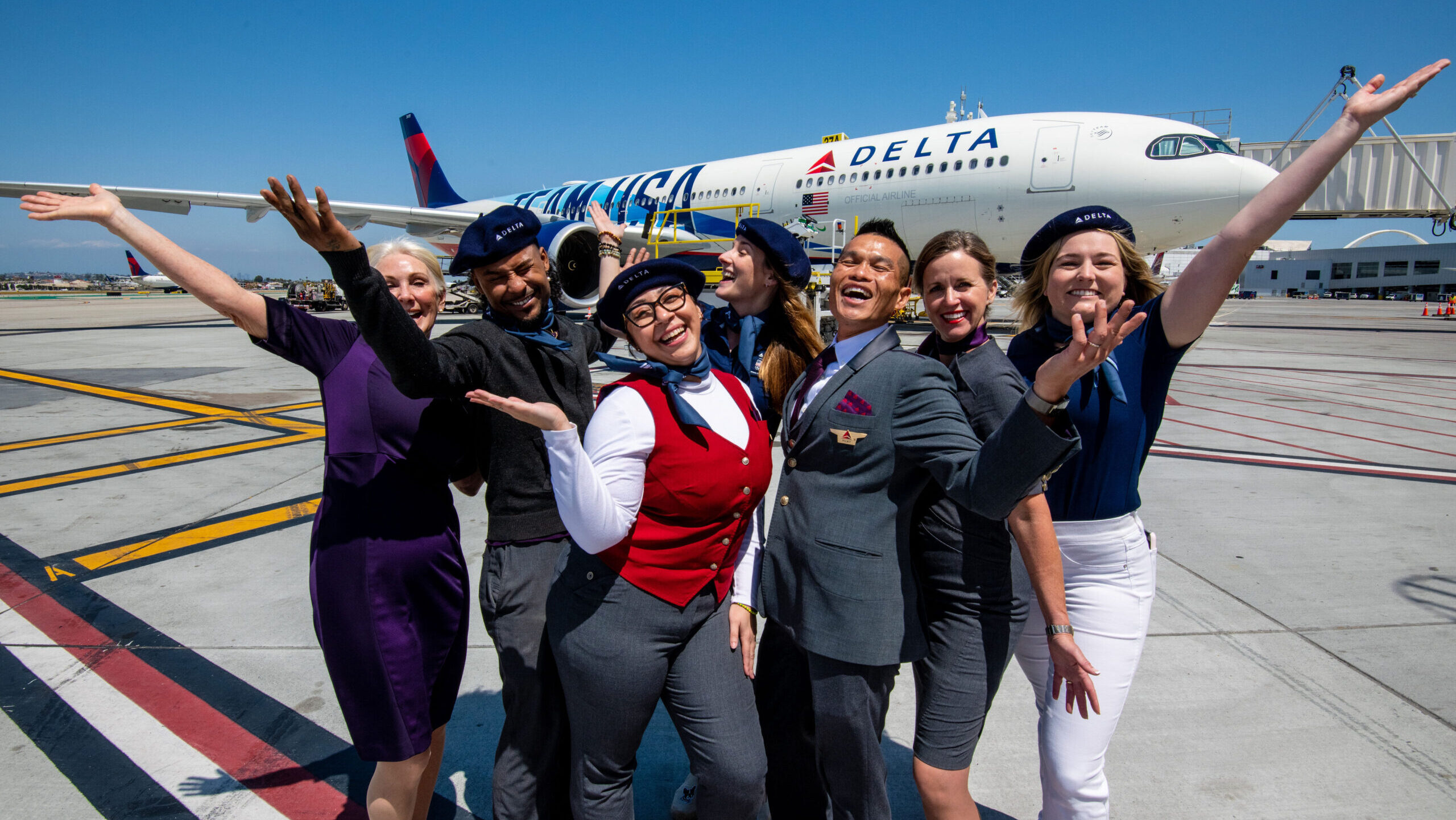
Delta Air Lines is one of the largest carriers in the United States, with its main hub in Atlanta, plus major operations in cities like Detroit, Minneapolis-St. Paul, and Los Angeles. Flight attendants at Delta play a critical role in ensuring passenger safety, comfort, and service, whether on short domestic hops or long-haul international trips.
For anyone considering a career as a flight attendant with Delta, understanding how the pay structure works, including base hourly pay, progression, allowances, and total compensation, is key. Additionally, here is also some more information on the benefits they enjoy, as well as the criteria required for an individual to be considered for a role.

Delta Air Lines Flight Attendant Salary
At Delta in 2025, the pay for flight attendants is structured primarily by experience (seniority) and flight hours. For new hires, the hourly rate begins at approximately US$36.92 per hour, and the salary rises steadily with each year of service.
For example, after a few years, the hourly rate may reach around US$45.96, and after five years US$55.31 per hour. More senior flight attendants (10 to 12 years’ tenure) may see rates near USD$83 per hour or more.
Translating the hourly rate into annual income (assuming typical flying hours) yields the following approximate figures: first-year attendants may earn around US$46,150 per year, mid-career those with five years might reach US$69,134 per year, and senior-level attendants with twelve years or more could exceed US$100,000 per year.
Total compensation, including bonuses, overtime, per diems, and profit-sharing, commonly ranges between US$53,000 and US$94,000 per year, with higher outliers for those who pick up premium trips or international schedule lines.
ALSO READ: JetBlue Flight Attendant Salary in 2025

Benefits of Working as a Delta Flight Attendant
Delta offers an extensive benefits package designed to support its flight attendants both professionally and personally:
- Healthcare & Insurance – Flight attendants are covered under comprehensive medical, dental, and vision insurance plans. Life and disability insurance are provided to give financial protection to the crew and their families.
- Retirement Savings & Profit-Sharing – The airline provides a 401(k) retirement savings plan with matching contributions and an annual profit-sharing programme which distributes a portion of the company’s profits to eligible employees.
- Paid Vacation and Time Off – Paid annual leave is offered, with higher seniority translating into more time off. Rest periods and duty-time regulations are built into rosters to promote safety and crew well-being.
- Staff Travel Privileges – Flight attendants receive discounted or standby travel on Delta and partner networks, often extending privileges to eligible family members. These travel perks are a valued component of the role.
- Premium Pay & Allowances – Crew receive additional pay for holiday flying, unsocial hours (weekends, nights), extra-duty trips, international sectors, and overnight layovers. This enhances earning potential beyond base pay.
- Training and Career Development – New hires undergo paid training before active flying. Ongoing training, professional development, and progression opportunities (senior attendant, lead roles) are available.
- Uniform and Appearance Support – Delta supplies required uniforms and supports professional appearance standards. Some uniform allowance or replacement support is provided to help crew meet the brand’s expectations.
- Employee Wellness & Support Programmes – Flight attendants have access to employee assistance programmes (EAPs) for mental health, counselling, financial planning, and wellness initiatives aimed at sustaining long-term career performance.

Requirements for a Flight Attendant at Delta Air Lines
Candidates seeking to become flight attendants with Delta must meet several essential criteria:
- Must be at least 21 years old and legally eligible to work in the United States.
- Must hold a valid passport and be able to travel globally without restrictions.
- Must have a high-school diploma or equivalent; higher education is advantageous.
- Must be fluent in spoken and written English; additional language skills are a plus.
- Must be physically fit and able to pass a medical examination, including vision, hearing, and overall health standards.
- Must meet height, reach, and mobility requirements to access safety equipment and perform emergency procedures.
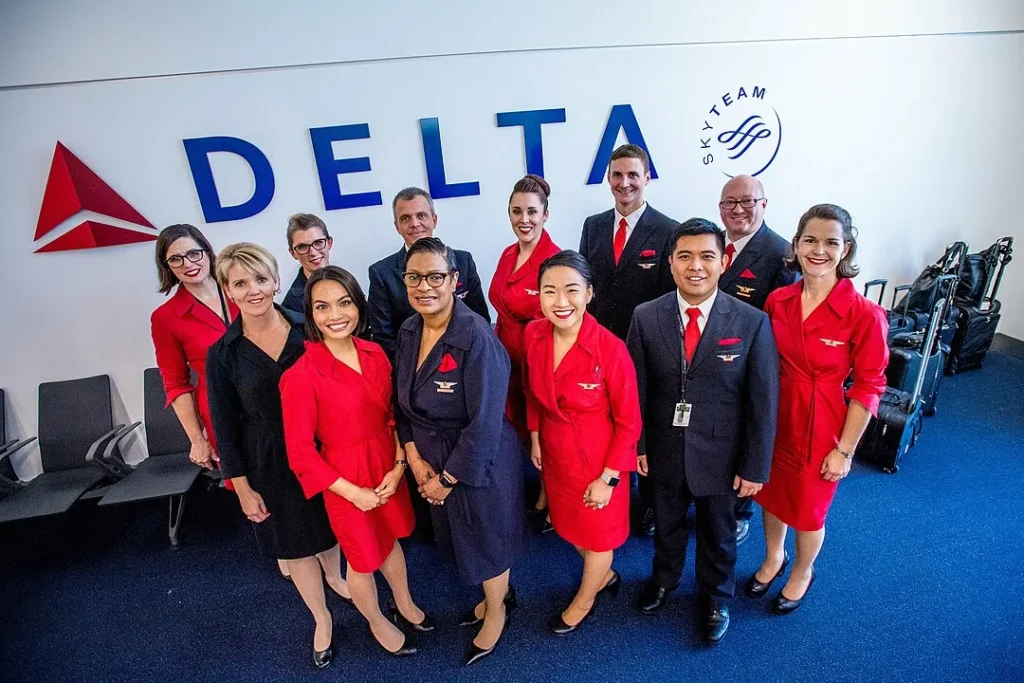
- Must maintain a professional appearance in line with Delta’s brand standards, including grooming and personal presentation.
- Must demonstrate strong customer service skills, teamwork, adaptability, communication, and the ability to work irregular hours, including nights, weekends, and layovers away from base.
ALSO READ: Private Jet Flight Attendant Salary in the US in 2025
Recruitment Process
- Online Application Submission – Applicants submit a resume and complete an online form via Delta’s careers portal, confirming their eligibility and providing relevant details.
- Initial Screening & Short-listing – The recruitment team reviews applications and short-lists those who meet the basic requirements for further assessment.
- Assessment Activities – Short-listed candidates may be invited to complete online aptitude tests or virtual assessments focused on service orientation, situational judgement and communication skills.
- Interview Stage – Candidates who progress attend a formal interview (often in person) where their motivation, customer-service mindset, professionalism and cultural fit are assessed.
- Background and Security Checks – Successful interviewees undergo background screening, reference checks and security clearance consistent with aviation standards.
- Medical Examination – A comprehensive medical check confirms each candidate’s fitness for cabin-crew duties, including the ability to respond in emergencies.
- Training Programme – Selected candidates participate in paid training covering safety procedures, emergency protocols, service delivery, teamwork, and Delta’s operational standards.
- Probation and Deployment – Following training, new flight attendants are placed on probation and monitored in the initial months of flying; upon successful completion, they are confirmed and fully integrated into regular rosters.

Bottom Line
Working as a flight attendant at Delta Air Lines offers a career that combines global travel, customer service excellence, and the opportunity for significant earning growth over time.
While the starting pay is modest relative to some senior aviation roles, the myriad of allowances, escalating pay scales with tenure, comprehensive benefits, and travel perks make the position a compelling choice. For those ready to meet the demands of flexible schedules, long hours, and life in the skies, Delta provides a structured path into a rewarding aviation career.

Delta Flight Attendant Salary FAQs
New flight attendants begin at approximately US$30.96 per hour in base pay, which translates into an annual income of around US$46,150 per year for typical flying hours.
With several years of service and higher hourly rates, many flight attendants earn between US$55,000 and US$75,000 per year, while senior crew and those with premium assignments may exceed US$100,000 per year.
Benefits include full healthcare coverage, retirement savings with matching contributions, profit-sharing, paid vacation, travel privileges, premium pay and allowances, training and professional development, uniform support, and wellness programmes.
Stay tuned with us. Further, follow us on social media for the latest updates.
Join us on Telegram Group for the Latest Aviation Updates. Subsequently, follow us on Google News
