

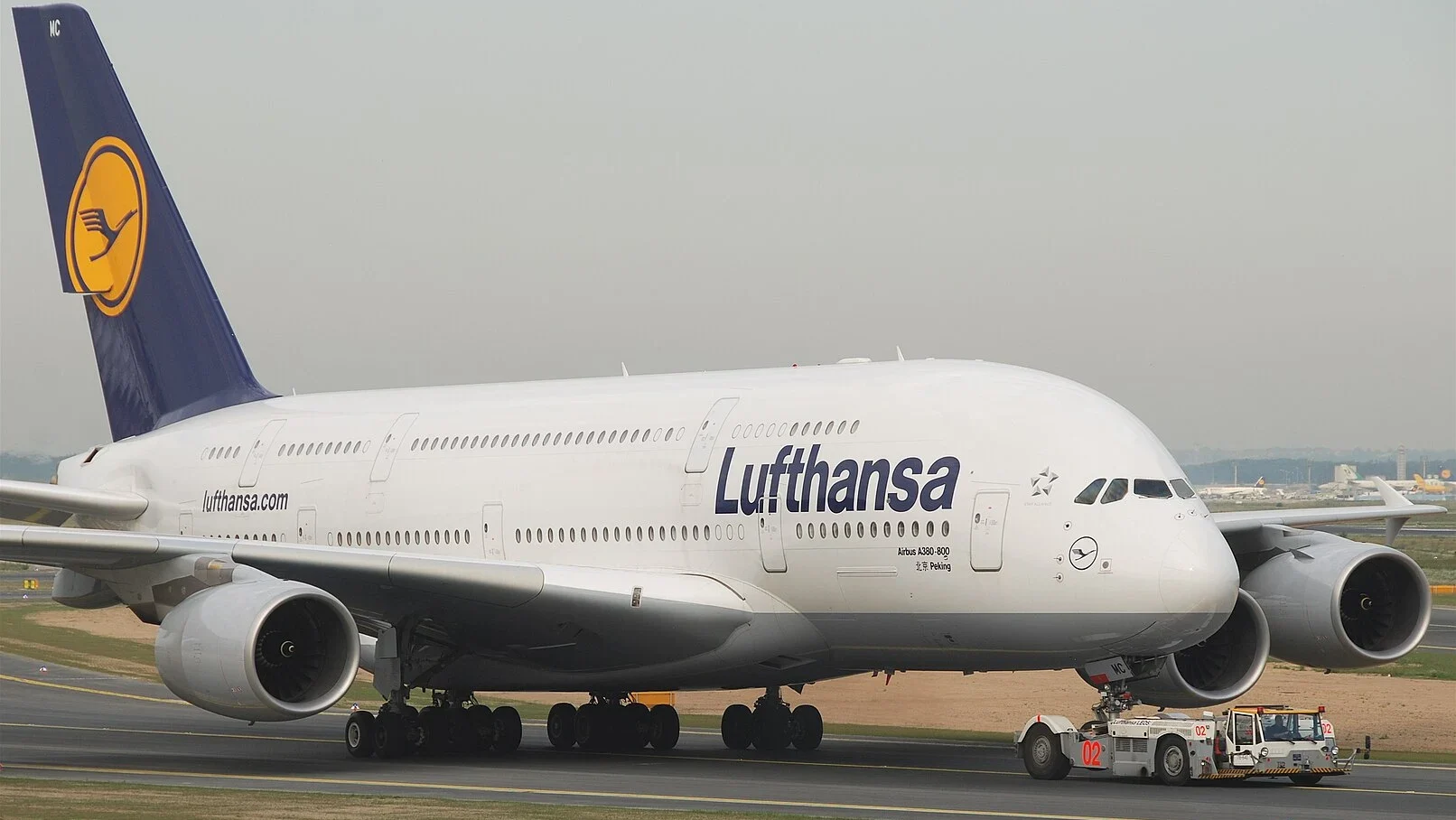
MUNICH- Lufthansa (LH) Flight LH459 from San Francisco International Airport (SFO) landed short of the runway threshold at Munich Airport (MUC) on August 17, damaging runway lighting before completing a safe landing. All 351 passengers and crew disembarked without injuries.
The incident occurred just two days after a separate Vietnam Airlines (VN) Boeing 787-9 event at Munich Airport (MUC), drawing attention to two runway-related incidents within a short period. German investigators have confirmed there is currently no evidence linking the two events.

BFU Investigates Lufthansa A380 Landing at Munich
The Lufthansa Airbus A380-800, registered D-AIML, was operating Flight LH459 from San Francisco to Munich after an approximately 11-hour journey. During its approach to Runway 26L, the aircraft touched down before the designated runway threshold, striking and damaging the runway lighting system located ahead of the paved landing surface.
Despite the early touchdown, the aircraft remained under control throughout the landing. It continued along the runway, taxied to its assigned parking stand, and passengers left the aircraft through the normal disembarkation process. Lufthansa confirmed that no injuries were reported and no emergency evacuation was required.
The event is operationally significant because the Airbus A380 is the world’s largest passenger aircraft. Its large wingspan, high landing weight, and extensive landing gear configuration require precise approach and touchdown performance. However, available information does not indicate that the aircraft departed the paved runway or suffered major structural damage.
The Airbus A380 remains one of the largest commercial aircraft operating scheduled passenger services worldwide.
- Aircraft Length: 72.7 meters (238 ft 7 in)
- Maximum Takeoff Weight (MTOW): 575 tonnes (1,268,000 lb)
- Typical Three-Class Capacity: 525 passengers
These characteristics make accurate runway alignment and touchdown particularly important during landing operations.

Flight Recorder Secured for Investigation
Germany’s Federal Bureau of Aircraft Accident Investigation (BFU) has launched an official investigation into the incident.
Investigators have recovered the aircraft’s flight recorder, which will provide detailed information about the final stages of the approach. Data from the flight recorder will be compared with cockpit procedures, aircraft performance, weather conditions, and airport infrastructure to determine why the aircraft crossed the runway threshold at such a low height.
At this stage, investigators have not identified a cause. Several possibilities remain under review, including an approach below the intended glide path, visual perception during landing, environmental conditions, or other operational factors.
The damaged runway lighting will also serve as physical evidence. By examining the location of the impact and matching it with recorded aircraft position, altitude, and speed, investigators can accurately reconstruct the final seconds before touchdown.
Authorities have not classified the occurrence as a runway excursion or attributed it to any aircraft system failure. The confirmed facts remain limited to the aircraft touching down short of the runway threshold and damaging airport lighting. Simple Flying flagged.
Second Runway Event at Munich Within Days
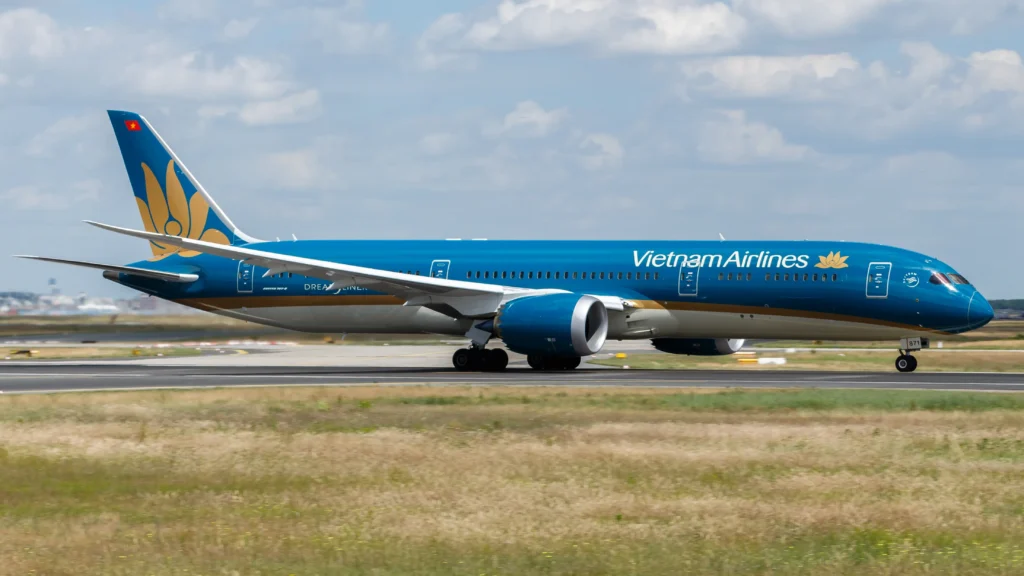
The Lufthansa incident follows another notable runway occurrence at Munich Airport on August 15 involving a Vietnam Airlines (VN) Boeing 787-9.
That aircraft experienced an acceleration issue during its takeoff roll from Runway 26L while operating to Hanoi. According to preliminary findings, the aircraft became airborne with only about 300 feet (91 meters) of runway remaining before later returning to Munich after cockpit warnings related to a possible tail strike and abnormal tire pressure.
The Vietnam Airlines aircraft also damaged runway lighting, prompting a separate investigation involving German and Vietnamese authorities. The aircraft has remained in Munich for further examination.
Although both incidents involved runway lighting damage on the same runway, investigators have emphasized that there is no evidence suggesting the two events are connected.
What Happens Next
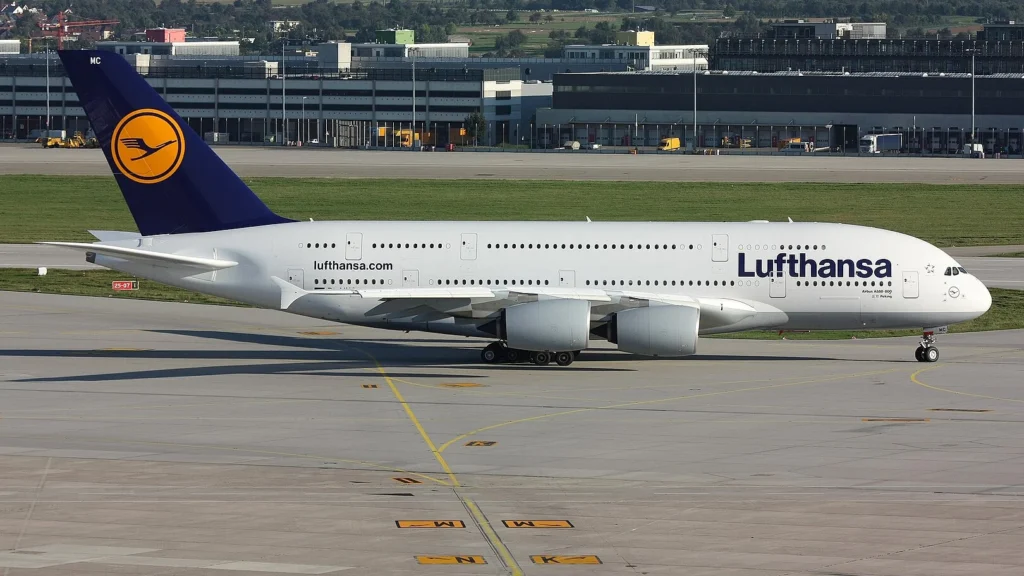
The BFU investigation will focus on determining exactly why the Lufthansa A380 landed before the runway threshold. Investigators will analyze flight recorder data, approach profiles, cockpit actions, navigation information, weather conditions, and airport infrastructure.
Lufthansa will also conduct technical inspections of aircraft D-AIML to determine whether the early touchdown caused any damage requiring repairs before the aircraft returns to scheduled service.
Munich Airport’s Runway 26L, measuring 4,000 meters (13,123 feet), is designed to accommodate large long-haul aircraft, including the Airbus A380. The recent incidents have increased attention on runway operations at one of Germany’s busiest international airports, although investigators caution against concluding until both investigations are complete.
With the flight recorder now secured, additional findings are expected once investigators complete their analysis. Until then, authorities continue to stress that the cause of the Lufthansa incident remains under investigation and no common factor has been established between the two runway events.
Stay tuned with us. Further, follow us on social media for the latest updates.
Join us on Telegram Group for the Latest Aviation Updates. Subsequently, follow us on Google News
