

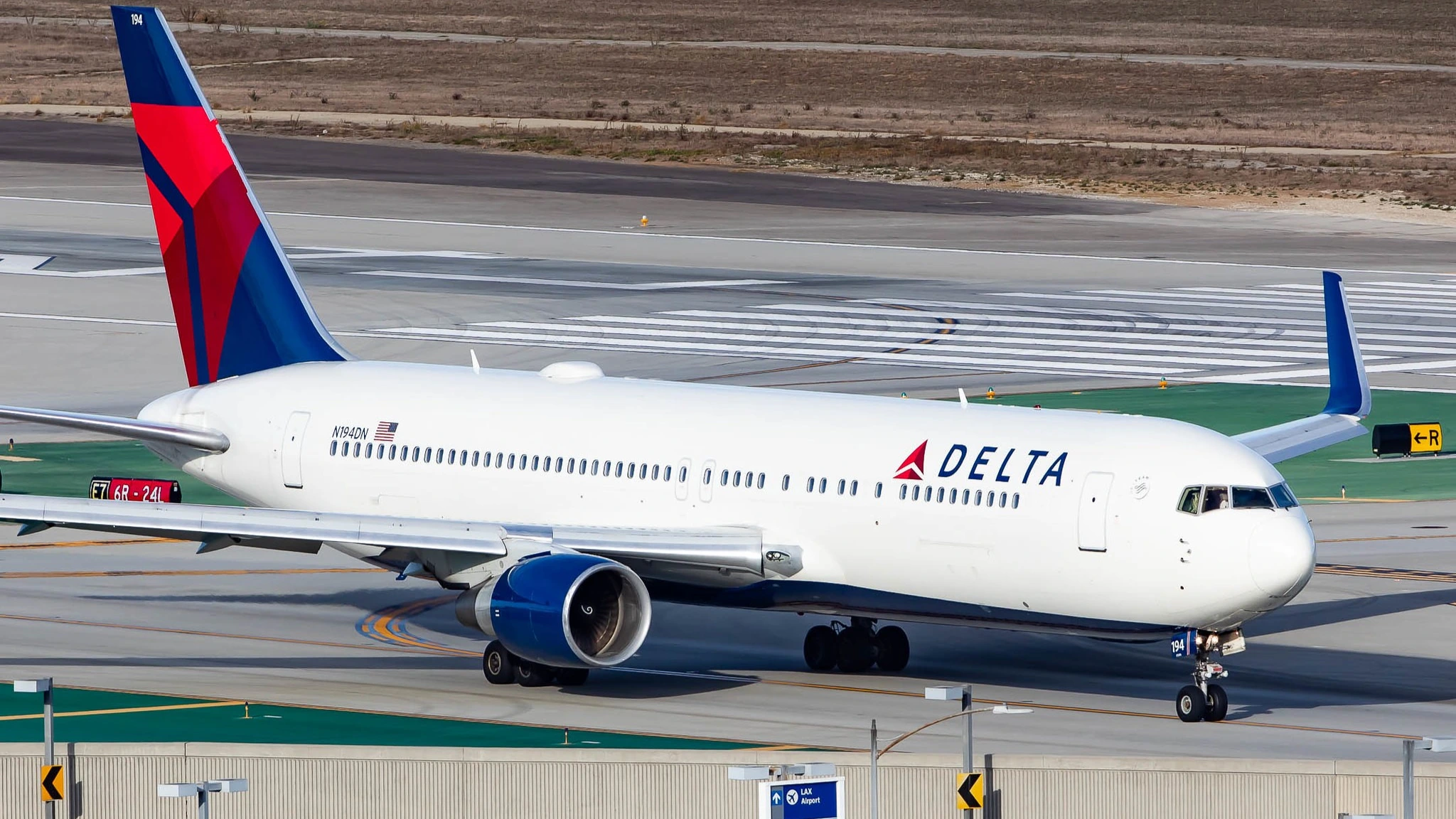
NEW YORK— Italian investigators have determined that limited use of available weather information contributed to a Delta Air Lines (DL) Boeing 767-300ER sustaining major hail damage shortly after takeoff from Milan Malpensa Airport (MXP) en route to New York JFK (JFK) on July 24, 2023.
The aircraft encountered a powerful hailstorm while climbing through 13,000 feet on the DOGUB 6T departure route, leading to extensive damage to its structure and systems. No injuries were reported among the 226 people on board.
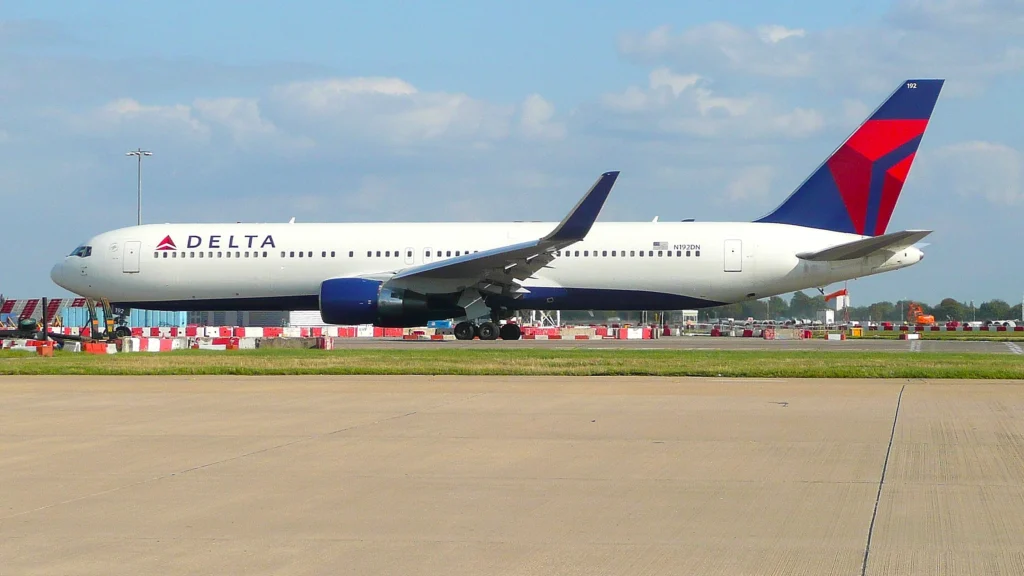
Delta 767 Pilot Failed to Use Weather Data
According to the Agenzia Nazionale per la Sicurezza del Volo (ANSV), while standard weather forecasts such as METAR and TAF indicated instability, they did not prohibit departure.
However, satellite radar imagery available before takeoff showed a high likelihood of intense convective weather along the aircraft’s planned route. This critical information was not relayed to the flight crew.
ANSV also found that Delta’s meteorology department produced an updated threat analysis showing worsening weather conditions, but the data covered too broad an area to be operationally useful.
Consequently, the crew relied on standard briefings that did not reflect the immediate severity of the weather west and southwest of Malpensa.
Eight other aircraft departed within 30 minutes of the Delta flight, none heading in the same southwest direction. Most flights were routed north or northeast, away from the developing storm cells.
When the Boeing 767 began its southwest turn, the onboard radar displayed significant storm activity. Terrain from the nearby Alps limited northward deviation, forcing the crew to turn left—directly into the hail zone.
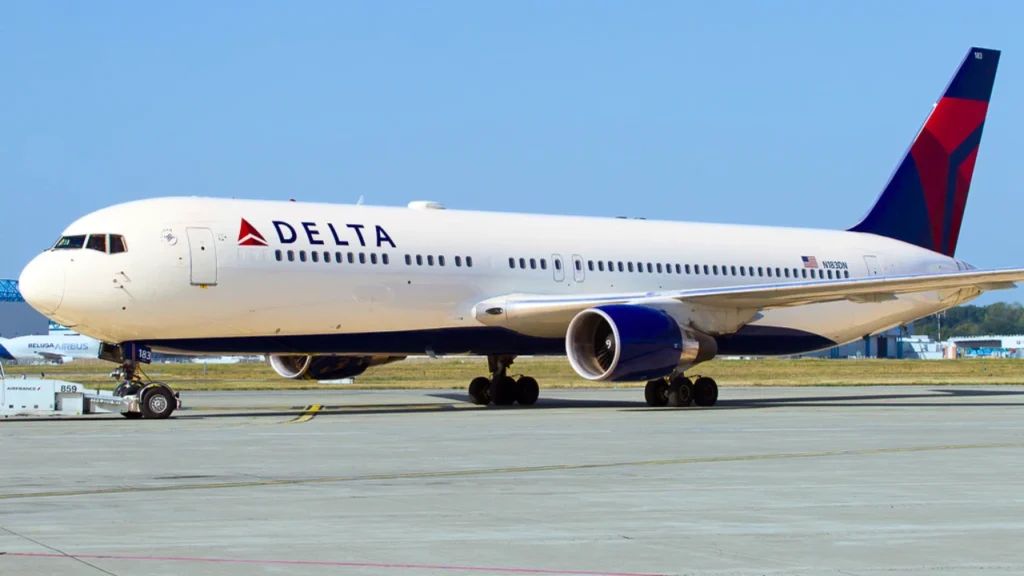
Extent of Damage and Diversion
The encounter caused a shattered cockpit window on the first officer’s side, a punctured radome, and about 20 impacts on the weather radar antenna.
Additional structural damage occurred to both wing leading edges, the horizontal stabilizer, engine spinners, and exterior lights.
Initially, the crew planned to return to Milan Malpensa (MXP), but after the windshield cracked further, they diverted to Rome Fiumicino (FCO) for an overweight landing. Four pilots were in the cockpit at the time, including a line-check pilot and a relief pilot.
Investigation Limitations and Safety Measures
The investigation was constrained by the absence of cockpit voice recorder (CVR) data, which prevented full reconstruction of the cockpit decision-making process. Despite this, ANSV highlighted human factors and meteorological awareness as central issues in the incident.
Following the event, Delta Air Lines (DL) introduced enhanced training on thunderstorm and hail avoidance and began upgrading its Boeing 767 and 757 fleets with 3D weather radar systems featuring improved sensitivity. The retrofit program is expected to be completed by April 2027.
Broader Safety and Climate Implications
ANSV noted that scientific evidence points to increasing frequency and severity of meteorological hazards affecting aviation—such as turbulence, icing, and large hailstones—due to changing atmospheric conditions.
A proposal submitted to the International Civil Aviation Organization (ICAO) Assembly has called for explicit inclusion of climate-related operational safety risks in future editions of the Global Aviation Safety Plan, reflecting growing concern over the effects of atmospheric instability on long-haul operations.
Stay tuned with us. Further, follow us on social media for the latest updates.
Join us on Telegram Group for the Latest Aviation Updates. Subsequently, follow us on Google News
