

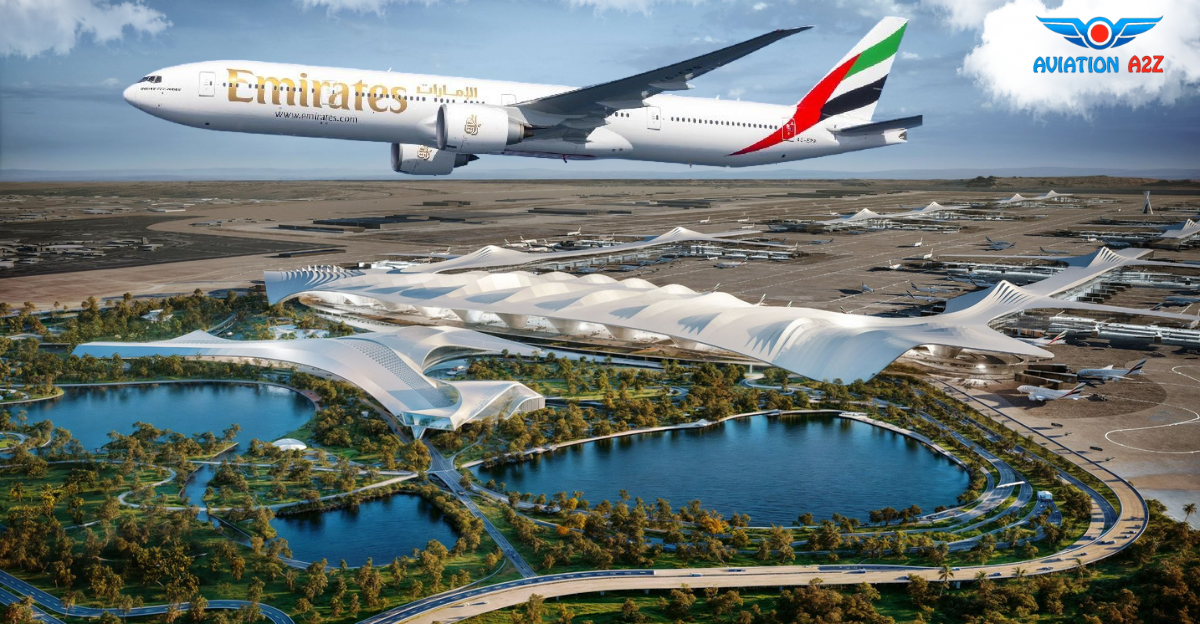
DUBAI- Al Maktoum International Airport (DWC) also known as Dubai World Central, is on course to become the world’s largest aviation hub.
The $35 billion project will gradually take over all major passenger operations from Dubai International Airport (DXB) by 2032, marking a historic transformation in the global aviation landscape.
Located within Dubai South, this mega airport embodies the emirate’s vision to sustain its leadership in international air travel.
With a projected capacity of 260 million passengers annually and cutting-edge sustainable design, DWC is set to redefine air connectivity and travel experiences worldwide.
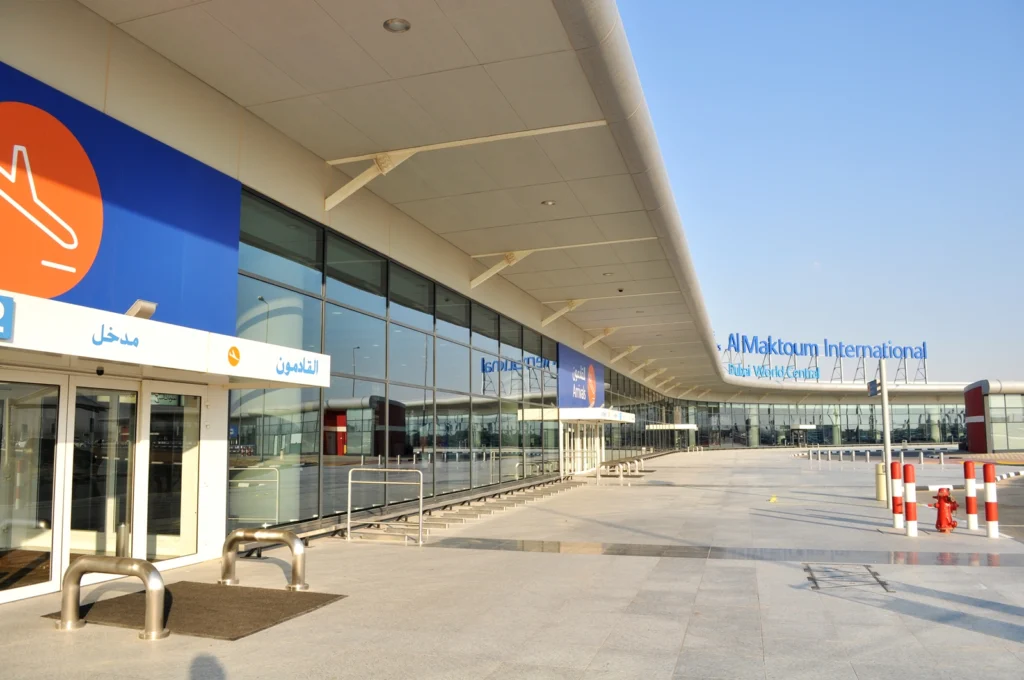
Dubai’s $35 Billion Al Maktoum Airport
Al Maktoum International Airport (DWC) represents a key component of Dubai’s long-term aviation and economic strategy.
It is the centerpiece of the Dubai South master plan, an integrated urban development that combines aviation, logistics, commercial, and residential zones.
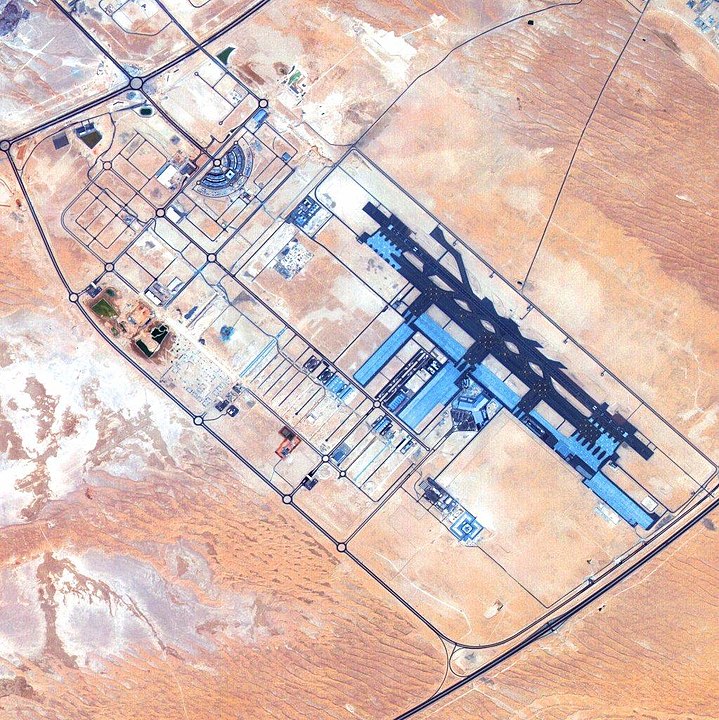
Spanning nearly 70 square kilometers, about 5 times the size of Dubai International Airport (DXB), DWC is designed as the largest greenfield airport and aerospace cluster in the world.
According to Gulf News, the airport’s expansion is part of Dubai’s effort to enhance its global standing beyond major international hubs such as London, New York, and Tokyo.
The project underscores the emirate’s commitment to innovation, sustainability, and economic diversification, aligning with the UAE’s long-term national vision.
Expansion Phases and Capacity Growth
The airport’s development follows a phased approach, with Phase Two currently underway as of 2024. This phase includes the construction of a state of the art passenger terminal estimated at $34.8 billion (Dh128 billion).
Once operational, the terminal will increase annual passenger capacity to 124 million by 2031, ultimately scaling up to 260 million passengers per year at full build-out.
DWC will feature 5 parallel runways designed to accommodate simultaneous take-offs and landings, 400 aircraft gates, and advanced air traffic control systems powered by artificial intelligence.
The design prioritizes operational efficiency, low taxi times, and reduced emissions through the use of next-generation sustainable aviation technologies.
Integrated Economic Ecosystem
Situated within Dubai South, DWC is more than an airport; it is a complete aerospace and logistics ecosystem.
The surrounding economic zone integrates cargo facilities, free-trade areas, and business parks, supporting over a million residents and thousands of companies.
This cluster model encourages international investment and creates new employment opportunities across aviation, tourism, and technology sectors.
The airport’s proximity to Jebel Ali Port enhances its role as a multimodal transport hub, offering seamless sea-air logistics connectivity. This strategic advantage positions Dubai as a global center for trade, travel, and logistics, further reinforcing its role as the gateway between East and West.
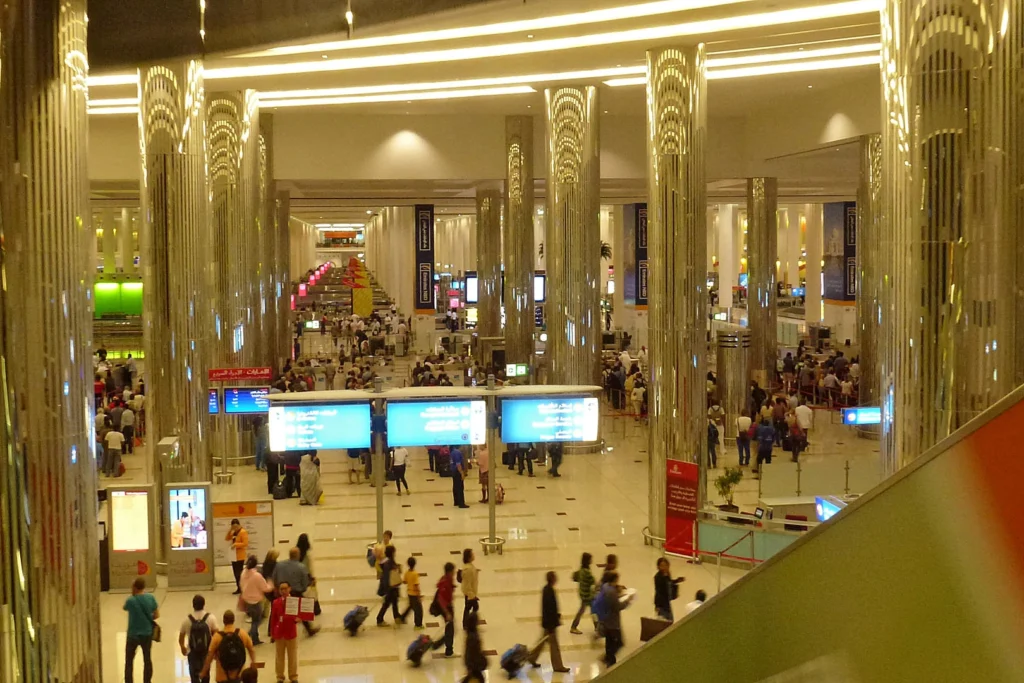
Technological Innovation and Sustainability
Al Maktoum International Airport is envisioned as one of the world’s most technologically advanced and environmentally responsible airports.
The project integrates AI-driven passenger flow systems, biometric security checks, and smart baggage handling for faster processing.
Sustainability remains at the core of DWC’s design. Solar-powered infrastructure, energy-efficient terminal systems, and smart waste management solutions aim to minimize the airport’s carbon footprint.
The integration of renewable energy and eco-friendly materials reflects Dubai’s broader sustainability goals under its Clean Energy Strategy 2050.
Transition from DXB to DWC
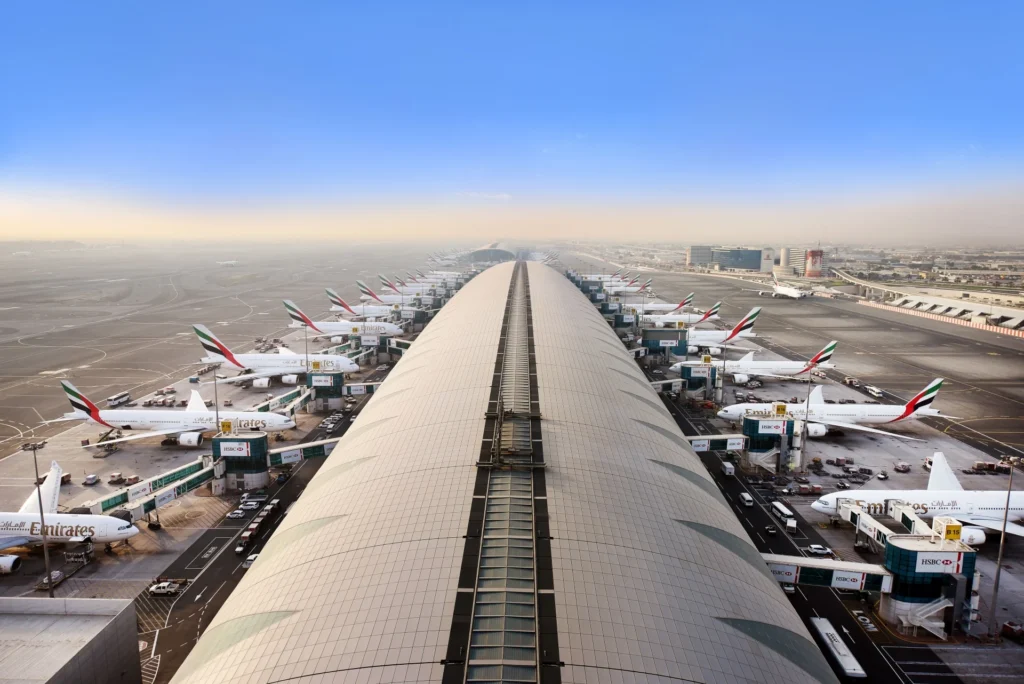
Dubai International Airport (DXB) currently handles more than 86 million passengers annually and is expected to reach its maximum capacity of about 115 million by 2031.
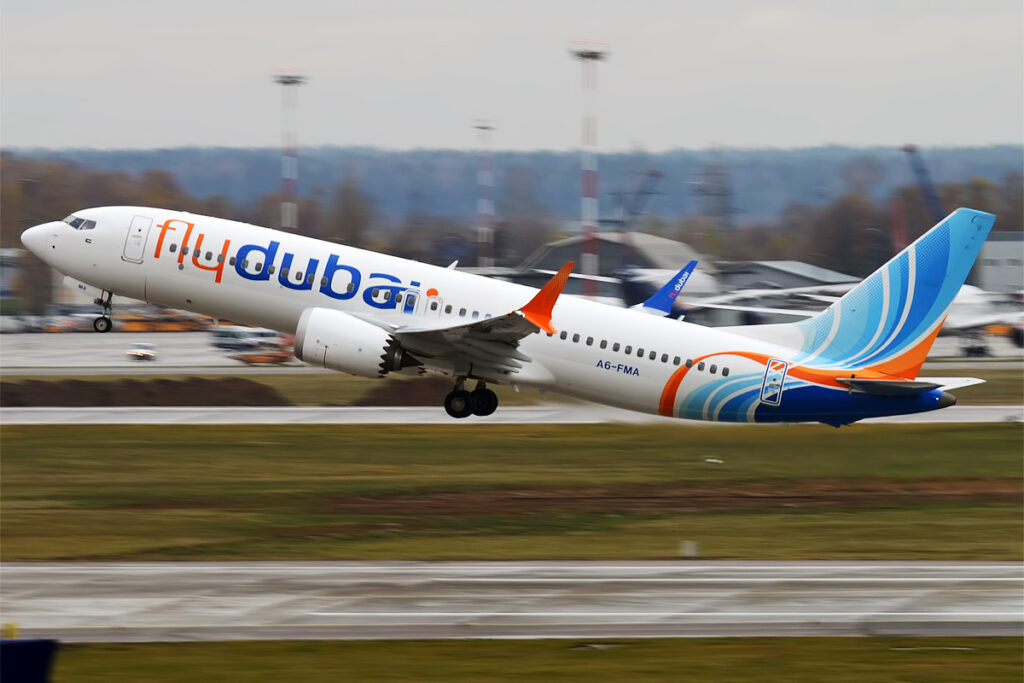
By 2032, major carriers, including Flydubai (FZ), are expected to shift operations to Al Maktoum International Airport (DWC).
This transition will ensure a smooth redistribution of air traffic, reduce congestion at DXB, and provide room for further expansion.
Cargo operations, charter services, and private jets already operate from DWC, paving the way for a full-scale move of commercial passenger flights.
Future Outlook
The completion of Al Maktoum International Airport by 2032 marks a defining moment for Dubai’s aviation and economic future.
The airport’s vast capacity, technological sophistication, and integrated development model position it as a cornerstone of Dubai’s plan to remain the world’s most connected city.
Beyond numbers, DWC symbolizes Dubai’s forward-thinking approach to infrastructure, a vision that merges innovation, sustainability, and global leadership in air travel.
Stay tuned with us. Further, follow us on social media for the latest updates.
Join us on Telegram Group for the Latest Aviation Updates. Subsequently, follow us on Google News
