

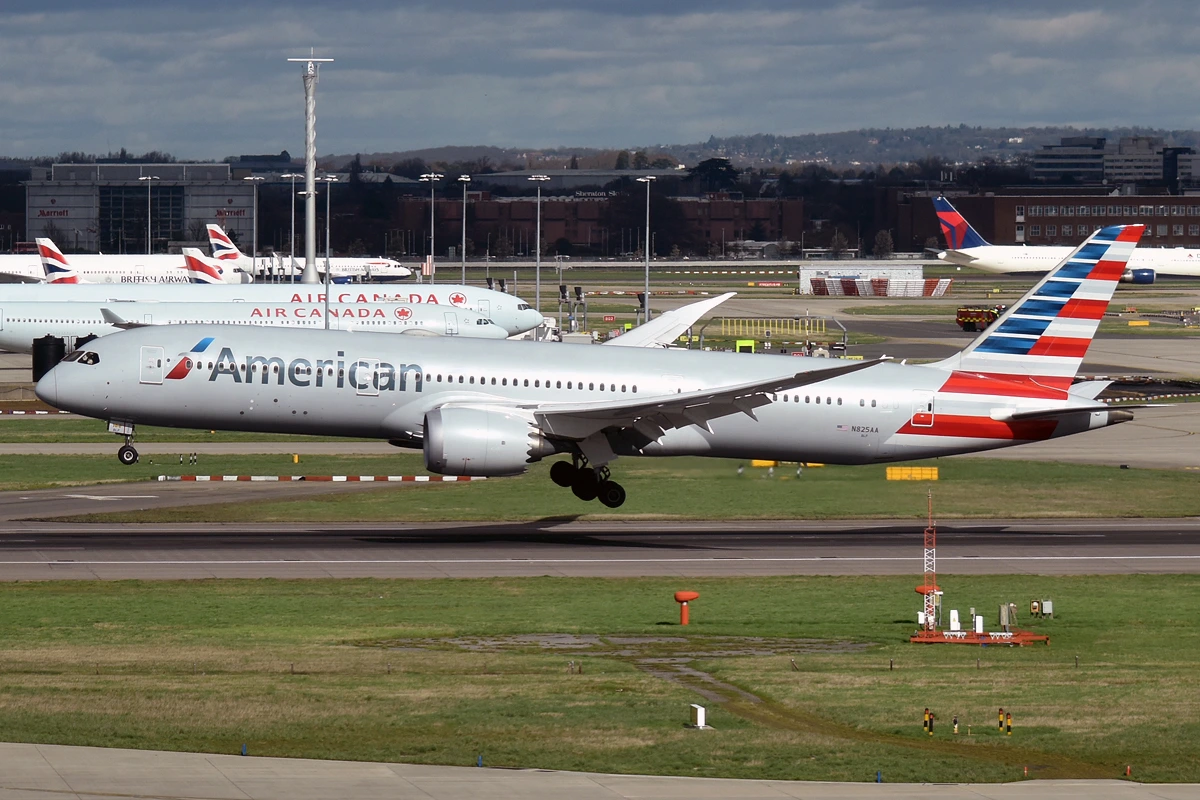
FORT WORTH- American Airlines (AA) is reportedly planning to replace the electronically dimmable passenger windows on some of its older Boeing 787 Dreamliners, addressing a recurring maintenance issue associated with the aircraft’s signature cabin feature. The US carrier operates its Dreamliners on long-haul routes from major hubs across the United States.
The proposed replacement program follows concerns that passengers repeatedly pressing window-control buttons can damage the dimming mechanism. American Airlines has not publicly confirmed the reported plan, and the scale of the proposed work remains unclear. However, the issue highlights how a feature designed to improve passenger comfort can create additional maintenance costs for airlines.

American Airlines Boeing 787 Window Problems
The Boeing 787 Dreamliner introduced electronically dimmable windows as an alternative to conventional pull-down shades.
Passengers can adjust the amount of light entering the cabin using a button beneath each window, allowing them to reduce glare while retaining some visibility outside.
Unlike traditional shades, the system relies on an electrochromic layer that changes its transparency when an electrical current passes through it. The adjustment takes time, meaning passengers cannot instantly switch between a clear window and a darkened one.
Repeatedly pressing the controls while waiting for a response can contribute to wear or damage. The problem can become more confusing when cabin crew restricts passenger control to darken the windows during overnight flights, as passengers may continue pressing buttons that no longer respond.
Aviation insider JonNYC reportedly disclosed American’s replacement plans. The reported cost of replacing a damaged window-dimming unit can reach $5,000 per window, making recurring failures a potentially expensive maintenance concern, Simple Flying flagged.
How Dimmable Windows Work
The Boeing 787 features passenger windows measuring approximately 10.7 inches wide and 18.4 inches high. Each assembly includes an outer structural pane, a central electrochromic layer, and an interior plastic cover.
The central layer changes its optical properties in response to an electrical voltage, allowing the window to darken or brighten without a conventional physical shade.
Depending on the setting and system response, a transition between fully bright and dark can take more than a minute.
The technology offers passengers greater control over cabin lighting, particularly on daytime long-haul flights. However, the gradual adjustment can encourage impatient users to press the button repeatedly, potentially contributing to equipment failures.
The system also allows cabin crew to manage window settings during certain phases of a flight.
This helps maintain a darker cabin environment when passengers are expected to rest, although restricted controls can create confusion if passengers do not understand why their buttons are unresponsive.

American Airlines 787 Fleet
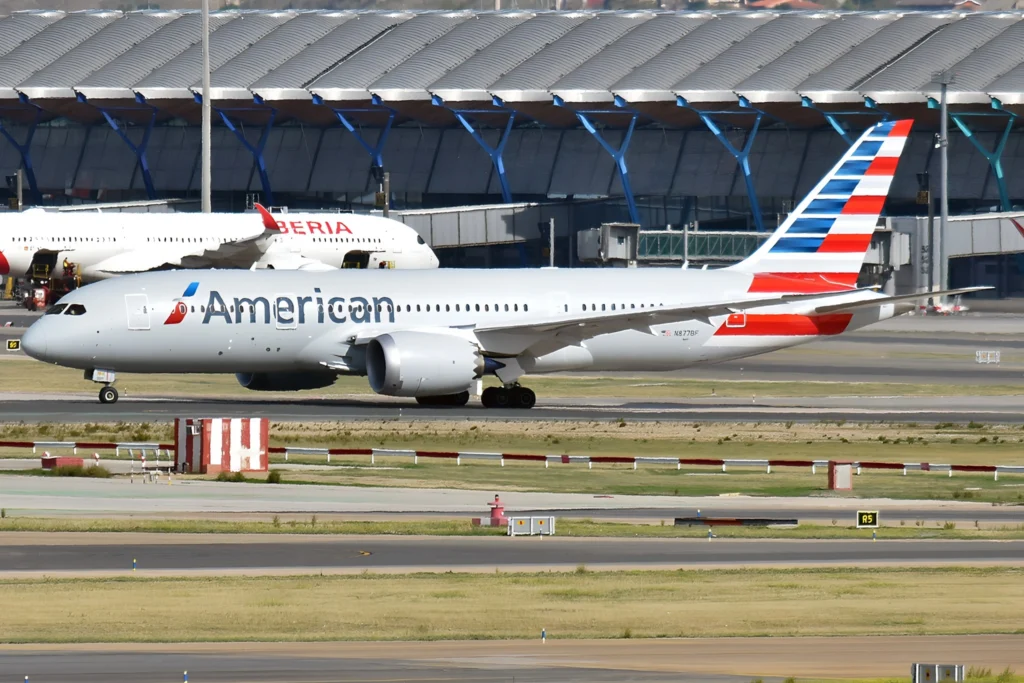
American Airlines operates both the Boeing 787-8 and 787-9, with the smaller variant entering the fleet in 2015 and the larger model following in 2016.
According to fleet figures cited in the original report, the airline operated 70 Dreamliners: 37 Boeing 787-8s and 33 Boeing 787-9s.
The carrier also had 19 additional 787s on order, giving it a continued commitment to the aircraft family.
Replacing older window components could help address recurring maintenance problems across some of its existing aircraft, although the airline has not confirmed which aircraft or windows would be affected.
The reported plan underscores a broader challenge for airlines introducing new cabin technology: passenger convenience must be balanced against durability and maintenance expenses.
Until American provides further details, the number of windows involved, the schedule, and the total cost of the proposed replacement remain unconfirmed.
Stay tuned with us. Further, follow us on social media for the latest updates.
Join us on Telegram Group for the Latest Aviation Updates. Subsequently, follow us on Google News
