


North America remains one of the world’s most important aviation regions, with a dense network of major international gateways connecting the United States and Canada with Europe, Asia, Latin America, and other global markets.
Its largest airports also serve as major transfer points, allowing passengers to connect between domestic and international services within the same journey.
Top 10 Megahubs in North America in 2026
OAG’s 2026 Megahubs Index highlights the airports with the strongest international connectivity across the region. The ranking is based on the number of possible connections between inbound and outbound flights within a six-hour window, where either flight is international, measured against the destinations served. The analysis uses schedules from September 2025 through August 2026 and the busiest day for global aviation, August 2, 2026.

1. Chicago O’Hare International Airport
Chicago O’Hare is the leading megahub in North America in 2026 and ranks fifth in the global OAG Megahubs Index. United Airlines is the dominant carrier, operating 49% of flights at the airport.
O’Hare recorded a global connectivity index of 232.1, with 71,497 potential connections across 308 destinations. The airport also had 54.2 million scheduled seats between September 2025 and August 2026.
Chicago’s position is supported by the rapid growth of its international network. OAG says capacity increased by more than 10.6%, while potential connections grew by 9.8%. Destinations increased from 297 to 308, giving O’Hare the third-largest destination network of any airport in the world.
The airport also has a relatively diverse airline mix for such a major hub. United’s 49% share is considerably lower than the dominant-carrier shares recorded at several other leading North American airports, allowing a number of airlines to contribute to Chicago’s overall connectivity.

2. Atlanta Hartsfield-Jackson International Airport
Atlanta Hartsfield-Jackson ranks second in North America and 10th globally. Delta Air Lines is overwhelmingly the dominant carrier, operating 80% of flights at the airport.
Atlanta recorded a global connectivity index of 190.7, with 49,782 potential connections across 261 destinations. It also had 63 million scheduled seats between September 2025 and August 2026, the highest seat capacity among the global top 10.
The airport’s enormous network is closely tied to Delta’s extensive hub operation. The carrier connects Atlanta with destinations across the United States while also providing a large international network.
Atlanta dropped two places in the global ranking compared with 2025, but it remains one of only two North American airports inside the global top 10. Its position demonstrates the scale of connectivity generated by a highly concentrated airline hub.
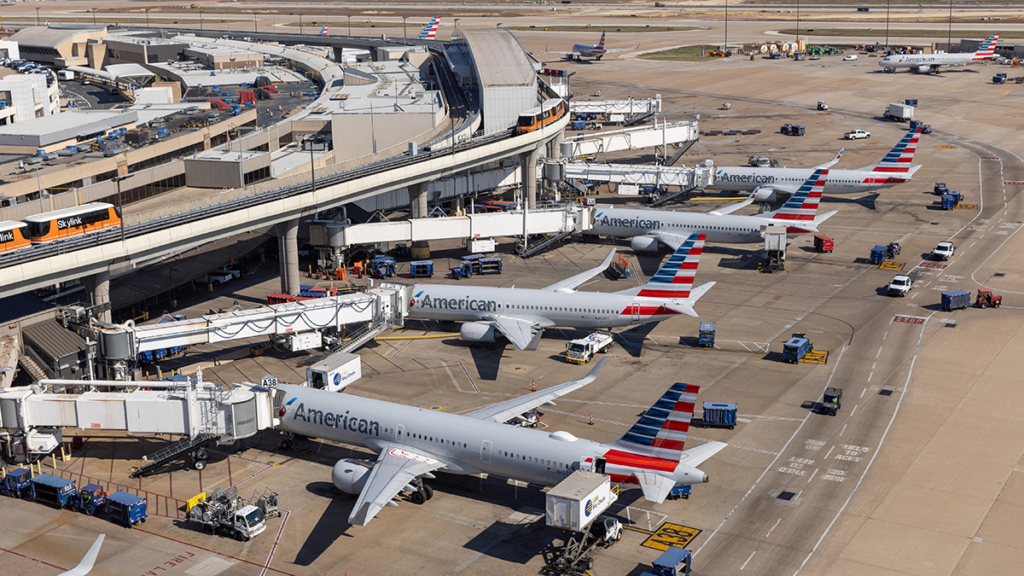
3. Dallas/Fort Worth International Airport
Dallas/Fort Worth holds third place in North America and ranks 15th globally. American Airlines is the dominant carrier, operating 85% of flights at the airport.
DFW recorded a connectivity index of 165.2 and 47,183 potential connections across 195 destinations. Its extensive network makes it one of the most important connecting airports in the central United States.
American’s 85% share gives Dallas/Fort Worth one of the highest levels of airline concentration among the major North American megahubs. The carrier uses the airport as one of its most important connecting centres, linking passengers between numerous domestic and international markets.
DFW’s central location also supports its role as a transfer point. Passengers travelling between different parts of the United States can use the airport to connect through American’s extensive schedule, while international services add connections to major markets around the world.

4. New York John F Kennedy International Airport
New York John F Kennedy International Airport ranks fourth in North America and 16th globally. Delta Air Lines is the dominant carrier, accounting for 35% of flights.
JFK recorded a global connectivity index of 156.5, placing it just behind Dallas/Fort Worth. Its position reflects the airport’s enormous international role and the breadth of destinations available from the New York metropolitan market.
Unlike some of the more concentrated hubs in the region, JFK has a relatively diversified airline mix. Delta’s 35% share means that a substantial proportion of the airport’s flights are operated by other carriers.
The airport’s position as one of the primary international gateways to New York is also important. Its network covers major markets across Europe, Asia, Latin America and other regions, giving JFK an extensive range of possible international connections.
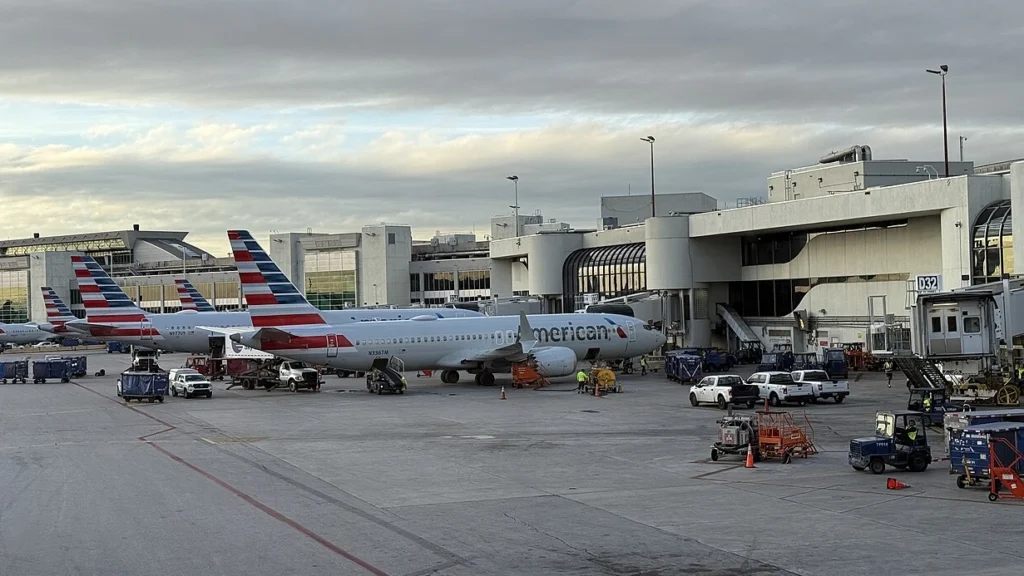
5. Miami International Airport
Miami International Airport ranks fifth in North America and 17th globally. American Airlines is the dominant carrier, operating 67% of flights.
Miami recorded a connectivity index of 155.0, placing it only slightly behind JFK. The airport moved three places higher in the global ranking compared with 2025, making it one of the notable climbers among North America’s leading international megahubs.
American’s large presence reflects Miami’s importance within its network, particularly for connections between the United States, the Caribbean and Latin America. The airport’s geographical position makes it an important gateway between North America and the southern regions of the Americas.
Miami’s rise also demonstrates the importance of its international network. While domestic connectivity remains significant, the airport’s extensive links across Latin America and the Caribbean are central to its role as an international megahub.
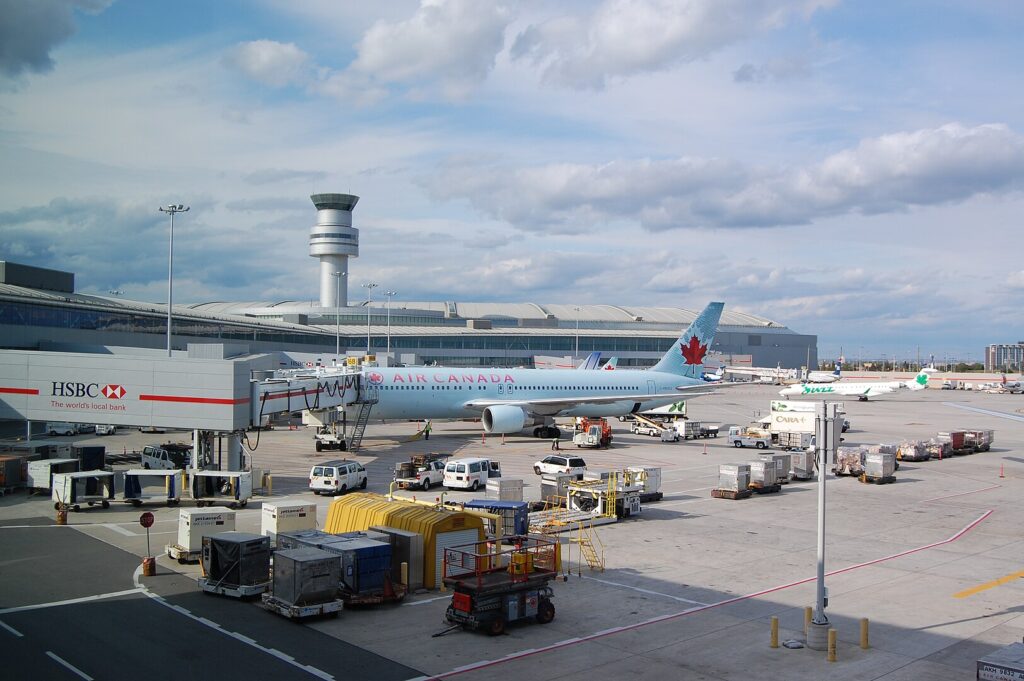
6. Toronto Pearson International Airport
Toronto Pearson ranks sixth in North America and 24th globally. Air Canada is the dominant carrier, accounting for 51% of flights.
Toronto recorded a global connectivity index of 138.8. It moved up two places in the worldwide ranking and also climbed from eighth to sixth among North American megahubs.
Pearson is the only Canadian airport to appear in the North American top 10. Its network provides connections between Canada and major destinations throughout the United States, Europe, Asia, Latin America and other international markets.
Air Canada’s 51% share gives it a strong position at Pearson without the level of concentration seen at some US hubs. The remaining flights are spread among numerous international and domestic carriers, contributing to Toronto’s role as a major gateway for Canada’s largest metropolitan area.

7. Houston George Bush Intercontinental Airport
Houston George Bush Intercontinental Airport ranks seventh in North America and 25th globally. United Airlines is the dominant carrier, operating 80% of flights.
Houston recorded a connectivity index of 136.5, putting it just behind Toronto Pearson. Despite its strong network, the airport fell from fifth to seventh place in the North American rankings and dropped seven places in the global ranking compared with 2025.
United’s 80% share makes Houston one of the most concentrated major airline hubs in the region. The carrier’s extensive schedule provides connections between numerous US cities and international markets.
Houston’s location also gives it an important role in connections between the United States and Latin America. The combination of United’s hub network and Houston’s large metropolitan market supports the airport’s continued presence among the world’s major megahubs.

8. Los Angeles International Airport
Los Angeles International Airport ranks eighth in North America and 26th globally. Delta Air Lines is the dominant carrier, but its share of flights is only 21%, giving LAX one of the most diverse airline mixes in the regional top 10.
Los Angeles recorded a connectivity index of 130.8. Although it fell two places in the global international ranking, LAX remains an important gateway for passengers travelling between North America and destinations across Asia, Europe, Latin America and other regions.
The airport’s relatively low dominant-carrier share distinguishes it from highly concentrated hubs such as Dallas/Fort Worth, Houston and Atlanta. A large number of airlines contribute to LAX’s extensive international schedule.
Los Angeles also has a particularly broad geographic role. Its position on the US West Coast makes it a natural gateway for transpacific services, while its large domestic market and extensive links to Latin America add further layers of connectivity.

9. Newark Liberty International Airport
Newark Liberty International Airport ranks ninth in North America and 36th globally. United Airlines is the dominant carrier, operating 72% of flights.
Newark recorded a global connectivity index of 113.2. It remains one of the major international gateways serving the New York metropolitan area, alongside JFK and other airports in the region.
United’s strong presence makes Newark an important hub within its network. The carrier operates a substantial schedule from the airport, connecting passengers with destinations across the United States as well as major international markets.
Newark’s inclusion in the top 10 also demonstrates the scale of New York’s aviation market. The metropolitan area has multiple major airports with significant international networks, allowing the region to maintain several separate connecting hubs.

10. San Francisco International Airport
San Francisco International Airport completes the North American top 10 and ranks 37th globally. United Airlines is the dominant carrier, accounting for 53% of flights.
San Francisco recorded a connectivity index of 113.1, placing it almost level with Newark. The airport’s location on the US West Coast gives it a particularly important role in connections between North America and Asia Pacific.
United’s 53% share makes it the largest carrier at SFO while still leaving a significant part of the airport’s operation to other airlines. This contributes to a broad international schedule serving major global markets.
San Francisco also recorded a notable rise in OAG’s separate US Domestic Megahubs ranking. It climbed from 17th to 11th domestically, with capacity increasing by 4% during the year to August 2026.
North America Remains A Major Global Connectivity Centre
North America has 12 airports in OAG’s global Top 50 Megahubs, with five appearing inside the global Top 20. Two of those airports, Chicago O’Hare and Atlanta, are inside the global top 10.
The regional ranking is heavily dominated by US airports. Nine of the top 10 are located in the United States, while Toronto Pearson is the only Canadian airport to feature.
Chicago’s fifth-place global position is particularly notable. OAG identifies O’Hare as the most connected megahub in the Americas, while Atlanta remains the world’s busiest airport by capacity and ranks 10th globally for connectivity.

Major US Airlines Shape The Region’s Megahubs
The 2026 ranking also illustrates how closely North America’s major international hubs are linked to the country’s largest airlines.
United Airlines dominates Chicago, Houston, Newark and San Francisco, while Delta Air Lines leads Atlanta, JFK, Los Angeles and several other major US hubs. American Airlines has particularly strong positions at Dallas/Fort Worth and Miami.
Chicago is somewhat different because United operates less than half of the airport’s flights. OAG describes O’Hare as having the most diverse airline portfolio among US hubs, with United accounting for 49% of flights.
This contrasts with airports such as Dallas/Fort Worth, where American operates 85% of flights, and Atlanta, where Delta operates 80%. The different airline structures show that there is more than one model for building a major international megahub.

How OAG Measures Megahubs
OAG’s Megahubs Index does not simply rank airports according to passenger numbers or total flight capacity. Instead, it measures potential scheduled connections between inbound and outbound flights within a maximum six-hour window, where either the inbound or outbound flight is international.
The destinations included in the calculation are those served between September 2025 and August 2026. OAG then measures the number of potential connections against the destinations served to produce the connectivity index. The 2026 global ranking is based on the busiest day for global aviation, August 2, 2026.
This methodology means that an airport with fewer total passengers can rank highly if its schedules create a large number of practical connecting possibilities. It also explains why the order does not necessarily correspond with the largest airports by passenger volume.
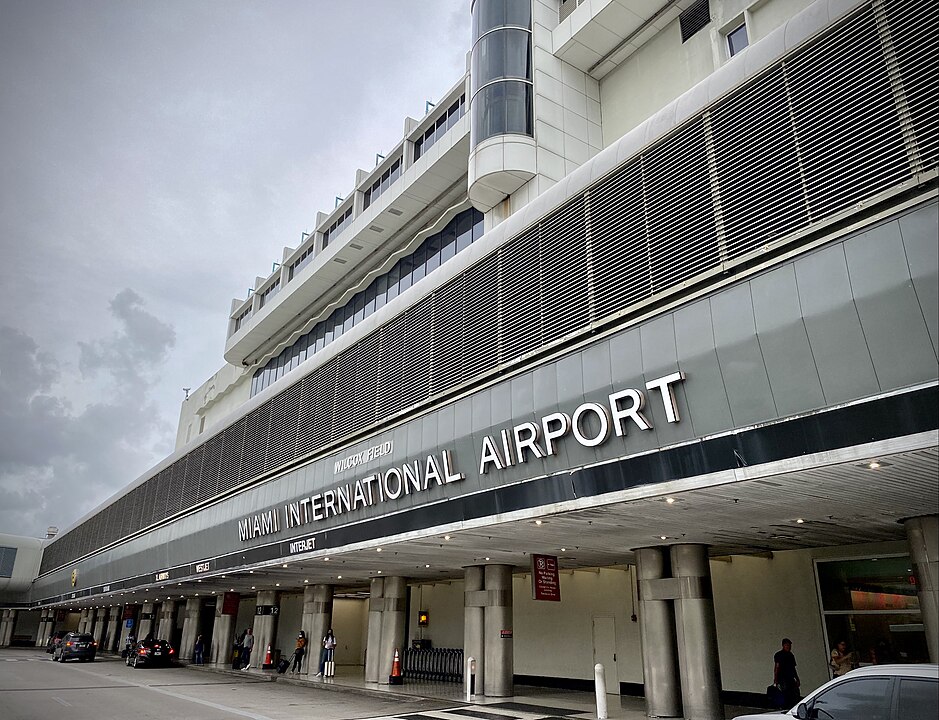
Bottom Line
Chicago O’Hare leads the Top 10 Best Megahubs in North America in 2026, ranking fifth globally and strengthening its position through a combination of network growth, destination breadth and connecting opportunities. Atlanta follows in second, while Dallas/Fort Worth, JFK and Miami complete the regional top five.
Toronto Pearson is the only Canadian airport in the top 10, rising to sixth place regionally. Houston, Los Angeles, Newark and San Francisco complete the list, with each serving a distinct role in the wider North American aviation network.
The ranking also shows the influence of the region’s major airlines. United, Delta and American dominate several of the largest hubs, although airports such as Chicago and Los Angeles have more diverse airline mixes. Overall, OAG’s 2026 figures demonstrate the continuing importance of North America as a major centre for international air connectivity.
FAQs
Chicago O’Hare International Airport ranks first in North America and fifth globally in OAG’s 2026 Megahubs Index, with a connectivity index of 232.1 and 71,497 potential connections.
Chicago O’Hare ranks fifth globally, Atlanta ranks 10th, Dallas/Fort Worth ranks 15th, JFK ranks 16th and Miami ranks 17th. These are the five North American airports inside OAG’s global top 20.
Toronto Pearson is the only Canadian airport in the regional top 10. It ranks sixth in North America and 24th globally, with Air Canada operating 51% of flights.
Stay tuned with us. Further, follow us on social media for the latest updates.
Join us on Telegram Group for the Latest Aviation Updates. Subsequently, follow us on Google News
