

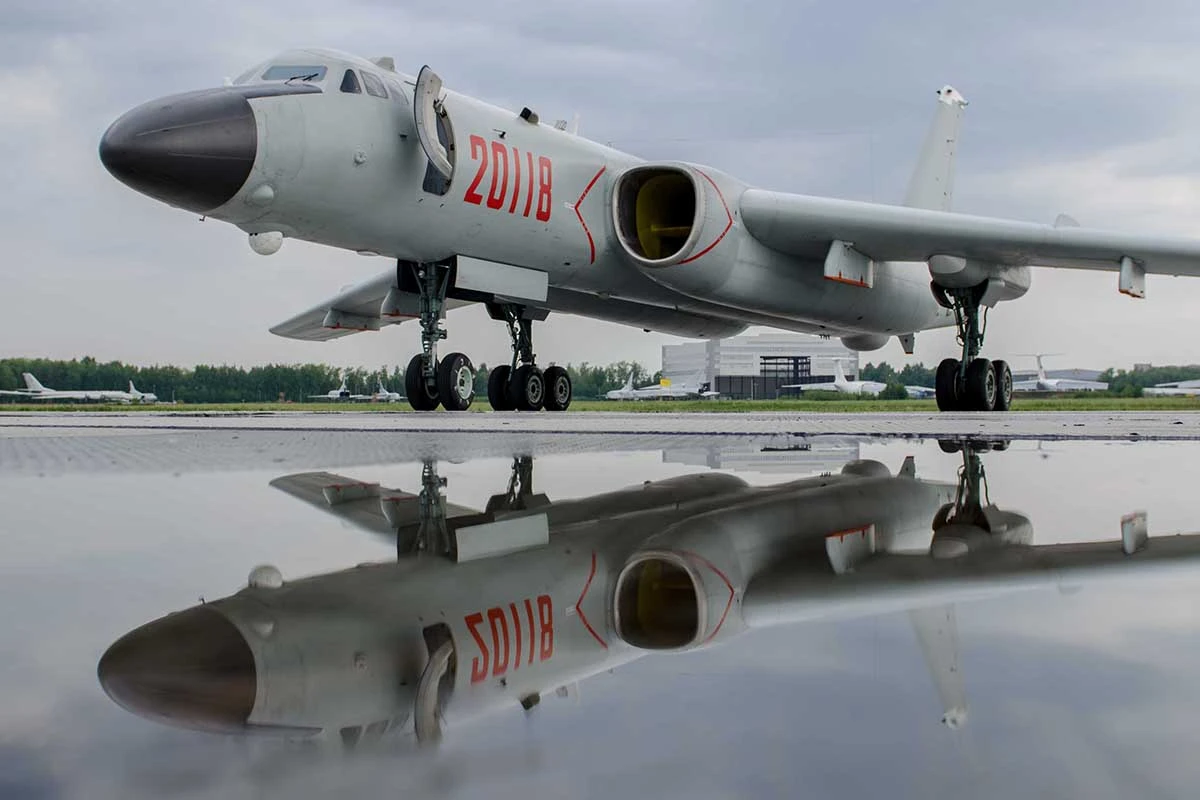
BEIJING— China has publicly shown its Xi’an H-6N strategic bomber carrying what analysts assess to be the nuclear-capable JL-1 air-launched ballistic missile, offering a rare look at the aircraft intended to provide the airborne element of Beijing’s nuclear deterrent.
The footage, released in August 2026, also showed two Chengdu J-20 fighters escorting the bomber during an exercise.
The H-6N is not a new aircraft. China unveiled the variant in 2019, while the U.S. Department of Defense has described it as an operational platform for the air component of China’s nuclear triad, alongside land-based missiles and nuclear-powered ballistic-missile submarines.
Role of H-6N Nuclear Bomber
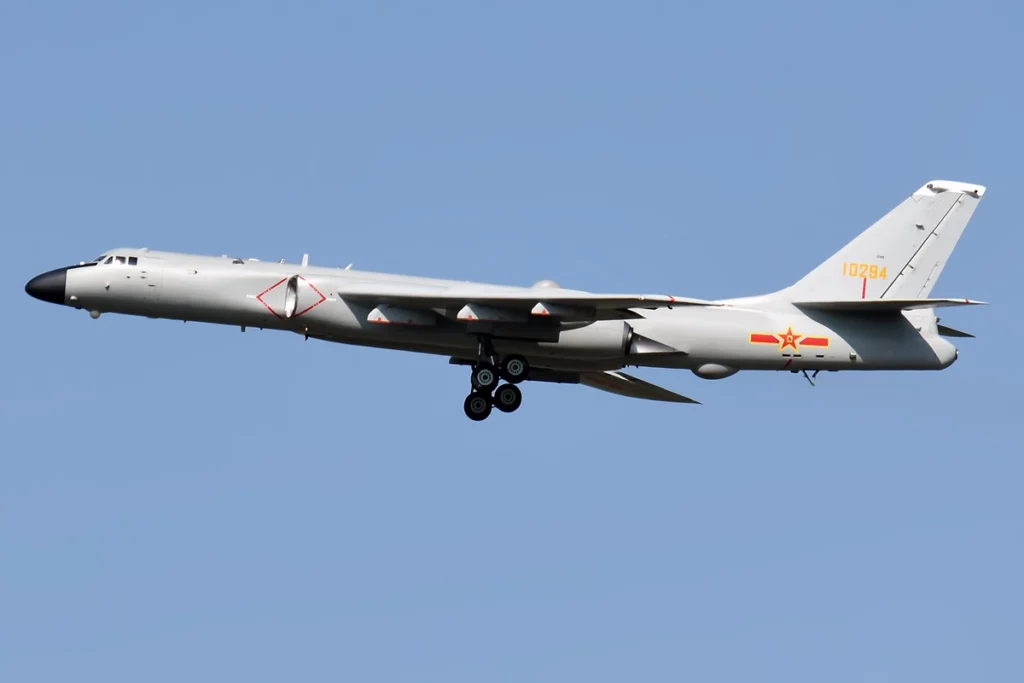
The latest footage is significant because it links the H-6N directly with a large air-launched ballistic missile in an operational-style setting.
Chinese state media did not identify the weapon by name, but military observers assessed that its size and configuration strongly resemble the JL-1, which China displayed publicly during its 2025 military parade.
The bomber was designed specifically to carry large weapons externally beneath its fuselage and also incorporates an aerial-refueling probe.
This allows the H-6N to operate farther from its base and launch long-range weapons without having to approach the target area as closely as a conventional bomber would.
The Pentagon has assessed the H-6N’s air-launched ballistic missile as a highly precise theater weapon that could be suited to delivering a low-yield nuclear warhead.
The aircraft therefore gives China an additional method of delivering nuclear weapons beyond its land-based and submarine forces.
J-6 Range Remains Limitation
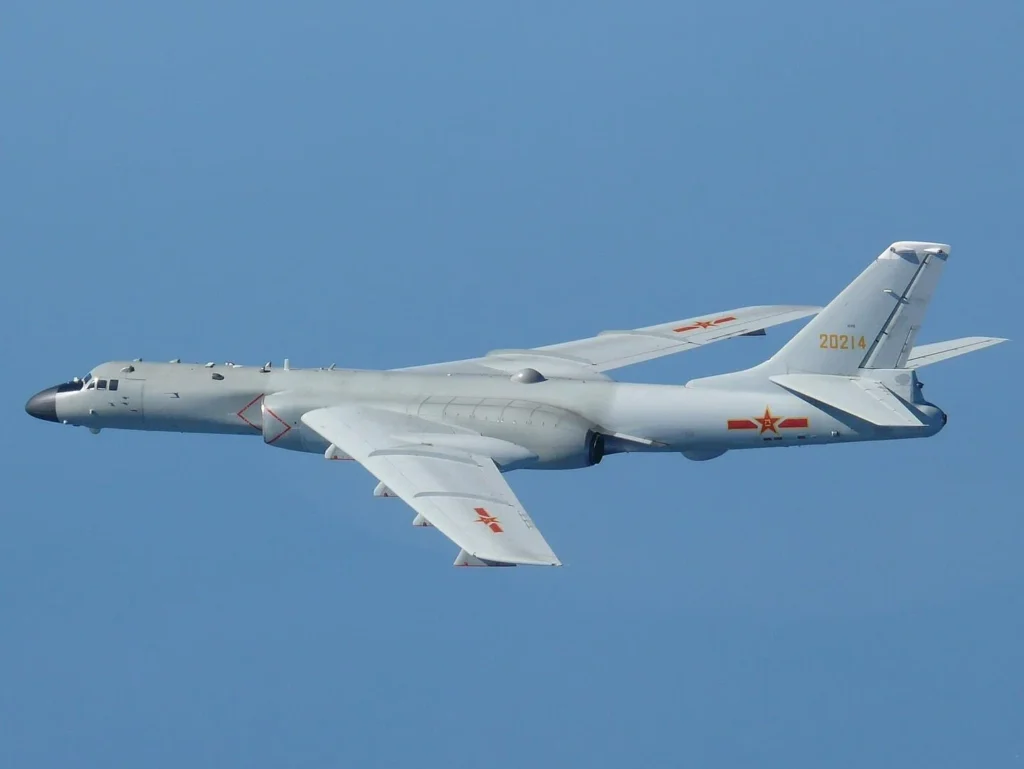
Despite its strategic role, the H-6N does not have the reach of the largest U.S. and Russian long-range bombers.
Open-source assessments commonly place the aircraft’s own range at around 3,000 kilometers, although aerial refueling can extend its operational reach considerably.
That creates a major difference from aircraft such as the Boeing B-52H.
The U.S. Air Force lists the B-52H with an unrefueled combat range exceeding 14,080 kilometers and a payload capacity of about 31,500 kilograms, while aerial refueling can extend its range further.
Russia’s Tupolev Tu-95MS is also built around long-range operations. Russian industry information gives the aircraft a range of roughly 6,500 to 10,500 kilometers depending on payload, with up to 12 tonnes of weapons.

Missiles Extend Reach Compared to J-20
China’s approach therefore relies on combining the H-6N with aerial refueling and long-range weapons rather than matching the range of traditional intercontinental bombers.
The concept allows the aircraft to remain farther from heavily defended areas while using a ballistic missile to cover much of the remaining distance.
The August footage showed the H-6N participating in an exercise involving attacks against surface targets, with the bomber operating alongside J-20 fighters.
Earlier demonstrations have also shown H-6Ns operating alongside Y-20U tanker aircraft, highlighting the importance of a broader support network for the relatively shorter-ranged bomber.
The Pentagon has separately identified the H-6N as an important part of China’s expanding nuclear forces.
The aircraft, tanker support and air-launched ballistic missile together give Beijing a mobile airborne strike option, even though the H-6N itself remains considerably shorter-ranged than the B-52H and Tu-95MS, Aero Telegraph flagged.
Stay tuned with us. Further, follow us on social media for the latest updates.
Join us on Telegram Group for the Latest Aviation Updates. Subsequently, follow us on Google News
