

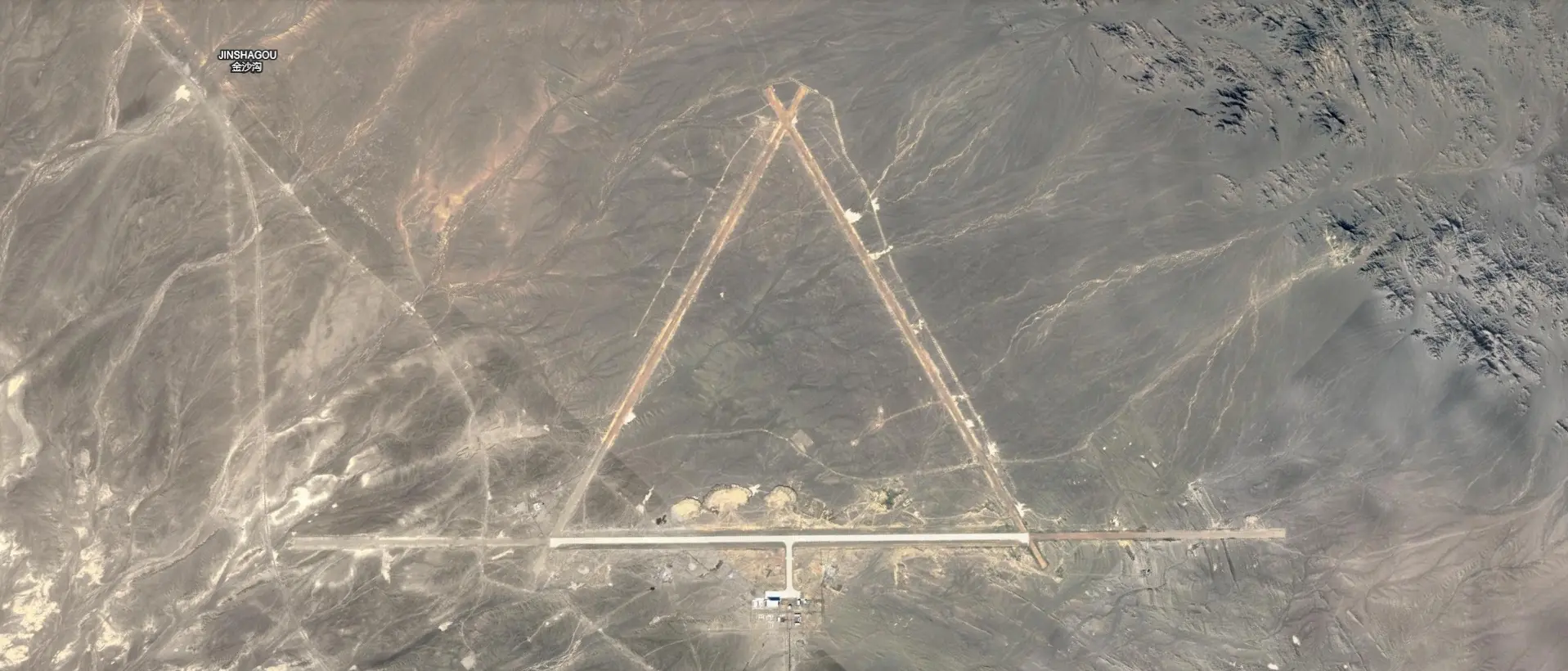
BEIJING- China is rapidly expanding a remote military flight-test facility in Xinjiang that supports advanced aerospace and combat-aircraft development.
The Lop Nur test facility features a 16,400 foot runway and is evolving into a major People’s Liberation Army (PLA) flight-test center.
The People’s Liberation Army Air Force is associated with the site, while Lop Nur, Xinjiang, lies near China’s primary nuclear weapons testing complex.
High-resolution satellite imagery from August 27, 2026, shows rapid construction of new hangars, taxiways, aircraft pads, and possible fuel infrastructure.
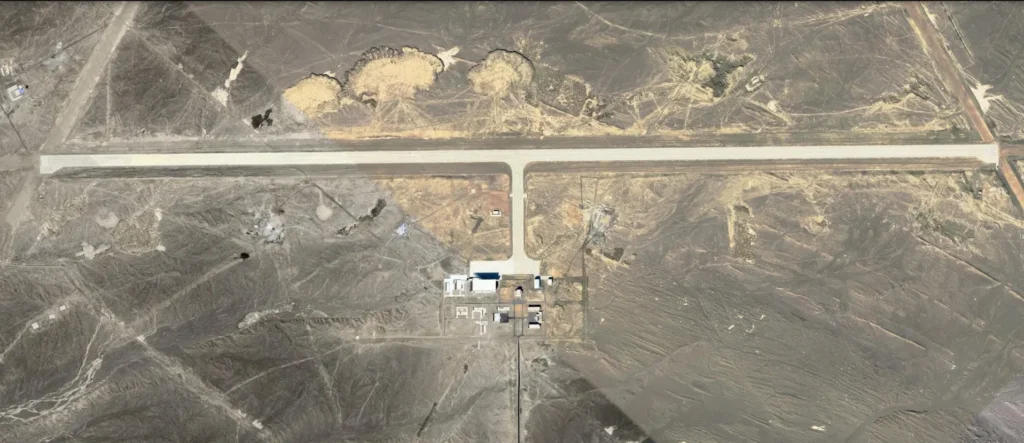
Lop Nur Flight-Test Complex
The remote installation in northwestern China has changed dramatically over the past several years.
What was once a relatively austere airstrip has developed into a much larger PLA flight-test center with expanded aircraft operating areas, multiple hangars, new taxiways, and growing support infrastructure.
The facility sits in the desolate and arid Xinjiang autonomous region near the Lop Nur Nuclear Test Base, China’s principal nuclear weapons testing site.
China conducted its first nuclear weapons test there in 1964 under the codename Project 596, becoming the world’s fifth nuclear-armed state.
The airfield itself has one of the world’s longest runways, measuring approximately 16,400 feet, or about 3.1 miles. Earlier imagery showed little more than the runway, a small hangar, and a limited number of scattered vehicles, but the site has since undergone sustained redevelopment.

From Space Testing to Advanced Combat Aircraft
The installation has not always been primarily associated with advanced military aircraft. As far back as 2020, it was linked to military space development and testing involving reusable space planes.
Its role expanded as Chinese flight-test activity moved toward increasingly advanced combat platforms.
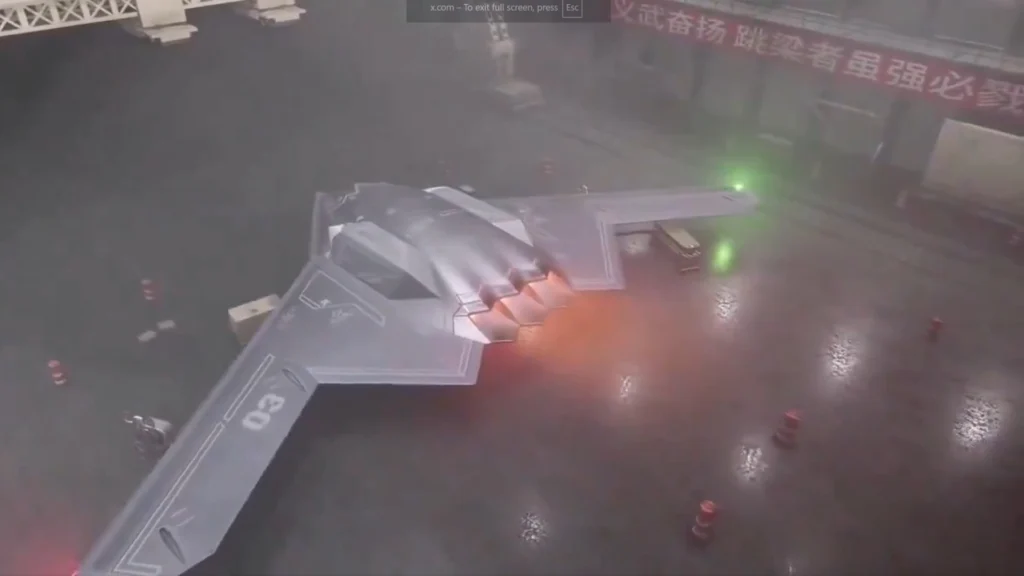
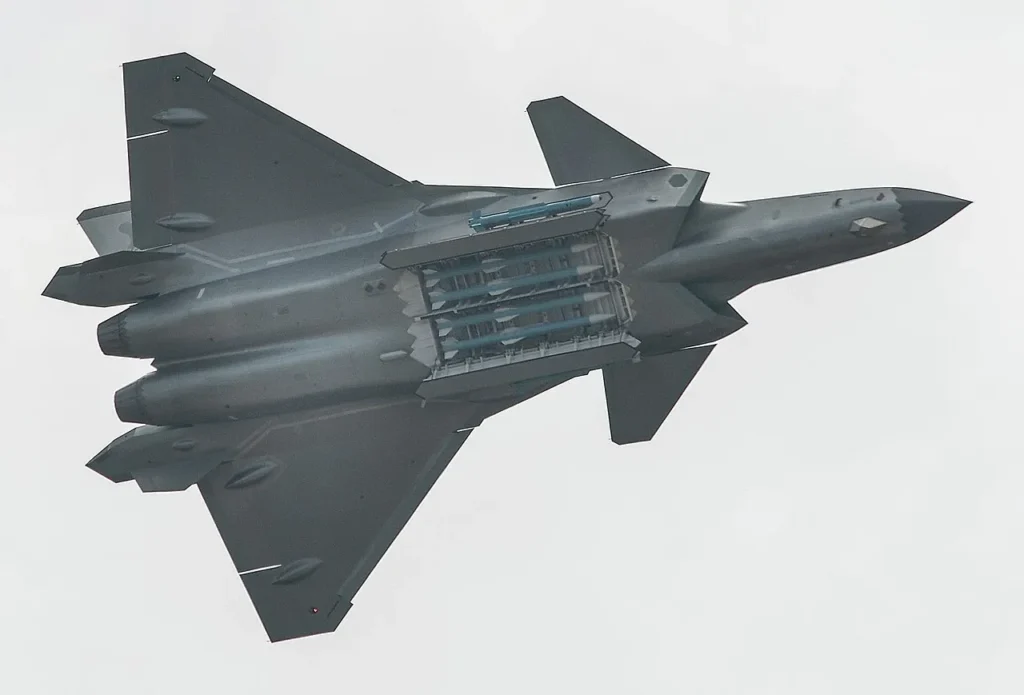
In 2025, imagery showed China’s J-36 and J-XDS sixth-generation stealth fighter designs at the site for the first time. The aircraft were operating far from the home airfields of their respective manufacturers, Chengdu and Shenyang.
Their appearance provided an important indicator of the facility’s changing role. Lop Nur was no longer simply an isolated airstrip or a location associated with earlier aerospace testing. It had become part of China’s broader infrastructure for evaluating next-generation aircraft.
Construction Accelerated After 2023
The current expansion followed several distinct phases.
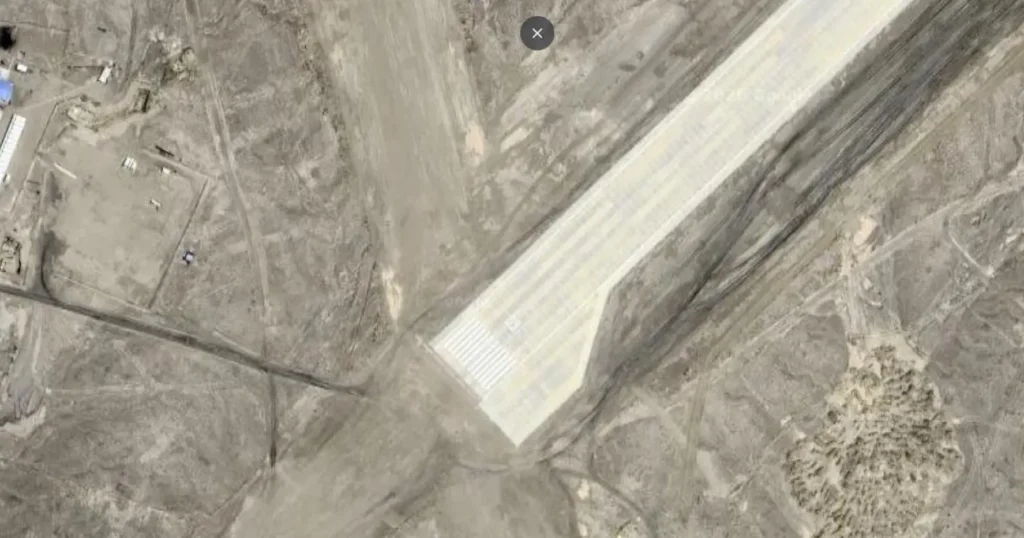
In 2023, the main apron was substantially enlarged and a new large hangar was added. In 2025, additional hangars appeared on both sides of the main ramp through extensions. These structures appeared optimized for tactical fixed-wing aircraft.
The two sixth-generation fighter designs appeared at the facility not long after those shelters were completed. Construction activity then accelerated sharply in May 2025 and has continued at a much higher pace since.
The 6 year progression shows a site that first expanded gradually before entering a much more intensive construction phase. Satellite imagery captured on August 27, 2026, illustrates the latest stage of that transformation.
New Taxiways Increase Flight-Test Capacity
One of the most important developments is a new taxiway extension south of the runway.
Construction is advancing rapidly on a route that runs parallel to the runway and connects the southern portion of the airfield with the central apron and main hangar area. The taxiway is nearly complete.
Its operational value is significant. Aircraft using a runway for back-taxi operations must occupy the same surface needed for launches and recoveries.
A parallel taxiway allows aircraft to move between operating areas without repeatedly entering the active runway, reducing conflicts and supporting a higher flight-test tempo.
The broader construction program includes new taxiways, aircraft turning pads, hangars, and possible fuel-storage infrastructure. These additions substantially increase the site’s capacity for aircraft movements and sustained testing activity.
Oversized Southern Hangars
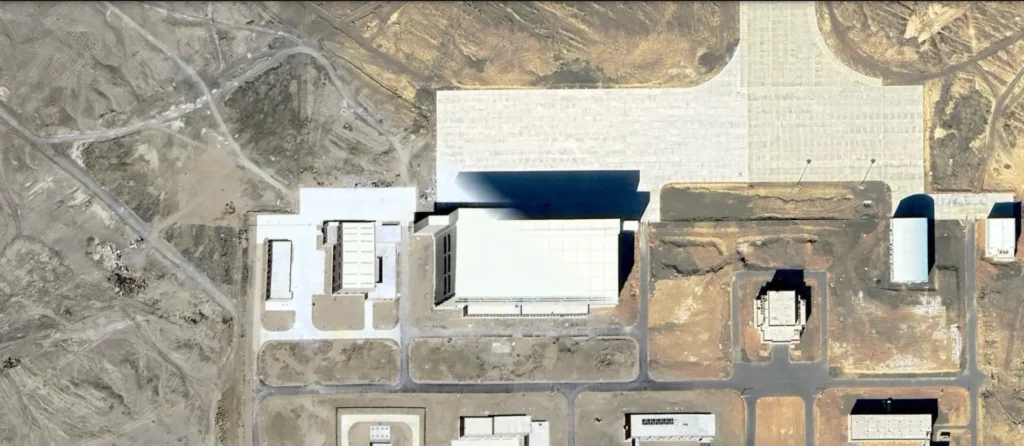
The most notable structures are four large hangars under construction on the southern section of the airbase.
Three of them measure approximately 80 by 40 meters, or about 262 by 131 feet. A fourth hangar is located farther south on the apron and has different dimensions.
The proportions are unusually wide compared with many conventional tactical-aircraft shelters. The structures also have direct access to the new southern taxiway, linking them efficiently with the broader flight-test complex.
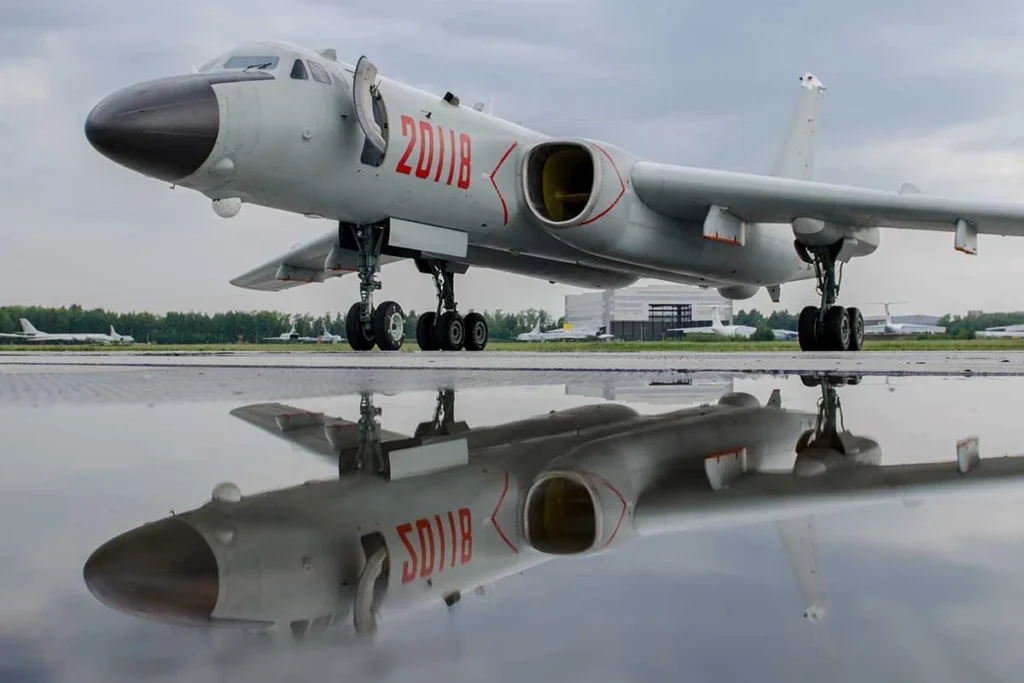
Their dimensions are large enough to accommodate tactical and strategic aircraft currently operated by the PLA. For comparison, China’s Xi’an H-6 strategic bomber has a wingspan of approximately 108 feet.
The existing fleet, however, does not appear to fully explain the importance of these hangars. Their size and configuration suggest that the facility is also preparing for aircraft with larger wingspans and more specialized test requirements.
Possible Implications for China’s H-20
The design of the southern hangars is similar to wide hangars identified at another secretive Chinese test facility near Malan in Xinjiang. That installation is more strongly associated with unmanned aircraft.
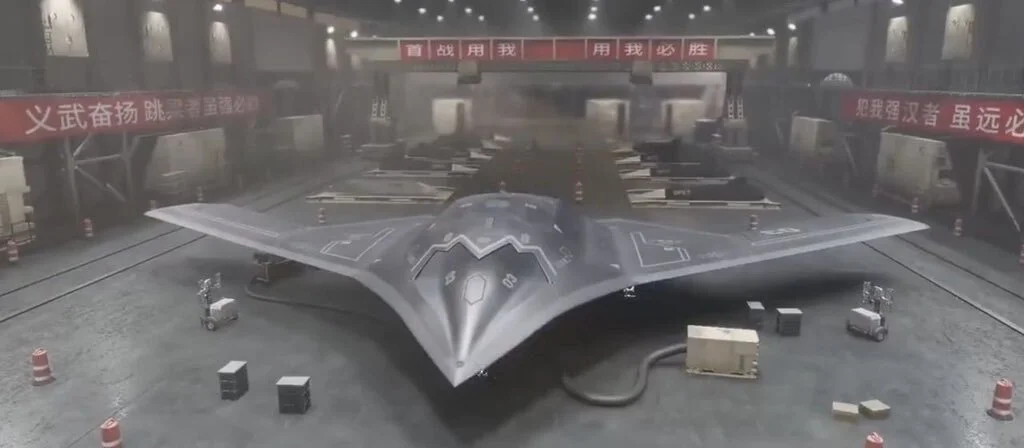
The Malan complex is relevant because China is currently flight-testing two massive stealth flying-wing drones and is also expected to conduct testing of the H-20 stealth bomber at an undisclosed location. The H-20 has not yet made a public appearance.
Lop Nur could be an attractive location for at least part of such a test program because of its isolation and existing flight-test infrastructure. The new southern hangars are large enough to support an airframe significantly wider than many current tactical aircraft.
The comparison with Malan is also important. Lop Nur appears more focused on crewed platforms, while Malan has a stronger unmanned-aircraft emphasis. That distinction makes Lop Nur a plausible location for future testing of large crewed stealth aircraft.
However, no available evidence confirms that the H-20 is being prepared for testing at Lop Nur. The possible connection remains an assessment rather than an established fact.
More Development Is Underway
Construction continues beyond the primary aircraft operating areas.
Several buildings that were still under development late in 2025 are now complete. A cluster of prefabricated containers has also appeared in tightly arranged rows.
Those containers could support construction operations by providing storage, accommodation, or workspace for the additional personnel and equipment needed to sustain the accelerated buildout. A larger construction workforce would be consistent with the sharp increase in activity visible across the site.
Excavation and construction have also begun in other nearby areas, although their intended functions remain unknown.
Farther east, near the outer edge of the installation, a concrete batching plant has been constructed. The facility includes wash-water ponds and segregated aggregate stockpiles, indicating continued demand for large-scale concrete work.
Specialized Testing
Another taxiway is being graded north of the central apron. The route is intended to connect the central operating area with the northern section of the main runway, and the latest imagery indicates that concrete pouring has begun.
A circular pad approximately 400 feet in diameter has also taken shape at the northern end of the facility. It has direct connections to both the runway and the main base.
The imagery assessment by TWZ identifies the circular feature as a likely engine-run and aircraft-turnaround pad. Such a facility would allow aircraft to conduct ground-engine operations and repositioning without placing unnecessary demands on the main runway.
If a shelter were added, the location could also serve as a concealed area for sensitive test aircraft or other test articles. Such a setup could reduce the exposure of sensitive equipment to overhead satellite observation.
An apron extension is also being built near the circular pad. At least two large hangars are under construction there, although their proportions appear more conventional than those of the four unusually wide southern structures.
Possible Fuel Infrastructure
Possible fuel-storage infrastructure is another notable addition.
If the infrastructure is confirmed as aviation fuel storage, it would increase the base’s ability to support a higher sortie rate and longer periods of sustained flight activity. Greater fuel capacity would be consistent with an installation intended to handle more aircraft and more demanding test schedules.
The combination of fuel infrastructure, additional taxiways, larger aprons, multiple new hangars, and specialized aircraft pads points to an airfield being prepared for a substantial increase in operational activity.
China’s Advanced Aerospace Programs
The construction at Lop Nur indicates that the facility is becoming an increasingly important part of China’s advanced aerospace development network.
The site now combines a very long runway with expanded aircraft operating areas, improved taxiway connectivity, large maintenance and shelter facilities, specialized ground-test infrastructure, and additional support capacity.
The most significant signal comes from the southern hangars. Their unusually wide dimensions suggest that the PLA expects to accommodate aircraft with substantially larger wingspans than many of the tactical platforms already seen at the site.
The current imagery does not identify which future aircraft will use the new facilities. It does show that China is investing heavily in infrastructure capable of supporting more aircraft, larger airframes, higher sortie rates, and longer-duration flight-test activity.
As the buildout continues, major advanced-aircraft programs could use Lop Nur for extended testing or temporary detachment operations. The facility’s increasing capacity indicates that its role in China’s next-generation aerospace development is likely to become more significant.
Stay tuned with us. Further, follow us on social media for the latest updates.
Join us on Telegram Group for the Latest Aviation Updates. Subsequently, follow us on Google News
