


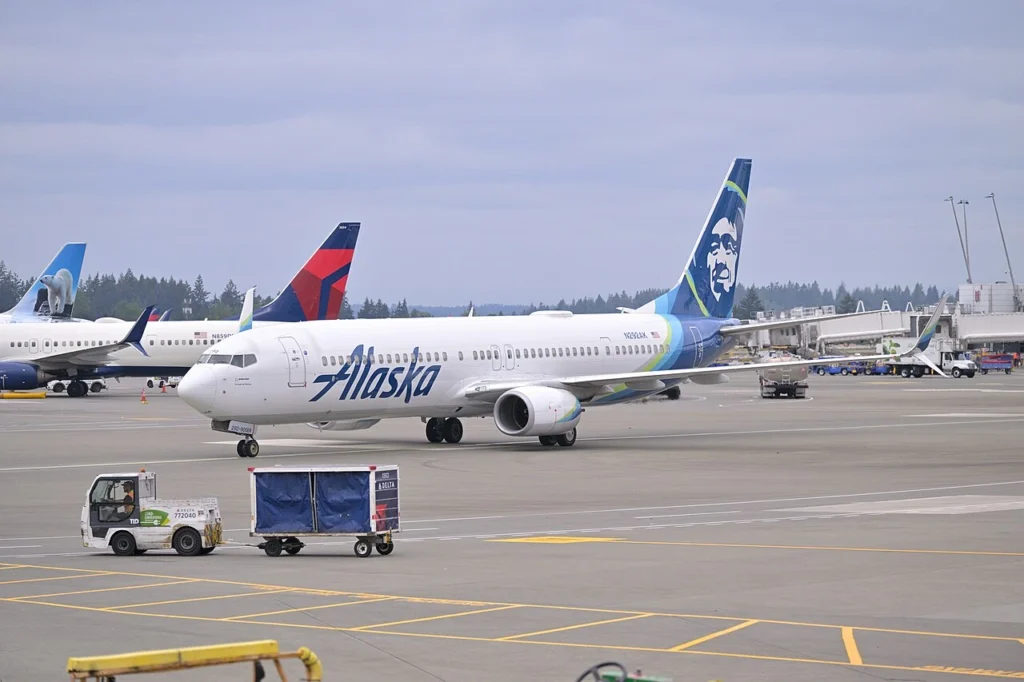
SEATTLE- Alaska Airlines (AS) and Delta Air Lines (DL) operate major portions of traffic at Seattle-Tacoma International Airport (SEA). Residents living beneath the airport’s flight paths alleged that aircraft pollution was contaminating homes, soil, and surrounding communities.
The Ninth Circuit ruled on September 23, 2026, that the residents’ state-law claims are expressly preempted by Section 233 of the Clean Air Act. The decision reversed the district court’s refusal to dismiss the claims and sent the case back for further proceedings.
Ninth Circuit Rules on Seattle Airport Pollution Claims
The case, Codoni v. Port of Seattle, involved residents living within five miles of Seattle-Tacoma International Airport. The plaintiffs sued Alaska Air Group, Delta Air Lines, and the Port of Seattle, alleging that aircraft operations released pollutants that accumulated in nearby communities and affected people and property.
The lawsuit was brought as a proposed class action. The complaint described a five-mile area around the airport as the “Contamination Zone” and said the proposed resident and property classes included more than 300,000 people. Alaska and Delta were alleged to account for about 80% of flights at Sea-Tac.

What Residents Alleged About Aircraft Pollution
The plaintiffs identified two principal sources of pollution: aircraft engine exhaust and particles from aircraft fuselages.
According to the allegations summarized by the Ninth Circuit, engine exhaust can contain particulate matter, carbon monoxide, nitrogen dioxide, sulfur oxides, hazardous air pollutants, and certain heavy metals. The complaint also alleged that repeated expansion and contraction of aircraft fuselages during takeoff and landing can cause metal-containing particles to flake from aircraft bodies.
The plaintiffs argued that pollution released at lower altitudes can accumulate in nearby neighborhoods before wind disperses it. They cited University of Washington research that, according to the court’s opinion, reported higher particulate pollution in communities directly beneath Sea-Tac flight paths and later found that pollution also entered classrooms in the affected area.
These environmental allegations formed the factual basis of the residents’ claims. The Ninth Circuit’s decision, however, did not determine that the alleged pollution caused the claimed health or property effects. Instead, the appeal turned on whether federal law preempted the state-law claims.

Claims Against Alaska Airlines, Delta and Port of Seattle
The amended complaint asserted several causes of action.
- Negligence: The plaintiffs alleged that the airlines and airport failed to exercise reasonable care to protect residents and property.
- Battery: The plaintiffs alleged that the airlines knew their emissions would result in harmful and unwanted contact with residents.
- Trespass: The property-related plaintiffs alleged that pollution entering their property interfered with their rights.
- Public nuisance: The plaintiffs alleged that the pollution interfered with the use and enjoyment of property.
- Inverse condemnation: The plaintiffs brought this constitutional claim against the Port of Seattle, alleging that airport operations damaged private property without the compensation required under Washington law.
The plaintiffs sought remedies that included pollution cleanup, compensation related to property use and enjoyment, and a court-supervised medical monitoring program.
Why the Clean Air Act Became Central
The Ninth Circuit resolved the appeal primarily through Section 233 of the Clean Air Act, 42 U.S.C. § 7573.
Section 233 provides that a state or political subdivision cannot adopt or enforce an emissions standard for aircraft or aircraft engines unless the standard is identical to the applicable federal standard. The court concluded that the plaintiffs’ claims targeted aircraft emissions covered by this federal framework.
The court reasoned that allowing the state tort claims to proceed could effectively impose an emissions requirement different from the federal standards. The fact that the claims were framed as traditional tort actions did not avoid federal preemption because their substance concerned aircraft emissions.
The court also noted that Section 233 permits states to enforce standards identical to federal aircraft emissions standards. However, the complaint did not allege that the defendants were violating federal emissions requirements, so that possibility did not preserve the plaintiffs’ claims.

Ninth Circuit Reverses the District Court
The district court had previously denied the defendants’ motions to dismiss and certified the case for interlocutory appeal.
The Ninth Circuit held that the district court had jurisdiction to consider the claims and rejected the defendants’ argument that the lawsuit constituted an improper collateral attack on federal agency actions. The court found that the defendants could not identify specific agency orders that were necessarily implicated by the complaint.
On the merits, however, the Ninth Circuit held that the state-law claims were expressly preempted by Section 233. It therefore reversed the district court’s order denying the motion to dismiss and remanded the case for further proceedings.

Airline Deregulation Act Issue Was Not Decided
The defendants also raised federal preemption arguments under the Airline Deregulation Act.
The Ninth Circuit did not need to decide whether that statute independently preempted the residents’ claims. Because the court resolved the appeal under Section 233 of the Clean Air Act, it left the separate Airline Deregulation Act question unresolved.
This distinction is important because the September 23, 2026 decision rests on the Clean Air Act’s aircraft-emissions provision rather than a ruling on every federal preemption argument presented by the defendants.

What the Decision Means for the Case
The ruling does not establish that aircraft pollution allegations are factually unfounded. Instead, it addresses the legal authority available for pursuing these particular state-law claims.
The Ninth Circuit’s holding means that claims seeking to impose state-law requirements concerning aircraft emissions cannot proceed when they would establish an emissions standard different from the federal standard covered by Section 233. The decision therefore centers on the division of regulatory authority between federal aircraft-emissions standards and state-law remedies.
The case remains significant because it illustrates how federal preemption can affect environmental litigation involving aviation, particularly when plaintiffs use state tort law to seek remedies connected to aircraft emissions.
Stay tuned with us. Further, follow us on social media for the latest updates.
Join us on Telegram Group for the Latest Aviation Updates. Subsequently, follow us on Google News
