

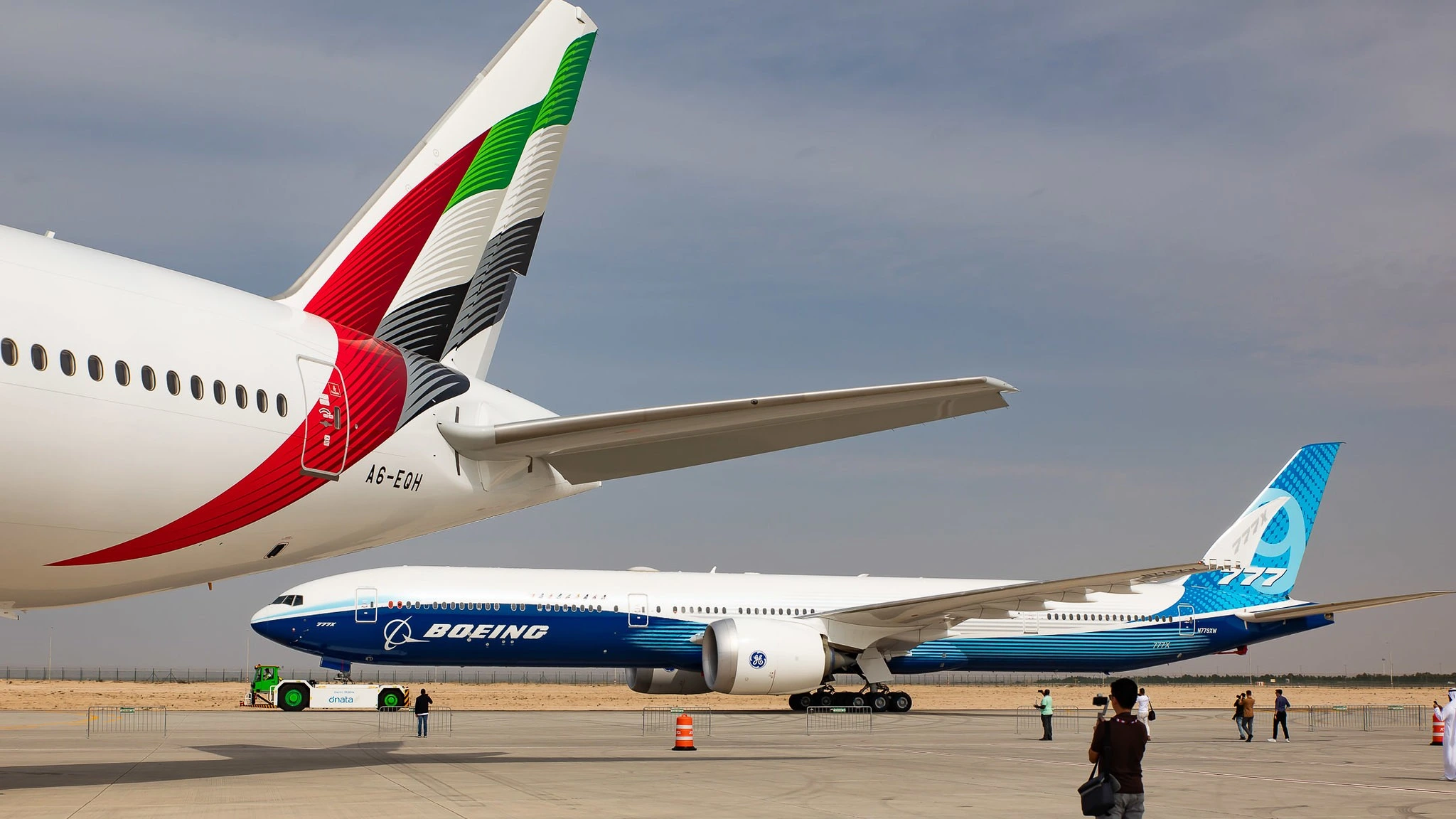
DUBAI- Emirates (EK) is moving closer to its next-generation fleet plans after its first Boeing 777-9 emerged from production in Everett, Washington.
The aircraft is intended for the airline’s long-term operations through Dubai International Airport (DXB), where the 777X will become an important part of its future widebody fleet.
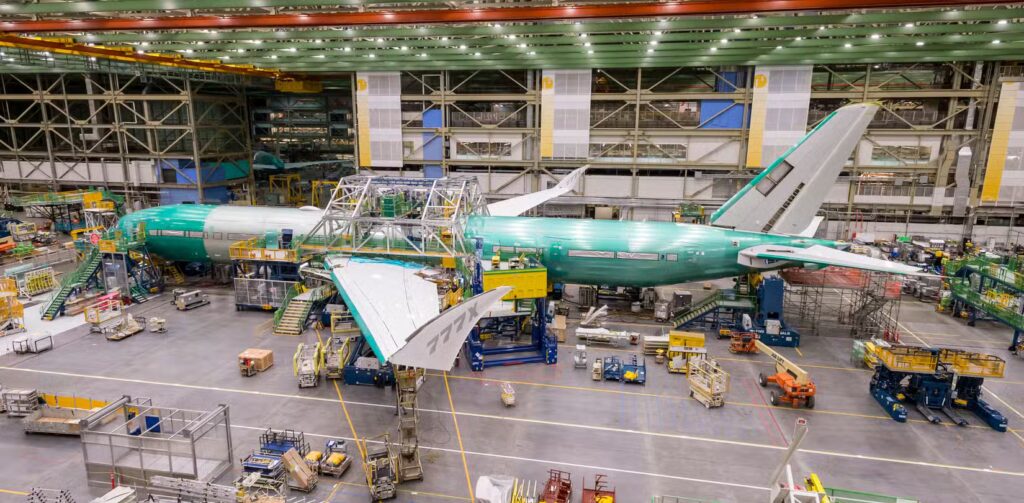
The new widebody has been spotted at Seattle Paine Field International Airport (PAE) in Everett wearing its green primer finish ahead of the paint process.
Simple Flying reported the aircraft’s movement from the assembly area, marking another step toward Emirates’ planned first 777X delivery in 2027.
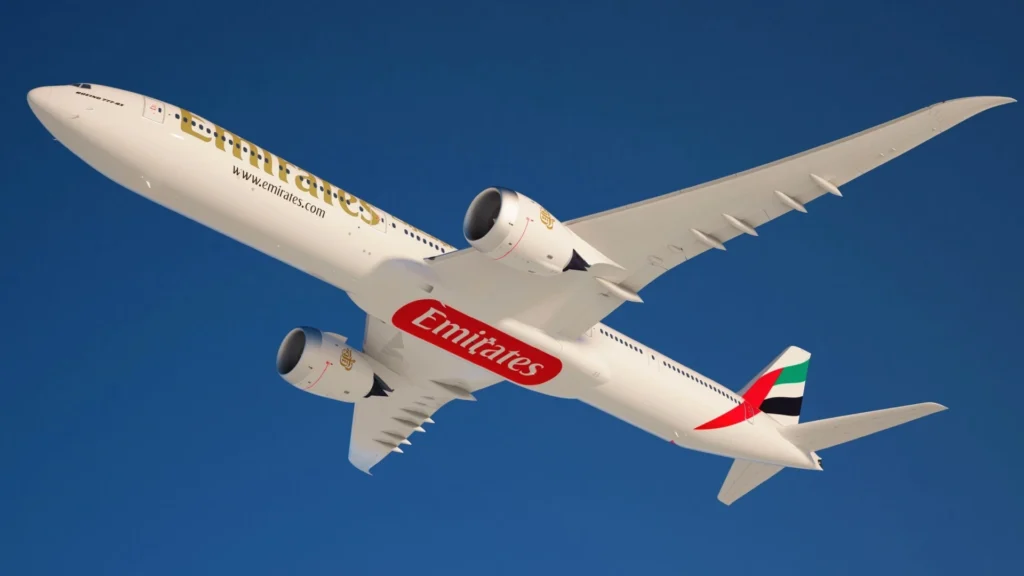
First Emirates 777-9 Moves Toward Completion
The aircraft is the first of a large group of Boeing 777X aircraft ordered by Emirates. The airline has 270 Boeing 777X aircraft in its orderbook, making it the largest customer for the program. Emirates added 65 Boeing 777-9s at the 2025 Dubai Airshow, taking its total 777X commitment to 270 aircraft.
The aircraft recently seen in Everett has completed a major stage of production and is now heading toward its final exterior finish. Its current green appearance comes from the primer applied before the final airline paint scheme.
The paint process will involve multiple coats and is expected to take several weeks. Once completed, the aircraft will appear in Emirates colors for the first time, providing a more visible indication of its eventual role in the airline’s fleet.
After painting, the aircraft is expected to move through the flight line and detailing hangar. Further work will include interior installation, system checks and additional testing before the aircraft can progress toward delivery.
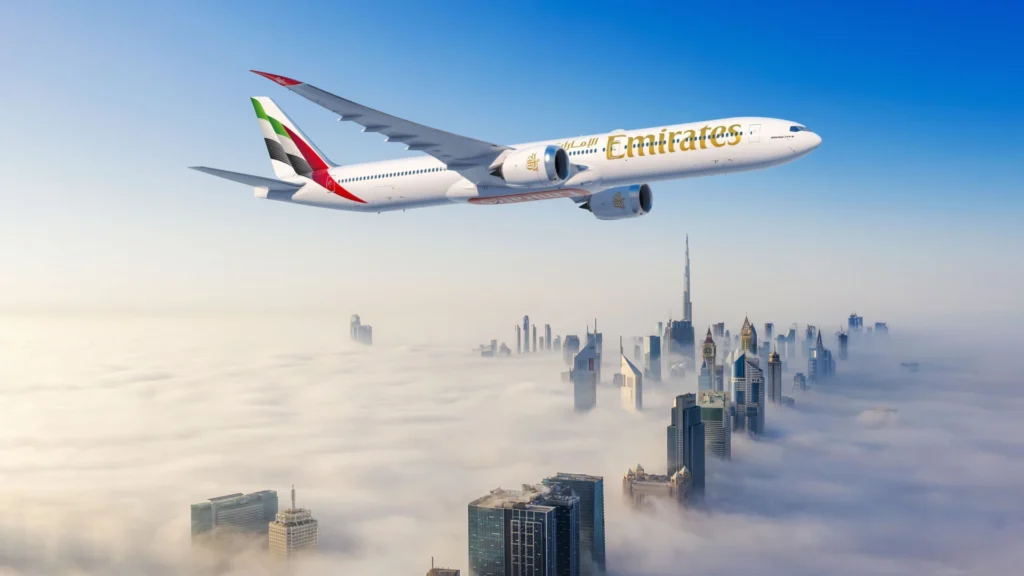
Long-Term Aircraft for Emirates’ Network
Emirates plans to use the 777-9 as a major part of its long-term widebody fleet strategy from Dubai. The aircraft is expected to provide additional high-capacity capability while helping the airline gradually replace older-generation aircraft, particularly Boeing 777-300ERs, without eliminating the role of the Airbus A380.
The 777-9 is particularly suited to Emirates because of its combination of passenger capacity, range and operating efficiency.
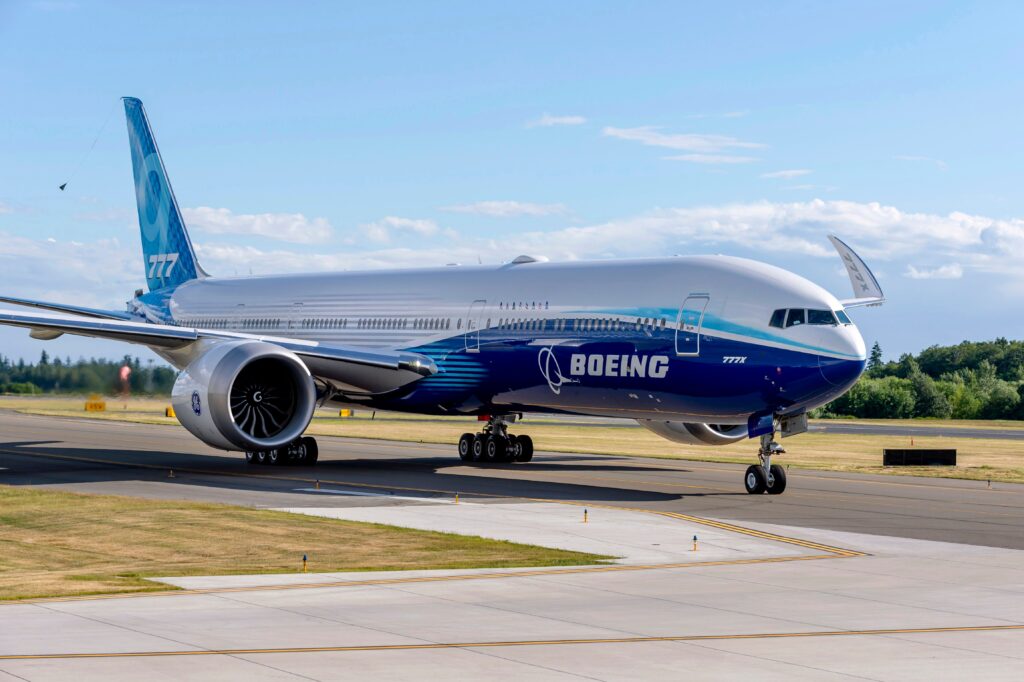
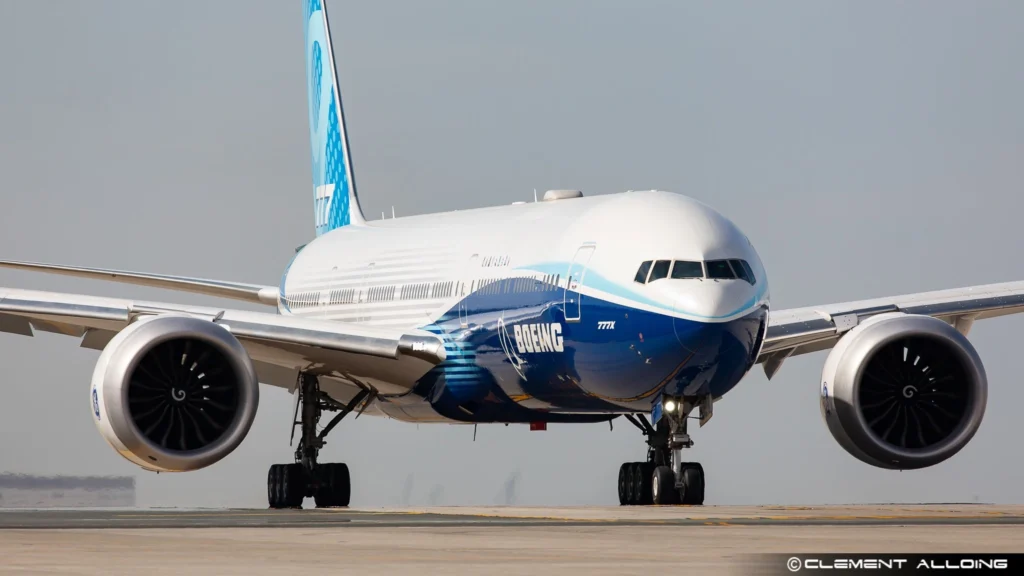
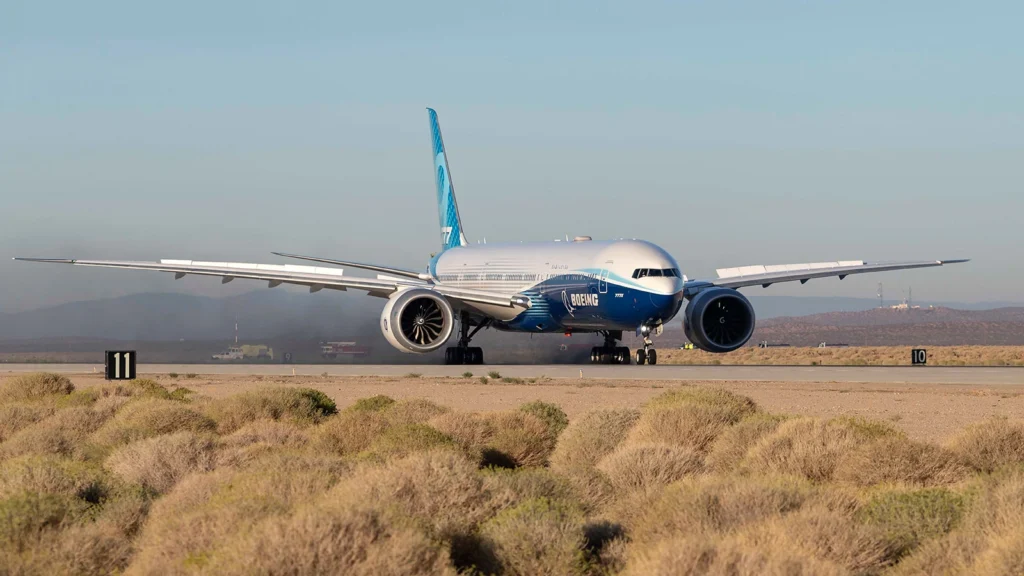
Boeing lists the aircraft with a typical two-class capacity of 375 to 450 passengers and a range of up to 8,000 nautical miles, or 14,820 kilometers. It is powered by GE Aerospace’s GE9X engine.
The aircraft also uses a large composite wing with folding wingtips. Boeing says the 777X is designed to deliver lower fuel use, emissions and operating costs than the aircraft it replaces, while the GE9X is designed to provide improved fuel efficiency compared with the GE90-115B used on many existing 777s.
These are manufacturer-stated performance claims rather than independent measurements of future Emirates operations.
The combination of capacity and range allows the 777-9 to support long-haul services from Dubai to markets across Europe, Asia, Africa and North America.
Boeing’s published range data includes nonstop network possibilities from Dubai to destinations such as Los Angeles, Dallas, New York and other long-haul markets.
The aircraft is not intended to completely replace the A380. Instead, the 777-9 gives Emirates another high-capacity option for routes where a large twin-engine aircraft can provide the required capacity with greater flexibility.
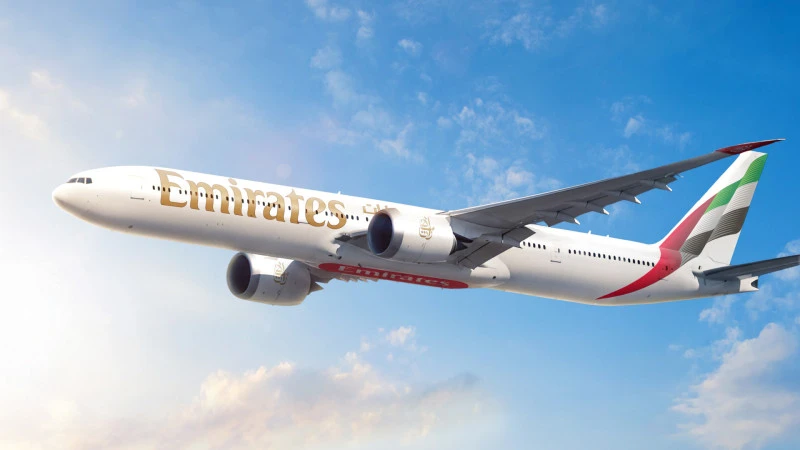
Boeing’s Long Partnership With Emirates
The expanded 777X order also reflects the long-standing relationship between Boeing and Emirates.
At the 2025 Dubai Airshow, Boeing Commercial Airplanes President and CEO Stephanie Pope said the company was “deeply honoured” that Emirates had selected the 777X for its future fleet. She also highlighted the airline’s fleet renewal and network expansion plans and Boeing’s four-decade relationship with Emirates.
Emirates said the additional order was part of a long-term fleet strategy linked to Dubai’s growth. The airline also confirmed that it expected to begin receiving its first 777-9 aircraft from the second quarter of 2027.
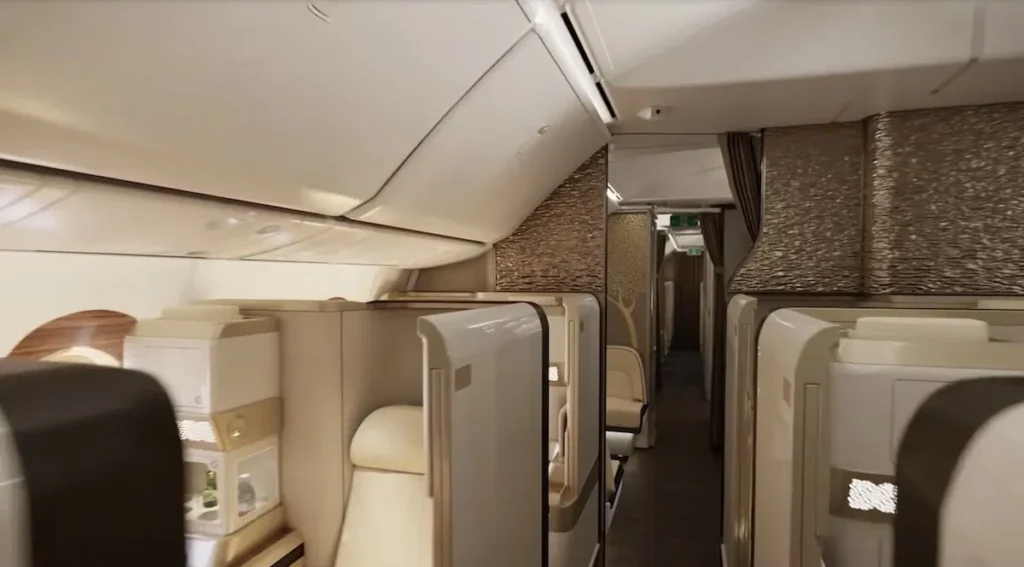
Program Delayed 7 Years
The 777X program has experienced repeated delays since Boeing originally targeted commercial service around 2020. Boeing now expects the first 777-9 delivery in 2027, putting the aircraft roughly seven years behind its original entry-into-service target.
The development program has faced both regulatory and technical challenges. During final static load testing in September 2019, Boeing reported a problem at approximately 99% of the final test load involving depressurization of the aft fuselage. Reuters later reported that the fuselage experienced a high-pressure rupture during the test.
Further problems emerged during the certification campaign. In August 2024, Boeing grounded its 777X test fleet after inspectors found a failure in a critical engine-mounting structure, interrupting flight testing while the company investigated the issue. Boeing subsequently resumed testing in January 2025.
The lengthy certification campaign has continued into 2026. Boeing said in July that the 777-9 test fleet had completed more than 4,800 flight hours and approximately 1,700 flights, with around half of the planned certification testing complete at that point.
Most Type Inspection Authorizations had also been granted, although additional certification work and ETOPS-related approvals remained.
Emirates Rejects Earliest 777-9 Airframes
The long development period has created a separate problem for Emirates. The airline decided in July 2026 that it would not accept approximately the first 10 early-build 777-9 aircraft originally produced for it.
According to Emirates President Sir Tim Clark, the aircraft would require extensive modifications to bring them up to the latest production and certification standard. Because some of the airframes were built as early as 2019, they would be about eight years old by the time they could be delivered in 2027.
Clark argued that accepting aircraft of that age would not make sense for Emirates because their effective service life would already have been reduced before entering airline service.
Aviation Week reported that Emirates had informed Boeing of its decision, while Boeing was developing a process to incorporate required changes into early-build aircraft.
Clark also compared the situation to a “can of baked beans,” using the analogy to describe aircraft that had spent years waiting for a program that had not yet reached certification and normal airline deliveries. The comparison underlined Emirates’ preference for newer aircraft built closer to their eventual delivery standard.
The rejection does not indicate that Emirates has abandoned the 777X program. The airline remains committed to a 270-aircraft 777X orderbook and continues to expect its first new-generation aircraft in 2027.
May or June 2027 Delivery Target
Emirates has provided a more specific delivery window than Boeing’s general 2027 target. In June 2026, Tim Clark told Reuters that the airline expected its first 777X aircraft in May or June 2027, while acknowledging that additional problems could still affect the timetable.
The expected delivery remains dependent on Boeing completing the certification process and receiving the necessary approval from the U.S. Federal Aviation Administration. Boeing continues to target first delivery in 2027 and has reported further progress on the remaining certification work.
If the aircraft arrives in May or June 2027 as Emirates expects, the airline would then begin its own preparations for commercial operations. The exact first passenger service date and launch route have not been established in the available announcements.
The distinction between delivery and commercial service is important. Certification must be completed before Boeing can deliver the aircraft, while Emirates must then complete operational preparation, including aircraft acceptance and airline-specific procedures.

What Happens After Paint Job
The completion of the paint process will be another visible milestone, but it will not mean the aircraft is ready to carry passengers.
The Emirates 777-9 will still require interior work, detailed inspections, system testing and other preparation before delivery. The aircraft must also complete the broader certification and acceptance process associated with the 777X program.
Boeing’s certification work continues alongside production activity. The company reported in 2026 that the test fleet had accumulated thousands of flight hours and flights, with remaining work focused on certification deliverables, final Type Inspection Authorizations and approval for extended operations testing.
That work is particularly important for Emirates because the 777-9 is intended for long-haul operations. ETOPS-related certification is necessary for extended twin-engine operations on long-distance routes, including flights over large bodies of water./
Other Airlines Waiting for 777X
Emirates is not the only major airline committed to Boeing’s new widebody family. Other airlines with 777X orders include Qatar Airways, Singapore Airlines, Cathay Pacific, Lufthansa, British Airways, All Nippon Airways, Korean Air, China Airlines and Etihad Airways. Current industry order data also includes Air India, Ethiopian Airlines, Cargolux and Silk Way West Airlines among the wider 777X customer base.
The scale of the customer base makes the Emirates aircraft’s progress relevant beyond a single airline. Boeing must complete the 777-9 certification program before deliveries can begin across the customer group.
For Emirates, however, the aircraft has particular importance because its fleet strategy depends on large-capacity widebody aircraft and continued expansion from Dubai.
Next Major Milestone
The emergence of Emirates’ first new 777-9 from Boeing’s Everett production process represents a significant manufacturing milestone, but the aircraft still has several stages to complete before entering commercial service.
The immediate sequence is straightforward: painting, detailing, interior installation, system work, testing and eventual delivery preparation. At the program level, Boeing must continue certification work and secure the regulatory approvals required for the 777-9.
Emirates currently expects its first aircraft in May or June 2027, while Boeing continues to target first delivery during 2027.
The arrival of the first completed Emirates aircraft will therefore be closely watched as both a fleet milestone for the airline and a major step in Boeing’s long-delayed 777X program.
Stay tuned with us. Further, follow us on social media for the latest updates.
Join us on Telegram Group for the Latest Aviation Updates. Subsequently, follow us on Google News
