

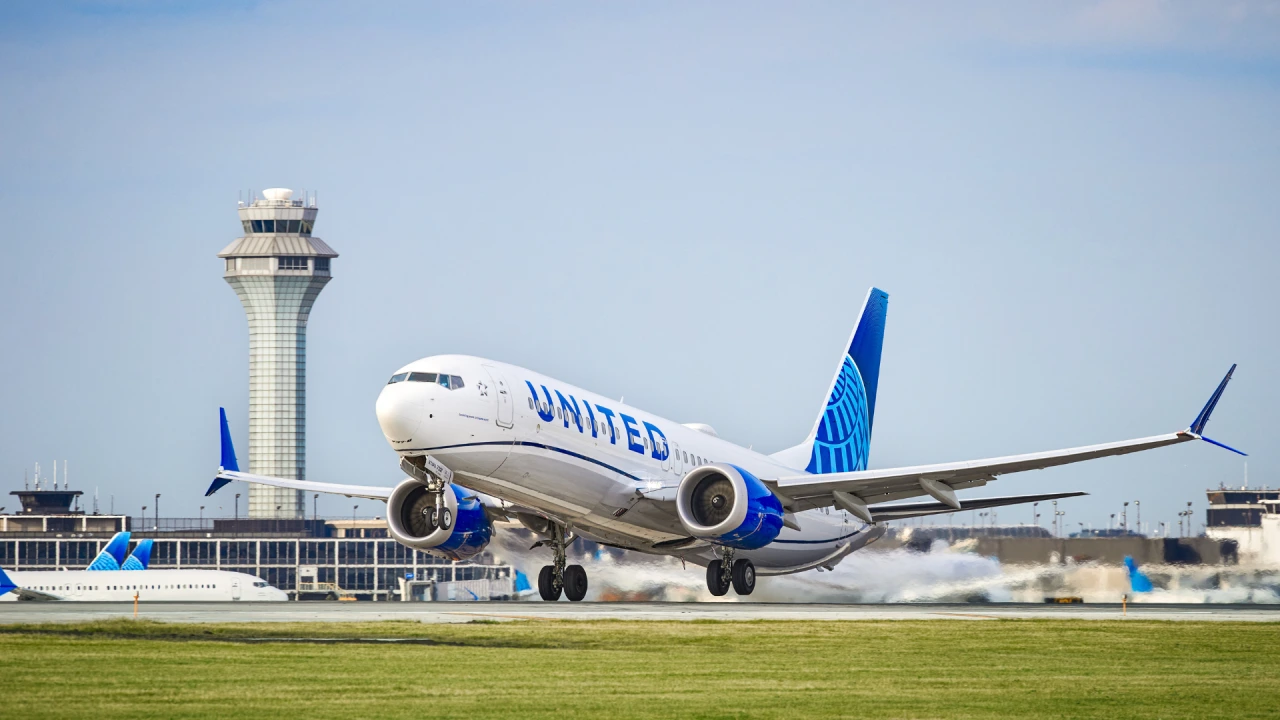
NEWARK- A man accused of attempting to breach the cockpit of a United Airlines (UA) flight from Newark Liberty International Airport (EWR) to Louis Armstrong New Orleans International Airport (MSY) has been identified as Rony Alexander Gomez-Alberto, a Honduran national facing immigration proceedings in the United States.
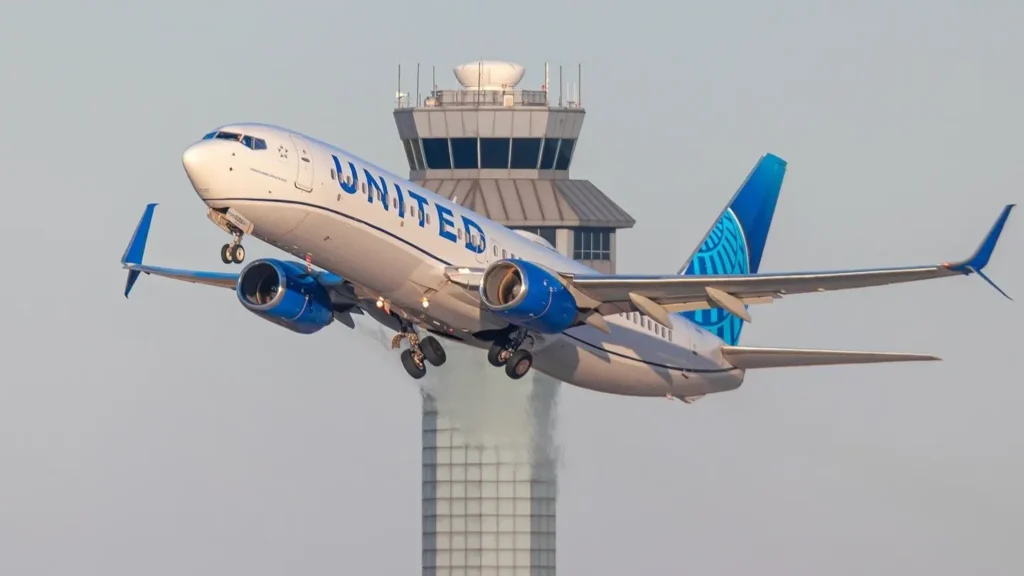
The incident occurred on November 9, 2026, aboard United Airlines Flight UA2174, when Gomez-Alberto allegedly rushed towards the locked cockpit door and claimed he had a b*mb. Pilots declared a Level 4 security alert, prompting an immediate flight deck lockdown.
United Airlines Flight Faces Cockpit Security Threat
United Airlines Flight UA2174 departed Newark Liberty International Airport (EWR) at approximately 9:30 p.m. on November 9, bound for Louis Armstrong New Orleans International Airport (MSY). The flight was scheduled to take approximately two and a half hours.
During the flight, Gomez-Alberto allegedly rushed towards the cockpit and attempted to enter through the reinforced, locked flight deck door while claiming to have a b*mb.
The pilots immediately declared a Level 4 security threat, the highest classification for unruly passenger incidents involving an attempted or actual cockpit breach. They secured the flight deck and prevented access to the cockpit.
The developing situation also prompted United Airlines’ operations control centre in Chicago to alert other aircraft. According to reports, managers sent messages to other flights warning their crews about the security threat aboard UA2174 and asking them to remain alert for suspicious activity.
Despite the incident, the Boeing 737 MAX 9 landed safely in New Orleans without further complications. Authorities subsequently took Gomez-Alberto into custody.

DHS Identifies Suspect as Honduran National
The suspect was identified as Rony Alexander Gomez-Alberto, an undocumented Honduran national who had reportedly been detained by U.S. immigration authorities three times.
According to PYOK, Gomez-Alberto had previously been removed from the United States twice. Following his third detention, an immigration judge released him while awaiting a decision on whether he should be removed from the country.
The Department of Homeland Security (DHS) confirmed that Gomez-Alberto had a criminal history involving felony b*mb threats, felony terroristic threats under state law, and disorderly conduct.
In addition to potential criminal charges arising from the United Airlines incident, U.S. Immigration and Customs Enforcement (ICE) has lodged an immigration detainer against him.
A DHS spokesperson issued a strong statement following the incident, saying:
“Under President Trump and Secretary Mullin, criminal illegal aliens who try to HIJACK AIRPLANES are NOT welcome in the United States.”
The investigation will determine the full circumstances surrounding the alleged cockpit breach and the suspect’s actions during the flight.
What Does a Level 4 Security Threat Mean?
Airline pilots and crew use a four-level classification system to assess unruly passenger incidents. Each level reflects the severity of the behaviour and helps determine the appropriate response during flight and after landing.
The four threat levels are:
| Threat Level | Description |
|---|---|
| Level 1 | Unruly or disruptive behaviour, including belligerence, without a direct threat to the aircraft. |
| Level 2 | More serious disruptive behaviour, including aircraft damage or threats of physical violence against passengers or crew. |
| Level 3 | Physically abusive behaviour, such as pushing, kicking or punching passengers or crew members. |
| Level 4 | An attempted or actual breach of the aircraft’s flight deck. |
In the United Airlines incident, the alleged attempt to force entry into the locked cockpit qualified as a Level 4 security threat.
Cockpit doors on modern commercial aircraft are heavily reinforced and designed to resist forced entry. However, an attempted breach triggers additional security procedures regardless of whether the individual can physically penetrate the door.
Under a Level 4 response, pilots can activate an additional locking mechanism, including a deadbolt, to secure the flight deck.
The procedure effectively prevents anyone from entering or leaving the cockpit while the aircraft remains airborne. The door is reopened only after the threat has been contained, and the crew determines that it is safe to do so.
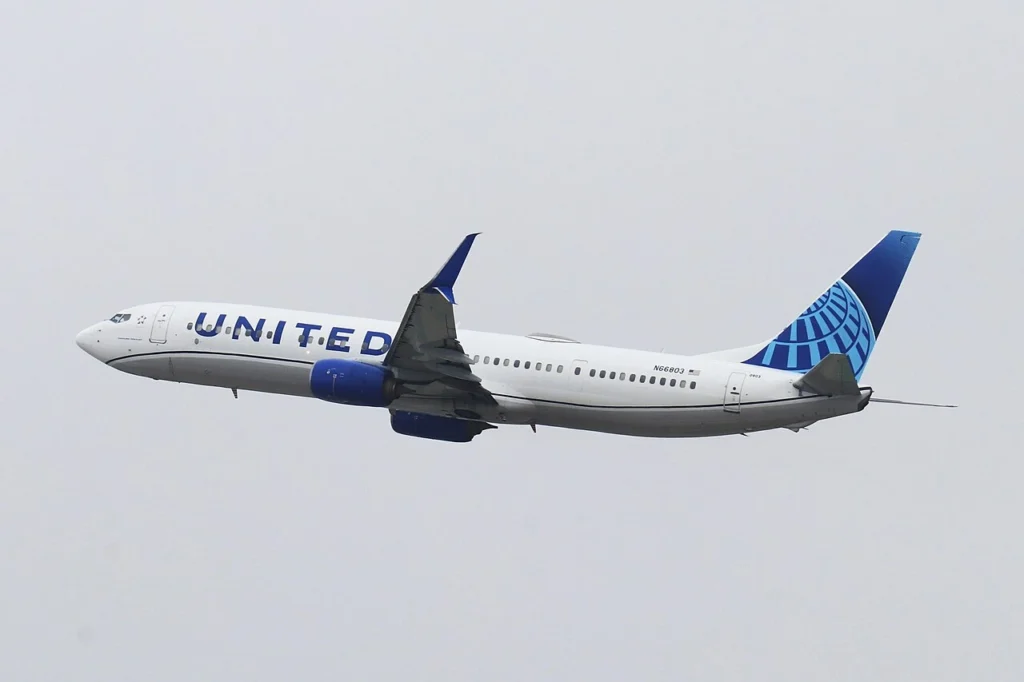
United Boeing 737 MAX 9 Features Secondary Cockpit Barrier
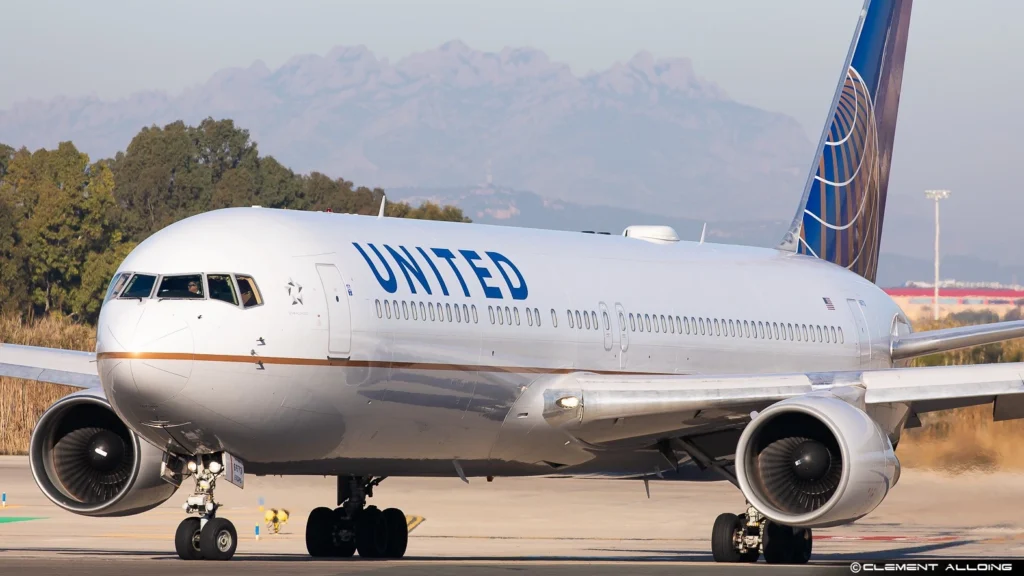
The aircraft involved in the incident was a Boeing 737 MAX 9 registered as N17422. United Airlines received the aircraft new in December 2025.
Because of its delivery date, the aircraft should be equipped with an Installed Physical Secondary Barrier (IPSB), an additional security feature designed to protect the flight deck.
The IPSB is a secondary cockpit barrier positioned between the main cockpit door and the passenger cabin. It provides an additional layer of protection whenever the main cockpit door needs to be opened.
For example, when a pilot needs to leave the flight deck to use the lavatory, the secondary barrier can be deployed before the main cockpit door is opened.
The system is designed to prevent unauthorised access to the flight deck during these brief periods when the primary cockpit door cannot remain closed.
Although the IPSB is not bulletproof or completely impenetrable, it is engineered to withstand an attack long enough for the crew to close and secure the main cockpit door.
U.S. Airlines Face Calls to Expand Secondary Cockpit Barriers
Newly delivered aircraft operated by U.S. airlines have been required to feature secondary cockpit barriers since August 2025.
However, the system’s operational introduction took longer because the aviation industry secured an extension to complete the necessary crew training. The barriers became operational during the summer of 2026.
The requirement currently applies to newly delivered aircraft rather than the entire existing commercial fleet.
Pilot unions have called on U.S. lawmakers to extend the mandate to all aircraft operating in the country. They argue that additional physical barriers should protect cockpit access across both new and older aircraft.
However, no U.S. airline has indicated that it plans to voluntarily retrofit IPSB systems across its existing fleet.
The incident aboard United Airlines Flight UA2174 highlights the importance of reinforced cockpit doors and additional security measures. While the aircraft landed safely, the alleged attempt to breach the flight deck has renewed attention to the protection available to flight crews and passengers.
Stay tuned with us. Further, follow us on social media for the latest updates.
Join us on Telegram Group for the Latest Aviation Updates. Subsequently, follow us on Google News
