

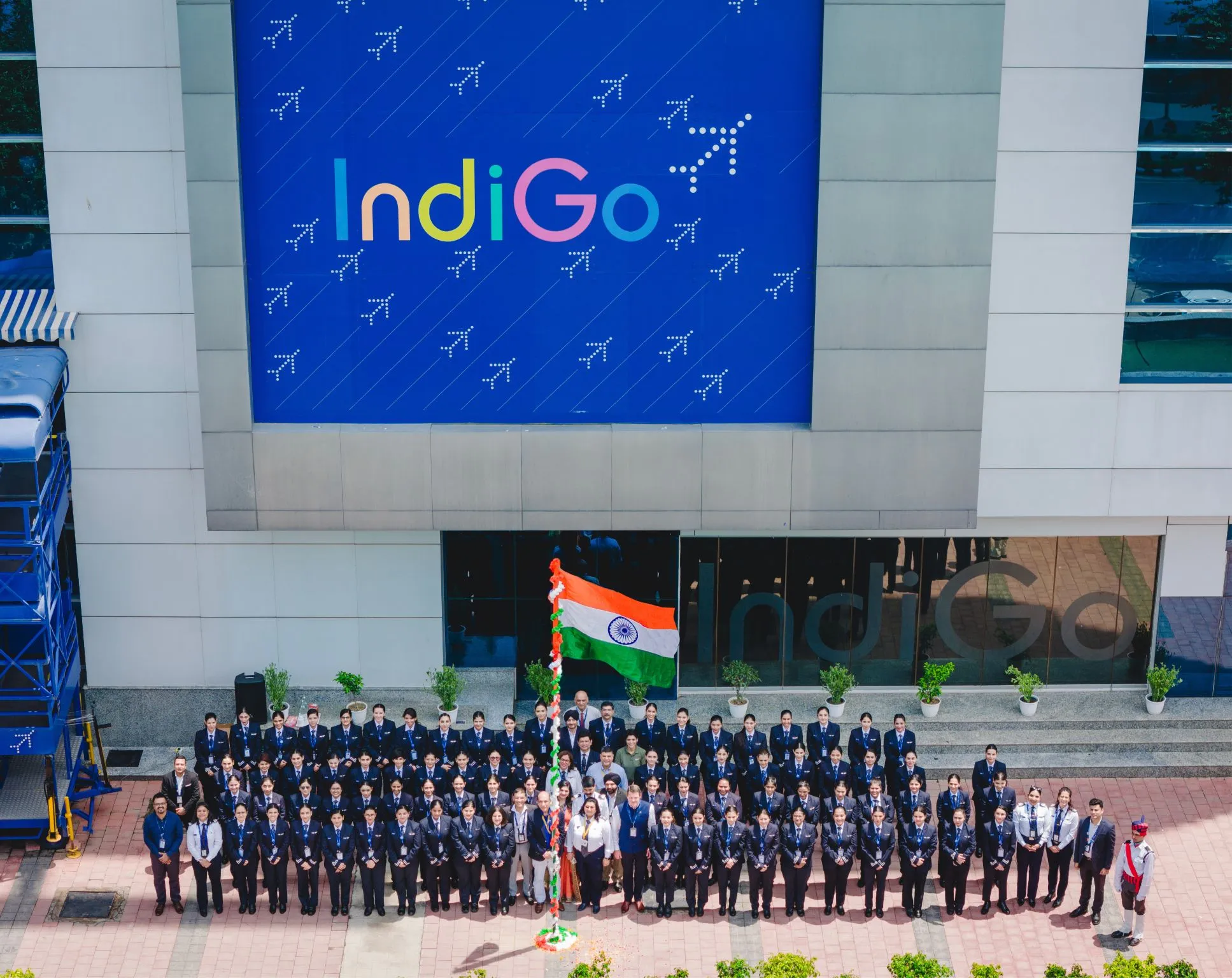
GURUGRAM- IndiGo Airlines (6E), India’s largest airline by market share, is preparing to roll out Evidence-Based Training (EBT) programs for its pilots in a move aimed at enhancing flight safety, operational efficiency, and decision-making.
Headquartered near Indira Gandhi International Airport (DEL), the airline plans to evolve from its current Competency-Based Training and Assessment (CBTA) framework to a fully EBT-compliant model within the next 12 to 18 months, adopting global best practices in aviation training.

IndiGo Evidence-Based Pilot Training
IndiGo currently operates more than 2,300 daily flights with a fleet of over 400 aircraft and employs around 5,300 pilots.
As it expands operations with new wide-body aircraft, the airline is investing in modern, data-driven training systems that focus on practical performance rather than theoretical testing.
The EBT approach will rely on real operational data, analytics, and artificial intelligence to shape training programs that reflect real-world flying conditions.
Instead of repeating standard procedures, pilots will train using scenarios derived from actual flight data, helping them respond better to unexpected challenges in the cockpit.
According to company officials, all training content will be validated with performance evidence collected across operations before being incorporated into learning modules.
This ensures pilots develop core competencies such as decision-making, communication, situational awareness, and teamwork—skills that directly affect safety outcomes in the air.

From CBTA to EBT
IndiGo’s transition from CBTA to EBT represents a shift from traditional evaluation methods to performance-based learning.
The current CBTA framework already focuses on developing pilot competencies, but EBT adds a layer of precision by using operational evidence to assess and improve performance more effectively.
The process will begin with comprehensive data collection, followed by validation and analysis with support from global aviation consultants.
Once the system is established, training programs will be tailored to individual pilot needs, allowing for personalized development plans that address strengths and improvement areas.
A senior IndiGo official explained that EBT allows the airline to “use real data to train for real situations,” ensuring pilots are better prepared for varied flying environments and operational demands.
Future Outlook
With more than 900 new aircraft on order, IndiGo expects its pilot strength to double by 2030. This rapid expansion requires a scalable and adaptive training model that aligns with international aviation standards.
By adopting evidence-based learning, IndiGo aims to enhance safety culture, improve operational resilience, and support its growing workforce with training programs that evolve alongside its fleet.
The initiative reflects the airline’s long-term vision to combine technology, safety, and human expertise in shaping the next generation of Indian aviators.
Stay tuned with us. Further, follow us on social media for the latest updates.
Join us on Telegram Group for the Latest Aviation Updates. Subsequently, follow us on Google News
