

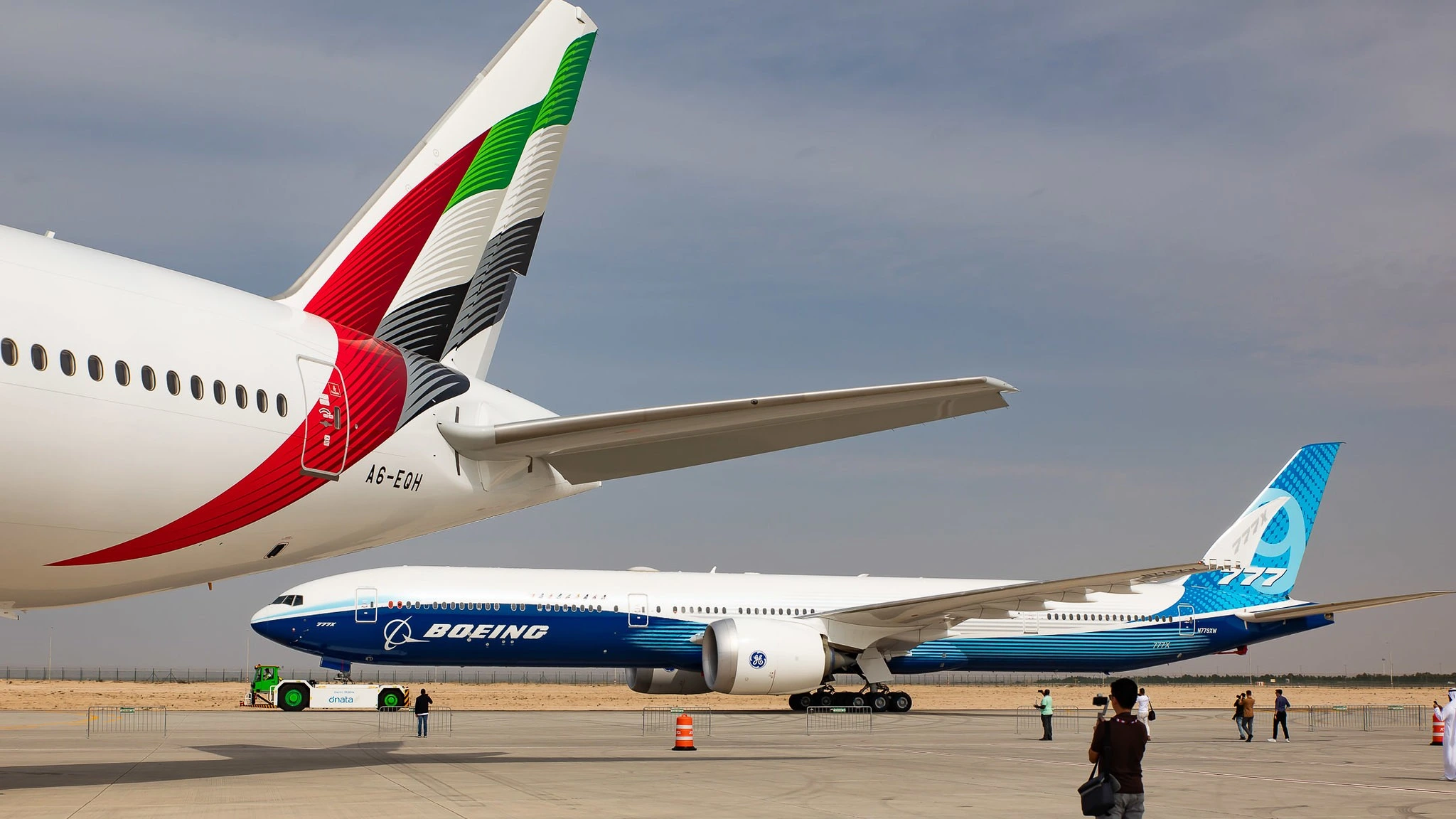
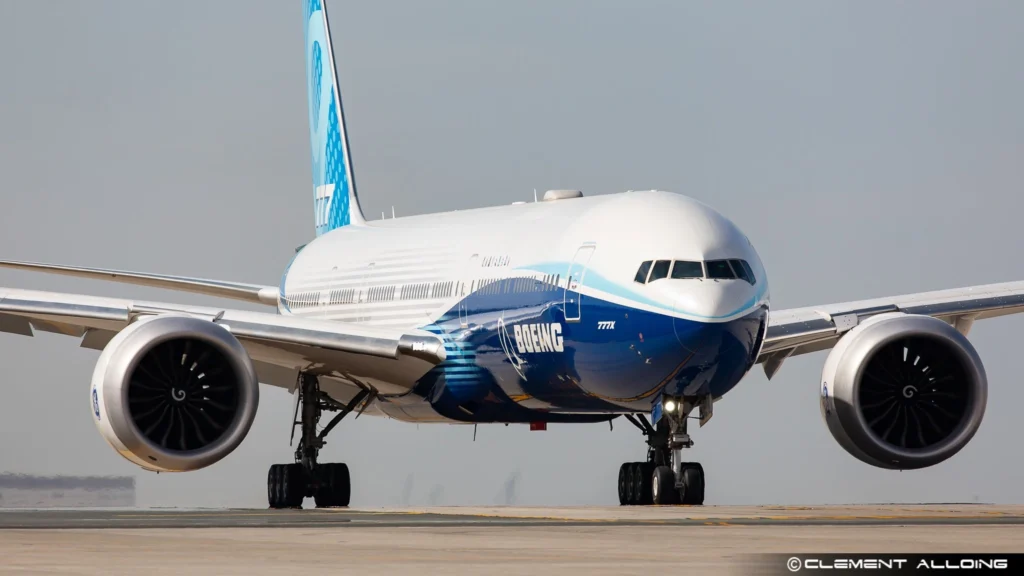
FARNBOROUGH- Emirates (EK) has refused to accept the first batch of Boeing 777-9 airframes built for the airline, arguing that the parked jets would need too much rework to meet its delivery standards. The Dubai (DXB) based carrier is the largest customer for the type.
United Airlines (UA) is now reported to be studying those unwanted aircraft. The Chicago (ORD) based airline has not ordered the 777X, but taking on the early frames could make it the US launch operator.
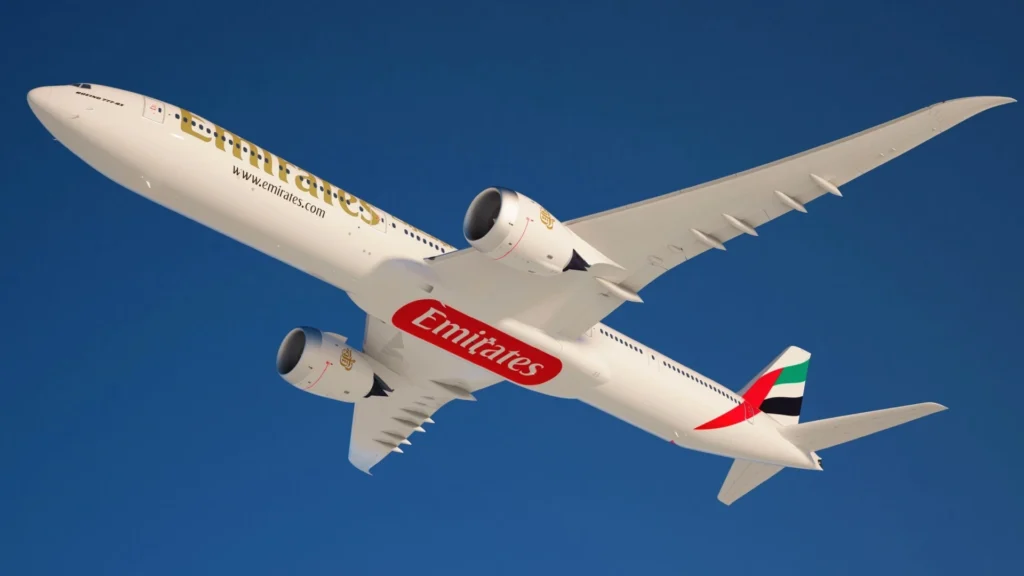
Why Emirates Will Not Take the Early Build 777-9s
Emirates President Tim Clark has stated that the first aircraft built for the airline are no longer acceptable. Several of these jets rolled off the line years ago in anticipation of certification, and they have sat parked since then.
Clark’s core objection is age and configuration. He has said the aircraft are already close to their half-life by Emirates standards before entering service, and that the volume of modifications needed to bring them to a certifiable, current specification would leave them of no practical use to any operator. He compared the situation to a can of baked beans, a reference to shelf life rather than aircraft value.
Emirates applies strict acceptance criteria to every delivery. The airline inspects aircraft in detail before signing, and it has previously refused to take jets that did not match its specification. That position has now been applied to the 777X program at scale.
Reported figures for the rejected batch vary. Early reports referenced the first 10 airframes, while later accounts placed the number at 11. The wider pool of early build 777-9s produced ahead of certification is understood to be around 20 aircraft.
Certification Scrutiny Created the Backlog
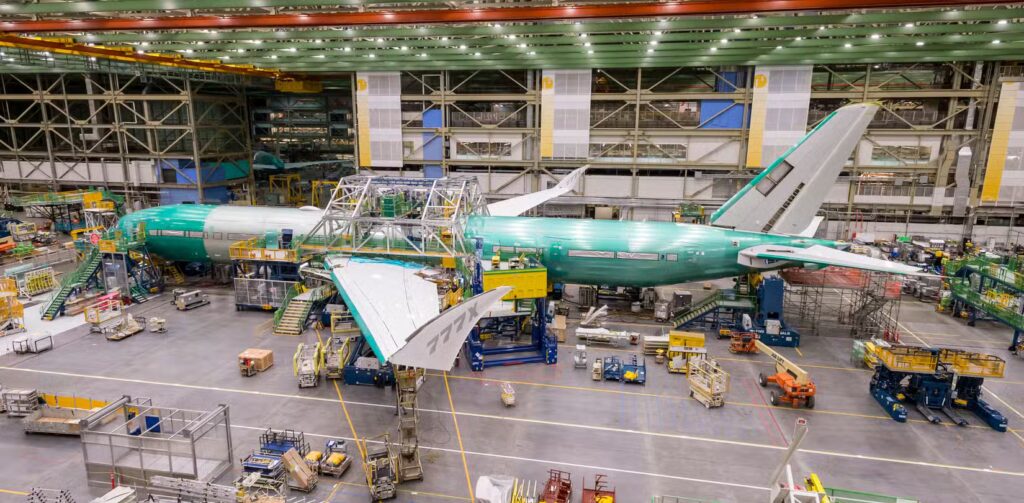
Boeing built a number of 777-9 airframes early, expecting the type to be certified and in service by 2020. That timeline collapsed.
The 737 MAX accidents changed how the Federal Aviation Administration reviewed Boeing programs. Regulators applied far tighter scrutiny across the manufacturer’s portfolio, including the flight control software on the 777X and its version of the Maneuvering Characteristics Augmentation System, which differs from the system fitted to the 737 MAX.
Each round of regulatory review pushed the entry into service date further out. The aircraft built during the original schedule remained on the ground while the certification standard around them moved. Requirements that did not exist when those frames were assembled now apply to them, which is the source of the rework burden Emirates objects to.
The delay also affects Emirates fleet planning. The airline expects the 777X, the Boeing 787 and the Airbus A350 to gradually replace its Airbus A380 fleet, and every year of slippage narrows the window for that transition.
ALSO READ: Boeing Quietly Boosts 777X Range by More Than 700 Nautical Miles
United’s Widebody Fleet and the Business Case
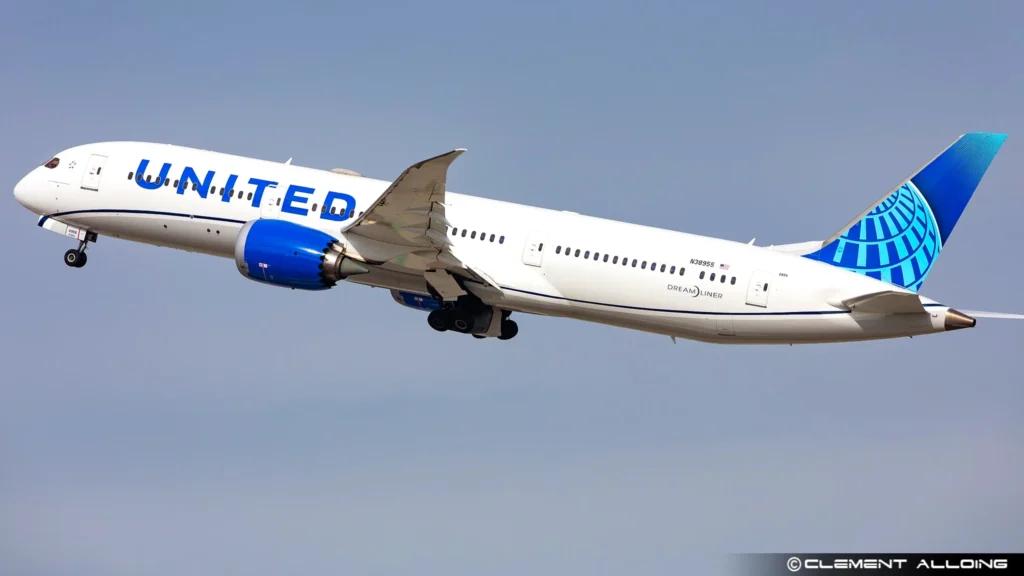
United operates an all-Boeing widebody fleet today, which reduces the training and maintenance friction of adding another Boeing type. Its current widebody position, according to ch-aviation, is as follows.
| Aircraft Type | Active | On Order |
|---|---|---|
| Boeing 767-300ER | 37 | – |
| Boeing 767-400ER | 16 | – |
| Boeing 777-200/-200ER | 63 | – |
| Boeing 777-300ER | 22 | – |
| Boeing 787-8 | 12 | – |
| Boeing 787-9 | 54 | 76 |
| Boeing 787-10 | 21 | 56 |
| Airbus A350-900 | – | 45 |
The A350 is the airline’s first Airbus widebody order, and those deliveries have also slipped. A legal dispute with engine supplier Rolls-Royce, reported at 175 million dollars, remains unresolved.
Two factors make the orphaned 777-9s commercially interesting to United. The aircraft physically exist, so the delivery wait would be shorter than a fresh order slot. Boeing also has a strong incentive to move them, which gives any buyer unusual pricing leverage.
Leeham News and Analysis and DJ’s Aviation have both reported that United is weighing the acquisition, which would make the airline the US launch customer for the type.
Why American Carriers Have Avoided the 777X
No US airline has ordered the 777X. The reason is network structure rather than aircraft quality.
The 777-9 seats more passengers than almost anything the big three US carriers operate. Their hub-and-spoke networks are built on frequency, using smaller widebodies on more daily departures rather than one very large aircraft. The 787 and A350 fit that model more comfortably.
The 777X is positioned as the successor to the Boeing 747 and Airbus A380. No US carrier operates either aircraft today, and no US airline has ever operated the A380. That absence of very large aircraft in the domestic market explains the lack of orders more than any specific issue with the 777X itself, Simple Flying flagged.
ALSO READ: Boeing Reveals Major 737 MAX and 777-9 Certification Breakthrough

https://commons.wikimedia.org/wiki/File:Boeing_Everett_Factory_-_777X_fuselages.jpg
The Open Question of Deployment
United has not confirmed any interest publicly, and no order has been announced. If the airline does proceed, the next question is where the aircraft would fly.
The 777-9 would need routes with consistently high demand to justify its seat count. Transatlantic trunk routes from Newark and Washington Dulles, and Pacific services from San Francisco, are the most plausible candidates.
Any decision would represent a shift in how United thinks about widebody capacity, moving from frequency toward gauge on its densest markets.
For Boeing, resolving the fate of these aircraft matters beyond a single sale. Parked airframes carry cost, and clearing them would remove a visible reminder of how far the 777X program has slipped.
Stay tuned with us. Further, follow us on social media for the latest updates.
Join us on Telegram Group for the Latest Aviation Updates. Subsequently, follow us on Google News
