

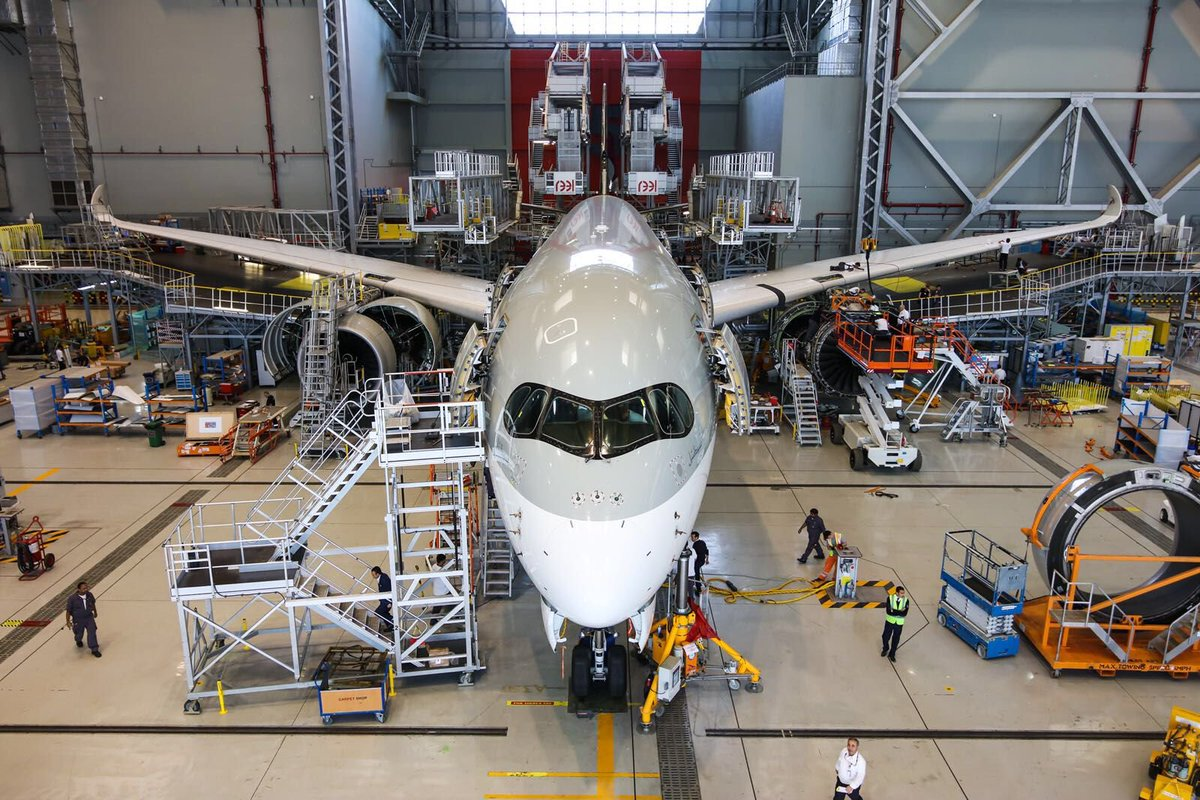
Qatar Airways (QR) has grown from a regional carrier into one of the aviation industry’s biggest success stories. Based in Doha, the airline serves hundreds of destinations through Hamad International Airport and operates a modern fleet that includes the Airbus A320 family, A350, A380, Boeing 777, and Boeing 787 Dreamliner.
While the airline is often praised for its award-winning onboard experience, a significant part of that success comes from its engineering teams working behind the scenes. Aircraft Engineers and Technicians ensure every aircraft meets strict safety and regulatory standards before it carries passengers around the globe.
For many maintenance professionals, Qatar Airways offers the chance to work on cutting-edge aircraft, gain international experience, and build a career with one of the Middle East’s most respected airlines.
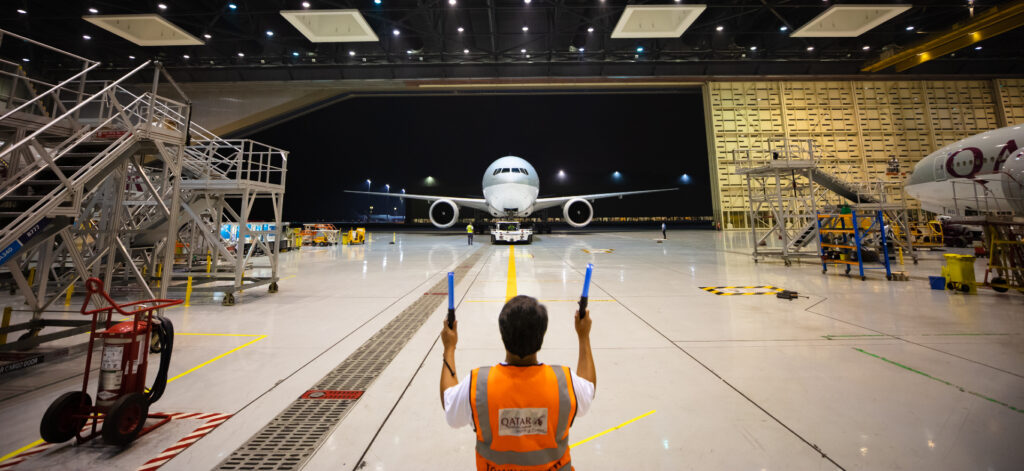
What Do Aircraft Engineers and Technicians Do?
Although they often work side by side, the responsibilities of an Aircraft Engineer and an Aircraft Technician are quite different.
Aircraft Engineer
An Aircraft Engineer is a licensed professional with the authority to certify that an aircraft is fit to return to service after maintenance.
Their day-to-day responsibilities may include:
- Inspecting aircraft during scheduled maintenance checks
- Diagnosing mechanical and avionics issues
- Reviewing maintenance documentation
- Supervising technicians during repairs
- Certifying completed work in accordance with aviation regulations
Because of the certification authority attached to the role, engineers carry significant responsibility and accountability.
Aircraft Technician
Aircraft Technicians focus on carrying out much of the practical maintenance work required to keep aircraft operational.
Their duties commonly include:
- Replacing and repairing aircraft components
- Conducting routine inspections and servicing
- Assisting engineers with fault diagnosis
- Working on hydraulic, electrical, and mechanical systems
- Maintaining tools and technical records
Technicians form the backbone of maintenance operations and play a vital role in meeting tight operational schedules.
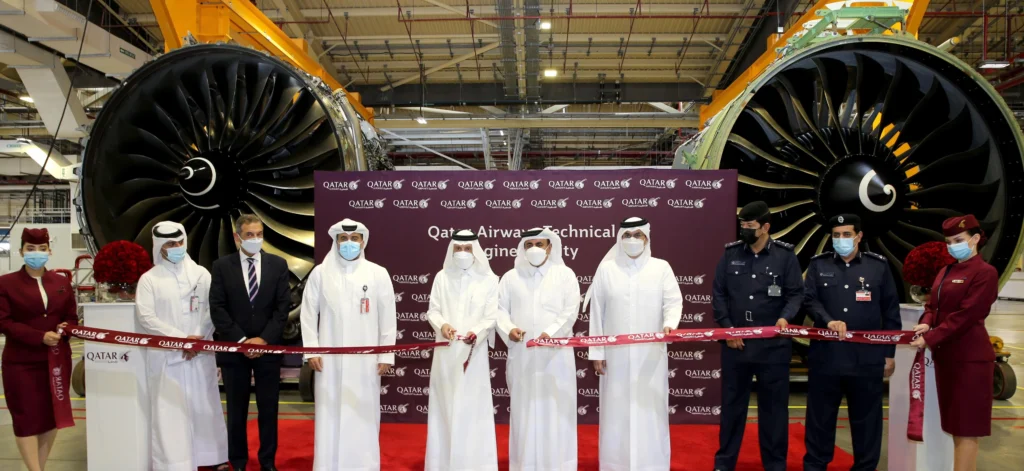
Requirements for Qatar Airways Engineers and Technicians
Working for Qatar Airways Engineering is competitive, with applicants expected to demonstrate strong technical ability and industry experience.
Basic Requirements
- A diploma or degree in aircraft maintenance or a related engineering discipline
- Good knowledge of aircraft systems and maintenance practices
- Strong English communication skills
- Ability to work rotating shifts and irregular hours
- Commitment to safety and regulatory compliance
For Aircraft Engineers
Licensed engineer positions generally require:
- A recognised aircraft maintenance licence, such as EASA Part-66 or an equivalent accepted by the Qatar Civil Aviation Authority
- Several years of commercial aircraft maintenance experience
- Type ratings on aircraft such as the Airbus A350, Boeing 777, or Boeing 787 are a major advantage
- Previous certifying experience in airline or MRO environments
For Aircraft Technicians
Applicants typically need:
- A technical diploma or vocational qualification in aircraft maintenance
- Practical experience performing maintenance tasks
- Familiarity with airline or maintenance organisation procedures
- Strong troubleshooting and teamwork skills
Many technicians later pursue licensing to advance into engineering positions.
ALSO READ: Etihad Airways Aircraft Engineer and Technician Salary in 2026
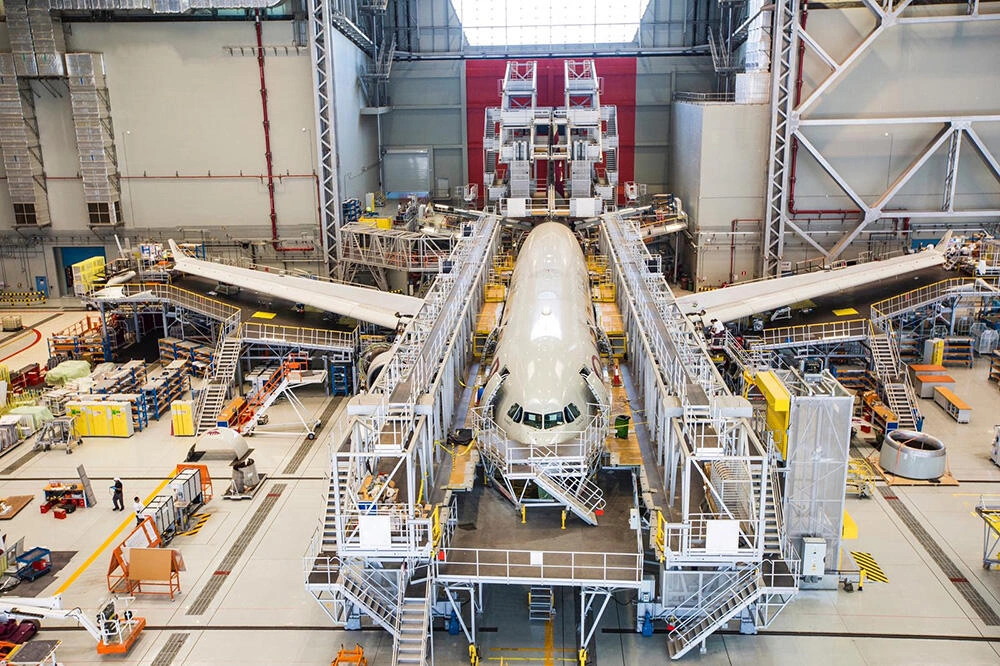
Qatar Airways AME and Technician Salary in 2026
Qatar Airways has developed a reputation for offering competitive engineering packages within the Gulf region. Rather than relying solely on high base pay, the overall compensation often reflects technical expertise, licence privileges, fleet experience, shift patterns, and operational responsibilities.
For licensed Aircraft Engineers, those entering the airline with relevant qualifications and commercial experience may earn approximately QAR 14,000 to QAR 18,000 per month. Engineers at this stage are usually building experience within Qatar Airways’ maintenance environment while working under established certification procedures.
As engineers accumulate additional aircraft type ratings and become responsible for more complex maintenance activities, earnings typically move into the QAR 19,000 to QAR 25,000 per month range. Personnel supporting advanced fleets such as the Airbus A350 or Boeing 787 often fall into this category.
Highly experienced certifying engineers, technical specialists, and team leaders may receive packages approaching QAR 26,000 to QAR 32,000 per month, with certain specialised positions potentially exceeding these figures depending on responsibilities and operational requirements.
On an annual basis, many Aircraft Engineers therefore earn somewhere between QAR 170,000 and QAR 380,000.
Aircraft Technicians follow a different pay scale but can still earn attractive salaries compared with many international markets.
Newly hired technicians commonly start around QAR 7,000 to QAR 9,000 per month, depending on qualifications and previous maintenance experience.
After developing additional skills and spending several years within airline maintenance operations, technicians frequently progress into the QAR 9,500 to QAR 12,500 monthly range. Their responsibilities often expand to include more complex inspections and component changes.
Senior technicians with extensive practical knowledge or specialist expertise may earn approximately QAR 13,000 to QAR 15,000 per month, particularly when assigned to demanding operational environments or specialised maintenance functions.
Overall, the salary picture can be summarised as follows:
- Aircraft Engineers: approximately QAR 14,000 to QAR 32,000 per month (3,800 to 8,700 USD)
- Aircraft Technicians: approximately QAR 7,000 to QAR 15,000 per month (2,000 to 4,000 USD)
For technicians seeking substantial salary growth, obtaining an aircraft maintenance licence remains the most effective route to higher earnings and greater responsibility.
ALSO READ: Emirates Aircraft Maintenance Engineer and Technician Salary in 2026
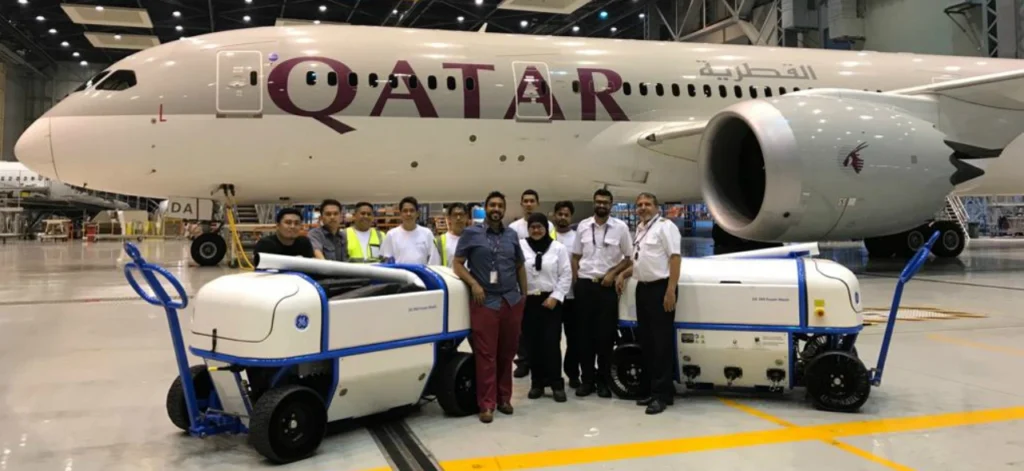
Benefits and Perks at Qatar Airways Engineering
Beyond monthly salary, employees may receive a range of employment benefits that strengthen the overall package.
Common advantages include:
- Accommodation or housing support in eligible roles
- Medical insurance
- Annual leave entitlements
- Staff travel concessions
- Professional training and development opportunities
- Exposure to one of the world’s youngest widebody fleets
- Career advancement within a globally recognised airline
The combination of these benefits can make engineering careers at Qatar Airways particularly attractive for professionals seeking international experience.
ALSO READ: British Airways Aircraft Engineer and Technician Salary in 2026
Bottom Line
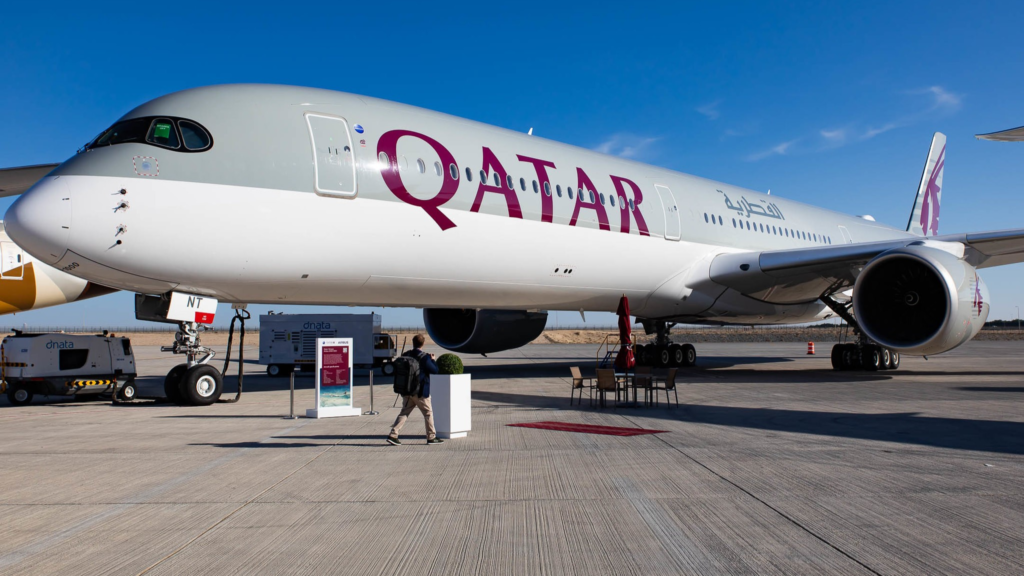
Working as an Aircraft Engineer or Technician at Qatar Airways in 2026 offers the opportunity to be part of a technically advanced airline operating modern aircraft across an extensive global network.
Licensed engineers command the highest salaries because they carry certification authority and significant operational responsibility. At the same time, technicians build valuable practical experience and often use the role as a stepping stone toward licensing.
For aviation professionals who enjoy fast-paced maintenance environments and seek exposure to sophisticated aircraft, Qatar Airways remains one of the strongest employers in the region.
Qatar Airways AME and Technician Salary FAQs
Aircraft Engineers hold the necessary licences to certify aircraft for service return, whereas Technicians primarily perform maintenance tasks and assist with inspections and repairs.
Yes. Many technicians build experience and obtain the required maintenance licences and approvals before moving into licensed engineering positions.
The biggest influences include licence category, aircraft type ratings, years of maintenance experience, certifying responsibilities, leadership duties, and the specific fleet on which the engineer works.
Stay tuned with us. Further, follow us on social media for the latest updates.
Join us on Telegram Group for the Latest Aviation Updates. Subsequently, follow us on Google News
