

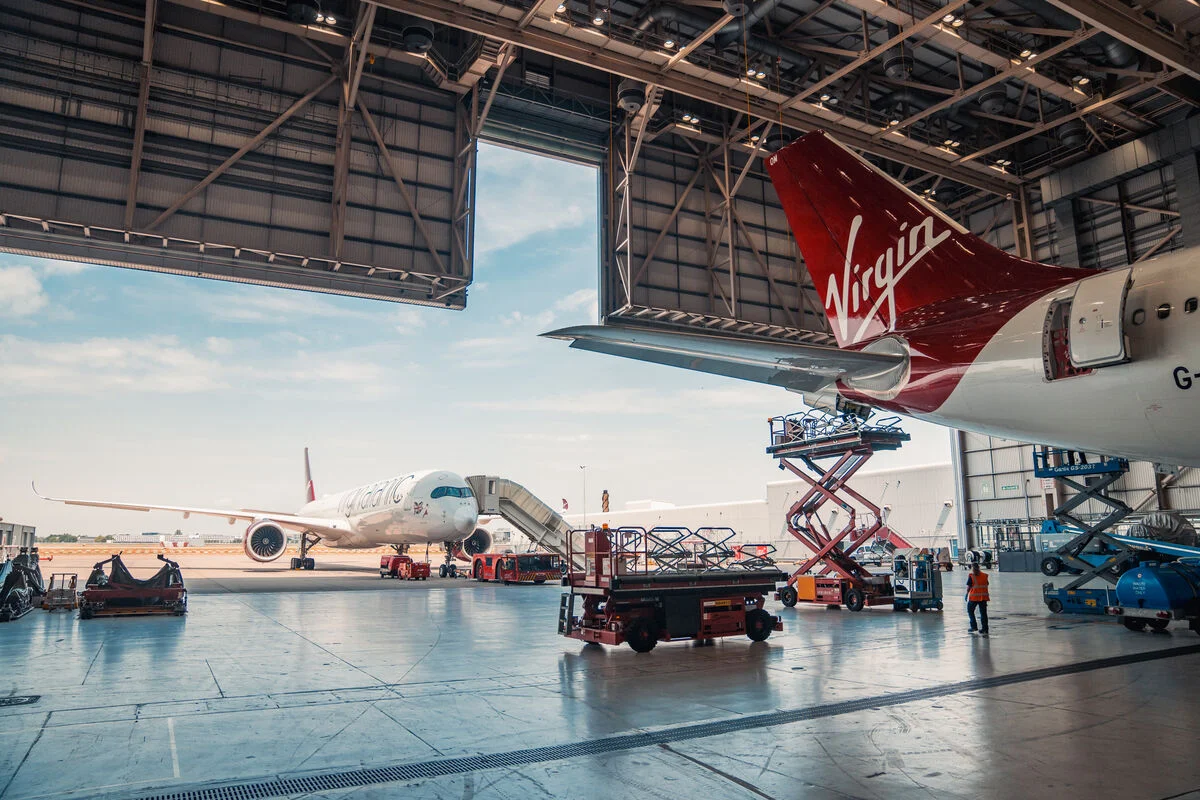
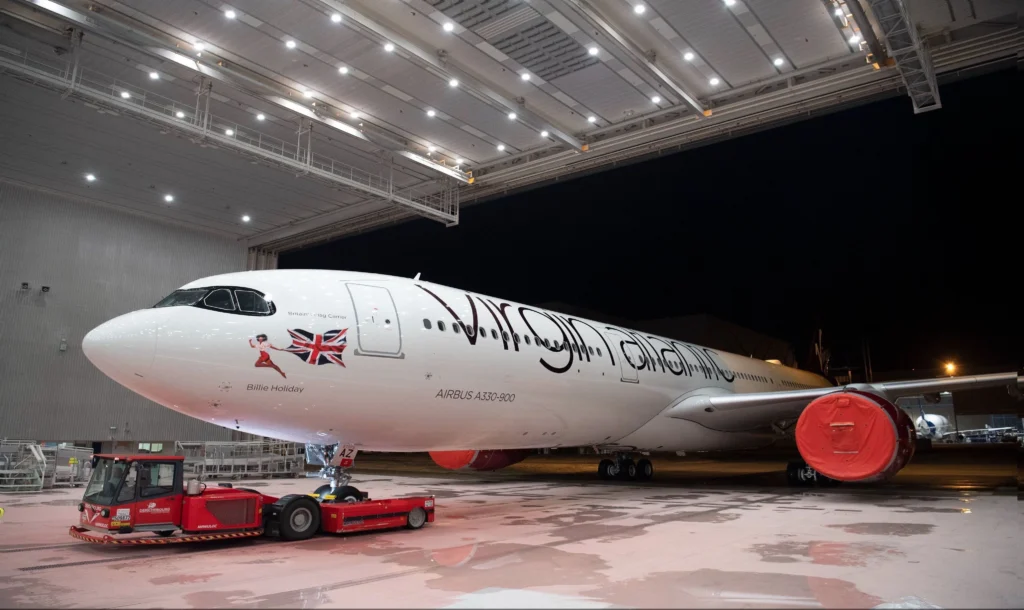
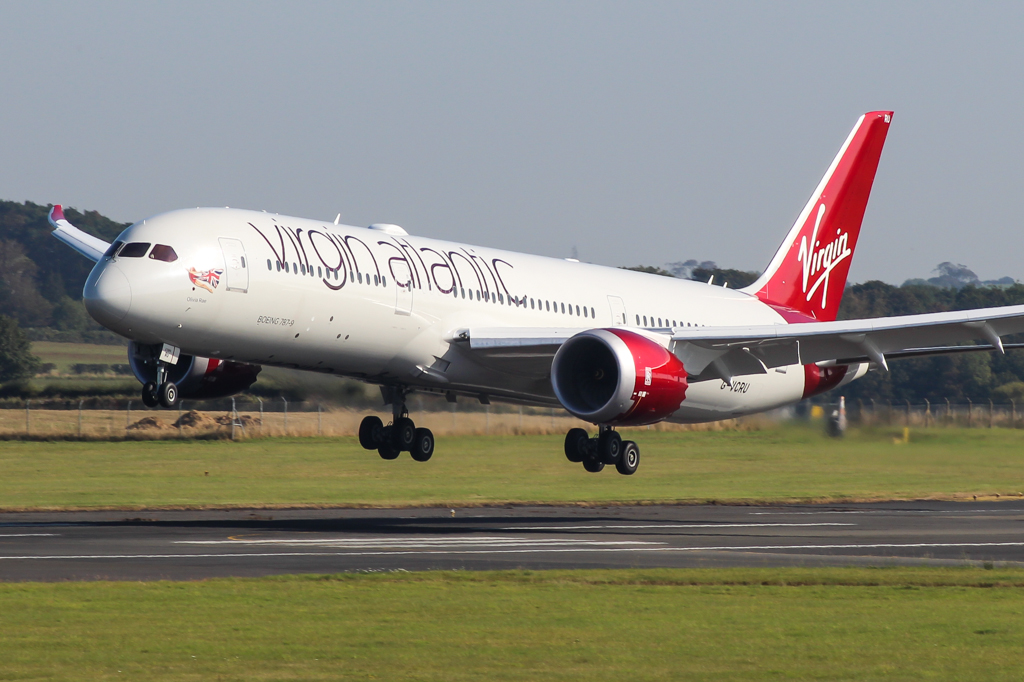
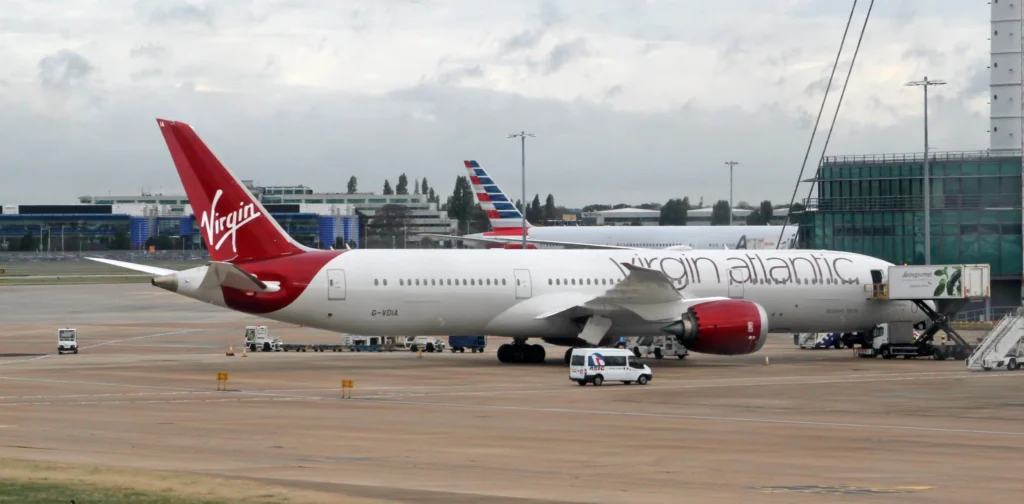
Virgin Atlantic (VS) is one of the UK’s best-known international airlines, operating long-haul services from its main hub at London Heathrow. Founded in 1984, the airline has built its reputation around international connectivity, customer service and a distinctive approach to premium air travel. Its fleet includes aircraft such as the Airbus A330, A350 and Boeing 787, which require specialised maintenance and engineering support.
Behind its flight operations is an engineering department responsible for keeping aircraft safe, reliable and available for service. Virgin Atlantic’s maintenance activities cover both hangar and line maintenance, with technical teams working on airframes, engines, aircraft systems and cabin interiors. The airline’s engineering operations have a presence at locations including Heathrow, Gatwick and Manchester.
Working in this department can offer aviation professionals exposure to modern wide-body aircraft and different areas of commercial aircraft maintenance. Opportunities range from hands-on technician positions to licensed engineering roles, technical planning and specialist engineering services.
What Do Aircraft Engineers and Technicians Do?
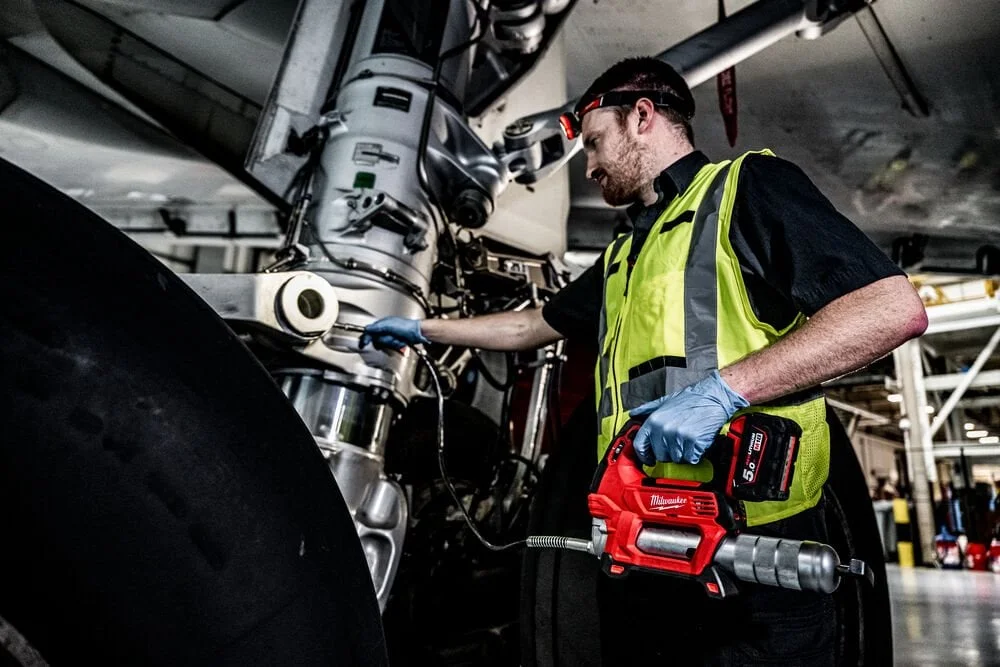
Aircraft engineers and technicians at Virgin Atlantic contribute to the maintenance and airworthiness of the airline’s fleet. Although their responsibilities overlap, licensed engineers generally have additional certification responsibilities, while technicians concentrate on carrying out maintenance and supporting tech operations.
Aircraft Maintenance Engineer
Aircraft Maintenance Engineers inspect aircraft, identify technical problems and carry out maintenance within their licence privileges and company authorisations. Their responsibilities include:
- Performing scheduled and unscheduled aircraft maintenance.
- Inspecting engines, airframes, landing gear and aircraft systems.
- Diagnosing mechanical, electrical and hydraulic faults.
- Carrying out repairs and replacing defective components.
- Certifying completed maintenance tasks when authorised.
- Maintaining accurate aircraft maintenance records.
- Ensuring all work complies with UK Civil Aviation Authority requirements and company procedures.
Aircraft Maintenance Technician
Aircraft Maintenance Technicians support aircraft maintenance across hangar and line operations. Their work may involve mechanical systems, avionics, structures or cabin interiors.
Typical responsibilities include:
- Assisting with routine aircraft inspections and servicing.
- Removing, repairing and installing aircraft components.
- Troubleshooting electrical, mechanical and cabin-related defects.
- Using technical manuals and diagnostic equipment.
- Supporting licensed engineers during maintenance checks.
- Recording completed work and reporting technical defects.
- Following engineering safety procedures and maintenance standards.
Requirements to Join Virgin Atlantic as an Engineer or Technician
Virgin Atlantic recruits people with suitable aviation qualifications, practical knowledge and the ability to work in a safety-critical environment. The precise requirements depend on the vacancy and the aircraft systems involved.
Basic Requirements
- A relevant qualification in aircraft maintenance, aeronautical engineering or an associated technical discipline.
- Good understanding of aircraft systems and maintenance procedures.
- Strong analytical and troubleshooting abilities.
- Good communication and teamwork skills.
- The ability to work rotating shifts, including nights and weekends.
- A responsible approach to safety and regulatory compliance.
- Flexibility to work at the required airport or engineering facility.
For Aircraft Maintenance Engineers
- A valid UK CAA Part-66 Aircraft Maintenance Licence in the category required for the position.
- A B1.1 licence for relevant mechanical aircraft maintenance roles.
- Appropriate aircraft type ratings, particularly for the aircraft operated by Virgin Atlantic.
- Recent experience in commercial aircraft maintenance.
- Knowledge of airworthiness regulations and maintenance documentation.
- The ability to certify work within the scope of the licence and company authorisation.
For Aircraft Maintenance Technicians
- A relevant aircraft maintenance apprenticeship, technical diploma or equivalent practical training.
- Experience with aircraft mechanical, electrical, avionics or cabin systems, depending on the position.
- Familiarity with maintenance manuals and workshop equipment.
- Good attention to detail and an understanding of aviation safety.
- Previous experience in an airline, maintenance organisation or aircraft engineering facility may be beneficial.
Virgin Atlantic Aircraft Technician and Engineer Salary in 2026
Virgin Atlantic does not publish one universal salary scale covering every Aircraft Maintenance Technician and Aircraft Maintenance Engineer. Pay depends on the position, licence category, aircraft type ratings, previous experience, shift arrangements and level of responsibility. The following figures are indicative 2026 estimates based on available salary information and advertised engineering roles, rather than a confirmed company-wide pay structure.
Aircraft Maintenance Technicians at Virgin Atlantic can expect an estimated annual salary of around £35,000 to £48,000 (approximately USD $46,000–$63,000). Employees entering the industry or joining with limited airline experience are more likely to be towards the lower end of this range. Technicians with several years of practical experience, particularly those working in specialised maintenance areas, may earn closer to the upper end.
This puts the estimated monthly gross salary for technicians at approximately £2,917 to £4,000 (USD $3,830–$5,240). Actual take-home pay will be lower after applicable deductions, while overtime and shift-related payments may increase overall earnings.
Licensed Aircraft Maintenance Engineers generally command higher salaries because their positions involve additional technical responsibility, regulatory knowledge and, where applicable, certification privileges. In 2026, a reasonable estimated annual range for a licensed engineer at Virgin Atlantic is approximately £42,000 to £60,000 (USD $55,000–$79,000). Engineers with relevant B1.1 licences, current aircraft type ratings and substantial experience on commercial wide-body aircraft may be better positioned to negotiate towards the upper end.
The airline’s recent recruitment for a Licenced Aircraft Engineer in Cabin Maintenance illustrates the level of responsibility involved in senior technical positions. The role requires a valid B1.1 CAA licence, at least one relevant aircraft type rating and experience in light or heavy maintenance. The successful candidate is also expected to certify allocated cabin maintenance tasks, supervise small teams and coordinate with Technical Control. These responsibilities distinguish the position from a general aircraft technician role.
More experienced engineers working in specialist or supervisory positions may earn approximately £55,000 to £70,000 (USD $72,000–$92,000) annually, depending on their qualifications and responsibilities. This should be treated as an indicative senior-level estimate, not a published Virgin Atlantic salary band. Engineering managers and specialist technical professionals may have different compensation arrangements.
It is also important to consider the effect of shift patterns on total earnings. Some Virgin Atlantic engineering vacancies involve a four-days-on, four-days-off arrangement, with long shifts and rotating start times. Overtime, additional responsibilities and any applicable shift payments can affect the final amount an employee receives. The advertised working pattern and compensation terms should therefore be checked for each individual vacancy.
Overall, Virgin Atlantic’s engineering salaries are competitive within the UK airline maintenance market, particularly for experienced licensed engineers. However, applicants should distinguish between an estimated industry salary range and the actual offer made for a specific job.
Benefits and Perks at Virgin Atlantic Engineering
Virgin Atlantic offers engineering employees the following benefits.
- Staff Travel: Eligible employees can access Virgin Atlantic staff travel privileges, offering opportunities to travel across the airline’s network subject to availability and applicable conditions.
- Pension Arrangements: Employees can benefit from workplace pension provisions, helping them build financial security for retirement.
- Holiday Entitlement: Paid annual leave gives engineering staff time away from operational responsibilities. The exact entitlement depends on the employment terms and applicable arrangements.
- Health and Wellbeing: Virgin Atlantic promotes employee wellbeing through workplace support and relevant health and wellbeing initiatives.
- Training and Development: Engineers can develop their technical knowledge through training and experience across different areas of the engineering department, including production maintenance and engineering services.
- Career Progression: Employees may have opportunities to move into specialist technical roles, supervisory positions and other areas of engineering management as they gain experience.
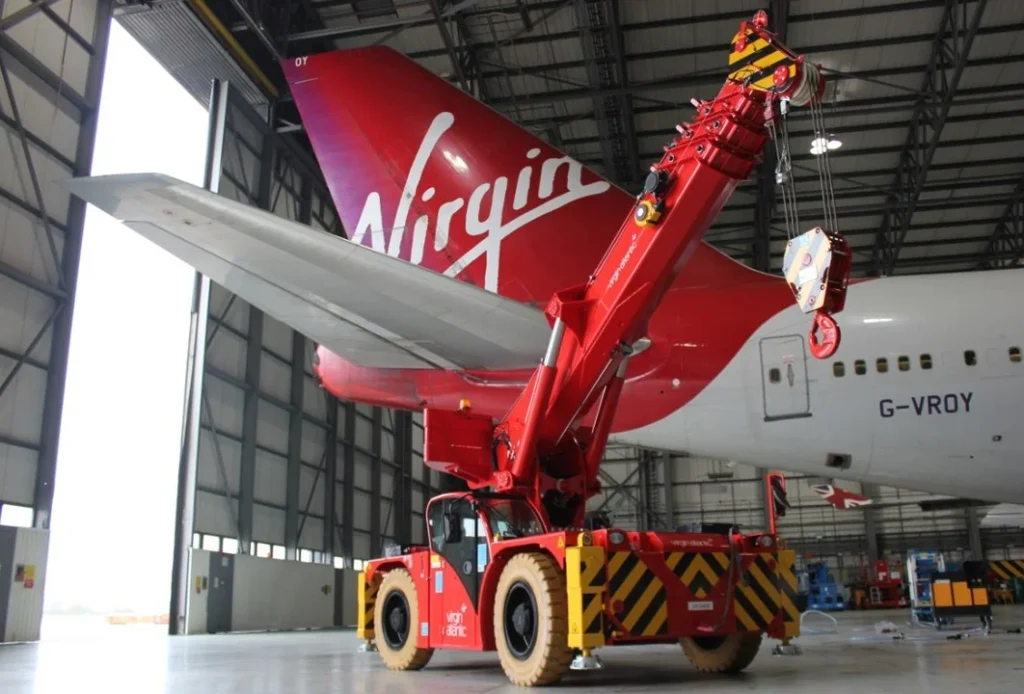
- Modern Engineering Facilities: Staff work with specialist equipment and maintenance facilities supporting the airline’s Airbus and Boeing aircraft.
- Shift Arrangements: Certain engineering positions operate structured shift patterns, which can provide blocks of consecutive days away from work between duty periods.
Bottom Line
Virgin Atlantic offers aircraft maintenance professionals the opportunity to work on a modern long-haul fleet while developing their experience in a major UK airline engineering operation. In 2026, Aircraft Maintenance Technicians can expect estimated annual earnings of approximately £35,000 to £48,000 (USD $46,000–$63,000), while licensed Aircraft Maintenance Engineers may earn around £42,000 to £60,000 (USD $55,000–$79,000).
Higher earnings may be possible for experienced engineers with relevant aircraft type ratings, specialist knowledge and supervisory responsibilities. Overtime and applicable shift payments can also influence total compensation.
For applicants, holding the correct CAA licence and having recent commercial aircraft maintenance experience can make a significant difference. Virgin Atlantic’s engineering department offers opportunities for both developing technicians and experienced licensed professionals looking to work in long-haul aircraft maintenance.
FAQs
An Aircraft Maintenance Technician at Virgin Atlantic can expect an estimated annual salary of £35,000 to £48,000 (approximately USD $46,000–$63,000). The actual offer depends on experience, technical specialisation and the position.
A licensed Aircraft Maintenance Engineer may earn approximately £42,000 to £60,000 (USD $55,000–$79,000) annually in 2026. Experienced engineers with relevant aircraft type ratings and additional responsibilities may earn more.
Applicants for relevant licensed engineering positions generally need a UK CAA Part-66 Aircraft Maintenance Licence. A B1.1 licence and at least one applicable aircraft type rating are required for certain mechanical and certifying roles.
Stay tuned with us. Further, follow us on social media for the latest updates.
Join us on Telegram Group for the Latest Aviation Updates. Subsequently, follow us on Google News
