

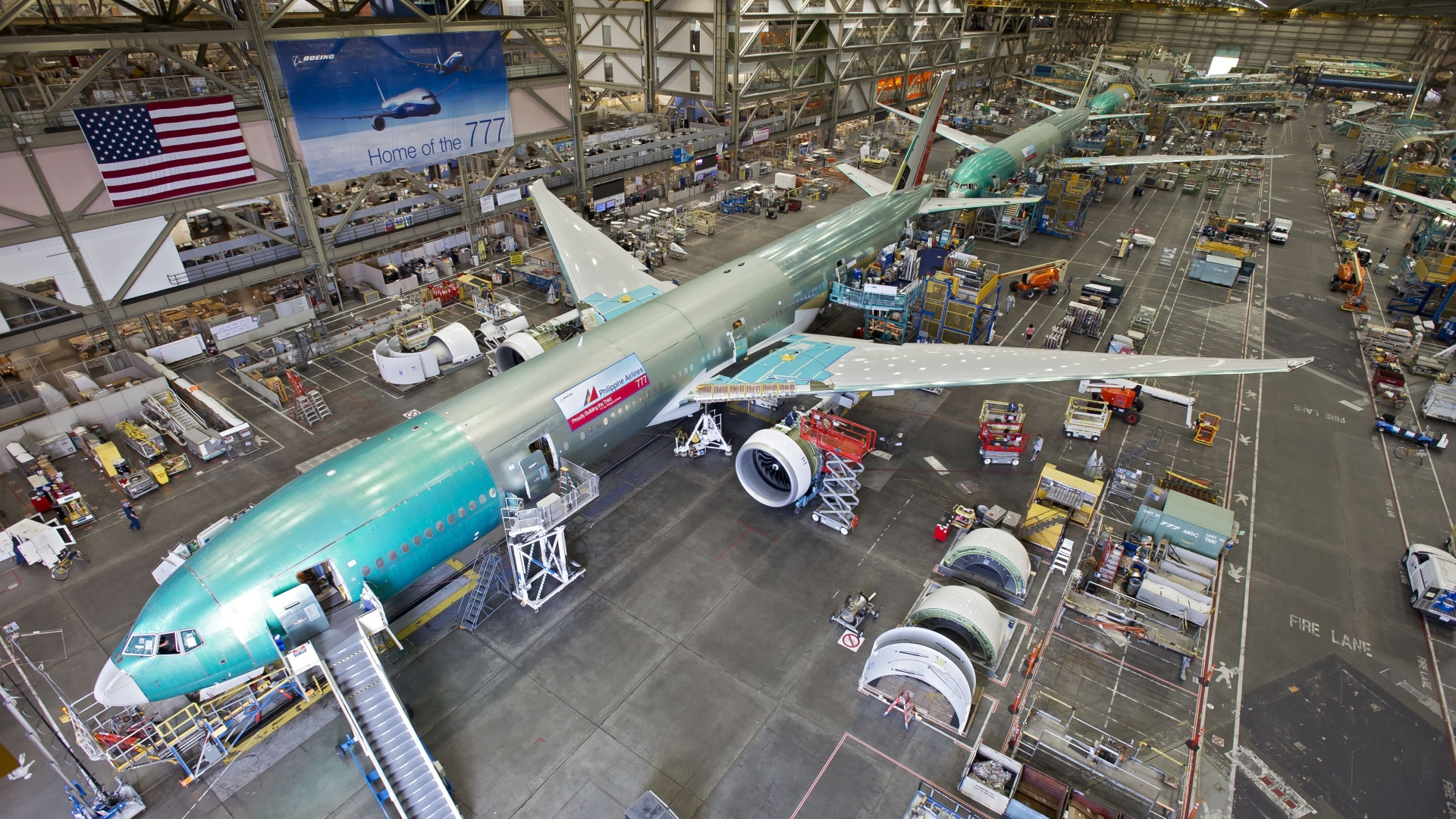
FARNBOROUGH, UK- Boeing released its 2026 Commercial Market Outlook (CMO) at the Farnborough International Airshow, staged at Farnborough Airport (FAB), forecasting that the global commercial airplane fleet will grow nearly 80% to more than 50,000 airplanes by 2045. The manufacturer said near-term disruptions will not meaningfully change the long-term trajectory of the industry.
The outlook projects that operators will need nearly 44,000 new airplanes over the next 20 years, with demand for air travel set to double across the same period. Boeing expects half of these deliveries to replace older, previous-generation jets with more fuel-efficient models.
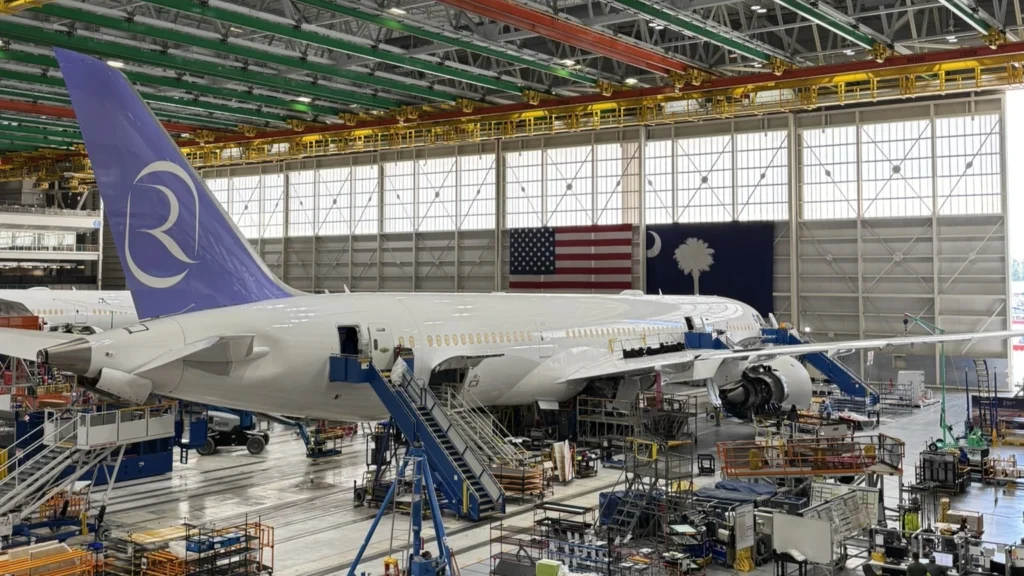
Boeing Aircraft Deliveries Outlook for 20 Years
Boeing forecasts that global passenger traffic will grow about 4% each year, doubling between 2026 and 2045. The company reports that travelers are adjusting destinations and routings rather than cancelling trips during current disruptions, which has kept underlying demand resilient.
Point-to-point and short-haul leisure segments are leading traffic growth. Long-haul travel in some regions, including the Middle East, has absorbed the most short-term impact from geopolitical tension.
Over the long term, Boeing points to enduring demand drivers such as dispersed family and friend networks, expanding tourism, new destinations, and cross-border trade.
According to Boeing, passenger traffic has grown despite double-digit swings in oil prices in 17 of the last 25 years, underlining the durability of travel demand through cost pressure.
“Airlines are adapting quickly to manage near-term industry constraints while demand for air travel remains resilient,” said Brad McMullen, Boeing senior vice president of Commercial Sales and Marketing. “That demand is driving the need to grow and modernize the global fleet, underscoring the importance of new, fuel-efficient airplanes that will play an increasingly vital role in connecting people and economies around the world.”
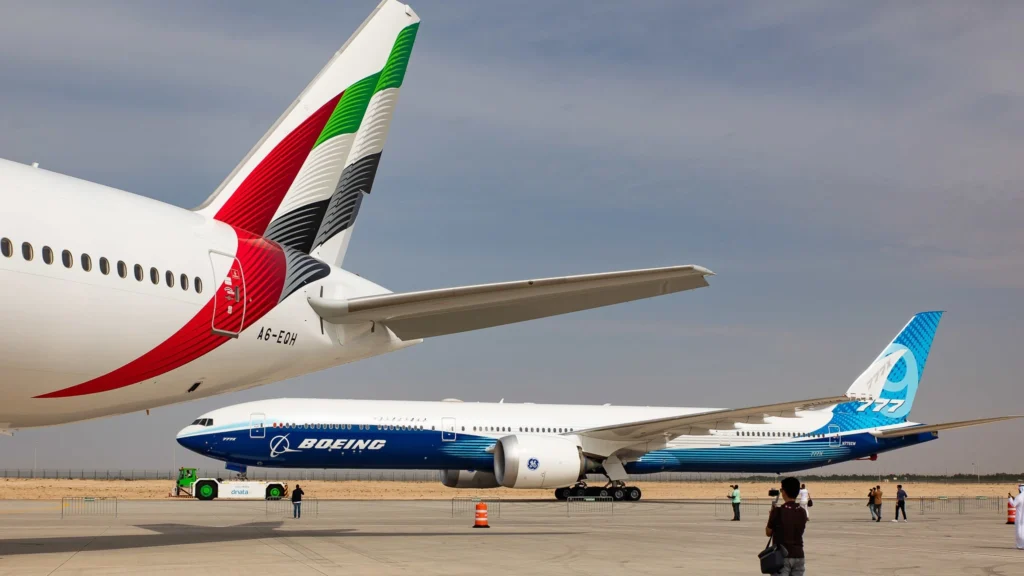
Airlines Expand Networks And Broaden Service Levels
Airlines have added nearly 5,500 new airport pairs since 2015, driving close to 30% network growth and giving passengers more direct routings and greater choice. Half of these new routes are now served daily or more frequently.
Carriers are also widening their service tiers, from ultra-low-cost to premium, based on trip purpose, passenger value, and market conditions.
Premium offerings are expanding fastest in North America and Northeast Asia, supported by higher incomes and wealth effects. Low-cost options are growing in emerging markets such as Latin America, Eastern Europe, and Southeast Asia, improving affordability for new travelers.
Boeing notes that airlines now generate close to half of their revenue from premium passenger traffic, cargo, and ancillary streams. Without the efficiency and productivity gains of modern jets, carriers would need 9,000 additional airplanes to serve the same number of passengers.

Aircraft Demand Across Regions And Categories
Boeing expects demand to stay balanced across the nearly 44,000 projected deliveries. Mature regions, including North America, Eurasia, Oceania, and Northeast Asia, will account for roughly 45% of new airplanes. Transitioning and emerging markets, such as China, the Middle East, Latin America, South and Southeast Asia, and Africa, will take about 55%.
Low-cost carrier fleets are forecast to grow nearly 4% each year, ahead of the nearly 3% growth expected for network carriers. Replacement demand is also rising as mature and transitioning markets renew older fleets. By 2045, Boeing expects less than 10% of previous-generation airplanes to remain in service worldwide.
The global single-aisle fleet is set to nearly double to more than 36,000 jets, operating over half of all global capacity. More than 8,000 widebody airplanes will be in service by 2045, supporting long-haul routes and critical cargo capacity.
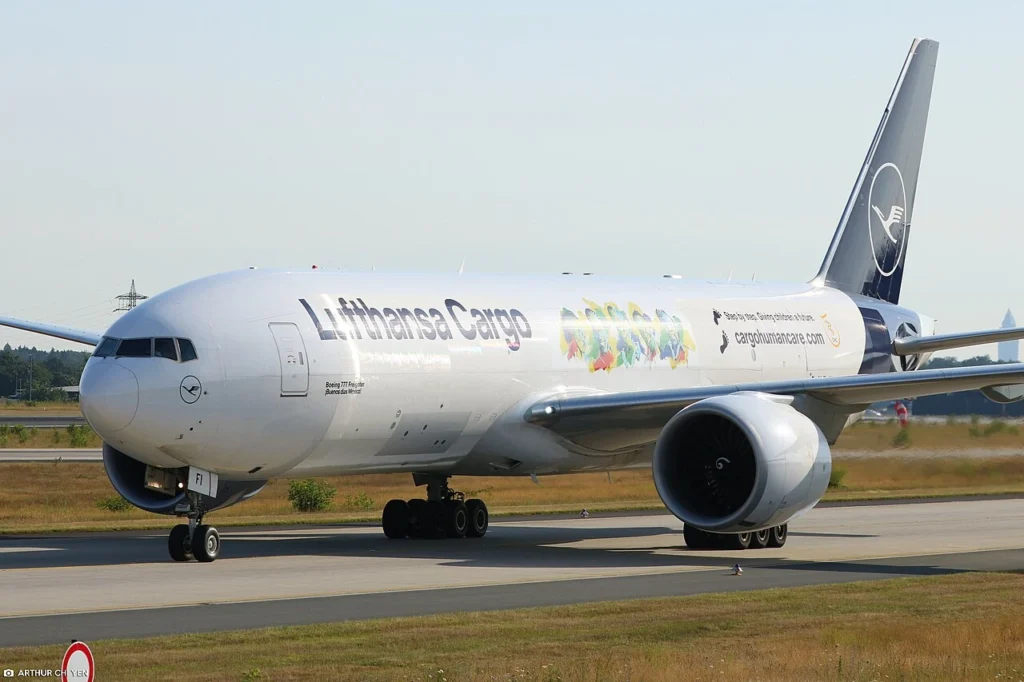
https://commons.wikimedia.org/wiki/File:Lufthansa_Cargo_Boeing_777F_D-ALFI.jpg
Air Cargo Stays Resilient Through Market Shifts
Air cargo demand has held firm as operators adjust routes and flows in response to geopolitics. International freighter capacity rose 5% year-to-date in 2026 despite market disruption, showing the flexibility of cargo networks.
Through 2045, Boeing forecasts air cargo traffic to grow about 3.7% each year, outpacing broader trade and economic growth.
Demand is supported by the movement of high-value, perishable, and time-sensitive goods, along with supply chain reliability and cross-border e-commerce.
The company expects the market to need more than 2,900 production and converted freighters over the period.
Delivery Breakdown By Aircraft Type
Boeing’s forecast splits the projected 43,625 total deliveries across four categories:
- Single-aisle: 33,545
- Widebody: 7,715
- Regional: 1,435
- Freighters: 930
Boeing has published the CMO since 1961, and the company released its annual Commercial Services Market Outlook and Pilot and Technician Outlook for 2026 to 2045 on the same day.
Stay tuned with us. Further, follow us on social media for the latest updates.
Join us on Telegram Group for the Latest Aviation Updates. Subsequently, follow us on Google News
