

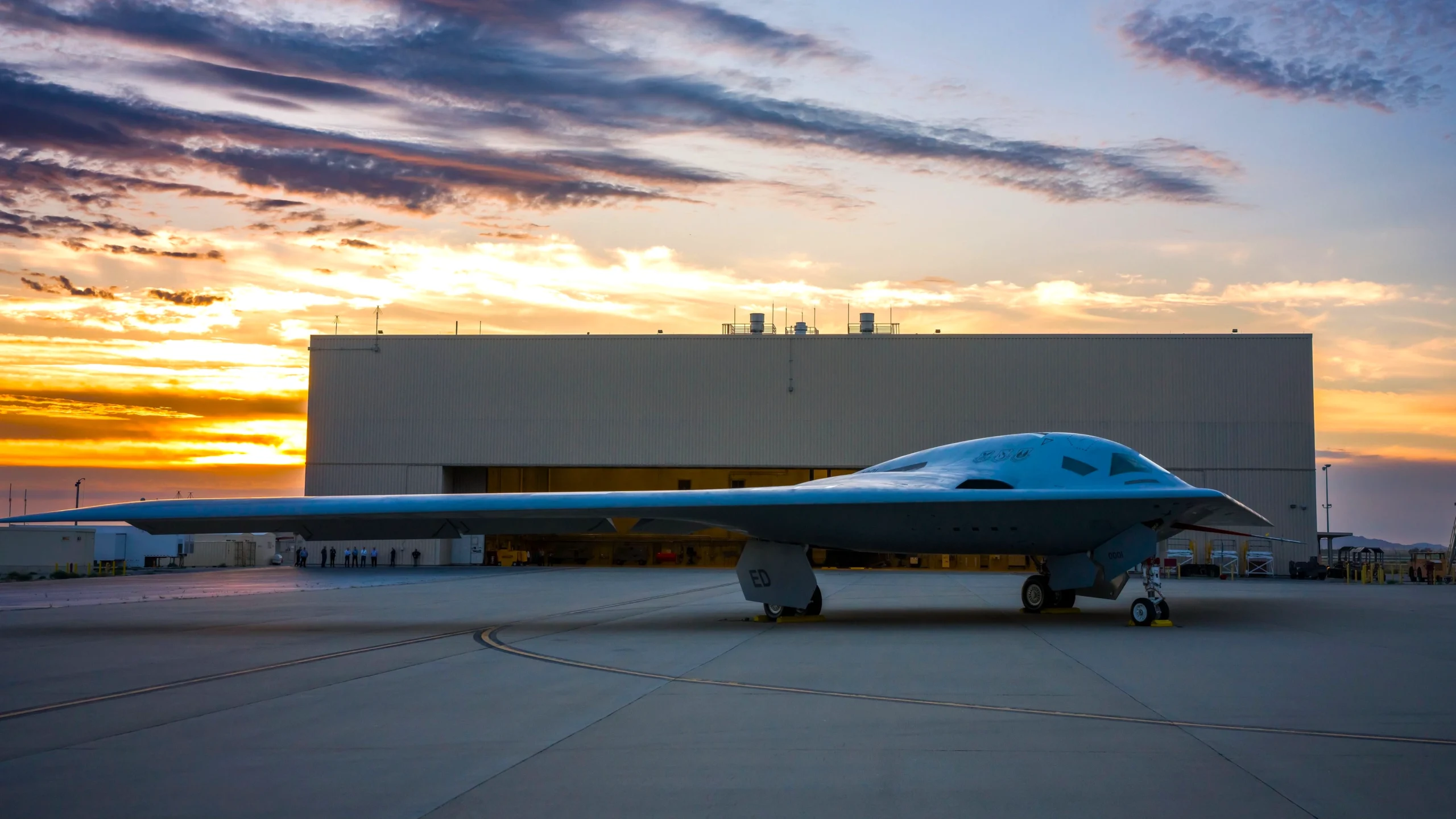
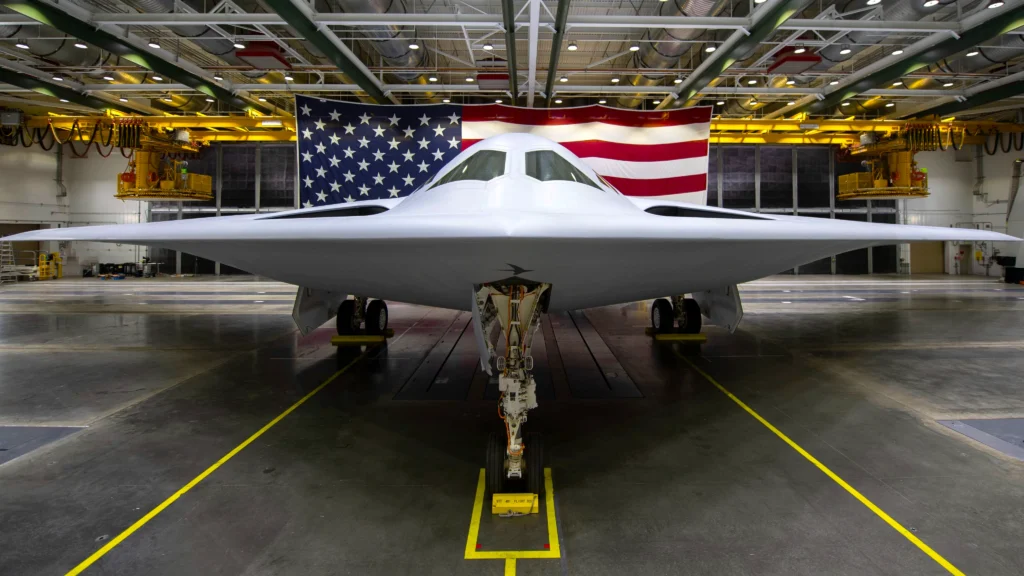
CALIFORNIA- The US Air Force has moved the Northrop Grumman B-21 Raider into a new testing stage by placing an operational test pilot in the cockpit alongside a developmental test pilot.
The 412th Test Wing announced the flight on June 11, 2026, at Edwards Air Force Base in California, marking an early step toward judging the stealth bomber as a combat system rather than only as a new airframe.
The sortie shifts the focus from basic airworthiness checks toward crew effectiveness, weapons employment, and survivability in contested airspace. The Raider Combined Test Force conducted the flight as the program expanded into mission-systems and weapons-integration work, supported by a second aircraft now at the base.
This phase is critical for proving the aircraft’s ability to penetrate advanced air defenses and deliver long-range strike effects, supporting the broader modernization of US strategic deterrence ahead of planned delivery to Ellsworth Air Force Base in South Dakota in 2027.
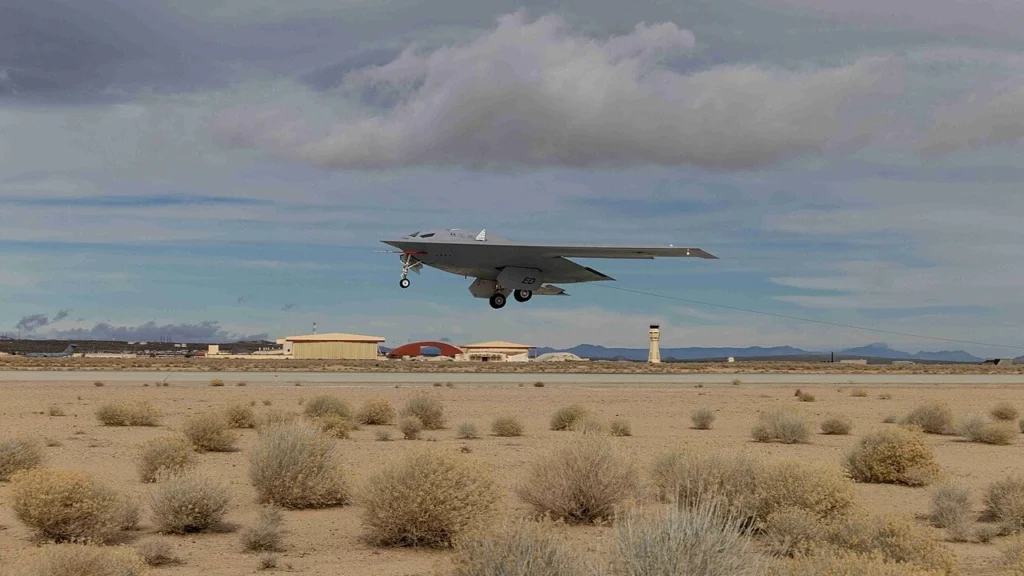
US Air Force B-21 Raider Combat Evaluation
The significance lies in the timing, not the addition of a second pilot. In a normal program, developmental testing first confirms that an aircraft meets design specifications, flies safely, and can proceed through envelope expansion.
Operational testing usually follows later and asks different questions: whether crews can employ the aircraft under realistic mission conditions, whether maintainers can sustain it, whether mission systems support combat tasks, and whether the aircraft can survive and deliver weapons against the threats it was built to face.
Col. Matt Guasco, commander of AFOTEC Detachment 5, said the Air Force had not brought operational testing into a modern test program this early.
That choice points to a deliberate effort to shrink the gap between engineering validation and combat assessment.
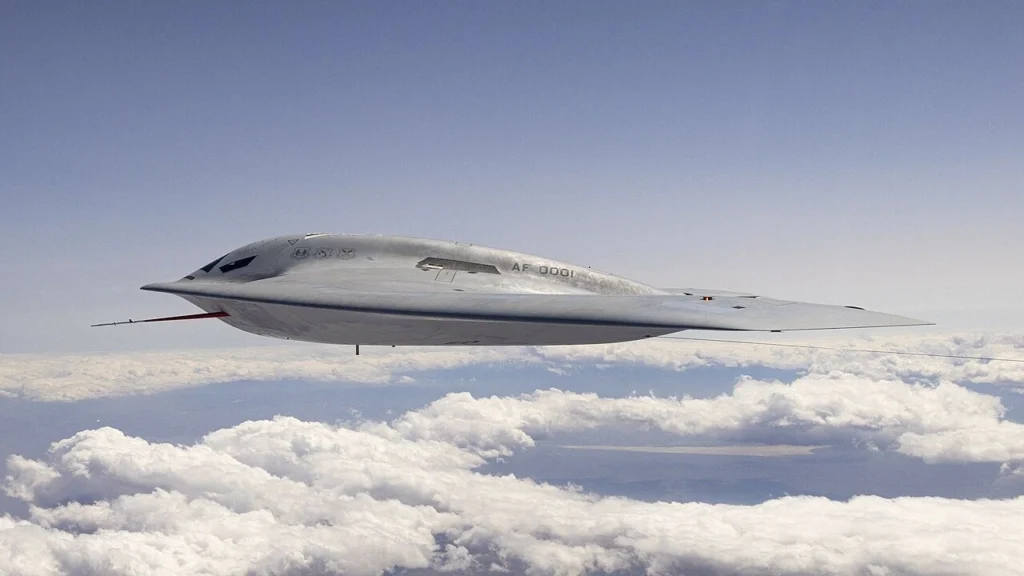
Early Operational Testing
The B-21 is entering this phase while production capacity grows. On February 23, 2026, the Department of the Air Force and Northrop Grumman agreed to apply $4.5 billion in already authorized and appropriated funding to raise annual production capacity by 25 percent.
The service says the program remains aligned with the 2027 Ellsworth delivery and lists a minimum inventory objective of 100 aircraft, with an average procurement unit cost of $692 million in base-year 2022 dollars.
Early operational test participation serves a practical purpose here. It can expose crew interface, mission planning, maintenance, or weapons employment problems before higher production rates make design or process changes more expensive.
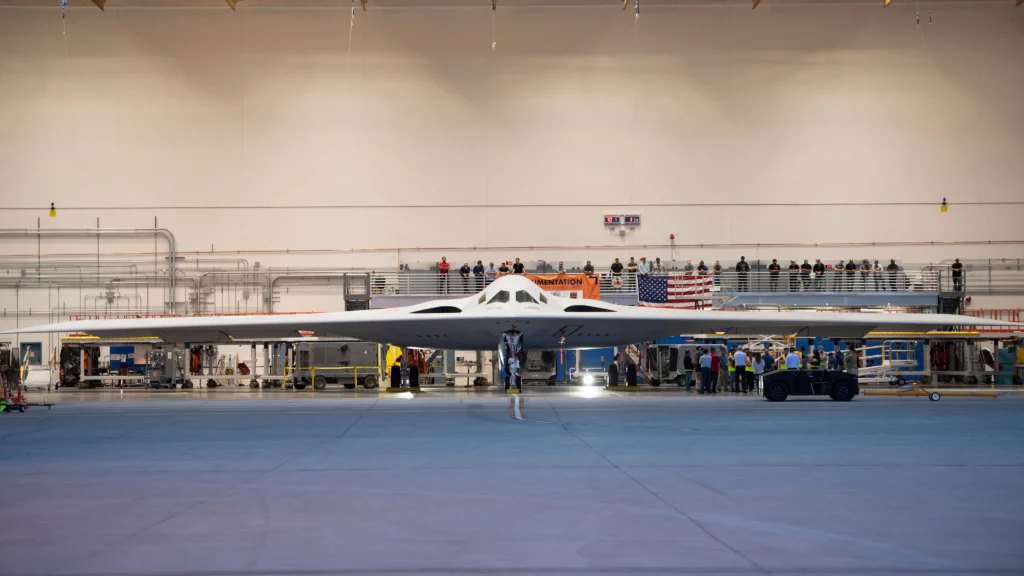
Inside the B-21’s Weapons Design Logic
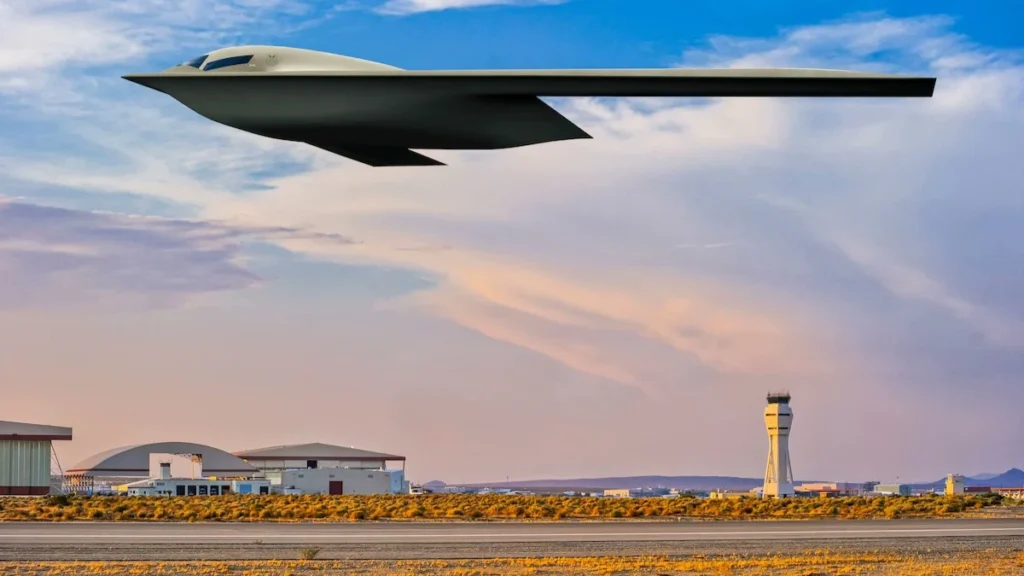
The B-21 Raider is a dual-capable penetrating strike stealth bomber that carries both conventional and nuclear munitions.
The Air Force states that it will use a broad mix of stand-off and direct-attack weapons and that its open-systems architecture reduces future integration risk.
Payload weight remains classified, so the aircraft’s military value depends on how it combines internal weapons carriage, low-observable shaping, mission software, communications, electronic effects, and long-range flight profiles.
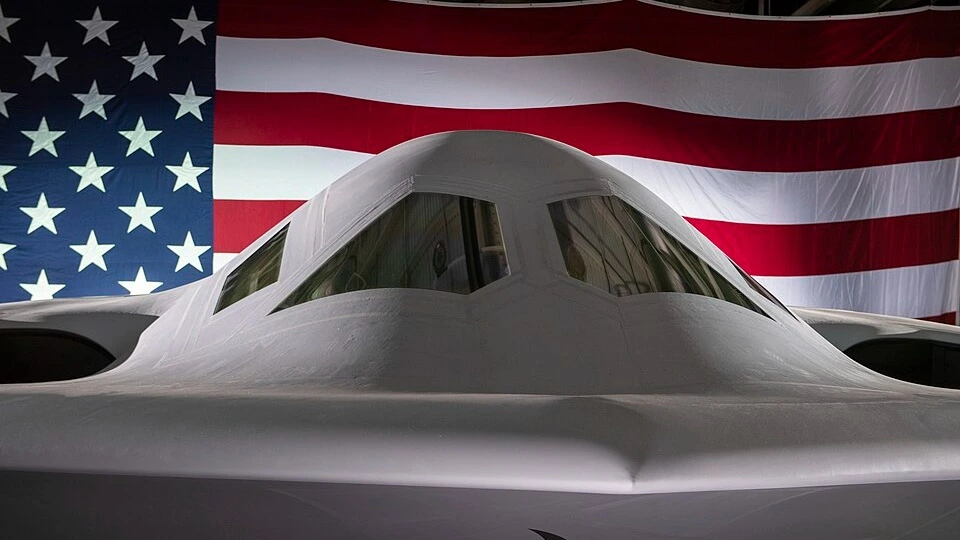
Internal carriage sits at the center of this design. Externally mounted weapons create radar-reflection penalties, while internal bays let a stealth bomber approach, release weapons, and leave with less signature growth than an aircraft carrying stores under the wings.
Direct-Attack Munitions
The direct-attack set points to weapons such as the Joint Direct Attack Munition family, including the GBU-31, GBU-32, and GBU-38 classes.
JDAM is a guidance tail kit that converts unguided general-purpose bombs into GPS and inertial-guided all-weather weapons rather than a bomb on its own.
For a penetrating bomber, this lowers dependence on visual conditions and reduces the number of aircraft needed per aim point compared with older unguided methods. This category becomes relevant once the aircraft enters defended airspace and can release from positions that improve impact angle, timing, or target pairing.
It also supports attacks against dispersed infrastructure, air-defense components, command facilities, hardened aircraft shelters, and logistics nodes when stand-off weapons are not required, or when commanders need to preserve cruise missiles for more heavily defended targets.
Stand-Off Missiles
The stand-off category gives the aircraft options outside the densest layers of enemy air defense. Current US bomber armament in this class includes the AGM-158 Joint Air-to-Surface Standoff Missile family.
The baseline JASSM is a 14-foot, 2,250-pound autonomous conventional cruise missile with a range of more than 200 nautical miles.
The extended-range version exceeds 500 nautical miles and shares about 70 percent of the common parts with the baseline missile.
The operational effect goes beyond distance. A stealth bomber carrying stand-off missiles can help suppress or destroy air defense networks, command and control nodes, bridges, bunkers, and missile support facilities without forcing every weapon release inside the most dangerous engagement zones.
This gives planners a phased approach, where stand-off weapons open corridors or degrade sensors, and direct-attack weapons follow against targets that require closer release geometry.
Nuclear Role and the Airborne Triad
The nuclear path is more specialized. The B-21 supports the airborne leg of the nuclear triad, and the future bomber force will pair B-21s with B-52s.
The B61-12 gravity bomb, whose life-extension program finished in December 2024, uses a modern tail kit to improve accuracy while consolidating older B61 variants. The B61-13, first assembled by NNSA in 2025, adds options against certain harder and large-area military targets.
The AGM-181 Long Range Stand Off weapon introduces a different method. The Air Force Nuclear Weapons Center describes LRSO as a long-range survivable cruise missile that will replace the AGM-86 Air Launched Cruise Missile and is being designed to penetrate and survive advanced integrated air-defense systems.
According to the Army Recognition Group, the mix of nuclear gravity bombs and a nuclear cruise missile complicates an opponent’s defense planning by presenting both penetrating-bomber and stand-off attack problems at once.

Aerial Refueling and Fuel Efficiency
The flight also carries implications beyond weapons. In April 2026, the Air Force released imagery and details of B-21 aerial refueling with a KC-135 Stratotanker, describing in-flight refueling as fundamental to the bomber’s global strike role.
Senior Air Force leaders stated that the B-21 consumes a fraction of the fuel used by legacy bombers, a trait that affects force packaging rather than only operating cost.
In a Pacific contingency, tanker availability sets a limit because refueling aircraft must operate at long distances, avoid missile threats, and support fighters, bombers, airlifters, and reconnaissance aircraft at the same time.
A bomber that needs less tanker support gives planners more route choices, more timing flexibility, and less dependence on forward bases exposed to ballistic and cruise missile attack.
Connecting Test, Evaluation, and Production
The milestone matters because it links three processes that programs often separate: developmental flight test, operational evaluation, and production scaling.
The Air Force is not waiting for full maturity to ask whether operational crews can employ the bomber effectively. It is bringing those judgments into the program while mission systems, weapons procedures, sustainment planning, and production-rate decisions remain adjustable.
This does not remove technical risk, and much of the sensor suite, electronic-warfare equipment, payload capacity, radar signature, and weapons integration stays classified.
It does show that the program has reached a point where the Air Force can test the B-21 as a combat system, which is the practical difference between a successful flight-test event and a step toward fielded capability.
Stay tuned with us. Further, follow us on social media for the latest updates.
Join us on Telegram Group for the Latest Aviation Updates. Subsequently, follow us on Google News
