

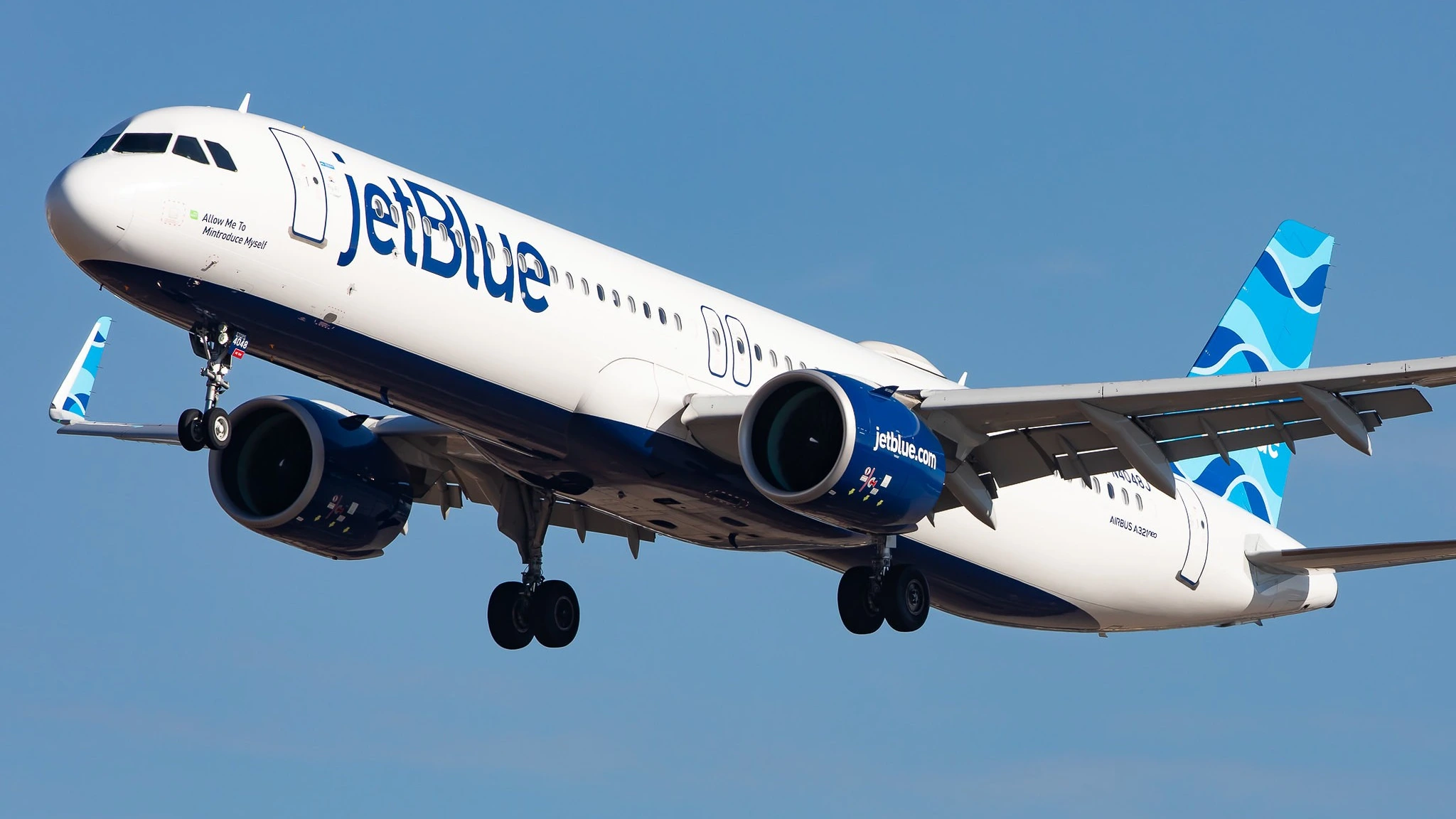
NEW YORK- JetBlue Airways (B6), which became the focus of a federal safety review after one of its passenger jets nearly crossed paths with a small training aircraft near Fort Lauderdale-Hollywood International Airport (FLL).
The Federal Aviation Administration confirmed it is investigating the Monday evening incident, which brought the two planes within 500 feet of each other.
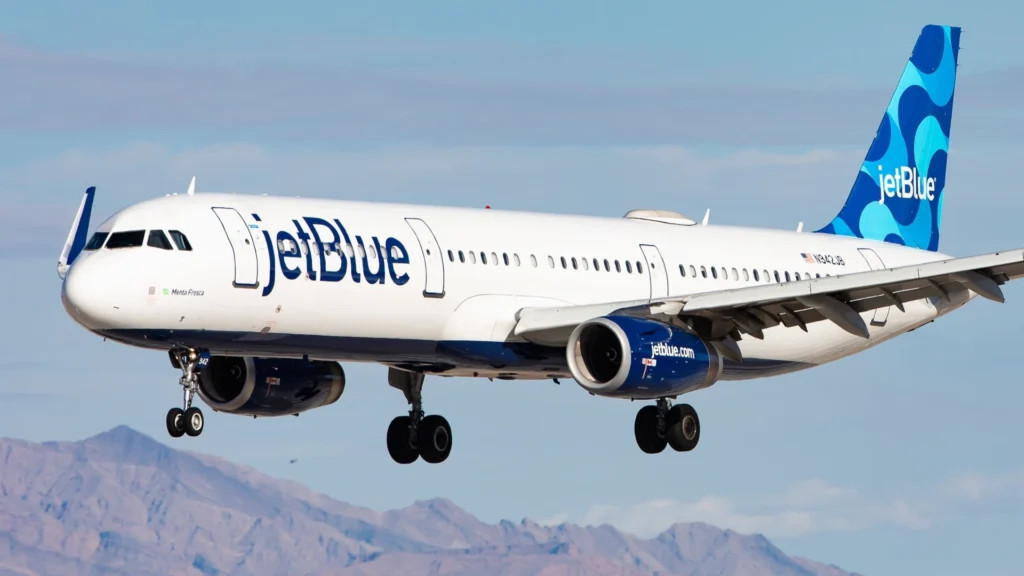
The event involved JetBlue Flight 1256, on approach to Fort Lauderdale, and a Beechcraft 76 owned by a local flight school.
The encounter occurred in busy training airspace west of the airport, where light aircraft frequently operate. The case adds to a growing list of close calls reported across the United States airspace in recent months.
How the Fort Lauderdale Near-Miss Unfolded
The close call took place around 6:15 PM as JetBlue Flight 1256 lined up for landing.
According to the FAA, JetBlue pilots received “an onboard alert that another aircraft was nearby and not in communications with air traffic control.” A controller also flagged the unidentified traffic to the crew.
According to CNN, air traffic control audio captured by ATC.com recorded the tense exchange in real time. “Yeah, they’re turning toward us,” one JetBlue pilot said.
The controller confirmed the aircraft was descending and tracking southwest. “I see them also descending,” the controller replied. “Yup, they are southwest bound, JetBlue 1256. They appear to be leveling at 4,400 feet now.”
About 20 seconds later, the controller bluntly described the other pilot’s flying. “That guy’s insane,” the controller said. The JetBlue pilot responded, “I agree.”
The Beechcraft 76 was registered to Sun City Aviation LLC, based on FAA records. Both Sun City Aviation and JetBlue were contacted for comment.
How Close Two Aircraft Came
Data from FlightRadar24 shows the two planes came within 500 feet vertically and roughly 1.6 miles horizontally of one another.
The JetBlue crew received a Traffic Alert and Collision Avoidance System (TCAS) notification and then flew higher to avoid the other plane.
The FAA stated that the required separation between the aircraft was maintained throughout the event.
Airspace and Conditions at the Time
Open-source flight tracking data indicates the Beechcraft was operating under visual flight conditions in airspace where pilots are generally not required to stay in contact with air traffic control.
The aircraft carried a functioning transponder, which allowed controllers and nearby planes to detect its position.
The area is marked on FAA charts as a zone of concentrated flight training activity, where student pilots and training aircraft are common.
Historical weather records confirm visual conditions at the time. Under those rules, pilots carry direct responsibility for spotting and avoiding other aircraft by seeing and avoiding them.

Recent Close Calls Patterns
This incident follows several other near-misses across the country. In April, a plane landing at New York’s John F. Kennedy International Airport (JFK) strayed into the flight path of a jet landing on a parallel runway.
The most severe recent event occurred last year, when 67 people died after an Army Black Hawk helicopter and an American Airlines (AA) regional jet collided over the Potomac River.
Stay tuned with us. Further, follow us on social media for the latest updates.
Join us on Telegram Group for the Latest Aviation Updates. Subsequently, follow us on Google News
