

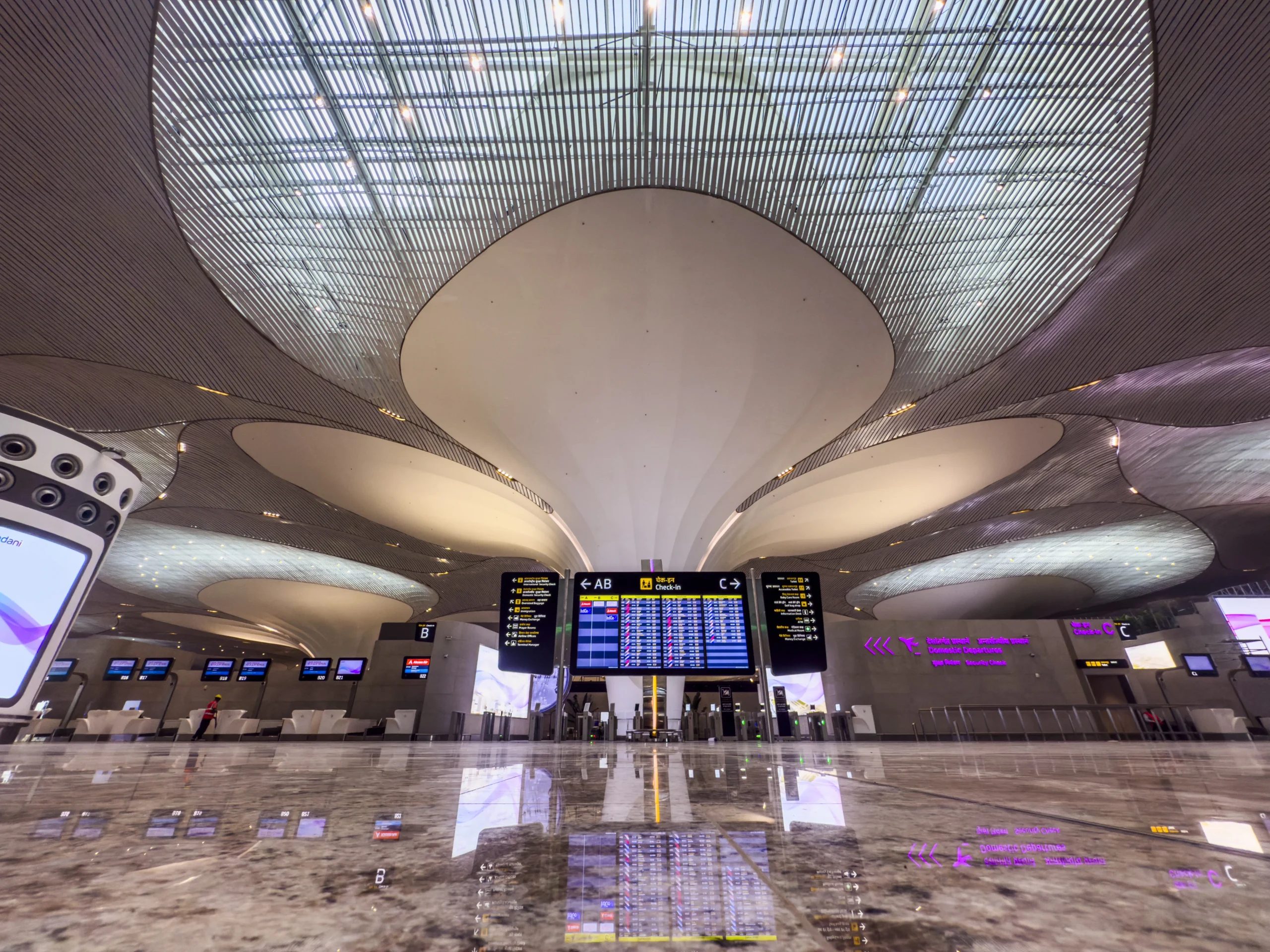
The global aviation industry is in the middle of another infrastructure boom. But unlike the airport expansion race of the early 2000s, when mega hubs competed primarily on size and prestige, the newest generation of terminals is being shaped by something more practical: regional connectivity, passenger efficiency, and the changing geography of air travel itself.
Across Asia, North America, and emerging aviation markets, governments and airport operators are investing billions into terminals designed not only to accommodate more passengers, but to fundamentally improve how people move through airports.
Faster security processing, smoother domestic-to-international transfers, larger check-in halls, upgraded baggage systems, and more intuitive passenger flows are increasingly becoming the benchmark.
The latest edition of the Skytrax World Airport Awards has now highlighted the terminals that are setting the standard for this next phase of aviation infrastructure.
The ranking reported in CN Traveler focuses specifically on terminals opened within the past 18 months and evaluates everything from passenger comfort and operational efficiency to design, accessibility, and customer experience.
This year’s winners reveal an interesting trend. The best-performing terminals are not necessarily the biggest or most extravagant. Instead, they are airports that combine architectural ambition with operational practicality, often while serving rapidly expanding secondary cities and regional markets.
From Japan’s timber-clad gateway in Kumamoto to India’s massive new airport outside Mumbai, these terminals represent where the future of air travel may be headed.

https://commons.wikimedia.org/wiki/File:Kumamoto_Airport_2023.JPG
1. Aso Kumamoto Airport, Mashiki, Japan
At the top of the 2026 rankings sits Aso Kumamoto Airport in Japan’s Kumamoto Prefecture, a project that reflects a growing shift toward regional airport revitalisation in East Asia.
The airport reopened with a completely redesigned passenger terminal created by renowned Japanese architect Kengo Kuma, whose work is often associated with natural materials, open spaces, and integration with surrounding landscapes.
Instead of leaning into futuristic steel-and-glass aesthetics, the terminal embraces locally sourced timber, broad natural lighting, and panoramic mountain views that immediately establish a strong sense of place.
What makes the terminal particularly notable is how intentionally regional it feels. Many modern airports are interchangeable — polished, efficient, but anonymous.
Kumamoto’s new terminal instead attempts to reflect the identity of Kyushu itself, incorporating local craftsmanship and architectural references tied to the surrounding volcanic landscape.
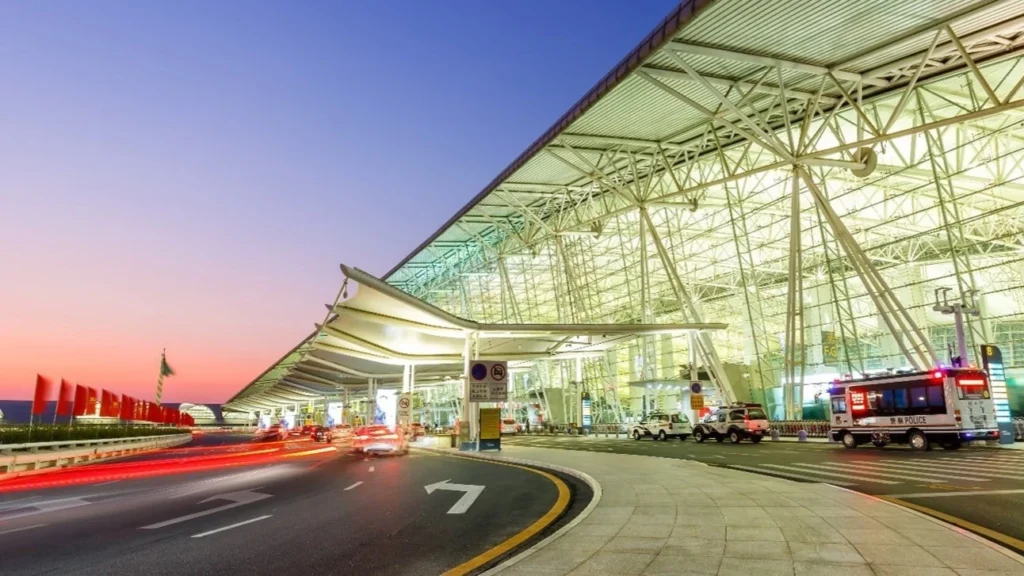
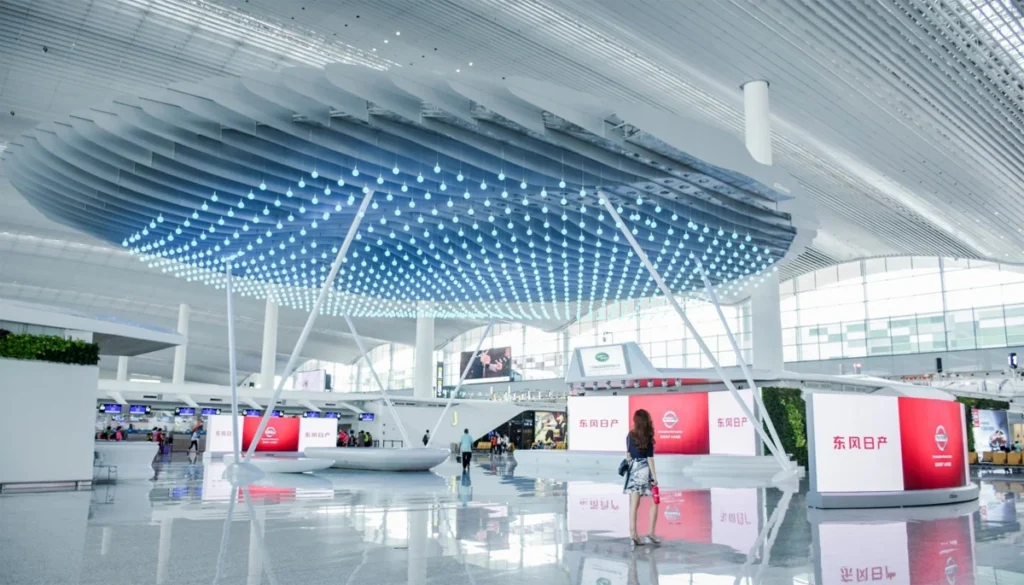
2. Terminal 3, Guangzhou Baiyun International Airport, China
China’s aviation expansion continues at an extraordinary scale, and Guangzhou Baiyun’s new Terminal 3 reflects the country’s ongoing ambition to build some of the world’s largest and most technologically advanced airport hubs.
Located in one of China’s most economically significant regions, Guangzhou Baiyun already serves as a major gateway for southern China and the Pearl River Delta. The addition of Terminal 3 dramatically increases the airport’s ability to handle growing passenger volumes while strengthening its role as an international transfer hub.
The terminal’s design prioritises scale and efficiency simultaneously. Vast departure halls, extensive self-service facilities, automated processing systems, and expanded gate capacity are central to the project.
China’s airports increasingly rely on integrated digital infrastructure, and Terminal 3 continues that trend with extensive use of biometric verification and intelligent passenger management systems.

3. Terminal 1, San Diego International Airport, United States
In the United States, where airport redevelopment projects are often slowed by aging infrastructure and operational constraints, San Diego International Airport’s new Terminal 1 stands out as one of the country’s most significant recent terminal upgrades.
San Diego faces a unique challenge among major American airports: it operates from a relatively constrained footprint close to the city centre, limiting opportunities for large-scale expansion.
The new terminal therefore, focuses heavily on efficiency and passenger experience rather than sheer capacity growth.
The redesigned Terminal 1 introduces larger gate areas, improved security checkpoints, expanded dining and retail offerings, and significantly modernised passenger facilities.
Sustainability also plays a major role in the project, with the terminal incorporating energy-efficient systems, water conservation measures, and environmentally conscious construction practices.

4. Navi Mumbai International Airport, India
India’s inclusion in the rankings through Navi Mumbai International Airport is significant not only because of the airport itself, but because it reflects the country’s rapidly accelerating aviation transformation.
India is currently among the world’s fastest-growing air travel markets, and Mumbai has long suffered from severe airport congestion. Chhatrapati Shivaji Maharaj International Airport, despite being one of India’s busiest and most efficient hubs, has operated near capacity constraints for years.
Navi Mumbai International Airport was conceived as the long-term solution to that problem.
The airport officially began operations on 25 December 2025 and represents one of India’s most ambitious infrastructure projects in decades. Once fully developed, the airport is expected to handle as many as 90 million passengers annually, placing it among the largest aviation hubs in Asia.
Its strategic importance extends well beyond Mumbai itself. The airport strengthens connectivity for the broader Mumbai Metropolitan Region while also improving access for nearby cities and regions including Pune, Thane, Vashi, Karjat, Alibaug, Talegaon, and Lonavala.
What distinguishes Navi Mumbai is the scale of future planning embedded into the project.
Unlike older Indian airports that evolved through piecemeal expansions, Navi Mumbai has been designed from the outset as a next-generation aviation ecosystem with integrated multimodal connectivity, large terminal infrastructure, and significant room for long-term growth.
https://en.wikipedia.org/wiki/File:Techo_International_Airport_Terminal.jpg
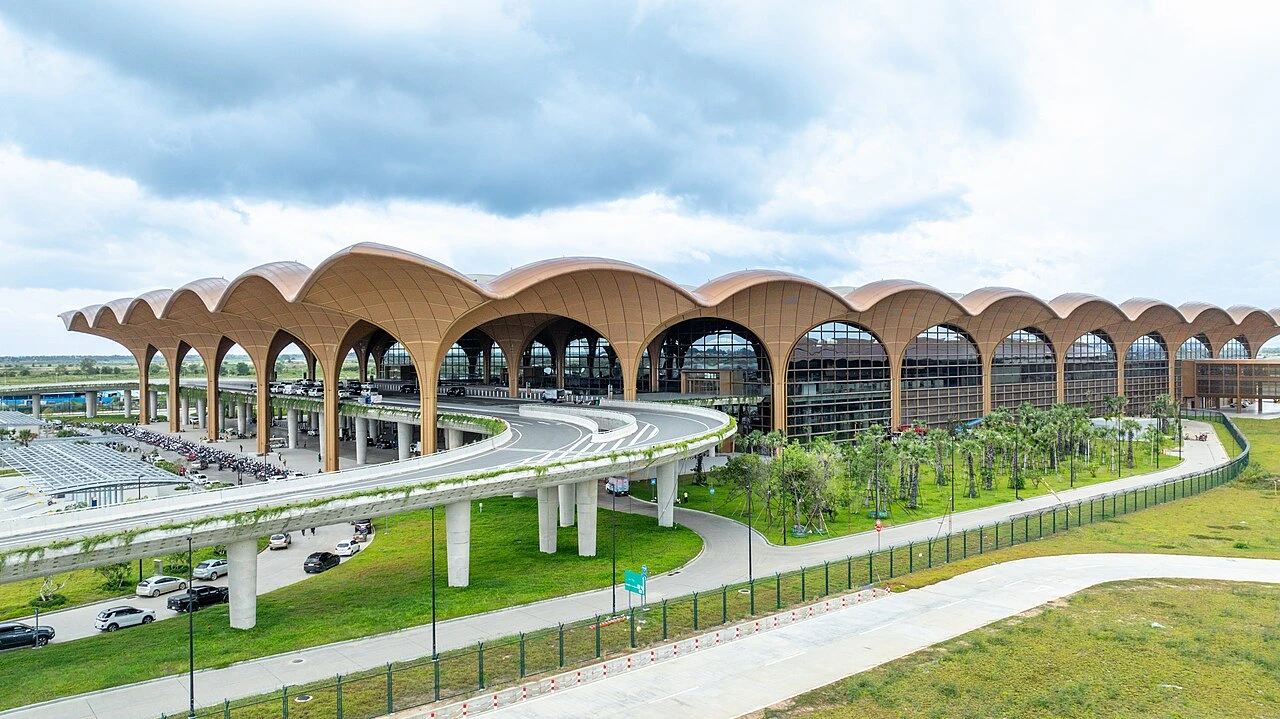
5. Techo International Airport, Cambodia
Rounding out the list is Cambodia’s Techo International Airport, located in Kandal Province near Phnom Penh.
The airport represents one of Southeast Asia’s most important emerging aviation projects and reflects Cambodia’s broader efforts to modernise its tourism and transportation infrastructure.
Designed to eventually replace Phnom Penh International Airport as the country’s primary gateway, Techo International has been developed with substantial future growth in mind.
The project aims to significantly increase Cambodia’s ability to handle rising international visitor traffic, particularly as tourism across Southeast Asia continues to rebound and expand.
Architecturally, the airport incorporates large open terminal spaces and climate-responsive design features suited to Cambodia’s tropical environment.
Operationally, the airport has been built to accommodate both regional and long-haul international services more efficiently than the country’s previous aviation infrastructure allowed.
For Cambodia, the airport is not merely a transportation facility. It is also an economic statement — one that signals the country’s ambitions to integrate more deeply into regional tourism, trade, and international investment flows.
Bottom Line
What ties these terminals together is not simply their scale or modernity, but the role they increasingly play as symbols of national and regional ambition.
Airports today are no longer viewed only as transit infrastructure. They are economic engines, tourism gateways, urban development catalysts, and increasingly, statements about how countries see themselves in a rapidly shifting global economy.
The best new terminals of 2026 reveal an industry trying to balance growth with experience, efficiency with identity, and technological advancement with human-centered design.
And as passenger traffic continues rising worldwide, this new generation of airports may define how people experience international travel for decades to come.
Stay tuned with us. Further, follow us on social media for the latest updates.
Join us on Telegram Group for the Latest Aviation Updates. Subsequently, follow us on Google News
