

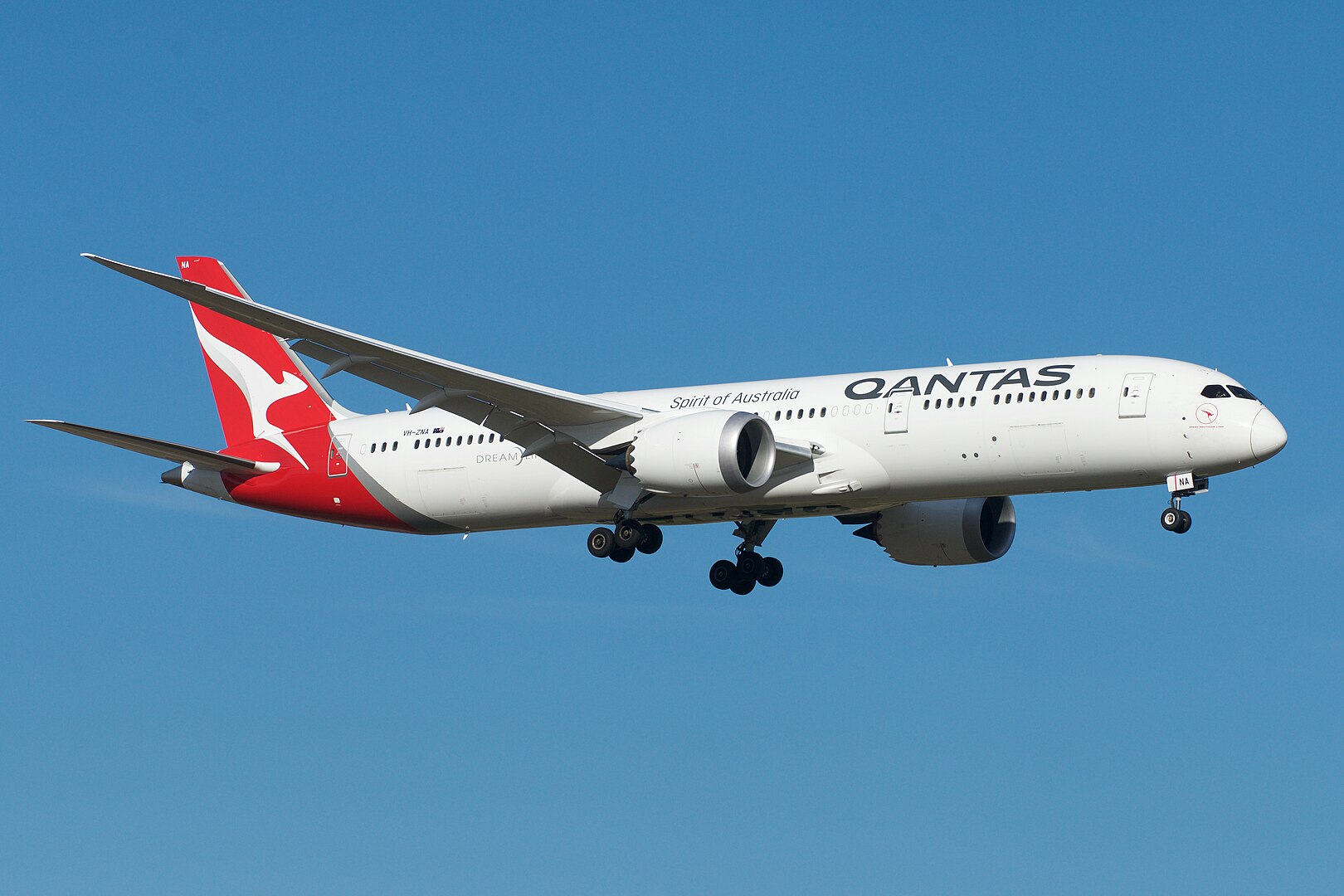
MELBOURNE- Qantas (QF) flight QF27 from Sydney Airport (SYD) to Santiago International Airport (SCL) returned to Australia after a mechanical issue developed approximately 4.5 hours into the journey, forcing the aircraft to divert from its scheduled trans-Pacific route.
Because Sydney Airport (SYD) was closed due to its overnight curfew, the Qantas (QF) aircraft landed at Melbourne Airport (MEL) instead. Passengers were accommodated overnight before continuing their journey to Santiago (SCL) on a replacement flight.

Qantas 787 Diverted to Melbourne
Qantas flight QF27 departed Sydney on its scheduled service to Santiago, Chile. About four and a half hours into the flight, the crew identified a mechanical issue that required the aircraft to discontinue the journey.
Following standard operational and safety procedures, the flight crew decided to return to Australia rather than continue across the Pacific Ocean. The decision prioritized passenger safety while allowing engineers to inspect the aircraft before it returned to service.
Although Sydney was the aircraft’s original departure point, it was unavailable because of the airport’s overnight curfew. As a result, the aircraft diverted to Melbourne, where suitable operational support and maintenance facilities were available.
Passengers Spent the Night in Melbourne
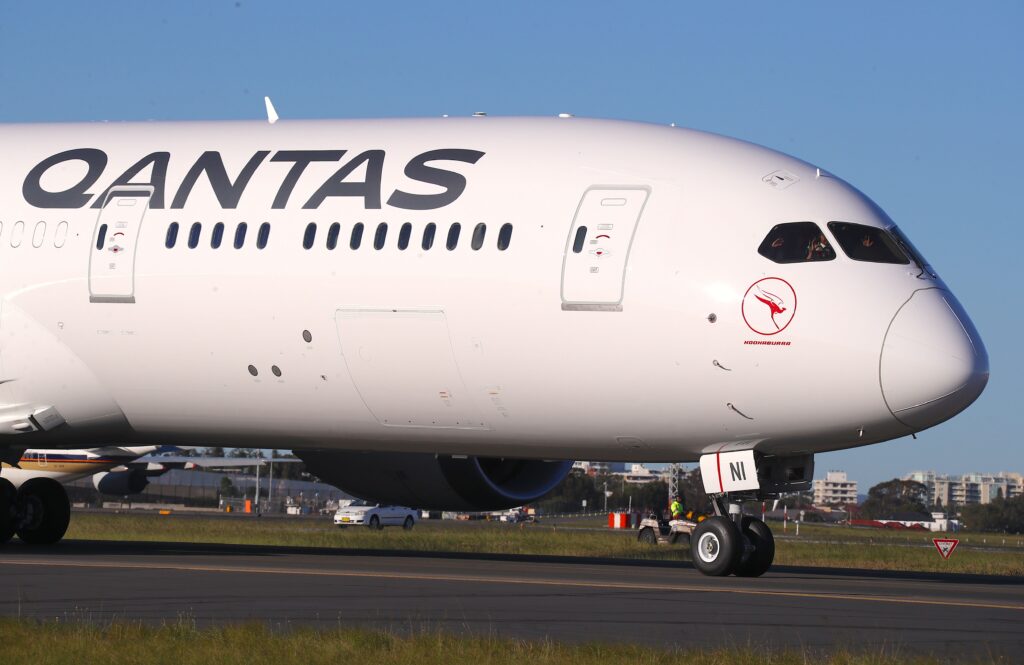
Instead of arriving in Santiago after the approximately 10-hour journey, nearly 200 passengers unexpectedly ended their trip in Melbourne.
Qantas arranged hotel accommodation for affected travelers while maintenance teams began examining the aircraft to determine the cause of the mechanical issue. The airline also coordinated customer support to minimize disruption caused by the unscheduled diversion.
While the delay altered travel plans, the airline implemented its standard disruption procedures by providing overnight accommodation and arranging onward travel for customers.
Replacement Flight Arranged for Santiago
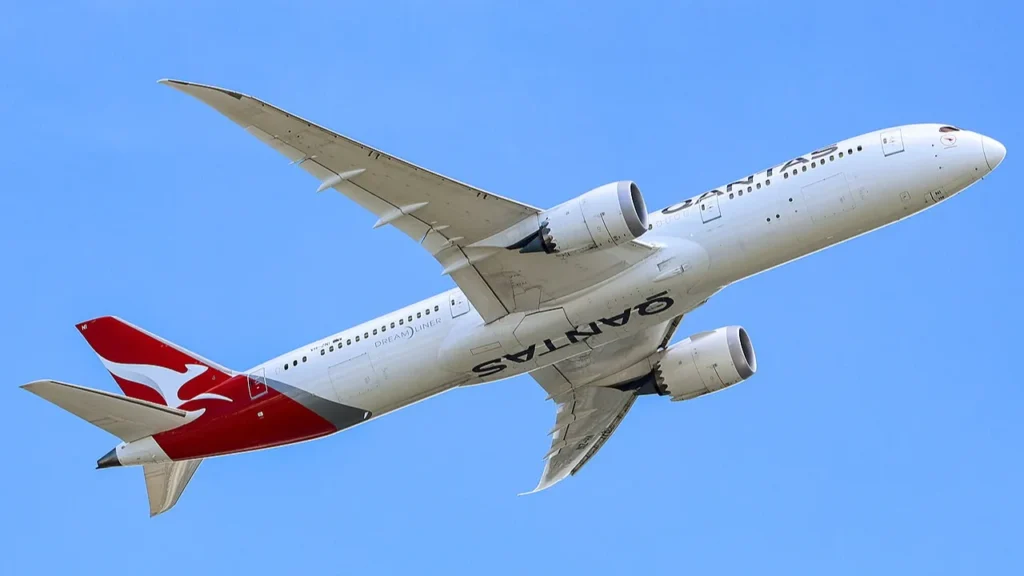
Qantas confirmed that passengers affected by the diversion were rebooked on a replacement flight departing from Melbourne around midday on Monday using another Boeing 787 Dreamliner registered as VH-ZNA.
This allowed travelers to continue their journey to Santiago without waiting for the original aircraft to be repaired and cleared for service.
Providing an alternate aircraft helped reduce the overall delay while maintenance engineers continued inspections of the original aircraft.
Sydney Airport Curfew Influenced the Diversion
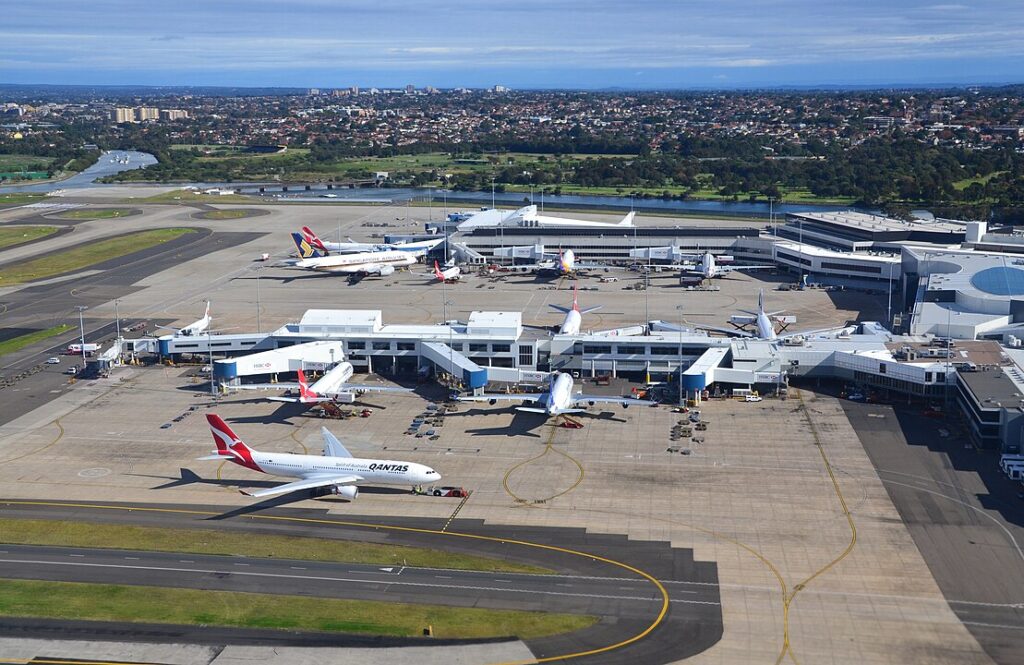
Sydney Airport operates under strict overnight curfew regulations that restrict most aircraft movements during designated nighttime hours.
Because the mechanical issue occurred late in the flight and the aircraft returned after the curfew had come into effect, Melbourne became the most practical diversion airport. The airport was able to accommodate the aircraft, passengers, and engineering teams without breaching Sydney’s operating restrictions.
Such operational decisions are common when airports face curfew limitations, ensuring flights remain compliant with regulations while maintaining safety as the highest priority.
Safety Remains the Primary Consideration
Mechanical issues during flight do not automatically indicate a serious emergency. Airlines are trained to assess technical faults and make precautionary operational decisions whenever required.
Returning or diverting to a suitable airport allows engineers to inspect the aircraft thoroughly before it resumes commercial operations. These procedures are part of standard aviation safety protocols followed by airlines worldwide.
In this case, Qantas prioritized safety, passenger welfare, and operational continuity by diverting the aircraft, providing overnight accommodation, and arranging a replacement service to Santiago.
Stay tuned with us. Further, follow us on social media for the latest updates.
Join us on Telegram Group for the Latest Aviation Updates. Subsequently, follow us on Google News
